.svg)
Finding a dentist in Peoria means sorting through a crowded field. Most practice websites bundle everything into vague headings like "restorative care" and leave you guessing. We'd rather just tell you what we do.
This office is our flagship location, with eleven operatories currently expanding to fifteen. Three doctors practice here: Dr. Horst, Dr. Rrushaj, and Dr. Gifford. It's also the office with our fullest service scope, so almost everything a patient needs gets handled in this building rather than sent somewhere else.
Below you'll find each service explained the way we'd explain it across the desk. Who it's for. What happens during the visit. How it differs from the service that sounds similar. If a routine cleaning is all you need, that's a short conversation. If you've got a cracked tooth or a gap you've been living with, there's a path for that too. Start wherever you are and follow the link to read more.
General Dentistry at Associates in Dentistry
Associates in Dentistry - Peoria handles the full run of general and restorative dental care, from a routine cleaning to a crown milled and placed in one appointment. This page walks through each service in plain terms so you can figure out what you need. Call or request an appointment when you're ready to get started.
General Dental Treatments We Offer




Dental Exams Start Every Visit to Associates in Dentistry
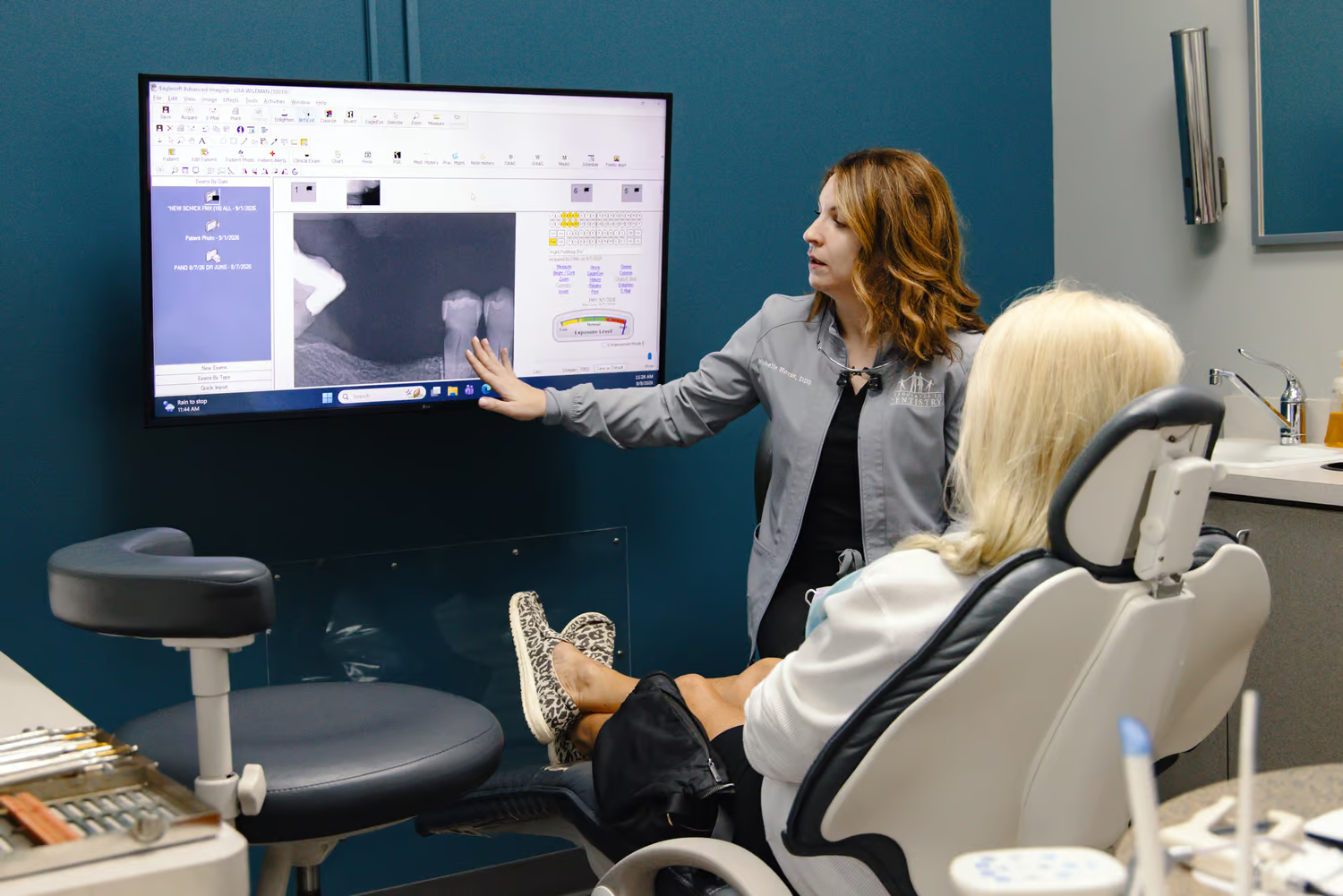
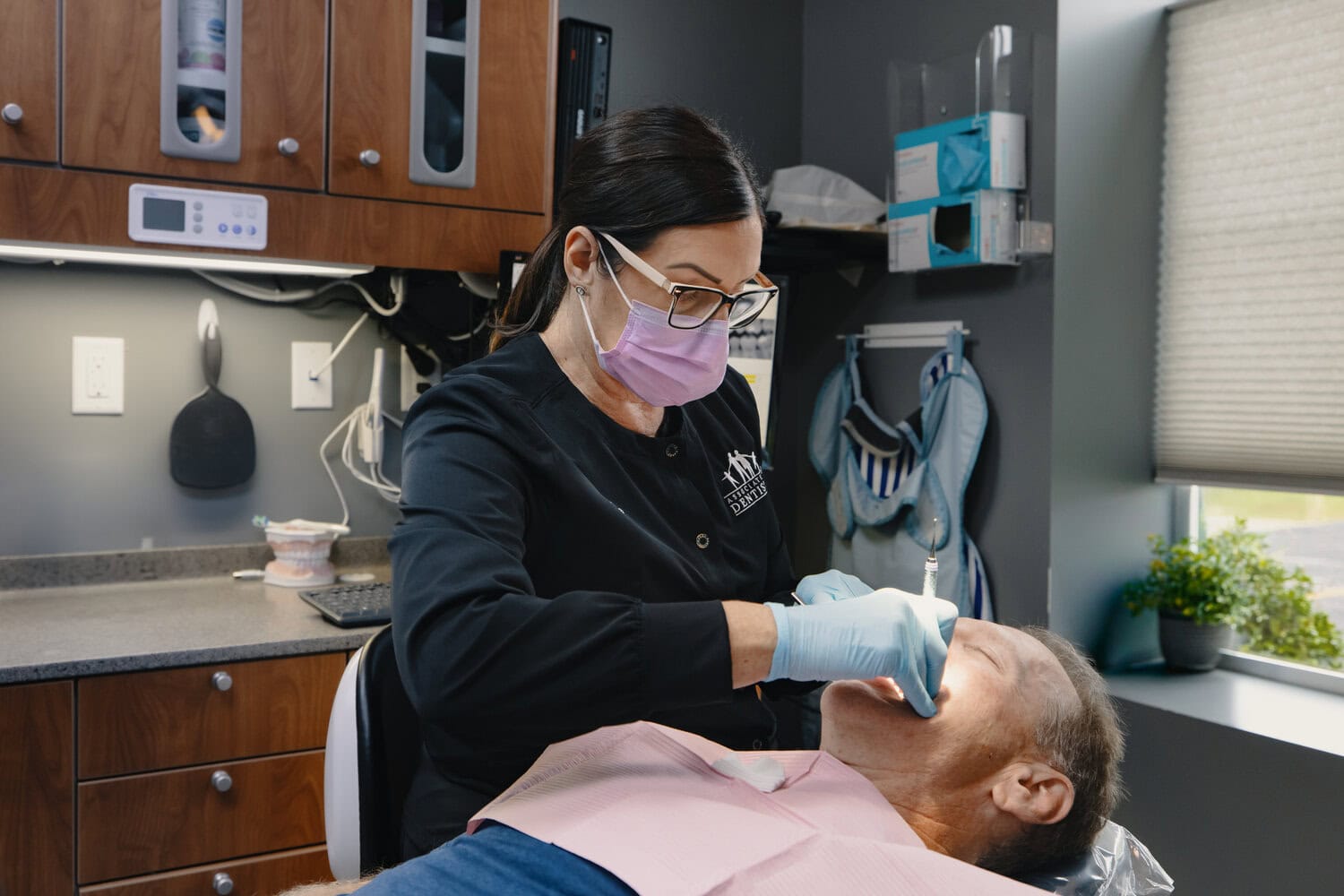
Every relationship here starts with a dental exam. It's the visit where a dentist looks at your teeth, your gums, and how your bite comes together, then sorts out what needs attention now versus what can wait.
Most exams include x-rays. That's how small problems get caught while they're still small. A cavity between two teeth doesn't hurt at first and you can't see it in the mirror. It shows up on film long before it shows up in your day.
A typical dental exam covers:
- A tooth-by-tooth check for decay, cracks, and worn spots
- Gum health, including where the gums meet each tooth
- How your upper and lower teeth meet when you bite
- An oral cancer screening
- X-rays when they're needed to see below the surface
We also use an iTero Lumina intraoral scanner here, which gives us a clear digital picture of your mouth without a tray of putty. And our x-rays go through a second-opinion review process, so more than one set of eyes looks at what's there before anything gets recommended.
For many patients, this is the appointment that gets put off the longest and regretted the most when skipped.
Learn more about Dental Exams.
Dental Cleaning Clears the Buildup Brushing Leaves Behind
You can brush twice a day and floss like a champion and still miss spots. Plaque hardens into tartar, and once it hardens, a toothbrush won't touch it. That's what a dental cleaning is for.
One of our hygienists removes plaque and tartar from above and below the gumline, polishes the surfaces, and gets in between teeth where buildup likes to hide. Most people pair a dental cleaning with their dental exam and knock both out in one visit. That's the usual rhythm, twice a year for most patients, more often if your gums need extra help.
Gum disease is the quiet one. It starts with a little bleeding when you floss and no pain at all. Left alone long enough, it loosens the bone holding your teeth in place. A regular dental cleaning is the cheapest insurance against that whole chain of events.
If it's been a few years since your last dental cleaning, you're not the first person to walk in here with that story. Nobody's going to lecture you. We'll just get you caught up and set a schedule that works from there.
Read more about Dental Cleaning.
Composite Fillings Repair Small Cavities and Chips
A composite filling repairs a tooth that has a cavity or a small chip. The dentist clears out the decay, then rebuilds the missing part with a tooth-colored material that bonds to what's left. Most of the time it's finished in a single visit.
The word "composite" just means the material. It's shaded to match your tooth, so once it's polished, it doesn't announce itself when you smile or laugh. That matters more on front teeth, but people appreciate it on molars too.
Here's the confusion we clear up most often. A cracked or discolored tooth doesn't automatically need a crown. A composite filling handles smaller areas of damage, where enough healthy tooth remains to support the repair. A crown covers the whole tooth, and that's for when the damage runs deeper or wider. The exam tells us which one fits your situation, and we'd rather do the smaller thing when the smaller thing works.
Signs you might need a composite filling:
- A sharp twinge with cold drinks or sweets
- A rough edge you keep finding with your tongue
- A dark spot or shadow on a tooth surface
- Food packing into the same spot every time you eat
None of those mean disaster. They usually just mean it's time to have it looked at.
More on Composite Fillings.
Dental Crowns Cover and Protect a Damaged Tooth
Picture a tooth that's cracked down one side, or a molar with an old filling so large there's barely any tooth around it. Patching that doesn't hold. A dental crown fits over the entire tooth, top to gumline, and restores the shape and strength so you can chew on it again without worry.
Crowns come up most often in four situations: a cracked tooth, a large cavity, a tooth that's already been through a root canal, or a tooth so worn down that a filling has nothing to grab. After a root canal in particular, the tooth gets brittle. A dental crown is what keeps it from splitting later.
The traditional process takes two visits. First visit, the dentist shapes the tooth, takes a digital scan, and places a temporary crown. The permanent crown is made, then you come back to have it fitted and cemented. That gap between appointments is usually a couple of weeks.
Same-day crowns are the other route. Same restoration, milled in-house and placed in one appointment instead of two. The difference is the schedule, not the crown itself.
Details on Dental Crowns.
Ask about Same-Day Crowns at the Peoria office to see if a same-day appointment fits your schedule.
Same-Day Crowns Finish the Whole Thing in One Appointment
A lot of people assume a same-day crown is a lesser product. A quick fix, a stopgap, something you settle for. It isn't. It's the same restoration as a traditional crown. The only thing that changes is how many times you have to drive here.
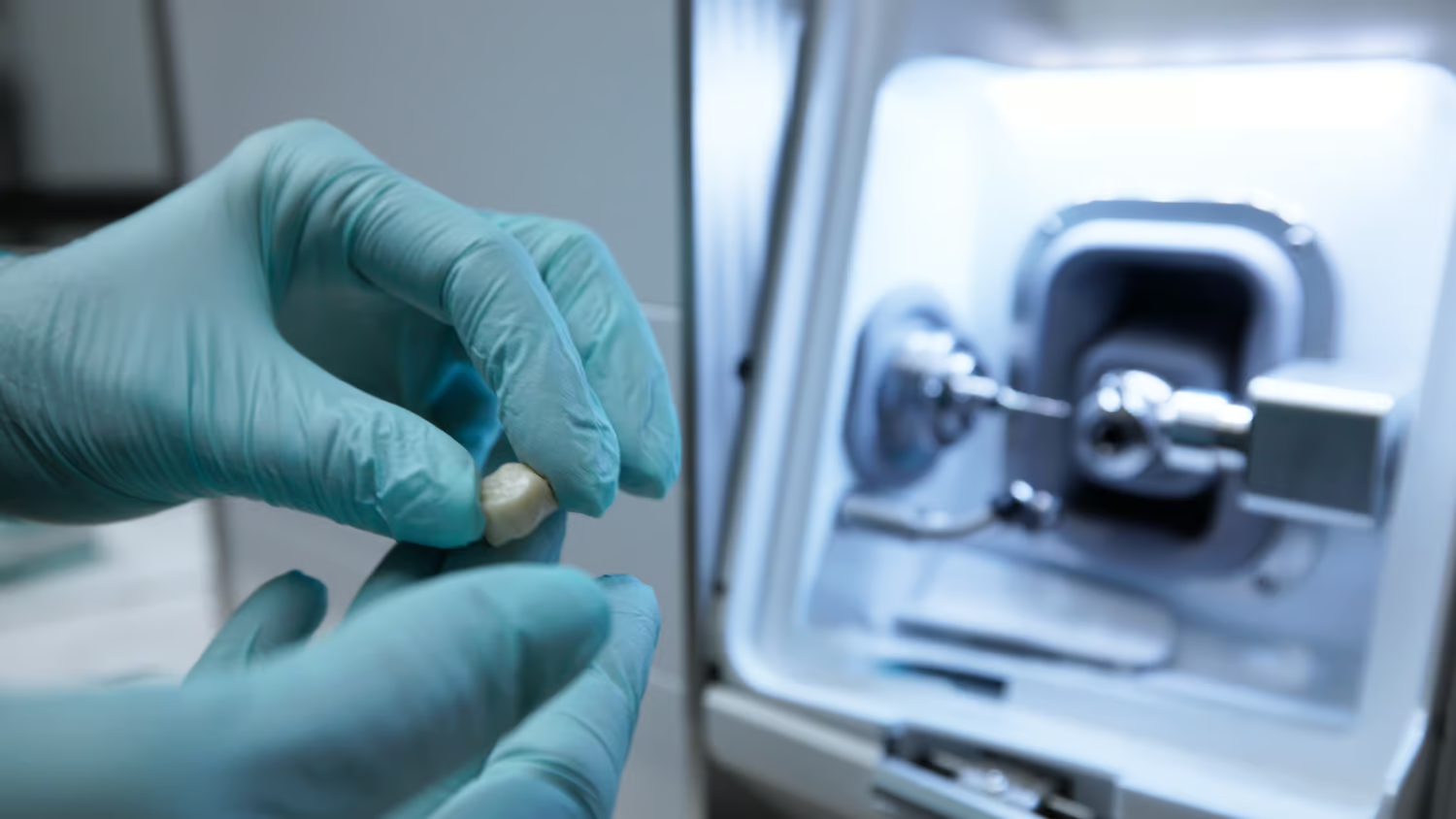
Crowns are milled in-house at this office. That means the dentist preps the tooth, scans it digitally, and the crown is made right here in the building while you're in the chair. Then it's fitted and placed. No temporary crown to baby for two weeks. No second appointment to arrange around work.
This is one of only two Associates in Dentistry locations with the milling equipment on site, so this isn't something every office can offer.
Who tends to choose this route:
- People who can't easily take a second half-day off work
- Anyone who's had a temporary crown pop off before and doesn't want to repeat that
- Patients driving in from Dunlap, Washington, or further out
- Folks who just want the thing finished
Not every tooth is a candidate, and the dentist will tell you straight if yours isn't. But when it works, it saves you a trip and gets you back to normal the same afternoon.
See Same-Day Crowns.
Root Canals Save a Tooth With Deep Decay or Infection
A toothache that keeps you up at night often means decay or injury has reached the nerve inside the tooth. That's the point where a filling can't help and the choice narrows to two options: treat the inside of the tooth, or lose the tooth.
A root canal treats the inside. The dentist opens the tooth, removes the infected tissue from the canals, cleans them out, and seals the space. The pain source is gone. The tooth stays in your mouth, roots and all, doing its job. A crown usually follows to protect what remains, since a treated tooth is more fragile than it looks.
Root canals have an old reputation that doesn't match how they go now. The procedure relieves pain, it doesn't cause it. Most patients tell us afterward that the worst part was the week before they came in.
Root canals are done in-house here, so you're not being sent across town mid-problem. And if you're the kind of patient who wants a second look before committing to major work, that's fair. Our x-rays already go through a second-opinion review process internally, and you're welcome to ask questions about anything on the treatment plan before you agree to it.
Read about Root Canals.
Dental Bridges Fill a Gap Using the Teeth Beside It
Lose a tooth and the gap doesn't just sit there politely. Neighboring teeth start to drift toward the space. Your bite shifts. Chewing moves to the other side and that side wears faster. A dental bridge closes the gap before that chain gets going.
The bridge works by anchoring to the healthy teeth on either side of the space. Those teeth get crowned, and the replacement tooth is attached between them. Once it's cemented, it stays put. You don't take it out, you brush it and floss around it like the rest of your teeth.
That fixed quality is the main difference between a bridge and a partial denture. A dental bridge is permanent and attaches to your own teeth. A partial denture comes out for cleaning and is the better answer when more teeth are missing or the neighbors aren't strong enough to carry a bridge.
A bridge tends to be a good fit when you're missing one tooth or a few in a row, and the teeth on either side are healthy enough to do the work. The exam sorts that out quickly.
Learn more about Dental Bridges.
Partial Dentures Replace Several Teeth While Keeping Your Own
Partial dentures are for the in-between situation. You've lost several teeth, maybe in different spots around your mouth, but you still have healthy natural teeth worth keeping. A partial fills those gaps without touching what's still working.
The appliance clips onto your remaining teeth and holds replacement teeth where the gaps are. You take it out to clean it, and you take it out at night. It's one piece solving several problems at once, which beats addressing each gap separately.
The distinction that trips people up: partial dentures work when some natural teeth remain. Complete dentures replace an entire arch when there are no teeth left to build around. Patients often come in assuming they need a full set and find out a partial is the right answer, which means keeping teeth they thought were already lost.
There's an adjustment stretch with any partial. Speaking feels odd for a few days, eating takes some practice, and the fit often needs small tweaks early on. That's normal and expected, not a sign something went wrong. We also handle denture repair here, so if something cracks or a clasp bends down the road, you're not starting over.
More on Partial Dentures.
Complete Dentures Restore a Full Upper or Lower Arch
When all the teeth in an arch are gone, a complete denture replaces the whole set. Upper, lower, or both. The denture rests directly on the gums and comes out for cleaning, and it gives you back the ability to chew, speak clearly, and smile without thinking about it.
Where a partial denture clips onto remaining natural teeth, a complete denture doesn't have any to hold onto. It's shaped to your gums so the fit does the holding. That's the whole difference, and it comes down to what's left in your mouth when you sit down in the chair.
Getting there takes a few appointments. Impressions or digital scans, a fitting, then adjustments once you've worn it a while and your mouth tells us where it rubs. Nobody gets a perfect fit on the first day. The adjustments are part of the process, not a sign of a problem.
Gums change shape slowly over the years, so complete dentures need periodic checks and occasional relining. We do denture repair at this office, which keeps that maintenance close to home.
Read more about Complete Dentures.
Oral Surgery Handles Extractions and More Involved Procedures
Some teeth don't come out easily. A tooth might be impacted below the gumline, broken off at the surface, or sitting at an angle that makes a simple extraction impossible. Oral surgery covers those cases, along with other procedures that need a surgical approach.
The dentist makes an opening to reach the tooth, removes it, and closes the site so healing goes cleanly. You get instructions for the days after, and we check on how things are settling. Most people are surprised at how manageable the recovery is when they follow the aftercare.
Common reasons patients come in for oral surgery:
- Wisdom teeth crowding the back of the mouth
- A tooth broken below the gumline
- A tooth too damaged by decay to save
- Preparing the mouth before dentures are made
Oral surgery is the broad category here. A frenectomy, by contrast, is a narrow and specific procedure to release tight tissue under the lip or tongue, and it's most often done for children. Both fall in the surgical family, but they're different situations with different conversations around them.
Surgical extractions are handled in-house at this office, so you're staying with the same team you already know.
Details on Oral Surgery.
Other Dental Services We Handle
A few other services round out our general and restorative care. TMJ/TMD Treatment addresses jaw pain and clicking that comes from the jaw joint itself, separate from a bite issue a crown or filling would fix. Sleep Apnea Treatment and Home Sleep Testing help patients who snore heavily or wake up tired, using an at-home test before recommending an oral appliance. Frenectomies are a quick laser procedure for children with tight tissue under the lip or tongue that affects feeding or speech. And Pediatric Dental Exams give younger patients a first look at their teeth and bite, with referral to a pediatric dentist if treatment beyond an exam is needed. Ask us about TMJ/TMD Treatment, Sleep Apnea Treatment, Home Sleep Testing, Frenectomies, or Pediatric Dental Exams at your next visit.
How do I know if I need a filling or a crown?
How often should I schedule a dental cleaning and exam in Peoria?
What if it's been years since my last dental visit?
Do I need a crown after a root canal?
What's the difference between a dental exam and a dental cleaning?
How do I choose between waiting on a cracked tooth or getting it treated now?
Every service below is offered at our Peoria office, by the same team.