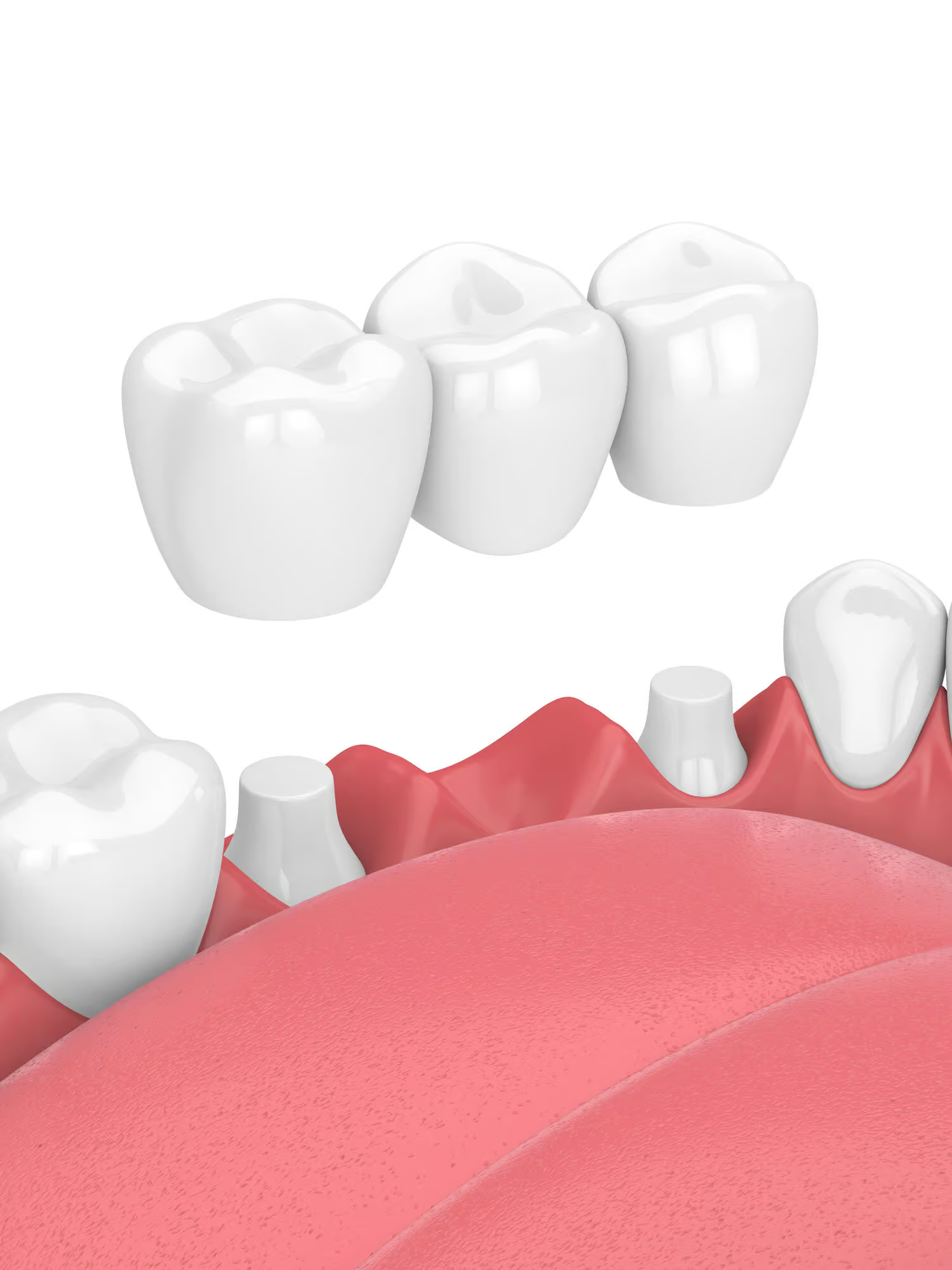



Illustration of a three-tooth dental bridge being placed over two prepared teeth
Your family's dental home

Dental Bridges in Peoria: Honest Answers on Bridge vs. Implant, and What Fits Your Mouth

Illustration of a three-tooth dental bridge being placed over two prepared teeth
The short answer
Reviewed by our
Peoria
doctors.
Dr. Michelle Horst, dentist at Associates in Dentistry in Peoria
Dr. Arian Rrushaj, dentist at Associates in Dentistry in Peoria
Dr. Jonathan Gifford, dentist at Associates in Dentistry in Peoria and Washington

A dental bridge fills a gap by anchoring a replacement tooth to the healthy teeth next to it. The anchor teeth get crowns, and the false tooth sits between them as one solid piece. It's cemented in place, so you don't take it out at night.

01

A Dental Bridge Replaces Missing Teeth and Restores Your Bite

Picture a gap where a molar used to be. The two teeth beside it get prepared and capped with crowns. The replacement tooth is fused between those crowns. The whole thing goes in as one unit and gets cemented down. You chew on it, floss around it, and mostly forget it's there.

But here's the part most folks don't hear until it's already happening.

Teeth lean. A gap doesn't stay a gap. The tooth behind the space tips forward over months, and the tooth above or below it drifts down into the opening because nothing's meeting it anymore. We see this every single week. Someone comes in a year after an extraction and the bite has already shifted enough that the gap no longer closes cleanly. That drift is why a bridge isn't cosmetic work. It's structural.

You'll also notice the chewing change first. Most people quietly move all their food to one side without realizing it, then wonder why that side starts aching. One patient told us she'd been eating on the left for two years and thought her jaw soreness was stress.

So what's a bridge buying you? Even pressure across your bite, teeth that stay put, and speech that doesn't catch on an open space. Front gaps affect how words come out more than people expect. The S sounds go first.

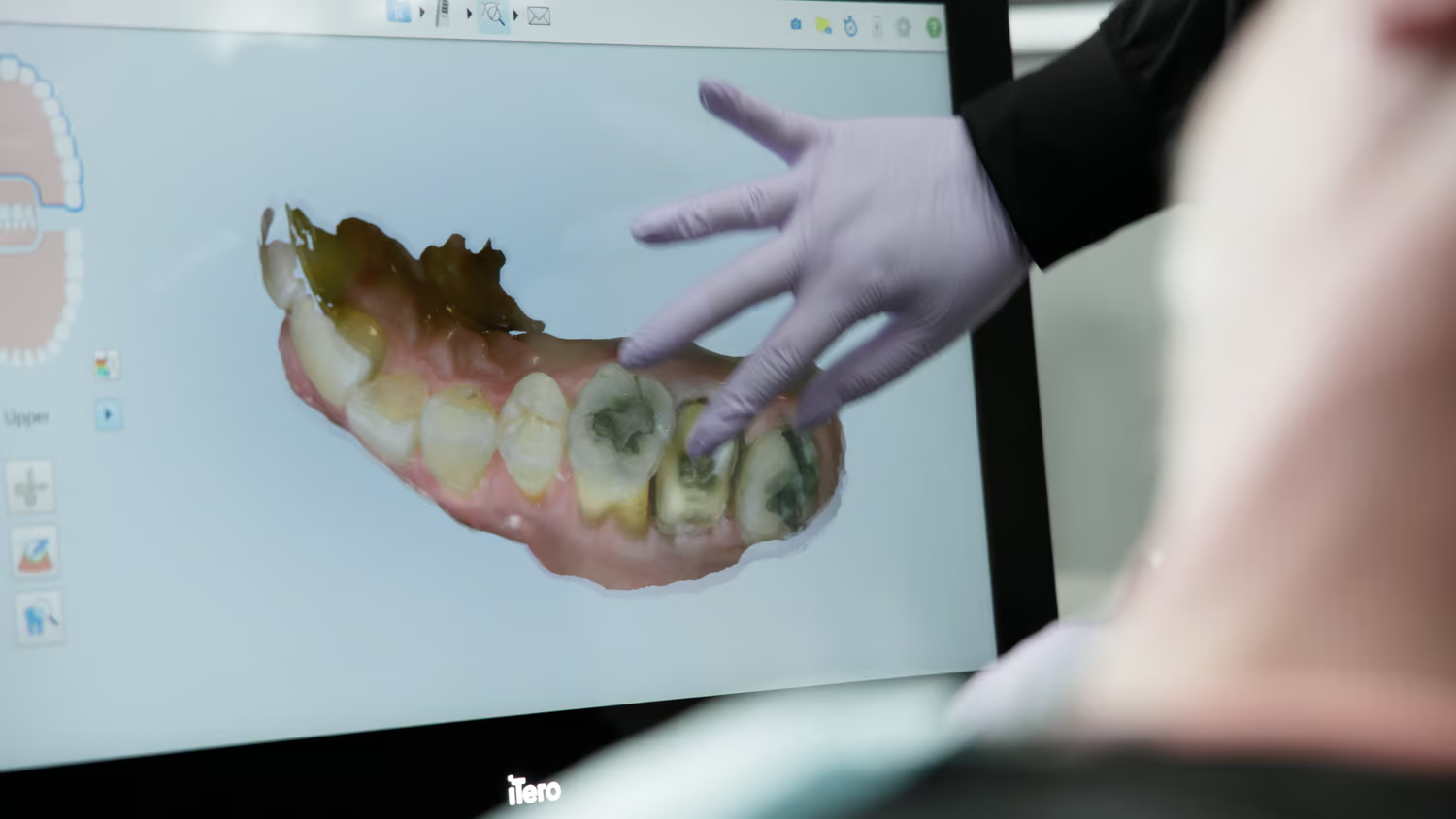
Our Peoria office handles the digital scanning and the fit in-house with an iTero Lumina scanner, no putty trays. And a bridge is fixed, not removable. That's the difference patients tell us matters most - it just feels like a tooth again.
02

Bridge vs. Implant: How to Decide Which Fits Your Case

People come in already knowing the two words. Bridge or implant. What they don't know is that the answer usually isn't about the gap at all. It's about the two teeth standing next to it.

Here's the honest version. If the teeth next to your gap are already crowned, cracked, or carrying big old fillings, a dental bridge makes a lot of sense. Those teeth need coverage anyway. A bridge covers them and fills the space at the same time, so you're solving two problems with one piece of work.

But if those neighbor teeth are clean and untouched? I'll tell you straight - I don't love shaving down healthy enamel just to hold a bridge. That's permanent. An implant leaves them alone, and that matters more at 40 than it does at 75.

Bone changes things too. Implants need enough jawbone to hold on to, and bone starts shrinking soon after a tooth comes out. Wait a few years and you may need grafting first. A bridge doesn't care about the bone underneath. It rests on the teeth.

Timeline is the other honest difference. A bridge is usually a few weeks start to finish. An implant is often months, because the bone has to grab hold before the tooth goes on top. If you've got a wedding in six weeks, that matters.

A bridge tends to be the better fit when:

  • The neighboring teeth already need crowns or have large fillings
  • You've lost bone height and want to skip grafting
  • You take blood thinners or have a health condition that complicates surgery
  • You want the gap closed in weeks rather than months
  • You grind heavily and want the load shared across three teeth

At our Peoria office we restore implants in house and mill crowns here as well, so the conversation isn't skewed toward whichever one is easier to send out. We scan, we look at the neighboring teeth, and we tell you what we'd do if it were our mouth.

03

When a Bridge Isn't the Right Choice

Sometimes the honest answer is no. A dental bridge leans on the teeth beside the gap, so those teeth have to be healthy enough to carry the load. If they're not, the bridge borrows trouble instead of fixing it.

Here's where we usually pump the brakes.

  • Active gum disease. Bone and gum tissue are still changing. Cement a bridge onto a shifting foundation and the fit won't hold. We treat the gums first, then talk restorations.
  • Weak or heavily filled neighbor teeth. If those teeth are already cracked or packed with old fillings, asking them to support a bridge is a lot.
  • Three or more missing teeth in a row. The span gets long, the flex gets worse, and the odds of failure climb.
  • Heavy grinding that hasn't been addressed. Nighttime clenching puts real force on a bridge. That force has to go somewhere.
  • A gap nobody can see and nothing is drifting into. Not every space needs filling right away.

And there's one more case worth saying out loud. If the teeth beside your gap are perfectly healthy, untouched, never drilled, a bridge means we shave down two good teeth to fix one missing one. Some patients are fine with that trade. Others aren't, and an implant restoration or a partial denture makes more sense for them.

We see this every week. Someone comes in set on a bridge because a friend had one, and after the x-ray review it's clear a different route fits their mouth better. That conversation takes ten minutes and saves years of headaches.

Waiting is also a real option. If money's tight and the gap is stable, holding off a few months while your gums heal is smarter than rushing into work that won't last. The mouth doesn't reward hurry.

Missing a tooth? Let's see if a bridge fits.
04

What Happens at Each Bridge Appointment

Most people picture something far worse than what happens. A dental bridge is usually two visits, a few weeks apart, and you're numb for the longest part of it.

Here's how a typical case runs in our Peoria office.

  • Exam and x-rays. We look at the teeth next to the gap. Those are the anchors, and they have to be healthy enough to carry the load. Our x-rays get a second-opinion review before we commit to a plan.
  • Numbing. You won't feel the prep work. Tell us if you're a slow freezer, some people are, and we'll give it more time.
  • Shaping the anchor teeth. We reduce them enough to make room for the crowns that hold the bridge. This is the part that takes the longest.
  • Digital scan. We use an iTero Lumina scanner instead of the old goopy trays. It's a wand and a few minutes of holding still.
  • Temporary bridge. You leave with something in the gap. It looks fine, it just isn't as strong as the final one.
  • Delivery visit. We take the temporary off, try the permanent bridge in, and check your bite from every angle before it's cemented.

The bite check matters more than patients expect. If a bridge sits even slightly high, you'll feel it in your jaw within a week. So we'd rather adjust it three times that day than send you home guessing.

Sore for a day or two afterward? Normal. Sharp pain, throbbing, or a bite that still feels off after a few days is not, and we want to hear about it.

And bring your questions to the first visit, not the second. That's the appointment where the plan is still flexible.

05

How Dental Bridge Pricing Typically Works

Nobody calls about a bridge without wondering what it costs. Fair question. Here's the honest answer: a dental bridge isn't one price, it's a stack of prices added together, and the stack changes depending on your mouth.

Across the dental field, bridges are billed per unit. A unit is one tooth's worth of the bridge. So a three-unit bridge means two anchor crowns plus one replacement tooth in the middle. Four units costs more than three. That's the single biggest driver of the number on your estimate.

  • Number of units. Longer gaps need more anchors and more porcelain.
  • Material. Zirconia, porcelain-fused-to-metal, and all-ceramic are priced differently.
  • Prep work. A cracked anchor tooth may need a root canal or buildup first, billed separately.
  • Location in the mouth. Front bridges take more shade-matching and shaping time.
  • Whether an implant is involved. Implant-supported bridges are a different fee category entirely.

Insurance is where people get surprised. Most plans treat a bridge as a major service, which usually means partial coverage after a waiting period, and many plans cap what they'll pay in a calendar year. We bill most insurance here, but we're not in-network with any plan, so your benefit is calculated a little differently than at an in-network office. We'd rather tell you that up front than have you find out on statement day.

Peoria households run a median income around $59,410, and we know that number matters when a treatment plan lands in your lap. CareCredit and 0% interest payment plans up to six months are both available here for exactly that reason.

Before you say yes anywhere, ask three things. How many units am I being charged for? What material is this, and why that one? And is any prep work missing from this estimate that could show up later? An office that can answer those clearly is an office worth trusting with your teeth.

FAQ

Answers to the most common questions.

Something else on your mind?
Call us at (309) 690-4500.

How do I know if I need a dental bridge instead of just leaving the gap alone?

You likely need a bridge if food keeps packing into the gap or a neighboring tooth looks tilted. A gap doesn't stay the same. Teeth beside it can lean into the space, and the tooth across from it can drift down or up. If your bite feels off or one side does all the chewing, that's a sign to get checked. Catching it early means the surrounding teeth are still strong enough to support a bridge.

What's the difference between a dental bridge and a dental implant?

A bridge uses the two teeth next to the gap as anchors, while an implant stands on its own without touching neighboring teeth. If the teeth beside your gap already have big fillings or cracks, a bridge often makes sense since those teeth need crowns anyway. If your neighbor teeth are healthy and untouched, an implant protects them better long term. We check your scans first to see if bone loss changes that picture.

How many visits does it take to get a dental bridge in Peoria?

It's usually two visits, spaced a couple of weeks apart. At our Peoria office, the first visit covers the exam, x-rays, and shaping the anchor teeth. Then we scan your teeth with our iTero Lumina scanner instead of using messy putty molds. The second visit is for fitting the final bridge. If a tooth was recently pulled, we may wait longer so the gum and bone can settle before scanning.

Can a dental bridge be placed if I just had a tooth pulled?

Not right away. Gum and bone shrink as they heal after an extraction, so a bridge made too soon can leave a gap underneath later. We usually let the site settle before taking any scans. This wait protects the fit of your bridge down the road. If you're unsure how long to wait, bring it up at your exam so we can check your specific healing progress.

What if my gums aren't healthy enough for a bridge yet?

If your gums bleed when you brush or the anchor teeth feel loose, periodontal treatment needs to come first. A bridge is only as steady as the teeth holding it up. Building one on weak gums won't hold long term. Our team reviews your x-rays with a second-opinion process before recommending a bridge, so we catch gum issues before they become bigger problems.

Is a missing back tooth in Peoria always something I need to fix?

Not always. If there's no tooth above the gap to chew against, and your bite feels fine with nothing drifting, watching it can be a fair choice. Every gap is different, so we look at your specific x-rays and bite pattern before suggesting a bridge. Some back molar gaps never cause trouble, while others slowly shift neighboring teeth. An exam tells you which situation you're in.

Request an appointment

Call us at (309) 690-4500

Tell Us About Yourself

Are you new to Associates in Dentistry?

Preferred Day and Time (optional)
Thank you! Your submission has been received!

That didn't go through. Please try again, or call your office.