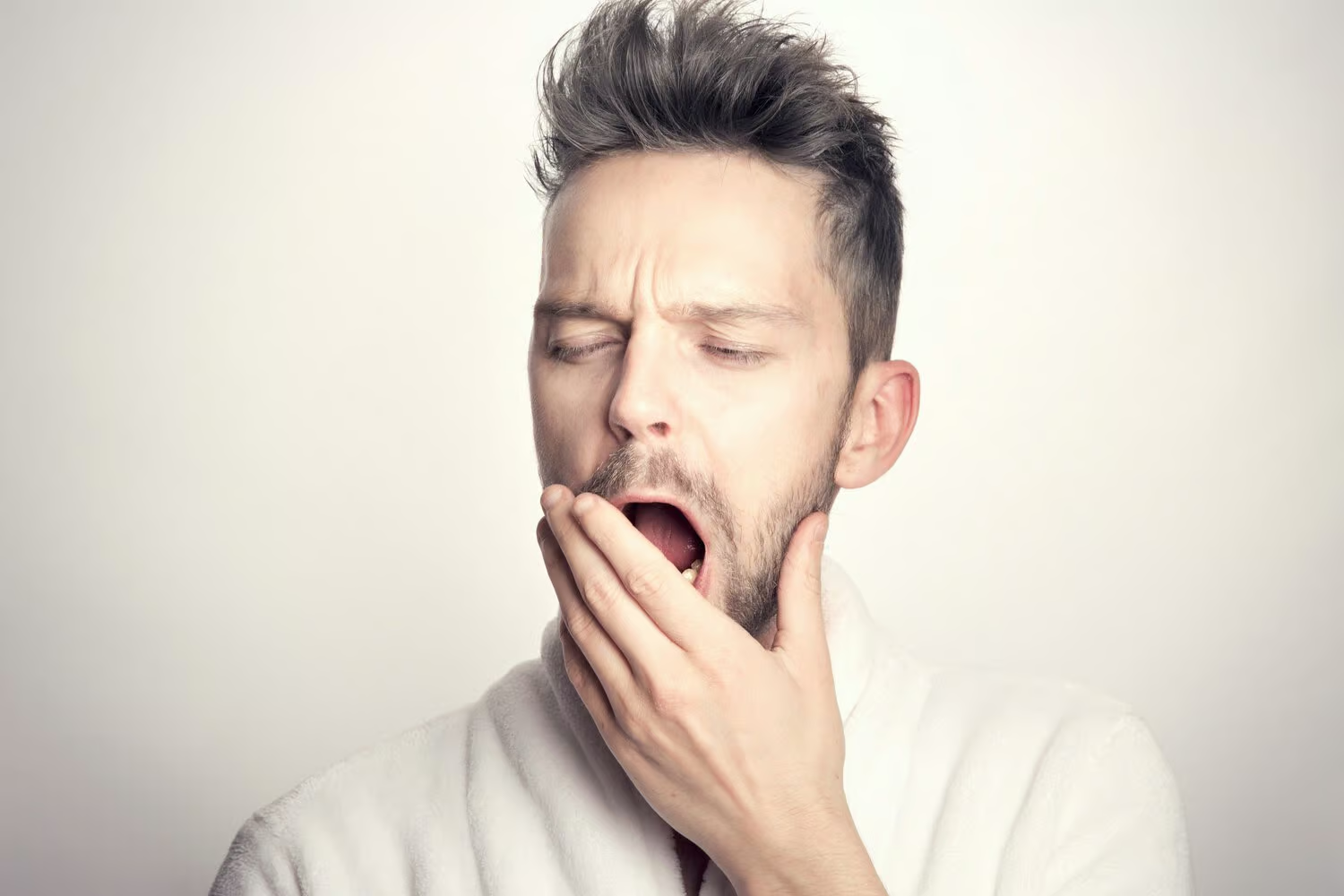

Tired man yawning with his hand over his mouth
Your family's dental home

Tired of Snoring and Fatigue? Sleep Apnea Treatment in Peoria That Goes Beyond CPAP

Tired man yawning with his hand over his mouth
The short answer
Reviewed by our
Peoria
doctors.
Dr. Michelle Horst, dentist at Associates in Dentistry in Peoria

Plain snoring is noisy but steady. Sleep apnea tends to come with pauses, gasping, morning headaches, and a tired feeling that sleeping longer doesn't fix. If your bed partner has ever watched you stop breathing, that's the sign worth acting on.

01

Signs Your Snoring Is Sleep Apnea

Lots of people snore. Most of them are fine. But snoring can also be the sound of an airway that's partly collapsing, and that's a different thing entirely.

This is part of General Dentistry in Peoria. Care is provided at our Peoria office by Dr. Michelle Horst.

Here's the scenario we hear about almost weekly. A spouse says the snoring goes quiet for a stretch, then there's a gasp or a snort, and it starts back up. That pause is the part that matters. The snorer almost never remembers it.

  • Pauses in breathing, followed by a gasp, choke, or loud snort
  • Waking up with a dry mouth, sore throat, or a dull headache
  • Falling asleep in the recliner by 8 p.m. after a full night in bed
  • Getting up two or three times a night to use the bathroom
  • Grinding or clenching, worn-down back teeth, or a sore jaw in the morning

That last one surprises people. Clenching and airway trouble travel together more often than you'd think, and a dentist is usually the first person to spot the wear pattern. We see flattened molars and scalloped tongue edges during routine exams, and sometimes that's the first clue anybody's had.

Daytime symptoms are the other half of the picture. Nodding off at a red light on War Memorial Drive. Reading the same paragraph three times. Short fuse by mid-afternoon. Your brain isn't getting a full night even when your body is in bed for eight hours.

Not sure if what you've got is just snoring? That's a fair question, and it's not one you can answer by guessing. A home sleep test shows what's happening while you sleep. You wear a small SleepImage ring that records your oxygen levels, heart rate, movement and sleep patterns, and a board-certified sleep physician reviews the results.

You sleep in your own bed. The data does the arguing for you.

02

Untreated Sleep Apnea Raises Other Health Risks

Most folks come in worried about the snoring. Their partner's had enough, or they're falling asleep at red lights on War Memorial Drive. Fair enough. But the part that doesn't show up in the bedroom is the part that concerns us more.

Here's what's happening. Every time your airway collapses, your oxygen drops. Your body panics a little and shoves you out of deep sleep to restart breathing. That can happen dozens of times an hour, all night, and you won't remember a second of it. Your heart feels every one of them, though. Blood pressure spikes. Your nervous system stays revved up when it should be resting.

Over years, that pattern gets linked to high blood pressure, heart rhythm problems, stroke risk, and trouble keeping blood sugar under control. Doctors have understood this connection for a long time now. It isn't a scare tactic, it's just what happens when the body gets starved of oxygen night after night.

And then there's the daytime stuff nobody connects back to sleep.

Brain fog. Short fuse. Falling asleep in the recliner at 7 p.m. Memory that isn't what it used to be. We've had patients tell us they thought they were just getting older. Many find the fog starts to lift once they're treated and sleeping through the night.

Your teeth tell on you too. Worn-down back molars, cracked fillings, a sore jaw in the morning. Grinding and clenching often show up alongside airway problems, and we spot those wear patterns during regular exams here in Peoria all the time. Sometimes the mouth is the first place this gets caught, and that's exactly why we look.

You don't have to guess. A home sleep test gives you an answer from your own bed, and then you know what you're dealing with.

03

When You Don't Need Sleep Apnea Treatment Yet

Not every snorer has a breathing problem. Some people snore because of a head cold, a few glasses of wine, or sleeping flat on their back after a long day. That's noise, not apnea. And noise doesn't need an appliance.

Here's the honest line we draw. Without a sleep test, nobody can tell you that you have sleep apnea. Not us, not your dentist, not your neighbor who got a device last year. A sleep test is what turns a guess into a diagnosis.

So if you haven't been tested, testing is the next step. Not treatment.

There are also folks who've been tested and still shouldn't start with an oral appliance. A few common ones:

  • You snore but your sleep test came back clean. Try side sleeping, cutting alcohol close to bedtime, and treating nasal congestion first.
  • Your apnea is severe and your doctor wants CPAP tried first. That's a reasonable order of operations, and we'd tell you the same.
  • You've got loose teeth, active gum disease, or untreated decay. An appliance grips your teeth every night. We'd want those handled first.
  • You're a kid, or you're a parent asking for one. Pediatric airway issues usually route through an ENT or a pediatric specialist.
  • Your symptoms started in the last week or two alongside a sinus infection. Give it time.

We see this every week. Someone comes in convinced they need a device, and what they need is a test, or a nasal spray, or a different pillow. We'll say so.

Waiting has a cost too, though, and it's worth naming. If you wake up gasping, if you're falling asleep at red lights on War Memorial, if your blood pressure keeps climbing with no clear reason, don't sit on that. Get tested. Then we can talk about what comes next, or whether anything needs to come next at all.

Tired of snoring and waking up worn out?
04

How Home Sleep Testing Confirms a Diagnosis

Nobody wants to sleep in a lab with wires taped to their head. That's the main reason people put this off for years. Most people can be tested in their own bed instead. At our Peoria office, home testing uses a SleepImage ring, a small sensor you wear overnight. It records your oxygen levels, heart rate, movement and sleep patterns.

We show you how to put it on before you leave. That night, you go to bed at your usual time.

  • We talk through your symptoms, your bed partner's observations and your medical history.
  • We look at your airway, tongue, jaw and bite during an exam.
  • If testing makes sense, you wear the ring for a night at home.
  • A board-certified sleep physician reviews the report and makes the diagnosis.
  • If it's sleep apnea, the diagnosis includes how severe it is: mild, moderate or severe. That shapes every choice after.

Treatment isn't one size fits all. Mild and moderate cases often respond well to an oral appliance. Severe cases need a different conversation. Without a diagnosis, you're guessing.

One night of data turns a maybe into a plan. And if the test comes back clean, that's useful too. You've ruled something out. Learn more about home sleep testing in Peoria.

05

Oral Appliance Therapy as a CPAP Alternative

An oral appliance looks a lot like a sports mouthguard, only slimmer and built to fit your teeth exactly. You wear it while you sleep. It holds your lower jaw slightly forward, and that small shift keeps the back of your throat from collapsing shut. No hose. No mask. No power cord. It fits in a case the size of a deck of cards.

Here's the part people don't expect: it's quiet, and your partner usually notices before you do.

Oral appliance therapy is recognized as a first-line option for mild to moderate obstructive sleep apnea, and for people with severe apnea who can't tolerate CPAP. That last group is bigger than most folks realize. We hear the same story over and over. The machine worked fine in the lab, then the mask leaked, or the pressure felt like drinking from a fire hose, and it ended up on a shelf.

Getting fitted isn't complicated, but it isn't one visit either.

  • You bring us a sleep study diagnosis, or we arrange home sleep testing here in Peoria.
  • We scan your teeth and bite with our iTero Lumina digital scanner. No goopy impression trays.
  • The appliance is made to your measurements and fitted in our Peoria office.
  • We adjust the jaw position over several weeks until your symptoms settle down.
  • You repeat a sleep test wearing the appliance, so you know it's doing the job.

That last step matters. Feeling better is good news, but it isn't proof. We want numbers.

There are trade-offs, and you should hear them up front. Some people wake up with a sore jaw or tender teeth for the first couple of weeks. Extra saliva is common early on. A small bite change can happen over years of wear, so we check your bite at every visit. If you have very few teeth or active gum disease, an appliance may not have enough to hold onto, and we'll tell you that instead of selling you one.

FAQ

Answers to the most common questions.

Something else on your mind?
Call us at (309) 690-4500.

How do I know if I have sleep apnea or just regular snoring?

The real difference is pauses in breathing, not just noise. Regular snoring is steady, but sleep apnea usually comes with gasping, choking sounds, or your bed partner noticing you stop breathing for a few seconds. Morning headaches, a dry mouth, and feeling exhausted even after eight hours are other clues. You can't tell for sure by guessing, though. A home sleep test with a SleepImage ring records your oxygen levels, heart rate, movement and sleep patterns while you sleep in your own bed, and a board-certified sleep physician reviews the results.

Can my dentist really diagnose sleep apnea in Peoria?

Dentists can't diagnose sleep apnea on their own, but we're often the first to spot the warning signs. We see flattened molars, worn-down back teeth, and scalloped tongue edges during routine exams here in Peoria. Those wear patterns point to clenching, which often travels alongside airway problems. If we notice these signs, we'll recommend a home sleep test to confirm what's going on before talking about any treatment.

What happens during a home sleep test?

You wear a small SleepImage sensor ring for a night in your own bed instead of going to a sleep lab. It records your oxygen levels, heart rate, movement and sleep patterns. A board-certified sleep physician reviews the report and makes the diagnosis. If it comes back clean, you've ruled something out. If it shows sleep apnea, you'll know how severe it is and what options make sense.

Is snoring on its own bad enough to need treatment?

Not always. Some snoring comes from a head cold, alcohol before bed, or sleeping flat on your back, and that kind usually clears up with simple changes like side sleeping or treating nasal congestion. If your sleep test comes back clean, you likely don't need an oral appliance yet. But if you're gasping awake, nodding off at red lights on War Memorial Drive, or your blood pressure keeps climbing, don't wait. Get tested to know for sure.

Can untreated sleep apnea affect my health besides making me tired?

Yes, and this is the part that concerns us more than the snoring. Every airway collapse drops your oxygen and jolts your body out of deep sleep, sometimes dozens of times an hour. Over years, that pattern is linked to high blood pressure, heart rhythm problems, and stroke risk. Many patients also notice brain fog and memory trouble that often improves once they're treated. Your teeth show it too, with worn molars and morning jaw soreness.

Who should not start with an oral appliance for sleep apnea?

A few groups need a different first step. If your doctor wants you to try CPAP first because your apnea is severe, that's a reasonable order to follow. If you have loose teeth, active gum disease, or untreated decay, we'll want those handled first since an appliance grips your teeth every night. Kids and recent sinus infections also need a different path. We'll always tell you if a test or another approach makes more sense than an appliance.

Request an appointment

Call us at (309) 690-4500

Tell Us About Yourself

Are you new to Associates in Dentistry?

Preferred Day and Time (optional)
Thank you! Your submission has been received!

That didn't go through. Please try again, or call your office.