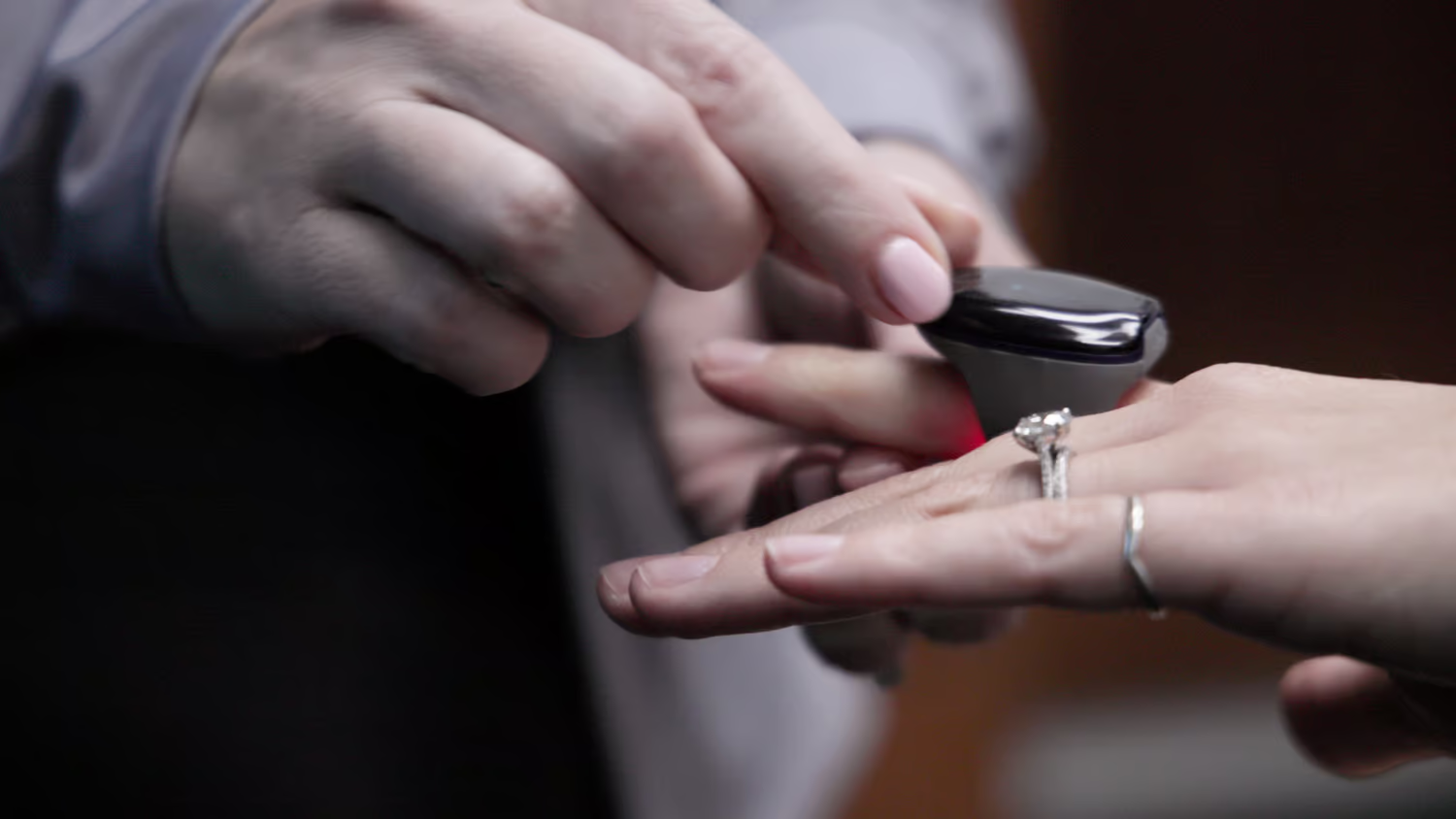

Small ring sensor for home sleep testing being placed on a patient's finger
Your family's dental home

Home Sleep Testing in Peoria

Small ring sensor for home sleep testing being placed on a patient's finger
The short answer
Reviewed by our
Peoria
doctors.
Dr. Michelle Horst, dentist at Associates in Dentistry in Peoria

Sleep problems can have more than one cause. If snoring, disrupted sleep or possible breathing pauses have raised concerns, home sleep testing can help gather information about what happens while you sleep. At Associates in Dentistry in Peoria, SleepImage testing offers a way to collect that information in your own bed.

01

Sleep Testing From the Comfort of Home

Traditional sleep studies usually mean a night in a lab, hooked up to equipment in an unfamiliar room. Home sleep testing is a more practical way to evaluate possible sleep-disordered breathing.

SleepImage uses a small ring sensor to record oxygen levels, heart rate, movement and sleep patterns overnight. You wear it at home, in your own bed.

A board-certified sleep physician reviews the report and makes the formal diagnosis. For our dental team, the same information helps guide decisions about airway-focused care.

Home sleep testing is part of General Dentistry in Peoria. Testing and follow-up happen at our Peoria office with Dr. Michelle Horst.


02

How It Works

  1. Wear the Sensor While You Sleep. We show you how to put on the ring before you leave. That night, go to bed at your usual time and wear it while you sleep. If you get up during the night, it keeps recording.
  2. Have the Results Reviewed. The data becomes a report that a board-certified sleep physician reviews to determine whether a sleep-related breathing disorder is present.
  3. Discuss What Comes Next. We go through the report with you at our Peoria office in plain language. If the results point to sleep apnea, we talk through your options, including oral appliance therapy as an alternative to CPAP.

Restless nights are common during testing. You don't need to sleep perfectly for the test to be useful.

03

Who Might Consider Home Sleep Testing?

Home sleep testing may be worth discussing if you snore, have been told your breathing pauses during sleep, or have concerns about the quality of your sleep. These signs don't confirm sleep apnea on their own, but they can be reasons to seek an evaluation.

Snoring alone, without daytime tiredness or noticed pauses, often isn't sleep apnea. A stuffy nose, sleeping on your back or alcohol late in the evening can all cause it.

Home testing also isn't the right first step for everyone. An in-lab study may be a better fit if you:

  • Have serious heart or lung disease, or use oxygen at night
  • Have a neuromuscular condition that affects breathing
  • Have symptoms that point to another sleep disorder, such as insomnia, restless legs or falling asleep suddenly during the day

If you have concerns about your sleep or breathing, talk with your healthcare provider or our dental team about whether testing is appropriate.

Ready to Find Out What's Happening at Night?
04

What Jaw Pain and Worn Teeth Can Tell Us

Most people come in for the tooth, not the sleep. A cracked molar. A night guard that keeps wearing through. A tight jaw and a dull headache most mornings.

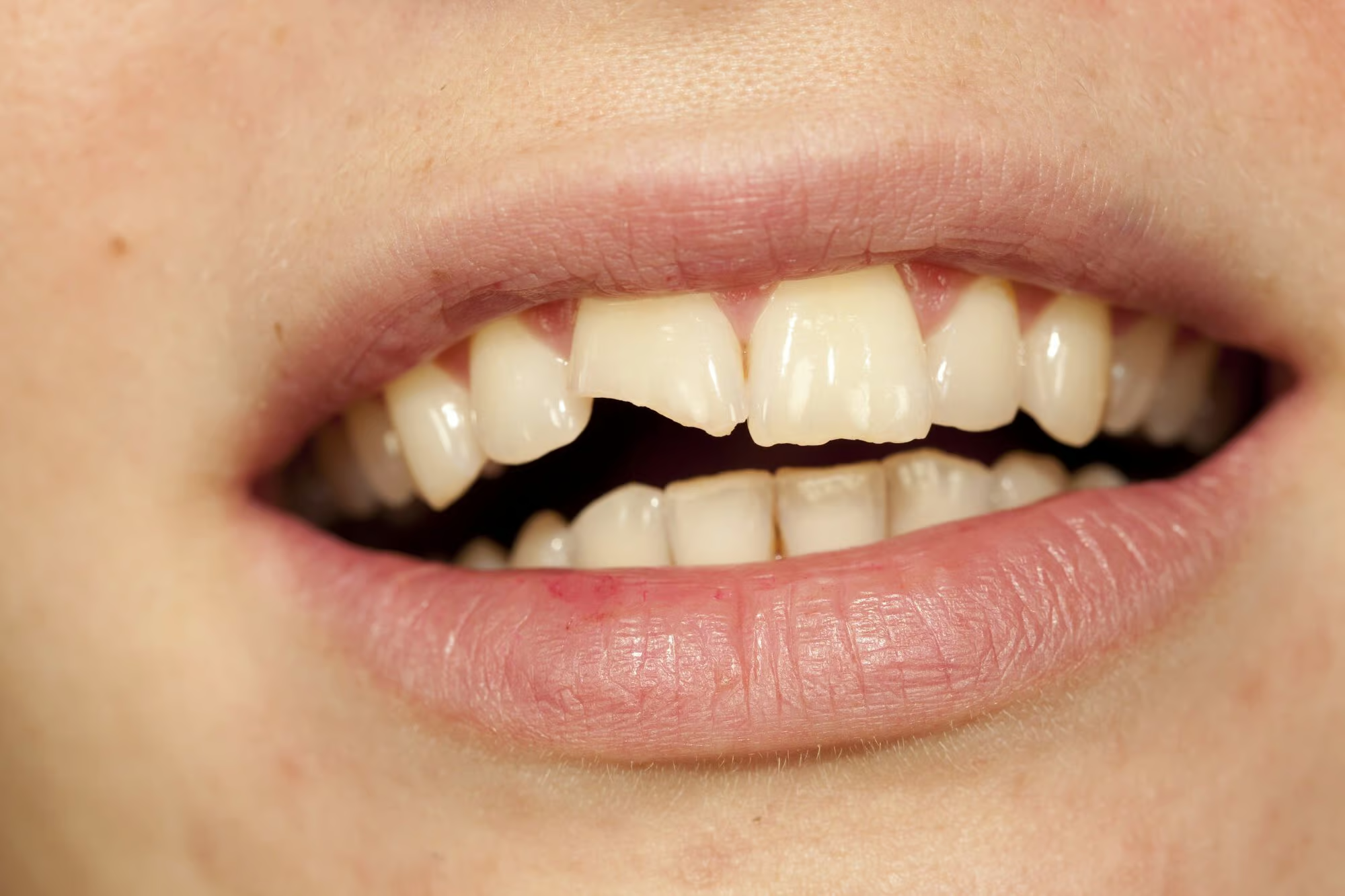
At exams, we look for a pattern: worn edges on the front teeth, scalloped ridges along the sides of the tongue, small bony bumps inside the lower jaw, and gum recession that doesn't match how someone brushes. None of these confirm a sleep problem on their own. Together, they're worth a closer look.

When the airway narrows during sleep, the jaw muscles can work to hold it open, often without waking you. That effort can show up as morning headaches and worn teeth.

A night guard protects enamel, which matters. It doesn't tell us why the clenching started. Home sleep testing gives us data instead of a guess, so the jaw and the airway become one plan instead of two separate problems.

If you wake up more tired than when you went to bed, mention it at your next exam, even if you came in for a filling.

05

Referrals, Insurance and What to Ask

You usually don't need a referral to start. We can screen you at a regular visit, talk through your symptoms and set up testing from there. Some insurance plans want a physician order on file before testing, so it's worth checking with your carrier.

Sleep testing typically bills to medical insurance, not dental. That means a separate plan and a separate deductible. We're fee-for-service and not in-network with any plan, but we accept and bill most insurance. Medicaid is the exception. CareCredit and interest-free payment plans of up to six months are available.

Questions worth asking any provider before you test:

  • Who reads my results, and are they a board-certified sleep physician?
  • Does this bill to medical or dental insurance, and can you verify my benefits first?
  • What happens if the test comes back normal but I still feel exhausted?
  • If I'm diagnosed, what treatment options do you offer in-house?
  • How long from test night to reviewing the results together?

A test you never review is just a night with a ring on your finger.

FAQ

Answers to the most common questions.

Something else on your mind?
Call us at (309) 690-4500.

What is SleepImage testing?

SleepImage is a home-based sleep testing system that uses a sensor ring to record signals such as oxygen levels, heart rate, movement and sleep patterns while you sleep.

Can a home sleep test diagnose sleep apnea?

The test collects information that helps evaluate possible sleep-disordered breathing. A board-certified sleep physician reviews the report and makes the formal diagnosis.

Do I have to sleep in a lab?

SleepImage testing is performed at home, so you can collect the data while sleeping in your own bed. Whether home testing is suitable for you depends on your circumstances and the clinical evaluation.

What happens after the test?

The results are reviewed by a board-certified sleep physician. The findings can help determine next steps and inform discussions about treatment options.

Does snoring mean I have sleep apnea?

Not necessarily. Snoring can have several causes. If you snore regularly or someone has noticed pauses in your breathing during sleep, discuss those symptoms with a healthcare professional.

Will my insurance cover a home sleep test?

Sleep testing usually bills to medical insurance, not dental. We're fee-for-service and not in-network with any plan, but we accept and bill most insurance, except Medicaid. Some plans want a physician order first, so check with your carrier before you schedule. CareCredit and interest-free payment plans of up to six months are available.

Request an appointment

Call us at (309) 690-4500

Tell Us About Yourself

Are you new to Associates in Dentistry?

Preferred Day and Time (optional)
Thank you! Your submission has been received!

That didn't go through. Please try again, or call your office.