.svg)
Tooth pain doesn't wait for a convenient morning. It wakes you up at 2 a.m., or it shows up right before a workday you can't miss. Emergency Dental Service in Peoria exists for exactly those moments, and that's what this page walks you through.
At Associates in Dentistry - Peoria, our emergency care covers four things: pain treatment, tooth extraction, root canal treatment, and broken tooth repair. They sound like four separate problems. They're really one decision with a few different endings. Once we see the tooth and take images, we can tell you how much healthy structure and root are left. That's what determines whether we save it or remove it.
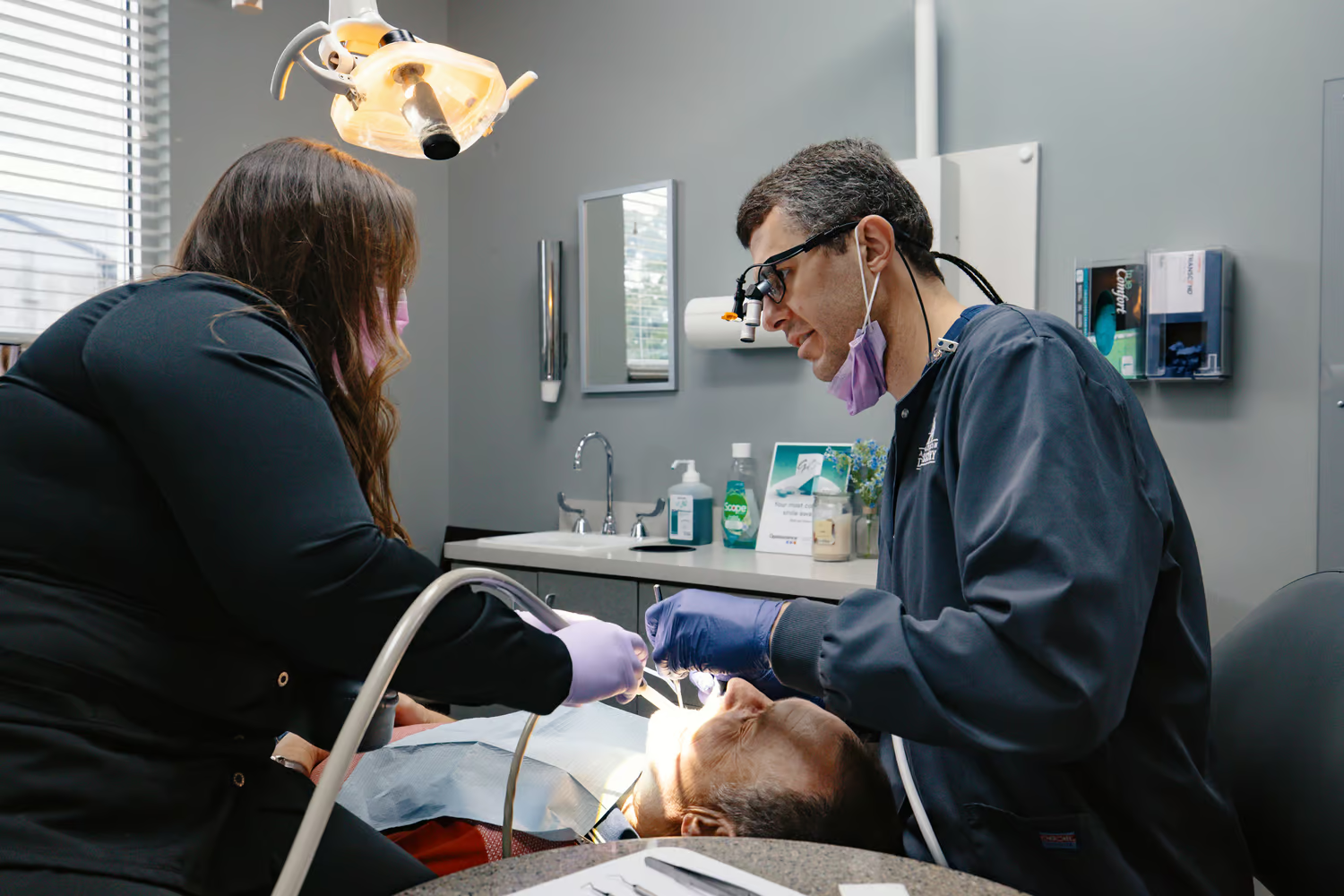
This office is the practice's flagship location, with the fullest range of services offered, including in-house root canals and oral surgery. So in most cases you're not getting sent somewhere else to finish the job. Dr. Michelle Horst, Dr. Arian Rrushaj, and Dr. Jonathan Gifford see patients here.
If you're not sure which of these you need, that's normal. Start with pain treatment. We'll figure out the rest together.
Emergency Dentistry at Associates in Dentistry
Most dental emergencies come down to one question: can this tooth be saved, or does it need to come out? A same-day exam answers that question quickly, and everything else follows from there. Call our Peoria office and describe what you're feeling, and we'll get you in.
Emergency Treatments We Offer
Emergency Dental Pain Treatment: Your First Stop
You've got throbbing pain on one side of your mouth. Nothing looks broken. You have no idea what's causing it. This is the visit for you.
Emergency dental pain treatment is the appointment where we find out what's wrong. It's the first visit that identifies the problem. A root canal or an extraction is one of the possible treatments that follows once we know the cause.
Here's roughly how a same-day emergency dental pain treatment visit goes:
- You tell us what hurts, when it started, and what makes it worse
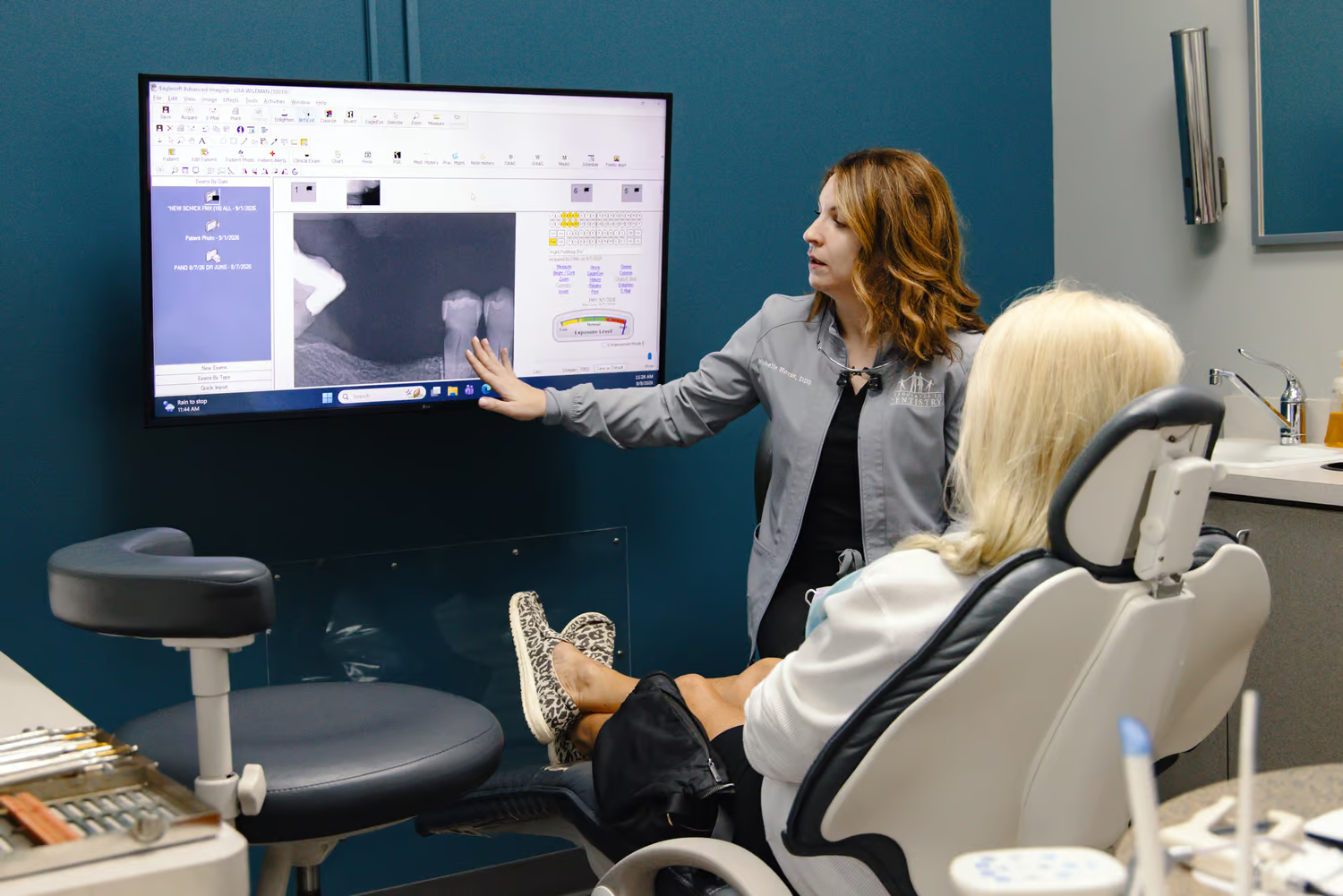
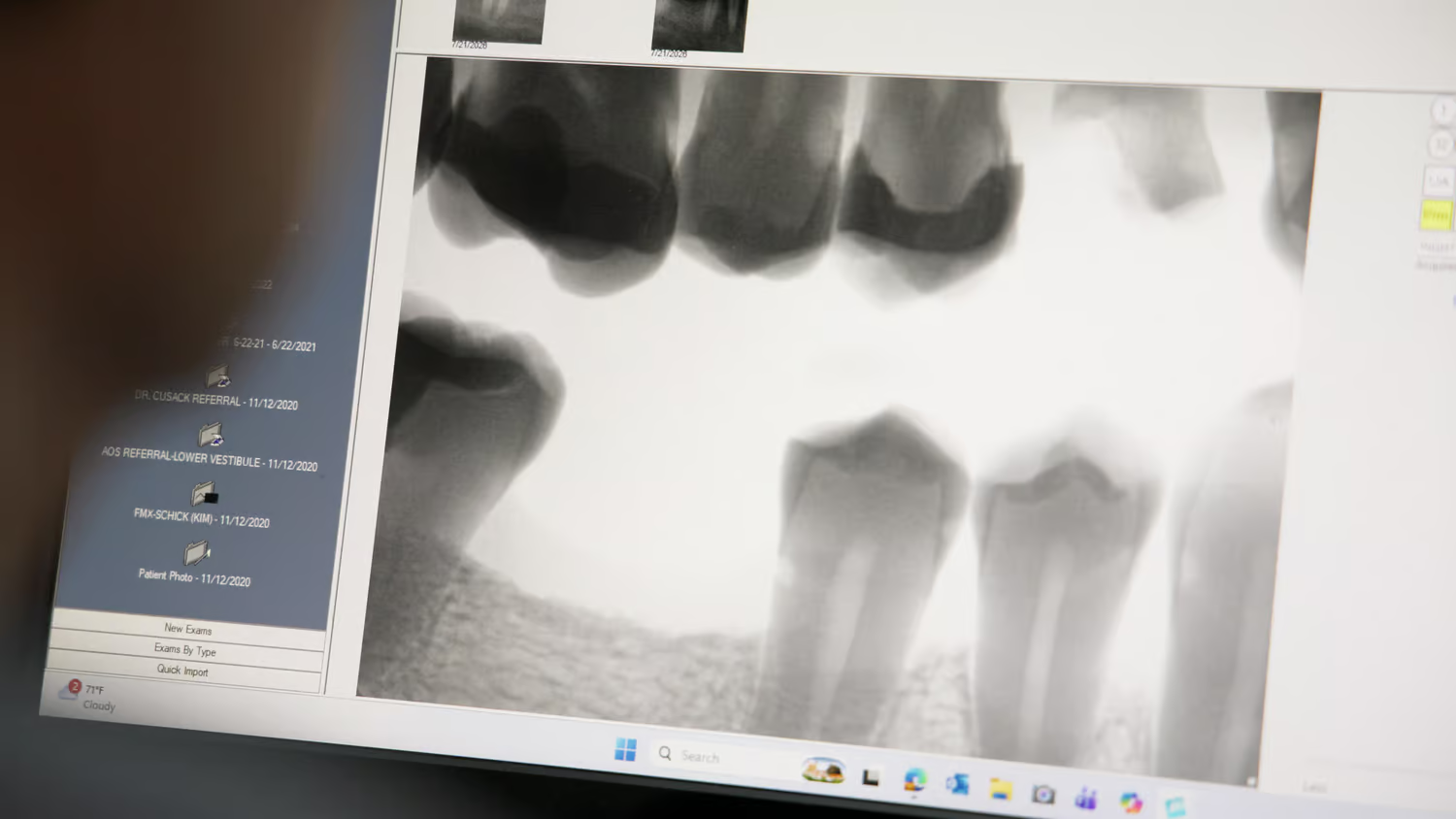
- We examine the area and take digital images of the tooth and root
- We get the pain under control
- We explain what we found in plain language
- We lay out your options and what each one involves
One thing worth clearing up: a hospital emergency room usually can't treat the tooth itself. They can manage pain and infection, but the underlying problem is still sitting there when you leave. A dental office is where the tooth gets handled.
This is the step people put off the longest, and it's often the one that costs them the most. Pain that goes away on its own can mean the nerve died, not that the problem did.
Emergency Dental Pain Treatment in Peoria
Emergency Tooth Extraction When a Tooth Can't Be Repaired
Sometimes a tooth is too far gone. Deep decay, a fracture below the gum line, or an infection that's destroyed too much of the root can all take a tooth past the point of repair. Emergency tooth extraction removes it.
This is the clearest contrast on the page. Extraction removes the tooth for good. Root canal treatment is the alternative when enough healthy tooth and root remain to save it. Same problem, two different answers, and the tooth itself decides which one applies.
When a tooth does need to come out, we don't make you book a second appointment to do it. We can assess and remove it the same day. This office handles oral surgery and surgical extractions in-house, so you're not driving across town with a swollen jaw.
Removing an infected tooth does two things right away. It stops the pain at the source. It also keeps the infection from spreading into nearby teeth, gum tissue, and bone.
Before you leave, we talk about what comes next. Losing a tooth changes how you bite and how the teeth around it shift over time. That conversation belongs in a calmer appointment, not while you're still numb, but we'll make sure you know your options.
Emergency Tooth Extraction in Peoria
Emergency Root Canal Treatment to Save the Tooth
A lot of people assume that a badly infected tooth automatically has to be pulled. That's a common misconception, and it's often wrong.
An emergency root canal treats infection inside the tooth. The infected nerve tissue is removed, the inside is cleaned out, and the tooth is sealed. The pain stops, and you keep your natural tooth. Root canal treatment saves the tooth. Extraction is the fallback only when the tooth is too damaged to restore.
Signs that a root canal might be on the table:
- Deep, constant pain that doesn't ease up
- Pain that lingers long after something hot or cold
- Swelling in the gum near one specific tooth
- A tooth that's darkened compared to the others
- A tooth that hurts sharply when you bite down
None of these guarantee a root canal. They're just the symptoms that point us in that direction when we're looking at the images.
We do root canals in-house at this office. That matters in an emergency, because the whole point is getting the infection handled today, not getting a referral and a phone number.
Emergency Root Canal in Peoria
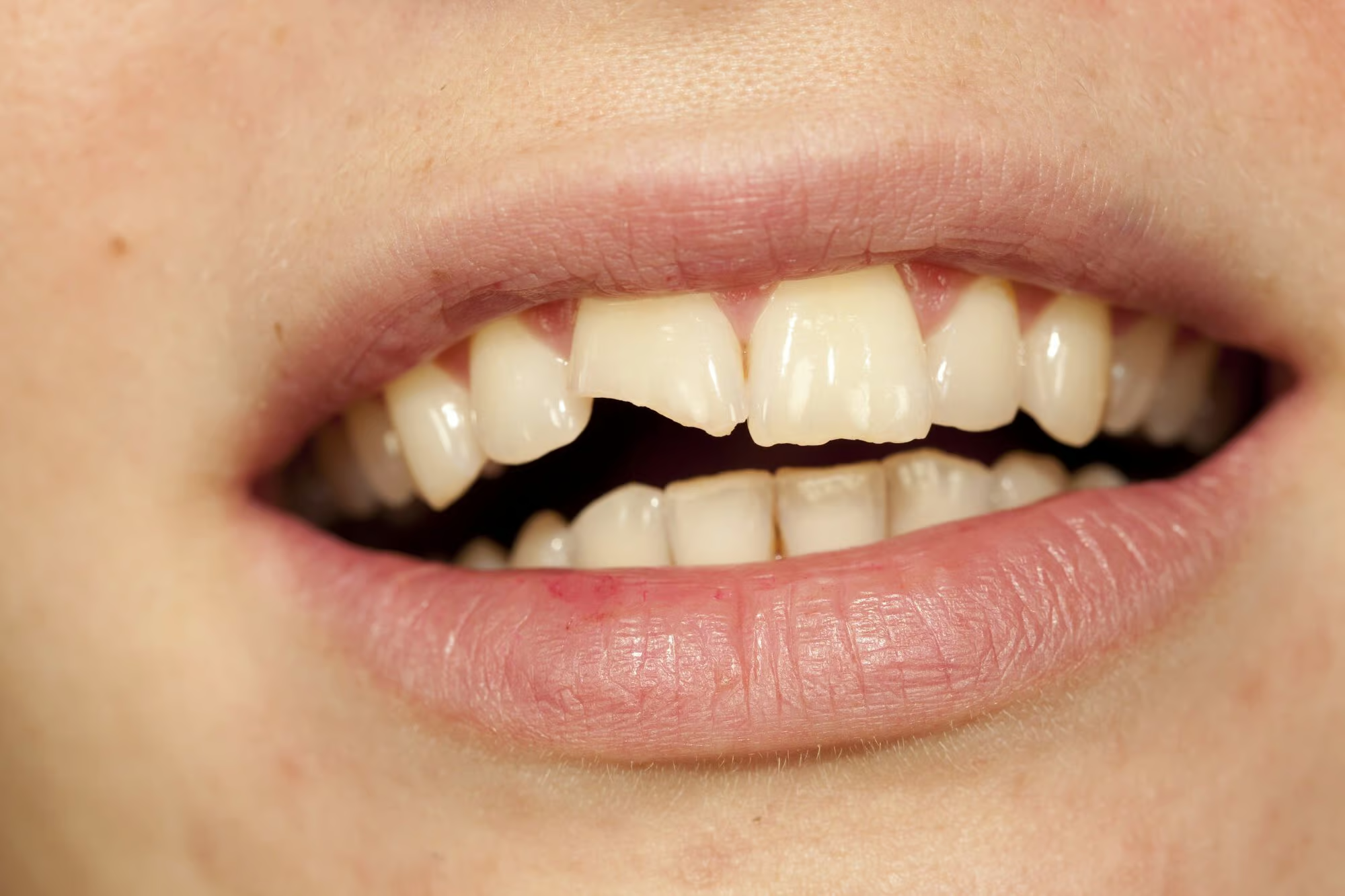
Broken Tooth Repair for Chips, Cracks, and Fractures
A hard elbow during a pickup game. A popcorn kernel you didn't see coming. A fall on an icy Peoria driveway in February. Broken teeth usually have a story, and you know exactly when it happened.
That's the difference between this service and the first one on this page. Broken tooth repair addresses visible damage to the tooth. Pain treatment addresses pain with no obvious cause, like infection or decay underneath.
Repair options depend on how much of the tooth is gone. A small chip may just need bonding. A bigger break often needs a crown, and we mill same-day crowns right here in this office, so you can walk out with the tooth covered instead of wearing a temporary for weeks.
Here's the part people get wrong: a crack that doesn't hurt is still worth looking at. Cracks spread. A tooth that's only chipped today can fracture down toward the root later, and at that point you're choosing between a root canal and an extraction instead of a quick repair.
Come in while it's still small. That's the whole advice.
Should I go to the ER or an emergency dentist for a broken or infected tooth?
How do I know if I need an extraction or a root canal?
Can I get emergency dental care in Peoria the same day I call?
What should I do about a tooth I chipped or broke on ice this winter?
My tooth pain went away on its own. Do I still need to see someone?
How can I tell if I need pain treatment or a root canal first?
Every service below is offered at our Peoria office, by the same team.