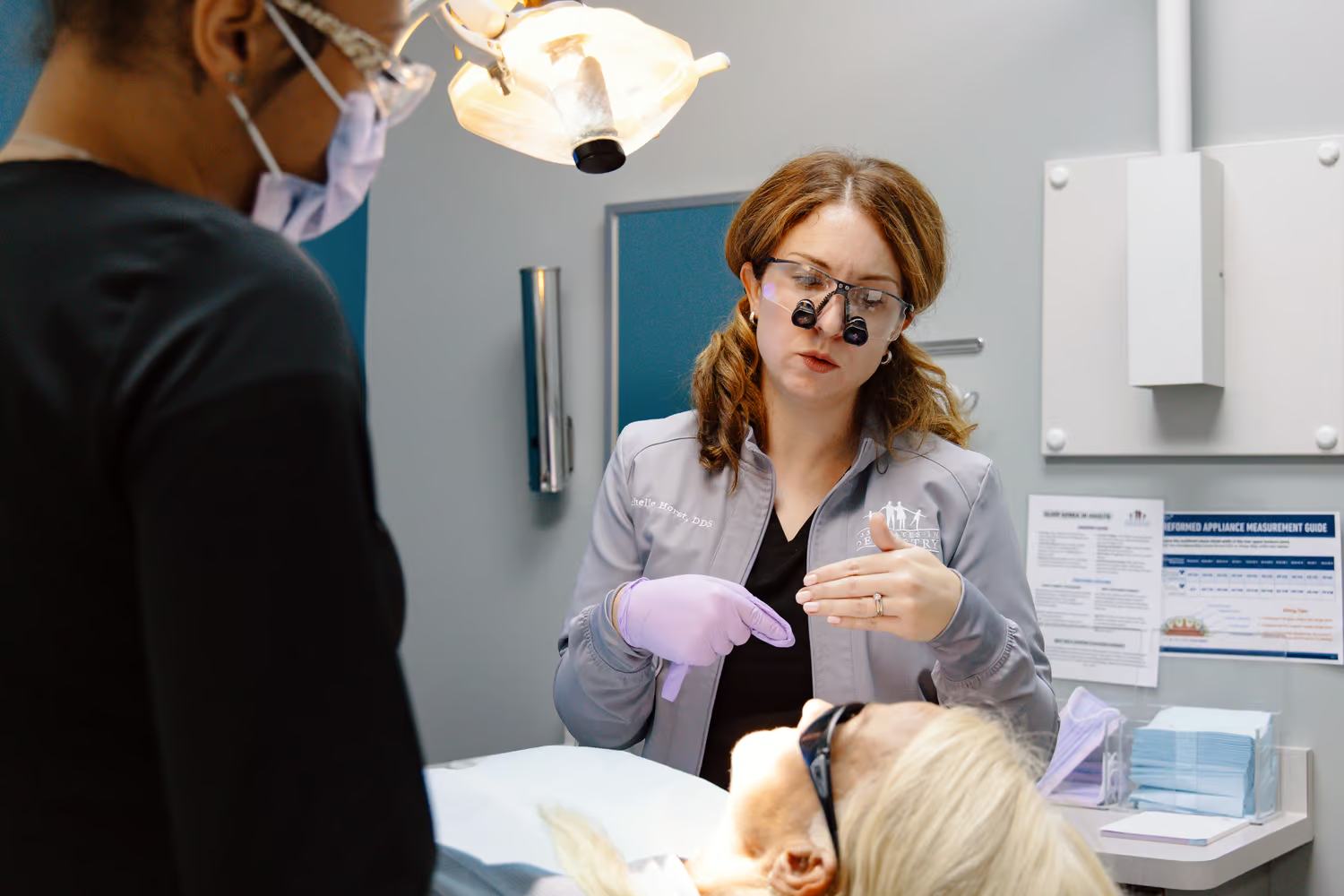
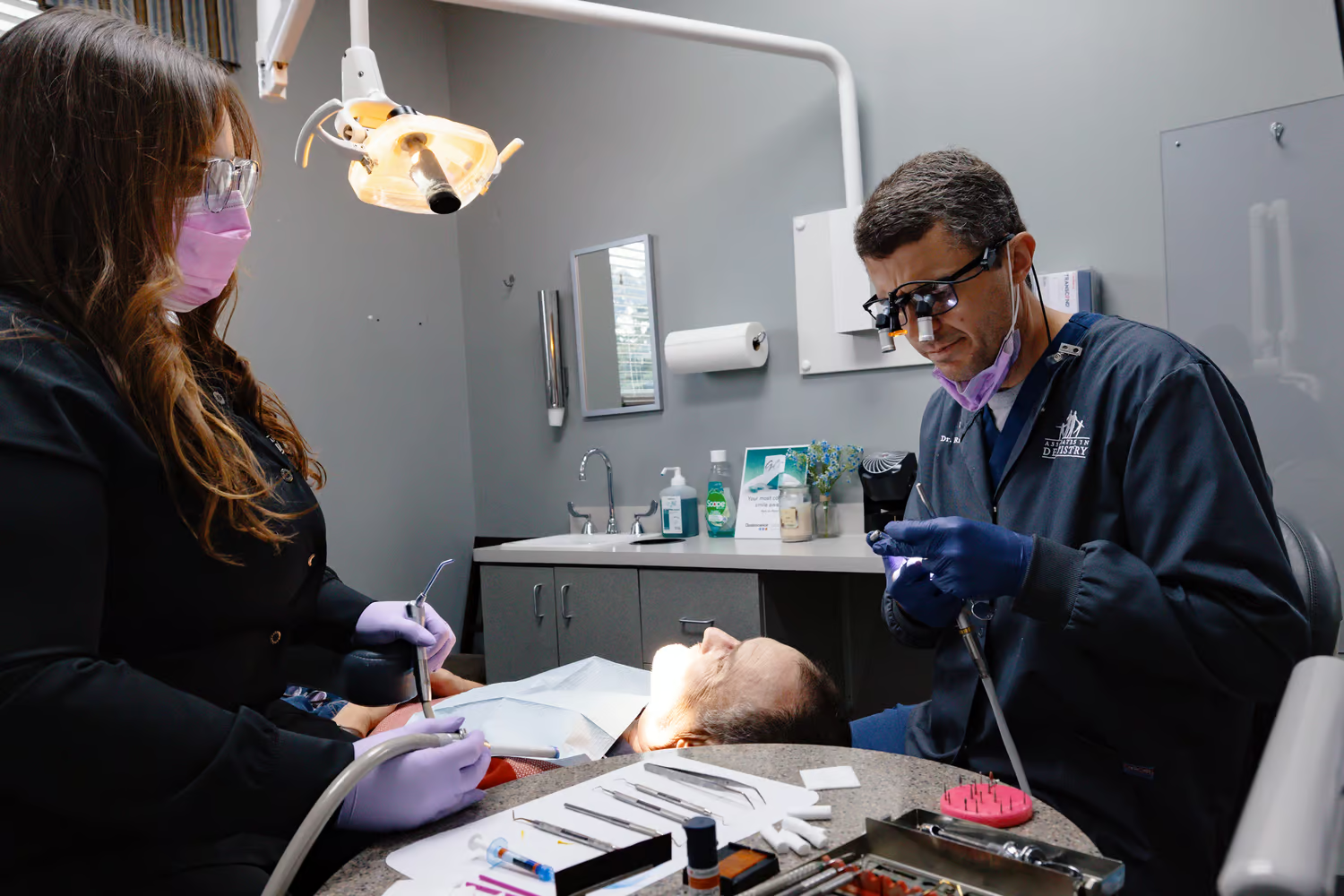



Dentist wearing loupes and an assistant treating a patient in a dental chair
Your family's dental home

Oral Surgery in Peoria: What to Expect Before You Book

Dentist wearing loupes and an assistant treating a patient in a dental chair
The short answer
Reviewed by our
Peoria
doctors.
Dr. Michelle Horst, dentist at Associates in Dentistry in Peoria
Dr. Arian Rrushaj, dentist at Associates in Dentistry in Peoria
Dr. Jonathan Gifford, dentist at Associates in Dentistry in Peoria and Washington

Most people who need oral surgery notice one of a few things first: swelling that won't go down, a tooth that hurts when nothing touches it, or pressure at the back of the jaw. Pain by itself doesn't decide it. An x-ray and a look inside your mouth do.

01

Signs You May Need Oral Surgery

Here's the honest version. You can't tell from the outside whether a tooth can be saved or has to come out. We can't either, not until we see the roots and the bone around them.

But there are signs that make us reach for the x-ray sooner. A back molar that's cracked below the gum line. A wisdom tooth pushing sideways into the tooth next to it. Gums that swell around the same spot every few months, calm down on antibiotics, then flare right back up. That pattern almost always means something underneath isn't going to heal on its own.

  • Swelling in your cheek or under your jaw that keeps growing, especially with a fever
  • Pain at the back corners of your mouth, often worse when you chew or open wide
  • A tooth that's broken at or below the gum line
  • A loose adult tooth with no injury to explain it
  • A sore or bump on your gums that hasn't healed in two weeks
  • Numbness or tingling in your lip or chin

That last one gets missed a lot. Numbness isn't normal, and it's worth a same-week look.

We see this every single week at our Peoria office: someone comes in for a cleaning, mentions their jaw's been aching for a month, and the x-ray shows an impacted wisdom tooth they had no idea was there. No throbbing. No emergency. Just quiet pressure they'd learned to live with. Our Peoria location runs a second-opinion review on x-rays, so a questionable tooth gets more than one set of eyes before anyone recommends surgery.

Not sure if what you're feeling counts? That's fair, and it's common. Bring it up at your next visit, we'd rather look and tell you it's nothing.

02

When Oral Surgery Can Wait (and When It Can't)

Here's the part most people don't hear: plenty of teeth we look at don't need to come out. A wisdom tooth that came in straight, has room, and you can brush? Leave it alone. We'll watch it at your cleanings. A tooth with a big filling that aches on cold for a few seconds and then quits usually isn't a surgery problem either. Sometimes it's a cracked filling. Sometimes it's a gum recession spot. We see this every single week.

Waiting is also fine when you're stable and life is busy. A root tip that's been quiet for two years isn't going to change next month. If you're mid-semester, mid-harvest, or heading out of town, we can plan around it.

But some things don't wait, and I'd rather you call than talk yourself out of it. Swelling is the big one. If your cheek or jaw is puffy and it's growing by the hour, that's an infection moving, not a toothache.

  • Swelling that spreads toward your eye, your neck, or under your jaw
  • Trouble swallowing, breathing, or opening your mouth more than a finger or two
  • Fever along with mouth pain
  • A tooth knocked loose or out from a fall or a hit
  • Bleeding after an extraction that hasn't slowed after firm pressure for 30 minutes
  • Pain that wakes you up at night and doesn't respond to over-the-counter medicine

Any of those, same day. Not Monday.

The gray zone is a broken tooth that isn't hurting much. People sit on those for months. The risk isn't pain, it's that the break runs deeper under the gum and takes a savable tooth off the table. Come in, let us take an x-ray, and you'll know. Sometimes the answer is a crown and you walk out with the tooth still in your head.

03

In-House Oral Surgery at the Peoria Office

Most people picture oral surgery happening somewhere else. A different building, a different team, a stack of new paperwork. That's not how it works here.

Our Peoria office is the largest one we have. Eleven operatories right now, and we're expanding to fifteen. Three doctors practice here: Dr. Horst, Dr. Rrushaj, and Dr. Gifford. So the person who looked at your tooth last week is often the same person handling the extraction. You already know their voice. That matters more than folks expect on a surgery day.

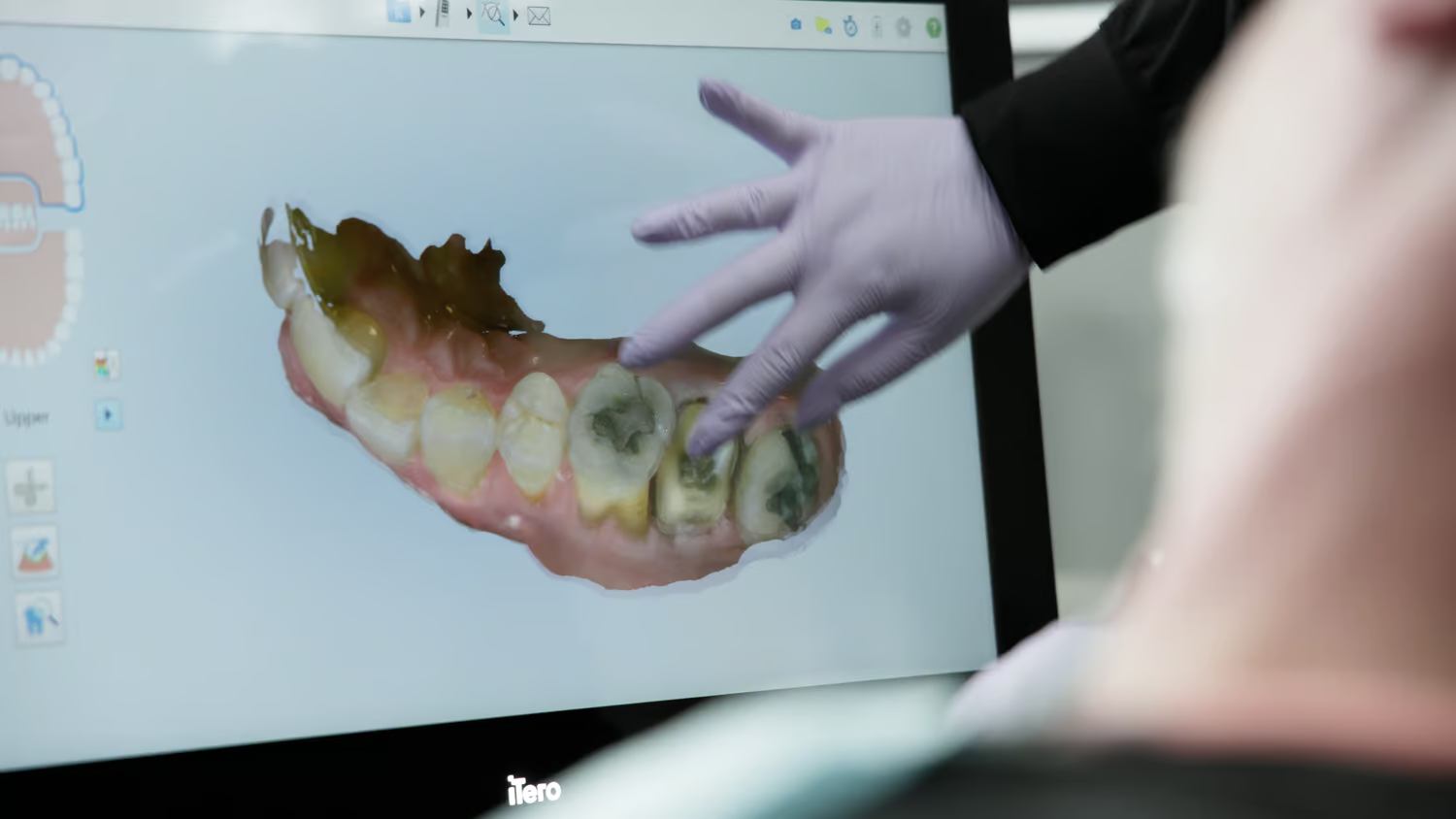
Before anything gets scheduled, we look hard at the imaging. Every x-ray here goes through a second-opinion review process. Two sets of eyes, not one. And we use an iTero Lumina scanner for digital impressions, so there's no tray of goop sitting in your mouth while you try not to gag.

Here's what the Peoria office can do without sending you across town:

  • Surgical extractions, including teeth that are broken at the gumline or partially buried
  • CO2 and diode laser work, which helps us be more precise with soft tissue
  • In-house implant restoration, so the tooth that goes back in is planned by the same team that took one out
  • Same-day crowns milled right here, useful when a neighboring tooth needs help too
  • Emergency tooth extraction when a patient walks in hurting and can't wait

Nine times out of ten, the thing patients tell us afterward isn't about the procedure at all. It's that nobody handed them off. Same chair, same front desk, same people who'll see them at their cleaning six months later.

Not every case belongs here. Some do need a specialist, and we'll tell you straight when that's true. But a lot of what gets referred out in this town doesn't have to be.

Wondering if that tooth needs to come out?
04

What to Expect Before, During, and After Your Procedure

Most of the fear people carry in here isn't about pain. It's about not knowing what happens next. So let's take the mystery out of it.

Before anything gets scheduled, we image the tooth and look at what's around it. Nerve position, sinus floor, bone density, root shape. Our Peoria office also runs a second-opinion review on x-rays, so more than one set of eyes reads your film before a plan is set. That's the part that turns a surprise into a plan.

  • We review your health history and every medication, including blood thinners, bisphosphonates, and anything for blood pressure or diabetes.
  • You get clear instructions the day before. Eat or don't eat, take this, skip that, bring a driver if sedation is part of the plan.
  • On the day, we numb the area fully and check it before we start. You should feel pressure and movement, not sharp pain.
  • The extraction or surgical step itself is usually shorter than people expect. Often 20 to 40 minutes for a single tooth.
  • We place gauze, go over bleeding control, and hand you written aftercare plus a number to call.

Day one you rest. Ice on, ice off, twenty minutes at a time. Soft foods, no straws, no smoking, no spitting hard. Swelling usually peaks around day two or three and then starts backing off, that timing surprises people who thought they were getting worse.

Most folks with a routine single extraction are back to normal activity in two to three days. Surgical or impacted cases run longer, closer to a week of taking it easy.

And call us if something feels off. Deep throbbing pain that shows up on day three or four, bleeding that won't settle, or a fever. Those are worth a phone call, not a wait-and-see. We'd much rather look at it early than hear about it a week later.

05

How Oral Surgery Costs and Insurance Typically Work

Money is the question most people are too polite to ask first. So let's just deal with it. Oral surgery isn't priced like a filling. It's priced by what the tooth is doing, how much work it takes to get it out, and what has to happen afterward to keep the site healthy.

Here's what usually moves the number up or down:

  • Simple extraction versus surgical. A tooth that's fully erupted and loose comes out fast. One that's broken at the gumline or wrapped around bone takes longer.
  • Impaction level. Soft tissue, partial bony, and full bony impactions are billed as different procedures. Wisdom teeth are where this shows up most.
  • Imaging. A panoramic x-ray or 3D scan is often its own line item.
  • Sedation. Local anesthetic is standard. Anything beyond that is billed separately and usually by time.
  • Bone graft or membrane. If you're planning an implant later, a graft at the time of removal is common and adds cost up front.

Insurance is where people get tripped up. Most dental plans cover extractions at a percentage, often lower for surgical than simple. Many plans also have an annual maximum, and a couple of surgical teeth can eat it quickly. Some cases cross over to medical insurance instead, jaw trauma, cysts, certain pathology. That's worth asking about before the appointment, not after.

We're fee-for-service and not in-network with any plan, but we do accept and bill most insurance. Medicaid we can't bill. Ask any office for a written pre-treatment estimate with procedure codes on it. Then you can call your plan yourself and hear the number from them.

For the balance, CareCredit and 0% interest payment plans up to six months are available here. Nobody should be delaying a painful tooth because of a number nobody explained to them.

FAQ

Answers to the most common questions.

Something else on your mind?
Call us at (309) 690-4500.

How do I know if I need oral surgery or just a filling?

You usually can't tell on your own, and that's okay. Signs like swelling, a tooth that hurts with no touch, or pain at the back of your jaw are worth checking. An x-ray tells the real story, not the pain level. At our Peoria office, every x-ray gets a second-opinion review before anyone recommends surgery, so you're not getting one quick guess.

Can a broken tooth wait, or should I come in right away?

A broken tooth that isn't hurting much can still need quick attention. The risk isn't pain, it's that the break runs deeper under the gum than it looks. Waiting months can take a savable tooth off the table. Come in for an x-ray and you'll know fast. Sometimes it's just a crown, and you keep the tooth.

What symptoms mean I need to see someone the same day?

Swelling that spreads toward your eye, neck, or under your jaw needs same-day attention. So does trouble swallowing or opening your mouth, a fever with mouth pain, or bleeding that hasn't slowed after 30 minutes of firm pressure. Those aren't wait-and-see situations. That's infection moving or active injury, and it needs a same-day look, not a Monday appointment.

Will I be sent somewhere else for oral surgery in Peoria?

Most of the time, no. Our Peoria office is our largest location, with eleven operatories and three doctors on site, including surgical extractions and implant restoration done in-house. The person who looked at your tooth is often the same one handling your procedure. Some cases do need a specialist, and we'll tell you plainly when that's true.

Is numbness in my lip or chin something to worry about?

Yes, numbness or tingling in your lip or chin isn't normal and deserves a same-week look. This symptom gets missed often because it doesn't come with obvious pain. We see patients weekly who mention a mild ache and end up with an x-ray showing an impacted wisdom tooth they never knew was there.

What happens if a wisdom tooth comes in straight and doesn't hurt?

It probably doesn't need to come out. A straight wisdom tooth with room to grow and one you can brush easily is often fine left alone. We just watch it at your regular cleanings. Surgery isn't automatic just because a wisdom tooth exists. It depends on position, room, and whether it's causing problems.

Request an appointment

Call us at (309) 690-4500

Tell Us About Yourself

Are you new to Associates in Dentistry?

Preferred Day and Time (optional)
Thank you! Your submission has been received!

That didn't go through. Please try again, or call your office.