



Bleeding Gums and Bone Loss Signal It's Time for a Deeper Look
Pink in the sink. That's how most people describe it when they finally sit down in our chair.
And almost everyone says the same thing next: they figured they were brushing too hard. We hear it every single week. But healthy gums don't bleed when you clean them. Skin on your arm doesn't bleed when you wash it, and gum tissue works the same way. Bleeding means bacteria have built up along the gumline and your body is fighting back. That fight is inflammation, and inflammation is the first stage.
The part that worries us more is what you can't see. Once that bacteria works its way under the gum, it starts breaking down the bone around the tooth root. You won't feel it happening. There's usually no pain until things are fairly far along, which is exactly why gum disease gets missed for years. By the time a tooth feels loose, a lot of support is already gone.
So what else should you be watching for? Gums that look puffy or dark red instead of firm and pink. Breath that comes back an hour after brushing. Teeth that suddenly look longer, or gaps that weren't there before. A partial denture that used to fit and now rocks a little. Any of those are worth a look.
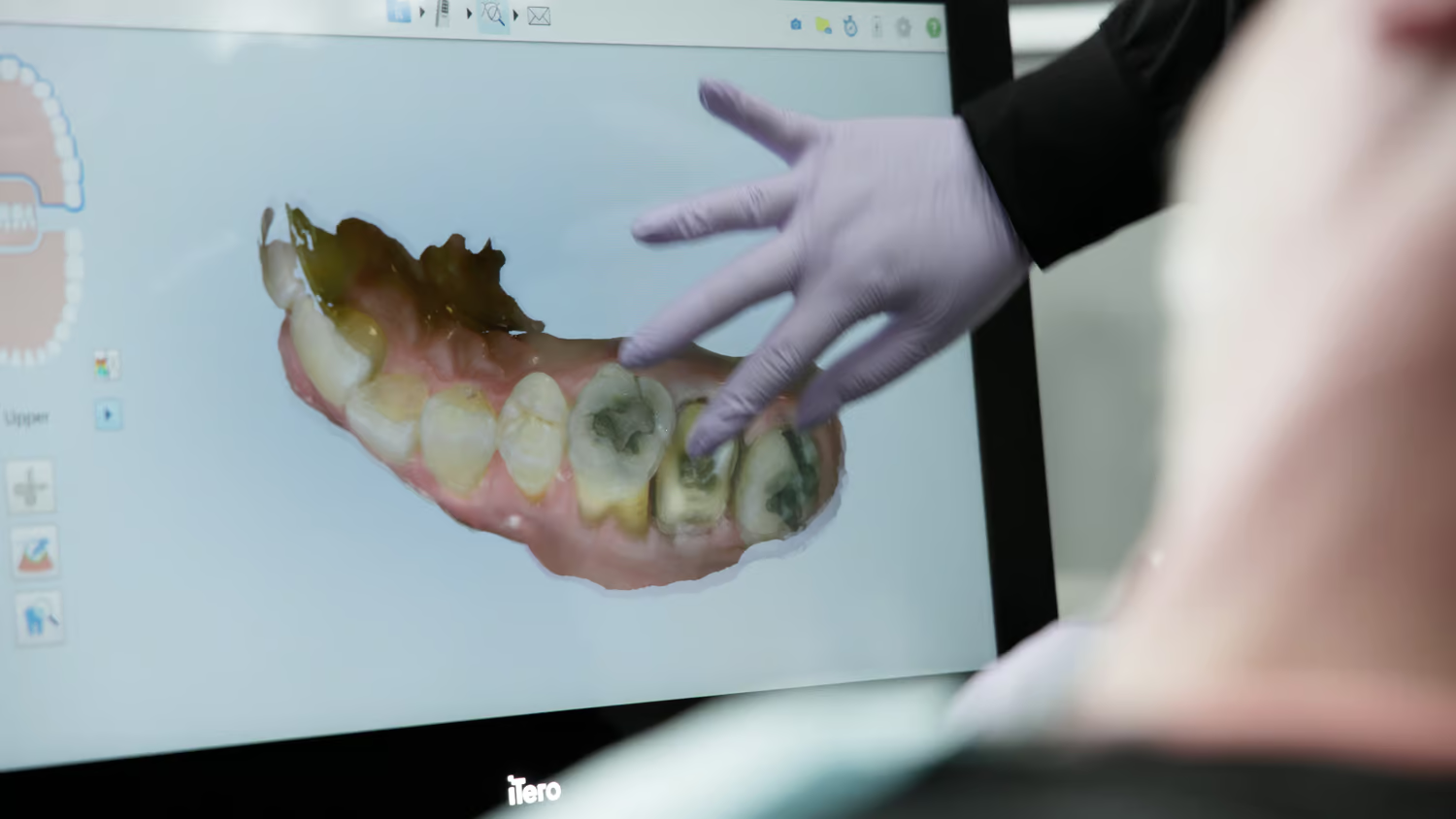
Here's the honest part - none of that tells us how deep the problem goes. We measure the space between your gum and tooth at six points around every tooth, then compare those numbers against your x-rays. Three millimeters is fine. Five or six with bleeding is a different conversation. That's the difference between a cleaning and periodontal treatment, and it's a number, not a guess.