
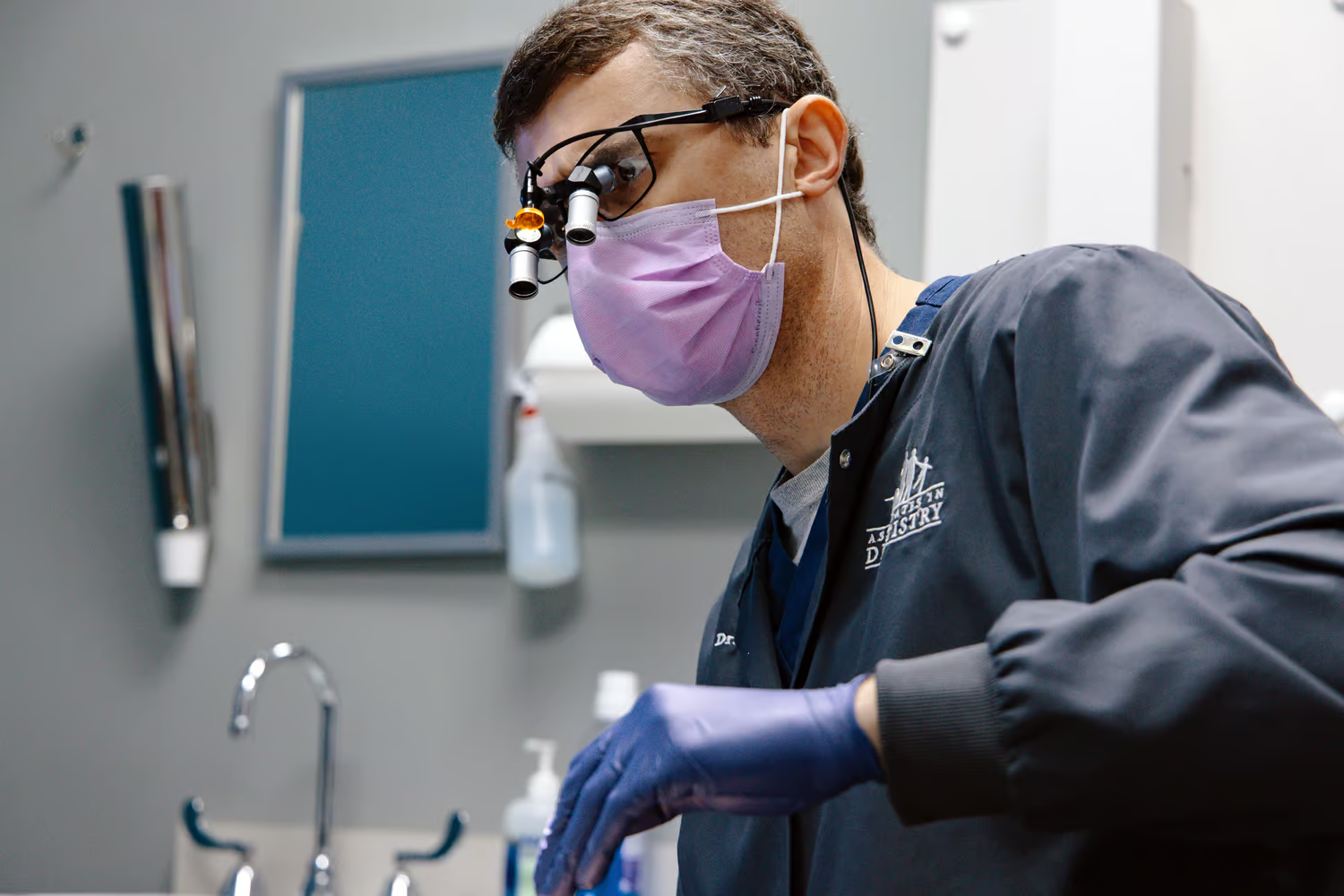



Dentist in magnifying loupes and a mask preparing to treat a patient
Your family's dental home

Severe Tooth Pain in Peoria? Same-Day Root Canals, Done In-House

Dentist in magnifying loupes and a mask preparing to treat a patient
The short answer
Reviewed by our
Peoria
doctors.
Dr. Michelle Horst, dentist at Associates in Dentistry in Peoria
Dr. Arian Rrushaj, dentist at Associates in Dentistry in Peoria
Dr. Jonathan Gifford, dentist at Associates in Dentistry in Peoria and Washington

Tooth pain that lingers after cold, wakes you at night, or comes with swelling usually means the nerve inside the tooth is infected or dying. That kind of pain doesn't settle down on its own. Call the same day rather than waiting to see if it passes.

01

Signs Your Tooth Pain Needs Same-Day Care

Most people already know. They just want someone to confirm it.

Here's the simplest test we give patients over the phone. Sensitivity that spikes and fades in a couple seconds is usually a filling issue or exposed root. Pain that hangs around for 30 seconds, a minute, longer? That's the nerve. And a nerve that's inflamed past a certain point doesn't heal itself, no matter how much ibuprofen you throw at it.

  • Throbbing that keeps you up at night or wakes you when you lie flat
  • Pain that lingers long after hot coffee or ice water is gone
  • A tooth that hurts to bite on, or feels taller than the ones next to it
  • Swelling in the gum, cheek, or jaw, even a small bump near the root
  • A bad taste or drainage near one tooth
  • Pain that shifted from sharp to dull and then quit entirely

That last one catches people. The pain stops and they cancel the appointment. But a nerve going quiet often means it died, and the infection is still moving down into the bone. We see this every single week. Someone calls three weeks after the pain "went away" with a swollen face.

So what makes it urgent? Swelling. If your cheek is puffy or your gum has a raised spot, that's an infection with somewhere to go, and it needs to be handled that day. Fever or trouble opening your mouth means go now, not tomorrow.

Pain alone, without swelling, still deserves a same-day look - it's just less likely to turn into something bigger overnight.

02

Not Every Toothache Needs a Root Canal

Here's the part most people don't hear. A lot of tooth pain isn't nerve damage at all. We see patients every week who walk in convinced they need a root canal, and the x-ray says otherwise. Sometimes it's a cracked filling. Sometimes the tooth is just bruised from clenching. And sometimes the sore spot isn't even the tooth.

Pain that shows up and leaves quickly is usually a different story than pain that sits on you for hours.

  • Sensitivity to cold that fades in a few seconds, often exposed root surface or a worn spot, not a dying nerve.
  • Soreness after a long dental visit or a new filling, the tooth can stay tender for a couple weeks while it settles.
  • Aching in the back teeth and jaw in the morning, which points more toward grinding or a TMJ issue than infection.
  • Food packing between two teeth, causing sharp pressure pain that stops as soon as you floss it out.
  • Sinus pressure after a cold, upper back teeth sit right under the sinus and can ache when it's inflamed.

A woman came in last winter sure she had an abscess. Throbbing upper molar, three days of it. Turned out to be a sinus infection pressing on the roots. She saw her physician instead, and the tooth calmed down on its own.

So what points to a nerve problem? Pain that wakes you up. Heat that makes it worse. A tooth that stays lit up for ten minutes after you drink something cold. Swelling along the gum. A bump that looks like a pimple near the root. Those are the signs that the nerve is dying or already dead, and time starts to matter. If your pain is mild and coming and going, you're not in an emergency. Book a normal exam, let us look at it, and go from there. We'd rather tell you it's nothing than talk you into treatment you don't need.

03

What Happens During an Emergency Root Canal Visit

Most people picture something awful. The truth is a lot more boring than that, and boring is good when you're in pain.

You'll get numb first. That's the part that takes the longest, and we don't start until you tell us you're ready. An infected tooth can be stubborn to numb, so sometimes we add more anesthetic and wait a few extra minutes. We'd rather sit there with you than rush it.

  • We take an x-ray and look at the tooth and the bone around the root.
  • We numb the area and place a small rubber shield around the tooth to keep it clean and dry.
  • We make a small opening in the top of the tooth to reach the inflamed nerve tissue inside.
  • We clean out the canals, shape them, and rinse them to clear the infection.
  • We seal the canals with a rubber-like filling material.
  • We close the opening with a temporary or permanent filling, depending on the tooth.

Once the nerve is out, the throbbing stops. That's the whole point of the visit.

You'll likely feel sore for a few days afterward. Tender to bite on, a little bruised feeling. That's normal healing, not a sign something went wrong. Over-the-counter pain relievers usually handle it fine.

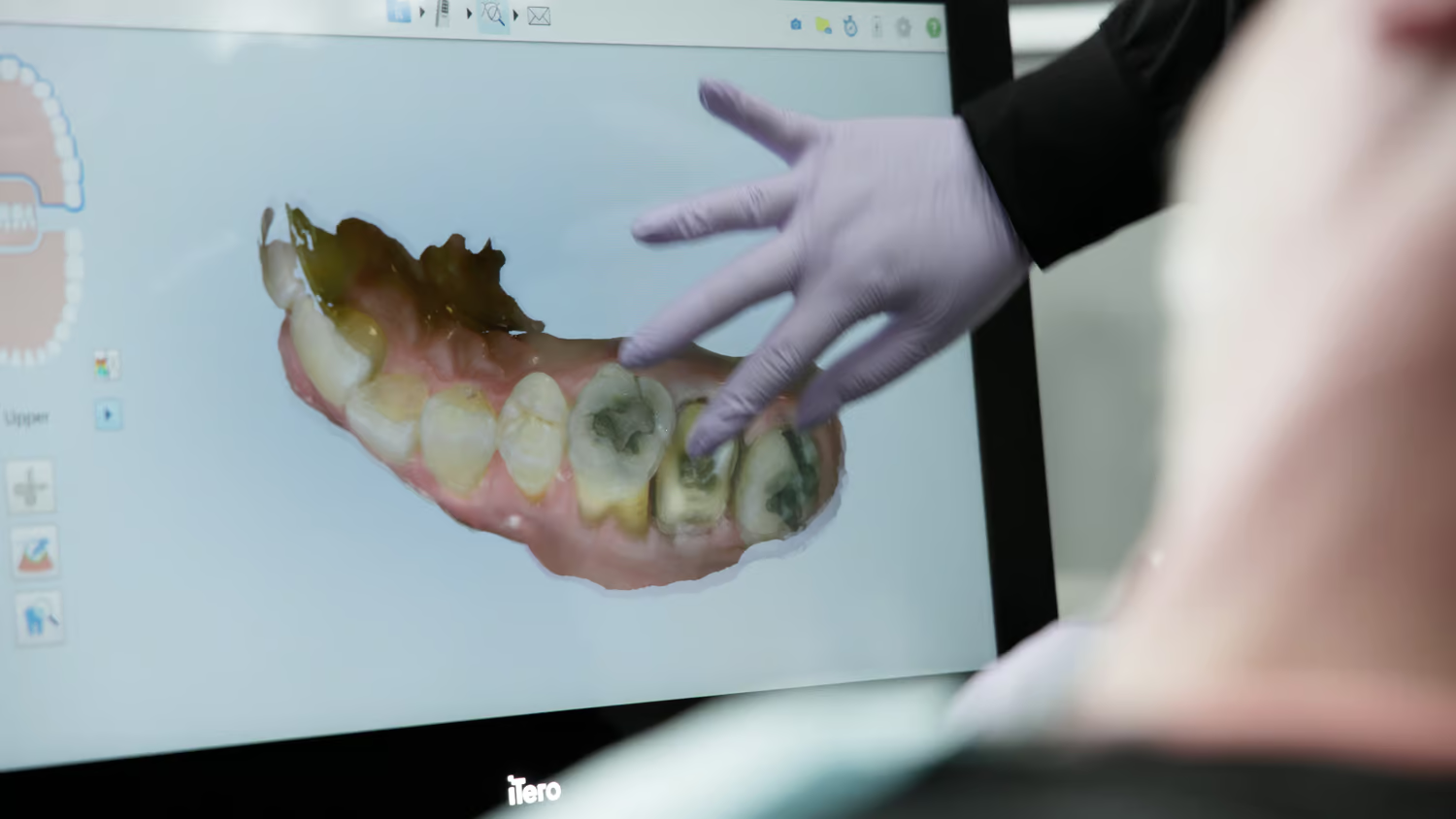
Then there's the crown question. A back tooth that's had a root canal is brittle, and it needs a crown to keep from cracking. At our Peoria office we mill same-day crowns in-house, so that second step doesn't always mean weeks in a temporary. Front teeth sometimes do fine with a filling instead. We'll tell you which camp your tooth falls in before you leave.

And if you've got questions partway through? Raise your hand. We stop.

Throbbing tooth that won't quit? Call us today.
04

How Payment and Insurance Work for Urgent Treatment

Let's talk about the part nobody wants to ask about on the phone. Money. When your tooth is throbbing at 7 a.m., the second thought after "make it stop" is usually "what's this going to cost me." Fair question. And you deserve a straight answer instead of a runaround.

Here's how root canal pricing works across dentistry in general. The fee isn't one flat number. It moves based on which tooth is involved and how much work that tooth needs.

  • Tooth position. Front teeth usually have one canal. Molars can have three or four, so they take longer and cost more.
  • Whether the tooth is being retreated. A tooth that had a root canal years ago and flared up again is more involved than a first-time case.
  • What the tooth needs afterward. Most back teeth need a crown to keep from cracking, and that's a separate fee from the root canal itself.
  • Whether you need anything urgent the same day, like an emergency tooth extraction instead, if the tooth can't be saved.

On the insurance side, be careful with the word "covered." Most dental plans do help with root canals, often at a set percentage, but they also carry a yearly maximum. A molar root canal plus a crown can eat a big chunk of that maximum in one visit.

We moved to a fee-for-service model in August 2024. What that means for you in plain terms: we accept and bill most insurance, but we aren't in-network with any plan. We're also not able to bill Medicaid. So ask us to walk through your estimate before we start anything, not after.

And if the timing is rough, we have options. CareCredit and 0% interest payment plans up to six months.

Peoria's median household income sits right around $59,410, and we know an unplanned dental bill lands hard here. Nobody should sit on an infected tooth for three weeks because they're scared of the number. Call and ask. We'll tell you.

05

Root Canal or Extraction: Getting the Right Diagnosis

Here's the question we hear most when someone's in pain: can this tooth be saved, or should it just come out? Nobody can answer that from a phone call. We need to see it.

So the first thing we do is figure out what's going on inside the tooth. We take an x-ray. We tap on it. We check how it responds to cold, and we look at the gum and bone around the root for signs of infection spreading. A tooth that hurts for three seconds after cold is a different problem than one that throbs for twenty minutes. That difference changes the treatment.

Nine times out of ten, the pain is coming from the nerve inside, and the tooth is worth keeping.

But not always. Sometimes the honest answer is that the tooth is too far gone. If the root is cracked down the middle, a root canal won't hold, the crack just keeps splitting. If decay has eaten below the gum line with nothing solid left to build on, there's no foundation for a crown. If the bone support is mostly gone from gum disease, saving the tooth buys you months, not years. In those cases we'll tell you plainly that extraction is the better use of your money.

We'd rather lose the procedure than talk you into one that fails.

At our Peoria office, x-rays go through a second-opinion review process, so more than one doctor looks at the image before a treatment plan gets locked in. It's a small step. It catches things. And when the diagnosis is right the first time, you don't end up paying twice for the same tooth.

FAQ

Answers to the most common questions.

Something else on your mind?
Call us at (309) 690-4500.

How do I know if my tooth pain is a real emergency?

Pain that lingers 30 seconds or longer after hot or cold is usually the nerve, and that's an emergency. Quick sensitivity that fades in a couple seconds is often just a filling issue or exposed root. Swelling in your cheek or gum, fever, or trouble opening your mouth mean you need care that same day. Pain alone without swelling still deserves a same-day look, but it's less likely to turn serious overnight.

My tooth pain suddenly stopped. Does that mean I'm fine?

No, pain that goes from sharp to dull and then quits can mean the nerve died. The infection often keeps moving into the bone even though it stopped hurting. We see this every week, someone calls weeks later with a swollen face after the pain seemed to disappear. Don't cancel your appointment just because the throbbing stopped. Get it checked so it doesn't turn into a bigger problem.

Does every toothache mean I need a root canal?

No, plenty of tooth pain has nothing to do with the nerve. Cracked fillings, clenching-related soreness, food packed between teeth, or even sinus pressure can all mimic nerve pain. One patient came in convinced she had an abscess, and it turned out to be a sinus infection pressing on her tooth roots. Pain that fades quickly usually isn't a dying nerve. If your pain is mild and comes and goes, a regular exam is a good first step.

What happens during an emergency root canal?

We numb the tooth, clean out the infected nerve tissue, and seal the canals to stop the pain. The visit starts with an x-ray, then numbing, which can take extra time on a stubborn infected tooth. Once the canals are cleaned, shaped, and sealed, we close the opening with a filling. The throbbing stops once the nerve is out. You'll likely feel sore for a few days, similar to a bruise, and that's normal healing.

Will I need a crown after my root canal in Peoria?

Back teeth usually need a crown after a root canal because they become brittle without the nerve. Front teeth often do fine with just a filling instead. At our Peoria office, we mill same-day crowns in-house, so you're not stuck waiting weeks with a temporary. We'll tell you exactly which category your tooth falls into before you leave, so there are no surprises about next steps.

How does root canal pricing work if I need urgent treatment?

Root canal cost depends mainly on which tooth is involved and how much work it needs. Front teeth usually have one canal, while molars can have three or more, which affects the time and materials involved. There isn't one flat number across dentistry. Ask upfront which tooth is affected and what that typically involves, so you have a clear picture before treatment starts.

Request an appointment

Call us at (309) 690-4500

Tell Us About Yourself

Are you new to Associates in Dentistry?

Preferred Day and Time (optional)
Thank you! Your submission has been received!

That didn't go through. Please try again, or call your office.