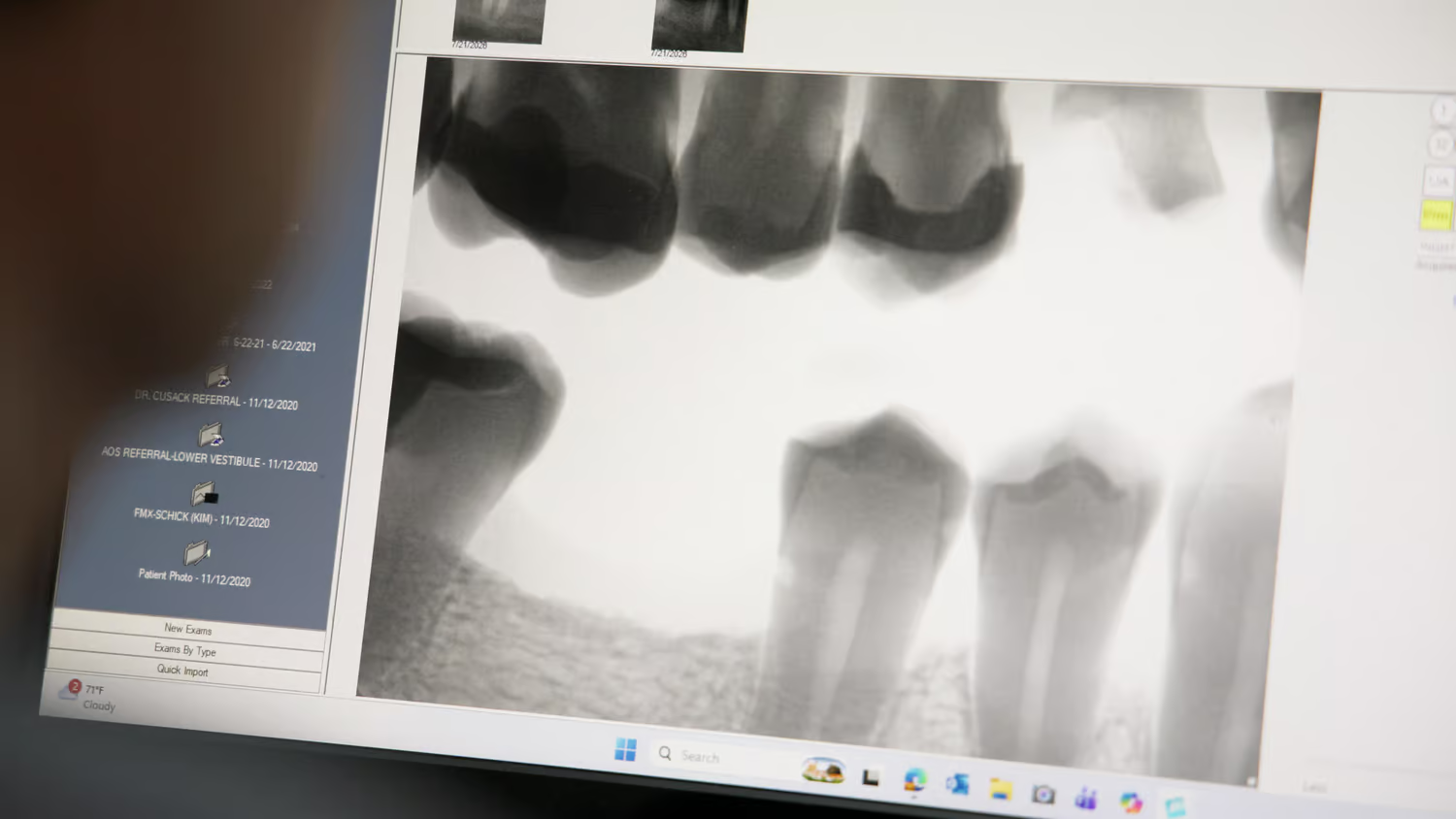



Dental x-ray of back teeth displayed on a computer screen
Your family's dental home

Emergency Dental Pain Treatment in Peoria: Same-Visit Answers When It Hurts

Dental x-ray of back teeth displayed on a computer screen
The short answer
Reviewed by our
Peoria
doctors.
Dr. Michelle Horst, dentist at Associates in Dentistry in Peoria
Dr. Arian Rrushaj, dentist at Associates in Dentistry in Peoria
Dr. Jonathan Gifford, dentist at Associates in Dentistry in Peoria and Washington

Tooth pain is a true emergency when there's facial swelling, a knocked-out or cracked tooth, bleeding that won't stop, or pain that keeps you awake and doesn't respond to over-the-counter medicine. Swelling that spreads toward the eye or under the jaw, or trouble swallowing, means you need care immediately. Sensitivity that fades in a few seconds usually isn't urgent.

01

Signs Your Tooth Pain Is a True Emergency

Here's the honest answer most people are looking for. It isn't how much it hurts. It's what the pain is doing and what's happening around it.

This is part of Emergency Dentistry in Peoria. Care is provided at our Peoria office by Dr. Michelle Horst, Dr. Arian Rrushaj and Dr. Jonathan Gifford.

A tooth that zings when you sip iced tea and settles down two seconds later is telling you something, but it isn't telling you to drop everything. A tooth that throbs on its own, wakes you at 2 a.m., and shrugs off ibuprofen is a different animal. That second one usually means the nerve inside is dying or already infected, and it won't fix itself.

Call us the same day if you notice any of these:

  • Swelling in your cheek, jaw, gum, or under your chin, especially if it's growing
  • Pain that keeps you up at night or doesn't ease with over-the-counter pain medicine
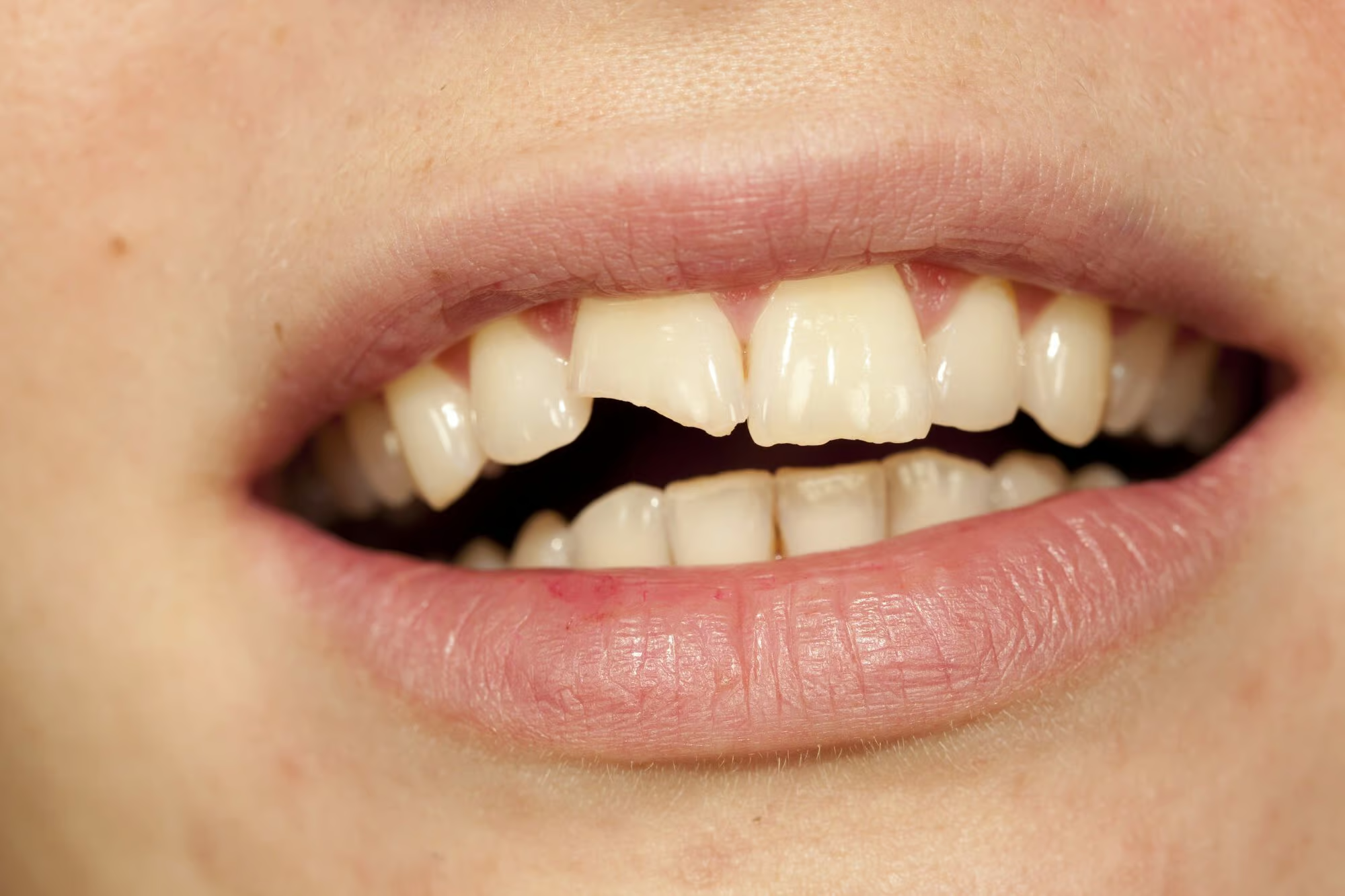
  • A tooth that's been knocked out, pushed loose, or visibly cracked after a hit
  • Bleeding from the gum or socket that won't stop after 20 minutes of steady pressure
  • A bad taste, pus, or a pimple-looking bump on the gum near a sore tooth
  • Fever along with tooth pain

Two of those deserve a little more weight. Swelling that creeps toward your eye or down under your jaw, trouble swallowing, or trouble opening your mouth all the way - that's an emergency room trip, not a wait-and-see. Infections in the lower back teeth can move into the floor of the mouth fast, and that's the one situation where we'd rather you go straight to the hospital and call us after.

And a knocked-out adult tooth has a clock on it. The first 30 minutes matter most. Keep it in milk or tucked inside your cheek, never scrub the root, and get here.

We see all of this every week at our Peoria office, and nine times out of ten people waited longer than they needed to.


02

When a Toothache Can Wait for a Regular Appointment

Not every sore tooth is an emergency. We tell people this all the time, and some of them sound relieved to hear it. A tooth that twinges when you drink something cold, then settles down in a few seconds, is usually not a crisis. That's often a worn spot or a little gum recession. Annoying, sure. But it can wait for a regular appointment.

Same goes for mild soreness after a filling or cleaning. Teeth get grumpy for a week or two after work, that's normal healing, not failure.

Here's the rough line we use. Pain that comes and goes with a trigger can usually wait. Pain that shows up on its own and stays is different.

  • Sharp zing to cold or sweets that fades in under 30 seconds
  • Tenderness on one spot after a new filling, easing a little each day
  • A dull ache in your jaw that's worse in the morning, which often points to clenching or grinding
  • Food packing between two teeth, sore until you floss it out
  • A chipped edge with no pain and no sharp cut on your tongue

Those are the ones you call about during the week and get seen on a normal day. Take ibuprofen if your doctor says it's fine for you. Chew on the other side. Skip ice water for a few days and see what happens.

But watch the clock on it. If a cold-sensitive tooth starts lingering for a full minute after the cold is gone, something changed inside the nerve. And if you wake up at 2 a.m. because the tooth is throbbing on its own, that's no longer a wait-and-see problem. Same if your face swells or you can't open wide.

Not sure which side of the line you're on? Call and describe it. Nine times out of ten, a two-minute conversation sorts it out - and we'd rather tell you it can wait than have you sit on something that can't.

03

What Happens During an Emergency Dental Visit

Most people picture something worse than what happens. You call, you tell us where it hurts and how long it's been going on, and we get you on the schedule. That phone call matters more than folks realize. If you tell us the swelling has moved into your cheek or under your jaw, that moves you up the list fast.

Here's how a typical visit runs.

  • We take an x-ray of the area and look at what's going on under the gum, where you can't see it.
  • A doctor examines the tooth, taps on it, checks how it responds to cold, and checks the teeth around it.
  • We tell you what's causing the pain and what your options are, in plain words, before anyone touches anything.
  • We get you numb and handle the source of the pain that day when we can.
  • If the fix needs more than one visit, we stabilize the tooth and schedule the rest.

That fourth step is where a lot of offices stop short. We do root canals in-house at our Peoria office, and we mill crowns here too, so a cracked tooth that needs full coverage often doesn't mean a separate trip to a lab-turnaround appointment weeks later. Surgical extractions happen here as well when the tooth can't be saved.

And no, we're not going to talk you into something in the middle of a toothache. Nine times out of ten the person in the chair just wants the throbbing to stop and a straight answer about what's next. That's a fair thing to want.

Our x-rays get a second-opinion review, so what we tell you isn't one person's read on a blurry image. Small thing. Matters a lot when you're deciding whether to save a tooth or let it go.

Tooth hurting right now? Call and we'll help.
04

Treating Broken Teeth, Infections, and Knocked-Out Teeth in One Place

Here's what frustrates people most. They get in somewhere, sit in the chair, get an x-ray, and then hear the words nobody in pain wants to hear: we'll refer you out. Now it's another phone call. Another wait. Another night of holding a cold washcloth against your jaw.

Our Peoria office was built to avoid that handoff. It's our largest location, with 11 operatories going to 15, and three doctors practicing here. Dr. Horst, Dr. Rrushaj, and Dr. Gifford. Root canals, surgical extractions, and oral surgery all happen under this roof.

So what does that look like for the three emergencies we see most?

  • Broken tooth. We check whether the nerve is exposed and how much structure is left. If the tooth needs a crown, we mill it here. Peoria has in-house same-day crown milling, so you're not walking around in a temporary for three weeks.
  • Infected tooth. Deep throbbing, swelling, pressure that gets worse lying down. That usually means the nerve is dying or dead. An emergency root canal clears the infection out of the canal and takes the pressure off. We do those here.
  • Knocked-out tooth. Time matters more than anything else. Handle it by the crown, not the root. Keep it moist in milk or your own saliva. Then get to us fast.

And if the tooth can't be saved, we say so plainly. Some teeth are cracked below the gumline or too far gone, and stretching that out just costs you more pain. Emergency tooth extraction is part of what we do, and so is talking through what replaces it later.

We see all three of these every single week. Nine times out of ten, the fix is straightforward once somebody looks at it.

05

How Emergency Dental Costs Work and What to Ask First

Money is the reason a lot of people sit on a toothache for three days. We get it. So here's how emergency dental pricing usually works, plainly.

Almost every emergency visit is billed in two parts. First there's the visit itself: the exam and the x-ray that tells us what's happening. That part is usually a flat, fairly predictable fee. Then there's the treatment, and that's the part that moves. A tooth that just needs the pressure released costs less than a root canal. A root canal costs less than a surgical extraction and a plan to replace the tooth later. Nobody can quote you the second number until they've seen the x-ray.

What drives the number up or down is mostly how far the problem has traveled.

  • Which tooth it is. Back molars have more roots and take longer to treat than front teeth.
  • Whether there's an active infection. Swelling and abscess usually add a step before anything else can happen.
  • Whether the tooth can be saved. Saving it and replacing it are two different paths with two different costs.
  • How many visits it takes. Some fixes finish same-day, others need a temporary and a return visit.

Before you agree to anything, ask three questions. What's the visit fee if I decide not to treat today? Can I see the x-ray and what you're seeing on it? And what happens to the cost if I wait two weeks?

That last one matters more than people think. An infection doesn't hold still, it spreads, and the fix gets bigger.

Our office is fee-for-service. We're not in-network with any plan, but we accept and bill most insurance, Medicaid excluded. For folks who need to spread it out, CareCredit and 0% interest payment plans up to six months are available. Ask us about the payment side up front, we'd rather talk about it than have you sit home in pain.

FAQ

Answers to the most common questions.

Something else on your mind?
Call us at (309) 690-4500.

How do I know if my tooth pain is a real emergency?

It's a true emergency if you have facial swelling, a knocked-out tooth, bleeding that won't stop, or pain that keeps you awake and ignores over-the-counter medicine. Swelling spreading toward your eye or under your jaw, or trouble swallowing, means you need care right away. A quick zing from cold that fades in seconds usually isn't urgent. When in doubt, call and describe what you're feeling. A short conversation can sort out which side of the line you're on.

Can a toothache wait for a regular appointment instead of an emergency visit?

Yes, if the pain comes and goes with a trigger like cold or sweets and fades within seconds, it can usually wait. Mild soreness after a filling, a dull morning jaw ache from clenching, or food stuck between teeth are also things you can manage until your next visit. Watch for change, though. If sensitivity starts lingering longer or you wake up with throbbing pain, that's no longer a wait-and-see situation.

What should I do if my tooth gets knocked out?

Keep the tooth in milk or tucked inside your cheek and get to us fast, since the first 30 minutes matter most for saving it. Never scrub the root or let it dry out. Call our Peoria office right away so we can get you in quickly. A knocked-out adult tooth has the best chance of being saved when you act within that first half hour.

What happens when I call about a dental emergency?

When you call, we ask where it hurts and how long it's been going on, then get you scheduled the same day. Telling us about swelling in your cheek or under your jaw moves you up the list quickly. At the visit, we take an x-ray, examine the tooth, and explain your options in plain words before treating anything. Most people just want the pain to stop and a clear answer about next steps.

Do I need to go to a specialist for a root canal or extraction?

No, we handle root canals, crowns, and surgical extractions in-house at our Peoria office. That means a cracked or infected tooth often doesn't require a separate referral or weeks of waiting on a lab. We also get a second-opinion review on x-rays, so decisions about saving or removing a tooth aren't based on just one read of the image.

How serious is a dental infection with facial swelling?

Swelling that spreads toward your eye or down under your jaw, along with trouble swallowing or opening your mouth, is a real emergency. Infections from lower back teeth can move into the floor of the mouth fast. In that situation, go straight to the emergency room and call us afterward. For swelling that's smaller and not growing, call our Peoria office the same day so we can see you quickly.

Request an appointment

Call us at (309) 690-4500

Tell Us About Yourself

Are you new to Associates in Dentistry?

Preferred Day and Time (optional)
Thank you! Your submission has been received!

That didn't go through. Please try again, or call your office.