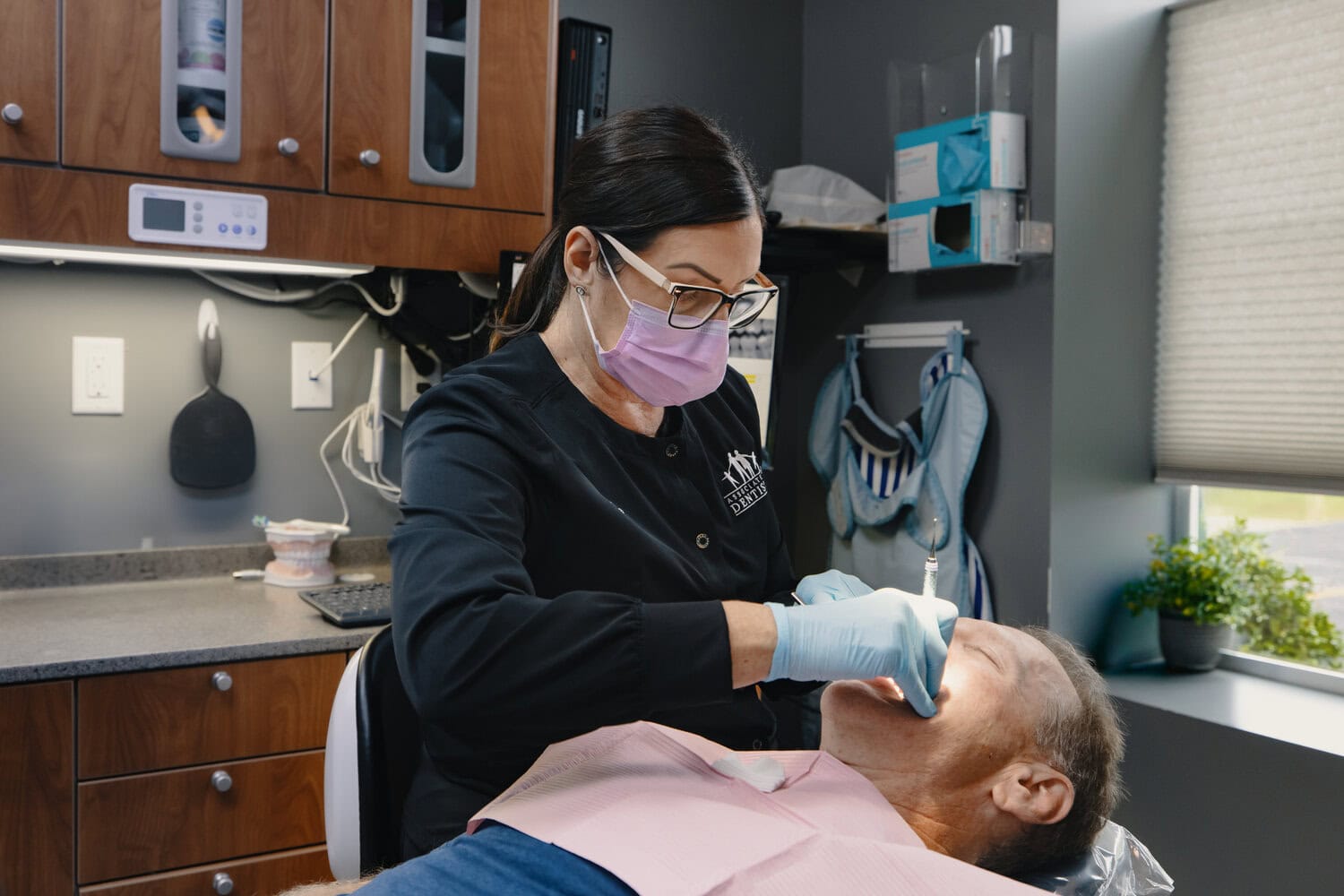



Hygienist in a mask cleaning a patient's teeth in a dental chair
Your family's dental home

Dental Cleaning in Peoria: A Checkup That Does More Than Polish Your Smile

Hygienist in a mask cleaning a patient's teeth in a dental chair
The short answer
Reviewed by our
Peoria
doctors.
Dr. Michelle Horst, dentist at Associates in Dentistry in Peoria
Dr. Arian Rrushaj, dentist at Associates in Dentistry in Peoria
Dr. Jonathan Gifford, dentist at Associates in Dentistry in Peoria and Washington

A dental cleaning is two jobs in one visit. A hygienist removes hardened plaque above and below the gumline, then a dentist checks your teeth, gums, bite, and tissues for anything that's changing. The polish at the end is the smallest part of the appointment.

01

What a Dental Cleaning in Peoria Covers

Most people think a dental cleaning is the scraping and the gritty paste. That's maybe fifteen minutes of it.

This is part of General Dentistry in Peoria. Care is provided at our Peoria office by Dr. Michelle Horst, Dr. Arian Rrushaj and Dr. Jonathan Gifford.

The bigger job is measuring. Your hygienist checks the pocket depth around every tooth with a small probe and calls out numbers. Ones, twos, threes are healthy. Fours and fives mean the gum has pulled away and bacteria have somewhere to hide. Those numbers get recorded every visit, so we can see whether a spot is holding steady or sliding. That record is the whole point. One reading tells us almost nothing, six months of readings tell us what's happening.

Here's how a typical visit runs at our Peoria office.

  • Review your health history and any medication changes since last time.
  • Take x-rays if you're due, and yes, every x-ray here gets a second doctor's review before anything is recommended.
  • Chart gum pocket depths tooth by tooth and note any bleeding.
  • Scale off hardened tartar above and below the gumline, by hand and with ultrasonic tips.
  • Polish, floss, and go over the spots you're missing at home.
  • A doctor exams your teeth, gums, bite, jaw joints, and soft tissue.

We also scan with the iTero Lumina at this location. It builds a digital model of your mouth in a couple minutes, no goopy trays. Handy for seeing wear patterns you can't feel yet.

And the oral cancer check is part of it. Lips, tongue, under the tongue, the floor of the mouth, the sides of the throat. Takes ninety seconds. It's the kind of thing you never think about until someone finds something early.

So the cleaning isn't really the product. The information is.

02

Signs You Need to Book Now vs. Wait for Your Regular Visit

Most people don't call us because a calendar told them to. They call because something changed. Blood in the sink. A weird taste. A tooth that feels rough when their tongue runs across it.

Here's how we sort it out over the phone. Some things mean come in soon, before the next scheduled visit. Others can genuinely hold.

Call us sooner rather than later if you notice any of these:

  • Gums that bleed every time you brush, not just once in a while
  • Bad breath that sticks around after brushing and flossing
  • Gums pulling back so teeth look longer than they used to
  • A tooth that feels loose or shifts when you bite
  • Swelling or tenderness in one spot that doesn't settle in a few days
  • It's been more than a year and you can feel buildup behind your bottom front teeth

Now the other side. A little pink on the floss the first few days after you restart flossing? That's usually your gums waking up, not an emergency. Some sensitivity to cold after a cleaning is normal and fades in a week or two. Coffee stain that bugs you but causes no pain can absolutely wait for your regular visit, we'll handle it then.

And if you've skipped a couple of years out of embarrassment, that's not a reason to keep waiting. We see that every week. Nobody at our Peoria office is going to lecture you.

One thing we won't do is guess. If bleeding or gum recession shows up, we measure the pockets around each tooth and take x-rays before deciding anything. Our Peoria team runs a second-opinion review on x-rays, so a call about sore gums gets more than one set of eyes.

Not sure which list you're on? Call and describe it. That's a two-minute conversation, not a commitment.

03

How Often Cleanings Are Needed and Why Consistency Matters

Twice a year isn't a law. It's an average. Most healthy mouths do fine on a six-month schedule, and that's where we start most people. But some folks need to come in every three or four months, and a few can stretch it out. The number comes from what your gums are doing, not from a calendar someone printed in the 1950s.

Here's what shortens the gap between visits:

  • Gum pockets that measure deeper than 3 millimeters, because tartar builds below the gumline where a toothbrush can't reach
  • Smoking or vaping, which slows healing and hides bleeding that would normally warn you early
  • Diabetes, since blood sugar and gum inflammation feed each other in both directions
  • Pregnancy, when hormone changes make gums swell and bleed more than usual
  • Crowded teeth, braces, or a bridge, all of which trap plaque in spots floss can't clear
  • A history of gum treatment, where three-month recalls are standard aftercare

Miss a couple of cycles and the math turns against you. Soft plaque hardens into tartar in about two days. Once it's hard, brushing won't touch it. It sits there irritating the gum, the gum pulls back, the pocket gets deeper, and now more tartar fits. That loop is how a routine dental cleaning turns into scaling and root planing over a year or two.

We see this every week. Someone comes in after four years away, apologizing, expecting a lecture.

You won't get one. We just want to know where you stand so we can pick the right interval going forward. At our Peoria office, three doctors read alongside the hygiene team, and x-rays go through a second-opinion review before anything gets recommended. So the schedule you leave with is based on your bone levels and pocket depths, not a default setting.

And if six months turns out to be right for you, great. That's the easiest outcome there is.

Due for a cleaning? Let's get you scheduled.
04

How Dental Cleaning Costs Work and What Affects Insurance Coverage

Here's the part most people worry about before they pick up the phone. Cost. And in dentistry, cleaning isn't one flat thing with one flat price. It's coded by what your gums need. A routine cleaning above the gumline is one code. Deeper cleaning below the gumline, done quadrant by quadrant, is a different code at a different fee. That's why two neighbors can walk out with very different bills after what they both call a dental cleaning.

Most dental plans treat routine preventive visits generously and deeper gum work less so. Typically a plan covers preventive cleanings at a high percentage twice a year, then drops coverage to a lower tier once you cross into periodontal territory. Annual maximums matter too, they're usually modest and they reset each year.

We moved to a fee-for-service model in August 2024. In plain terms, that means we're not in-network with any plan. We still accept and bill most insurance for you, just not Medicaid. You'll often still get benefits, they're just applied as out-of-network. For patients who want to spread things out, CareCredit and 0% interest payment plans up to six months are available.

Cost is a fair thing to ask about. We'd rather you ask the awkward questions up front than skip the visit.

  • Ask which cleaning code is being planned before treatment starts.
  • Ask what your plan pays out-of-network versus in-network.
  • Ask what your annual maximum is and how much you've already used.
  • Ask whether x-rays and the exam are billed separately from the cleaning.
  • Ask for a written estimate if deeper gum treatment is recommended.
05

What to Expect Before, During, and After Your Visit

Most people picture the polishing cup and nothing else. There's more going on, and knowing the order helps.

Before you come in, eat normally. Brush like you would any other morning. Bring a list of your medications and anything that's changed since we last saw you, blood pressure meds, pregnancy, a new heart condition, a jaw that clicks. All of it matters more than patients expect. If you're anxious, tell us when you book, not when you sit down. We can slow the whole thing down.

Here's how the visit usually runs at our Peoria office:

  • Health history review and blood pressure check.
  • X-rays if you're due, with a second doctor reviewing the images as part of our process.
  • Digital scanning with the iTero Lumina when it's useful for tracking wear or crowding.
  • Measuring your gum pockets, tooth by tooth, and calling the numbers out loud.
  • Removing hard tartar above and below the gumline with hand instruments and ultrasonic tools.
  • Polishing, flossing, and a fluoride application if it's right for you.
  • The doctor's exam and a plain conversation about what we found.

The scaling part is where people feel the most. Some pressure, some vibration, some cold water. If a spot is tender, raise your hand and we stop. There's no prize for toughing it out.

Afterward your teeth may feel slick and a little sensitive to cold for a day or two, that's normal, especially if it's been a while since your last dental cleaning. Gums can bleed a bit that evening. Keep brushing anyway. Skipping it because it bleeds is exactly how the cycle keeps going.

And if we found something, you'll leave knowing what it is and what happens next. No mystery follow-up call.

FAQ

Answers to the most common questions.

Something else on your mind?
Call us at (309) 690-4500.

How long does a dental cleaning in Peoria take?

Most cleanings run about 45 minutes to an hour. That covers your health history review, x-rays if you're due, gum measurements, the actual scaling, polish, and a doctor's exam. The gritty polish paste people picture is only about fifteen minutes of the visit. The rest is measuring pocket depths and checking your bite, jaw, and soft tissue for changes worth tracking.

Is it normal for gums to bleed during or after a cleaning?

A little bleeding is common, especially if it's been a while since your last visit or you're just restarting flossing. Gums that bleed every single time you brush, though, are worth a call sooner rather than waiting. We measure pocket depth around each tooth to see if it's just gums waking up or something that needs attention now.

How often should I really get my teeth cleaned?

Twice a year works for most healthy mouths, but it's not a fixed rule. Some people need cleanings every three or four months, especially with deeper gum pockets, smoking, diabetes, or a history of gum treatment. We base your schedule on your actual pocket depths and bone levels, not just a calendar habit from decades ago.

What if I haven't been to the dentist in years?

You won't get a lecture at our Peoria office. This happens every week, and we'd rather just find out where you stand than make you feel bad about the gap. We'll chart your gum pockets, take x-rays, and check for any buildup or changes so we can figure out the right schedule going forward.

Does dental cleaning include a cancer screening?

Yes, every cleaning at our Peoria office includes an oral cancer check as part of the exam. It only takes about ninety seconds and covers your lips, tongue, under the tongue, the floor of your mouth, and the sides of your throat. It's easy to skip thinking about, but it's built into every visit here without you having to ask.

Will a cleaning show cavities or other problems, or is it just polish?

A cleaning does much more than polish your teeth. Your hygienist charts gum pocket depths on every tooth and notes any bleeding, then a doctor checks your teeth, bite, jaw joints, and soft tissue. We also scan with the iTero Lumina here, which builds a digital model of your mouth and can reveal wear patterns you can't feel yet.

Request an appointment

Call us at (309) 690-4500

Tell Us About Yourself

Are you new to Associates in Dentistry?

Preferred Day and Time (optional)
Thank you! Your submission has been received!

That didn't go through. Please try again, or call your office.