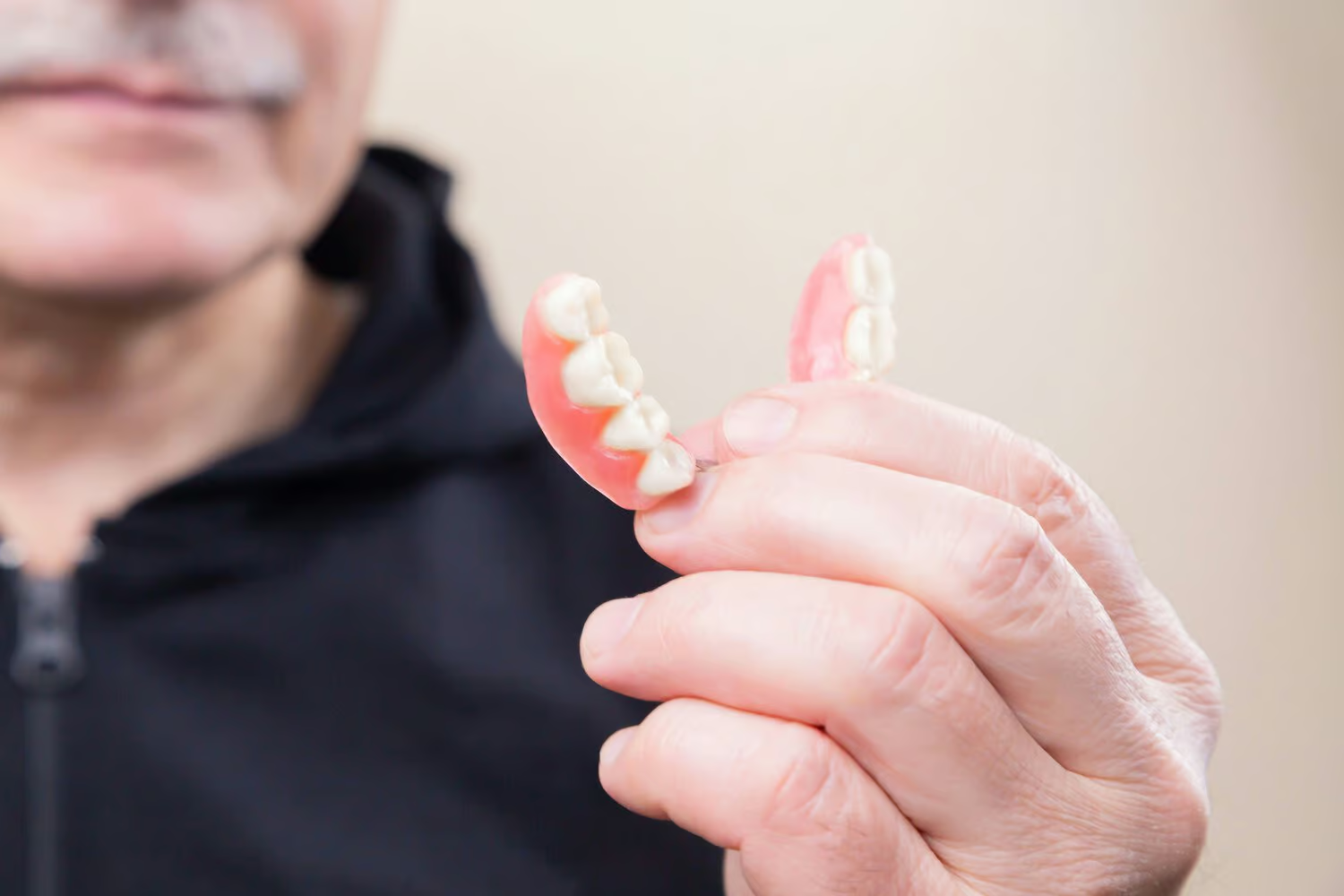



Man holding a partial denture in his hand
Your family's dental home

Partial Dentures in Peoria: Restore Your Bite Without Losing Healthy Teeth

Man holding a partial denture in his hand
The short answer
Reviewed by our
Peoria
doctors.
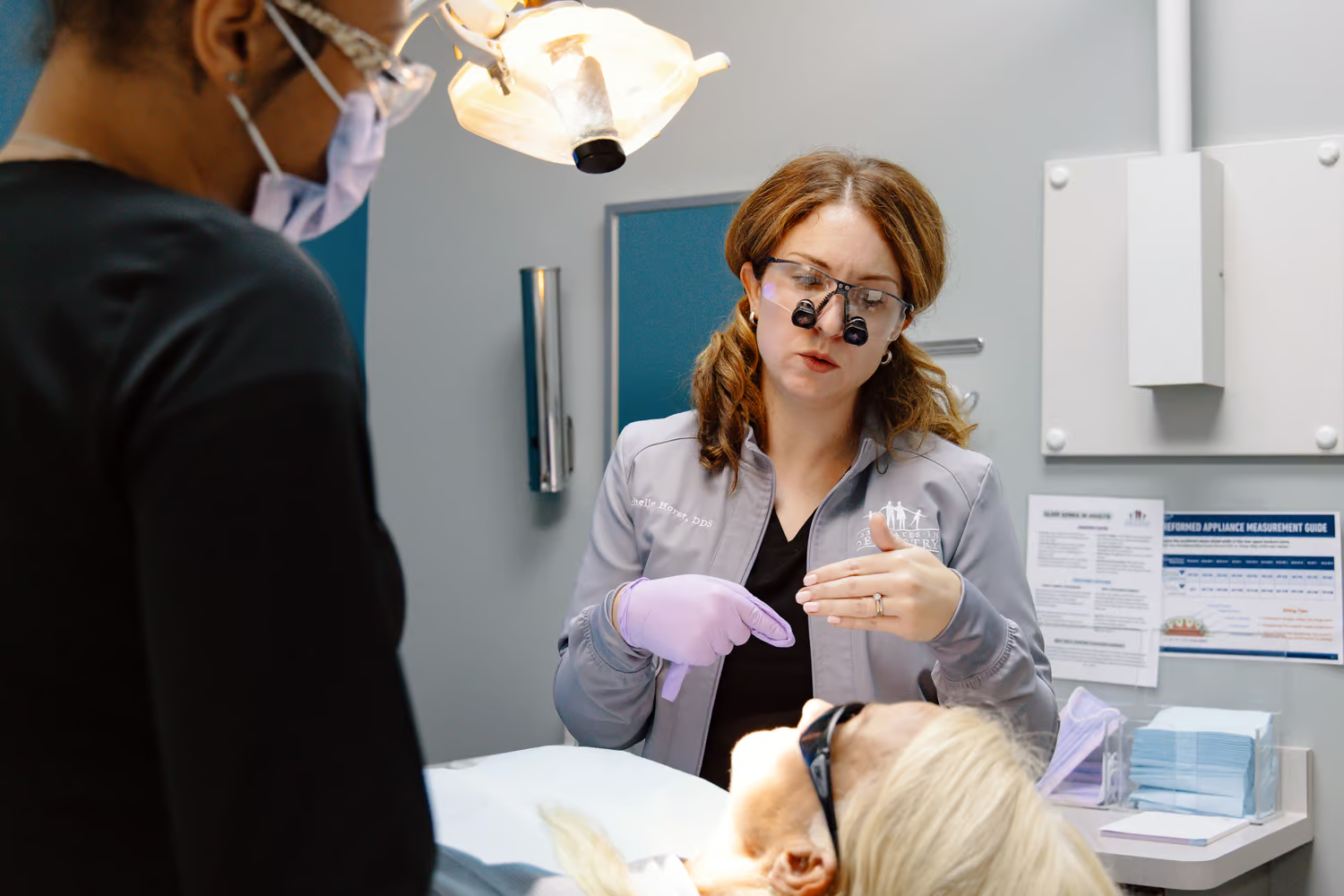
Dr. Michelle Horst, dentist at Associates in Dentistry in Peoria
Dr. Arian Rrushaj, dentist at Associates in Dentistry in Peoria
Dr. Jonathan Gifford, dentist at Associates in Dentistry in Peoria and Washington

A partial denture replaces some missing teeth while your remaining natural teeth stay put. It fills the gaps, restores chewing on both sides, and keeps the teeth next to the space from drifting. It's for people with healthy teeth left in the arch, not for people who need everything replaced.

01

What a Partial Denture Fixes and Who Needs One

A partial denture is a removable piece that fills in where teeth are gone. It clips onto the teeth you still have. You take it out at night, clean it, and put it back in the morning. Simple as that.

Most people come in because chewing got lopsided. You lose a molar on the lower right, and pretty soon you're doing all your work on the left side. That side wears faster. The jaw joint on that side starts complaining, too.

But the bigger issue is drift. Teeth don't sit still when a neighbor disappears. The tooth behind the gap tips forward, the tooth above it drops down looking for something to bite against. Give that a couple of years and the gap changes shape. Now the fix is harder than it needed to be.

Here's who a partial usually makes sense for:

  • You're missing one to several teeth in the same arch, with solid teeth still around them
  • Your remaining teeth and gums are healthy enough to carry a clasp
  • You want back teeth for chewing, not just front teeth for looks
  • You'd rather not have your other teeth drilled down for a bridge
  • You've had a tooth out and the space is starting to bother you when you eat

Not sure if that's you? That's pretty common, and it's an easy thing to sort out in one visit.

We see plenty of folks in Peoria who put this off because the missing tooth doesn't show when they smile. Then the front teeth start shifting to cover for the back ones. That's the part nobody expects.
02

Partial Denture vs. Bridge vs. Implant: Making the Right Call

Three teeth missing on the bottom left. That's a common one. And it's usually the point where somebody starts asking what their options really are.

A partial denture replaces several teeth at once and comes out at night. A bridge fills a single gap and stays put, but it means shaping down the healthy teeth on both sides. An implant replaces one tooth root and doesn't touch the neighbors at all. Each one solves a slightly different problem.

  • A partial denture makes the most sense when you're missing teeth in more than one spot, or the gaps are too long for a bridge to span.
  • A bridge fits best when you've got one or two teeth missing and the teeth on either side already need crowns anyway.
  • An implant is the strongest pick for a single gap with healthy bone underneath and no work needed on the neighboring teeth.

Here's where I'll argue against myself. If you're missing one tooth, you have solid bone, and the teeth beside it are perfectly healthy, a partial denture is probably not your best move. You'd be wearing a removable appliance for a problem a single implant handles better. We'd tell you that in the chair.

Cost matters, and I'm not going to pretend it doesn't. Median household income in Peoria sits around $59,410, and most folks are weighing this against everything else in the budget. Partial dentures typically cost less up front than implants and require no surgery. That's a legitimate reason to choose one, not a lesser one.

Not sure which camp you fall into? That's normal. A scan and an exam answer it faster than any article can.

One more thing worth knowing. These aren't permanent decisions in every case. Some patients start with a partial denture while they save for implants later, and the partial keeps the remaining teeth from drifting in the meantime. It buys you room to decide.

03

When a Partial Denture Is Not the Right Fix

Here's the part most people don't hear until after they've paid for something. A partial denture leans on the teeth you still have. If those teeth aren't solid, the partial isn't solid either. We turn people down for this every month, and it's almost always the same reasons.

Active gum disease is the big one. Bone loss around the anchor teeth means those teeth are already loosening. Clasp a partial onto them and you speed that up. So we treat the gums first, then look at replacement. That order isn't negotiable, it's the difference between a partial that lasts and one that pulls two more teeth out with it.

Position matters too. A partial needs anchor teeth spread out, ideally on both sides. If everything remaining is bunched in the front, the back end of the partial has nothing to hold it down. It rocks. You feel it every time you bite.

  • Only one or two teeth left in an arch, and both are mobile
  • Untreated decay or infection in the teeth that would carry the clasps
  • A single missing tooth with healthy teeth on either side, where a bridge or implant usually makes more sense
  • Recent extractions where the gum is still shrinking and reshaping
  • A severe gag reflex that no adjustment has ever settled

That fourth one trips people up. After an extraction, the ridge changes shape for months. Build a partial too early and it fits great in week two and floats by week ten. Sometimes the honest answer is wait.

And sometimes the answer is a complete denture instead. If the remaining teeth are broken down past saving, keeping them just to anchor a partial isn't doing you a favor. It's postponing a bigger bill. We'd rather say that out loud at the first visit than six months in.

Missing a few teeth? Let's see if a partial fits.
04

From Exam to Delivery: The Partial Denture Process

People ask how long this takes before they ask anything else. Fair question. A partial denture isn't a single appointment, it's a short series of them. Most folks are in and out four or five times over several weeks. Here's how it usually goes.

  • Exam and x-rays. We look at every tooth that has to hold the partial denture. If one of them is cracked or loose, we deal with that first. Building on a weak tooth is how partials fail.
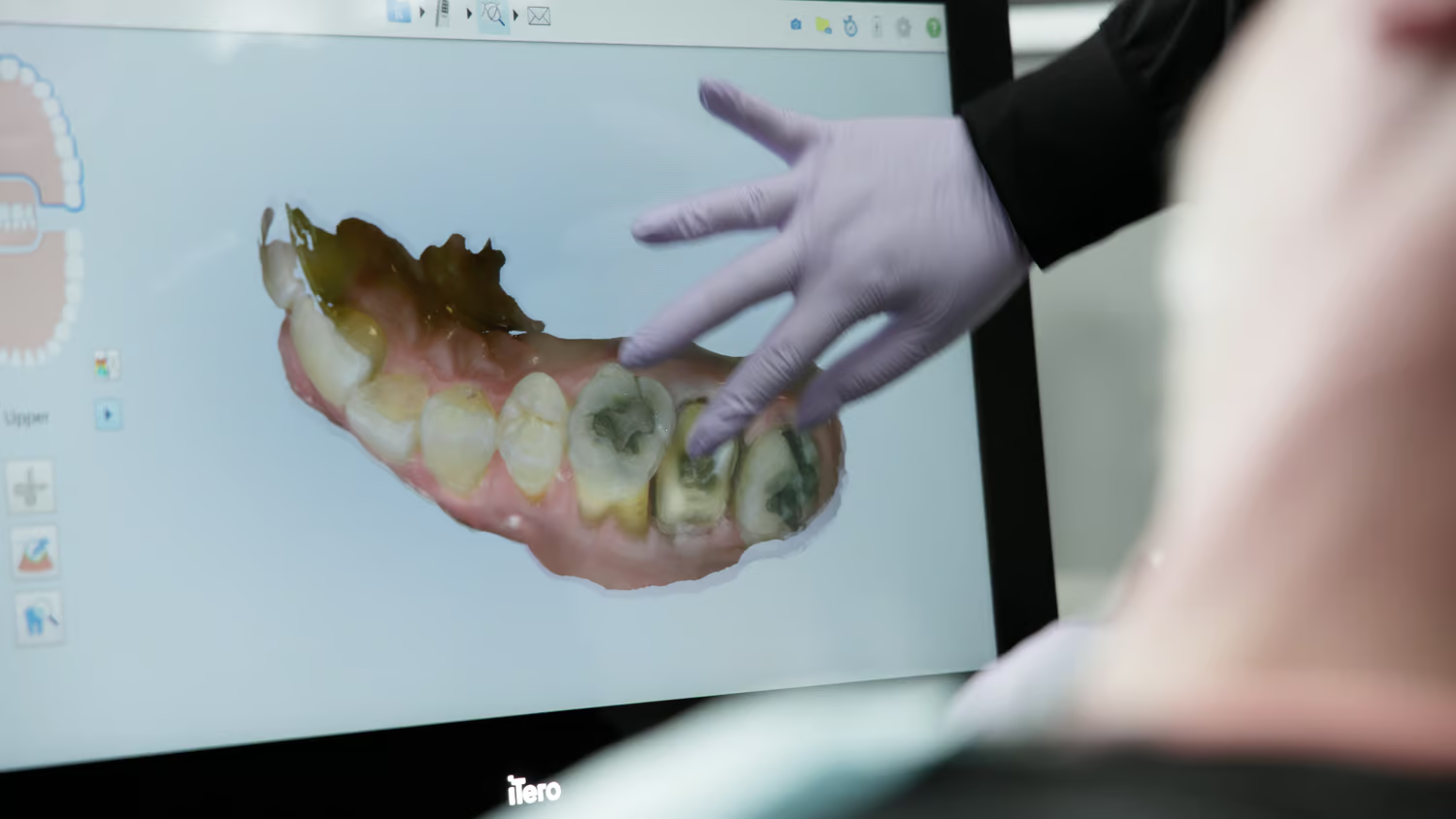
  • Digital scan. We use an iTero Lumina scanner at our Peoria office, so no tray of goop in your mouth. The scan captures your bite and the shape of your gums.
  • Design and lab work. The framework and teeth get made off your scan. This is the waiting part, and it's the part nobody loves.
  • Try-in. You wear it, we watch you bite and talk. We adjust the clasps and the bite until it sits right.
  • Delivery. Final fit, final polish, and a rundown on cleaning and taking it in and out.

Sometimes there's an extra step. If a tooth has to come out first, we wait for the gum to settle before the final impression. Gums shrink as they heal. Take the scan too early and the partial denture fits loose in a month.

Expect adjustments after delivery. That's normal, not a mistake.

The first week is the honest one. Your tongue will hunt for it. Some people lisp a little on s-words for a few days, it passes faster if you read out loud at home. Sore spots show up where the plastic presses, and we smooth those down in about ten minutes. We tell everybody the same thing: don't suffer through a sore spot for three weeks. Come in. It's a quick fix and you'll eat better for it.

05

Living With and Caring for a Partial Denture

The first two weeks are the honest part of this conversation. A new partial denture feels bulky. Your tongue will find it constantly, and some people get extra saliva for a few days. Speech can sound slightly off at first. Most of that settles as the muscles learn the new shape, and reading out loud for ten minutes a day speeds it up more than anything else we suggest.

Sore spots are normal. They're also fixable in about five minutes.

We had a patient come in convinced her partial was a lost cause. One rubbed groove behind a lower clasp, one adjustment, and she ate a sandwich that afternoon. Nine times out of ten that's the whole story. But don't try to file it down yourself, and don't just stop wearing it, the tissue needs steady contact to settle in. Call and let us adjust it.

Daily care matters more with a partial than with a full denture, because you still have natural teeth to protect. Food traps around clasps. Plaque builds where the framework meets the tooth. That's exactly where new decay starts.

  • Take the partial out and rinse it after meals when you can.
  • Brush it daily with a soft brush and hand soap or denture cleaner, never regular toothpaste. Toothpaste is abrasive and scratches the acrylic.
  • Brush and floss your own teeth carefully, especially the ones the clasps rest on.
  • Leave it out overnight in water or a soaking solution so your gums get a rest.
  • Stand over a folded towel or a sink of water when you handle it. Acrylic cracks on a hard counter.

Worried you'll forget half of this? Nobody remembers it all on day one. We go through it again at your follow-up.

Keep your regular dental exams. Your mouth keeps changing underneath the partial, and a denture that fit well two years ago may need a reline. Catching that early is cheap. Ignoring it until the framework bends or a clasp tooth cracks is not.

FAQ

Answers to the most common questions.

Something else on your mind?
Call us at (309) 690-4500.

How long does it take to get a partial denture?

Most people finish in four or five appointments over several weeks. The process starts with an exam, then moves to impressions, a fitting, and final adjustments. Each visit builds on the last one, so the timeline depends on how your mouth responds along the way. If you just had a tooth pulled, we may wait a bit longer before starting, since the gum shape keeps changing for months after an extraction.

Can I get a partial denture if I'm only missing one tooth?

Usually not, if the teeth next to the gap are healthy. A single missing tooth with strong neighbors is often better solved with a bridge or an implant. A partial denture makes more sense when you're missing several teeth, or when the gaps are spread across the arch. We'll look at your specific case and tell you which option fits, even if it's not the one you came in expecting.

Why do my teeth feel like they're shifting after losing one?

Teeth drift when a neighbor is gone, and it happens faster than most people expect. The tooth behind the gap tips forward, and the one above it drops down looking for something to bite against. Give it a couple of years and the space changes shape completely. That's why we tell Peoria patients not to wait too long after losing a tooth, even if it doesn't show when they smile.

Will a partial denture work if I have gum disease?

Not right away. Active gum disease and bone loss around the anchor teeth need to be treated first. A partial clasps onto your remaining teeth, so if those teeth aren't solid, the partial won't be stable either. We treat the gums, let things settle, then move to the replacement. Skipping that step is the fastest way to end up losing more teeth than you started with.

What's the difference between a partial denture and a bridge?

A partial denture replaces several teeth and comes out at night, while a bridge fills one gap and stays fixed in place. A bridge means shaping down the healthy teeth on both sides of the space, which a partial denture avoids. If you're missing teeth in more than one spot, or the gap is too long for a bridge, a partial denture is usually the better fit for Peoria patients weighing their options.

Can I still get a partial denture after a recent tooth extraction?

It depends on how recent, since the gum keeps reshaping for months after a tooth comes out. Building a partial too early means it fits well at first, then feels loose a few weeks later as the ridge settles. We'll check your healing at the exam and let you know if it makes sense to wait a bit before starting the process.

Request an appointment

Call us at (309) 690-4500

Tell Us About Yourself

Are you new to Associates in Dentistry?

Preferred Day and Time (optional)
Thank you! Your submission has been received!

That didn't go through. Please try again, or call your office.