
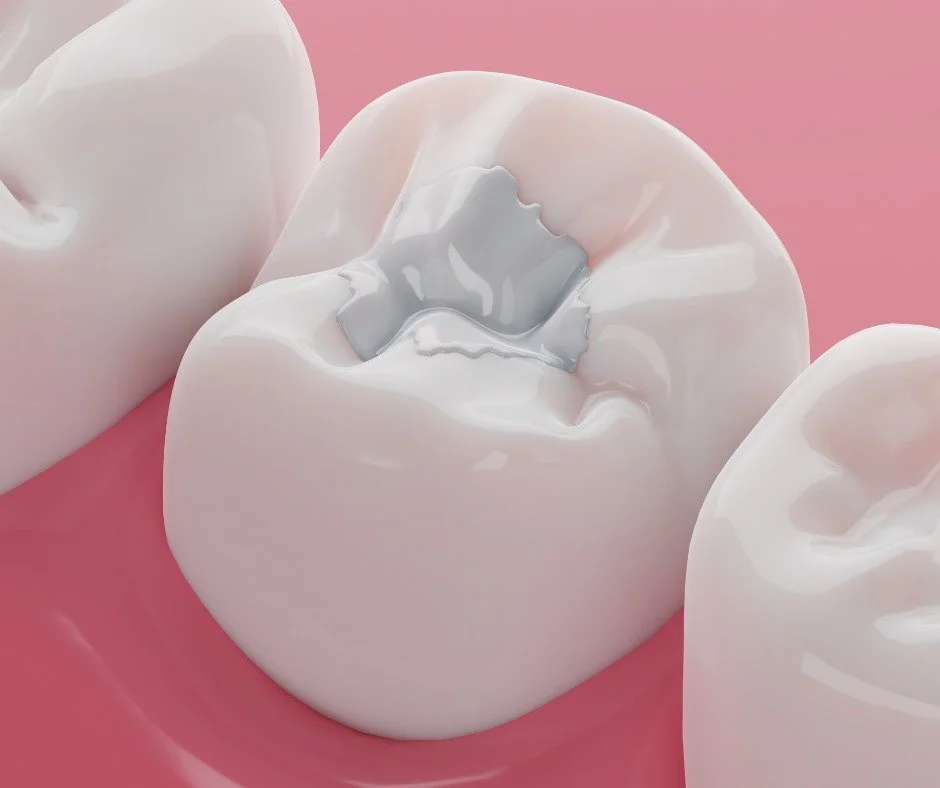



Illustration of a molar with a tooth-colored filling
Your family's dental home

Composite Fillings in Peoria: What Same-Day Treatment Involves

Illustration of a molar with a tooth-colored filling
The short answer
Reviewed by our
Peoria
doctors.
Dr. Michelle Horst, dentist at Associates in Dentistry in Peoria
Dr. Arian Rrushaj, dentist at Associates in Dentistry in Peoria
Dr. Jonathan Gifford, dentist at Associates in Dentistry in Peoria and Washington

Most teeth that need a composite filling don't hurt yet. The early signs are subtle: cold sensitivity that fades, floss that shreds in one spot, a dark line on a chewing surface. Pain usually means decay has already reached the nerve, and by then a filling may not be enough.

01

How to Tell If That Tooth Needs a Filling

Here's the part that surprises people. A cavity doesn't announce itself.

Decay starts on the outer enamel, and enamel has no nerve endings. So it can sit there quietly for months. You feel nothing. Then it works through to the softer dentin underneath, and that's when you start getting messages from the tooth. A quick zing with iced tea. A twinge when you bite down on something crunchy. It fades in a second or two, so you shrug it off.

We see this every single week. Someone comes in for a dental cleaning, mentions a tooth has been "a little weird" since summer, and the x-ray shows a spot that could have been handled with a small composite filling back then.

  • Cold or sweet sensitivity in one specific tooth that goes away quickly
  • Floss that catches, frays, or tears in the same spot every time
  • A dark spot, brown line, or chalky white patch on a chewing surface
  • Food packing between two teeth after every meal
  • A rough edge your tongue keeps finding
  • An old filling that feels sharp or chipped around the edge

Notice what's not on that list. Throbbing pain. Pain that wakes you at night. Pain that lingers after the cold is gone. Those are different. They usually mean the nerve is involved, and that's a root canal conversation instead of a filling conversation.

But what if you feel nothing at all? That's the most common way we find decay. Bitewing x-rays catch cavities between teeth long before they reach the surface you can see. At our Peoria office, every set of x-rays gets a second look from another dentist before we recommend treatment, so nobody gets drilled on a maybe.

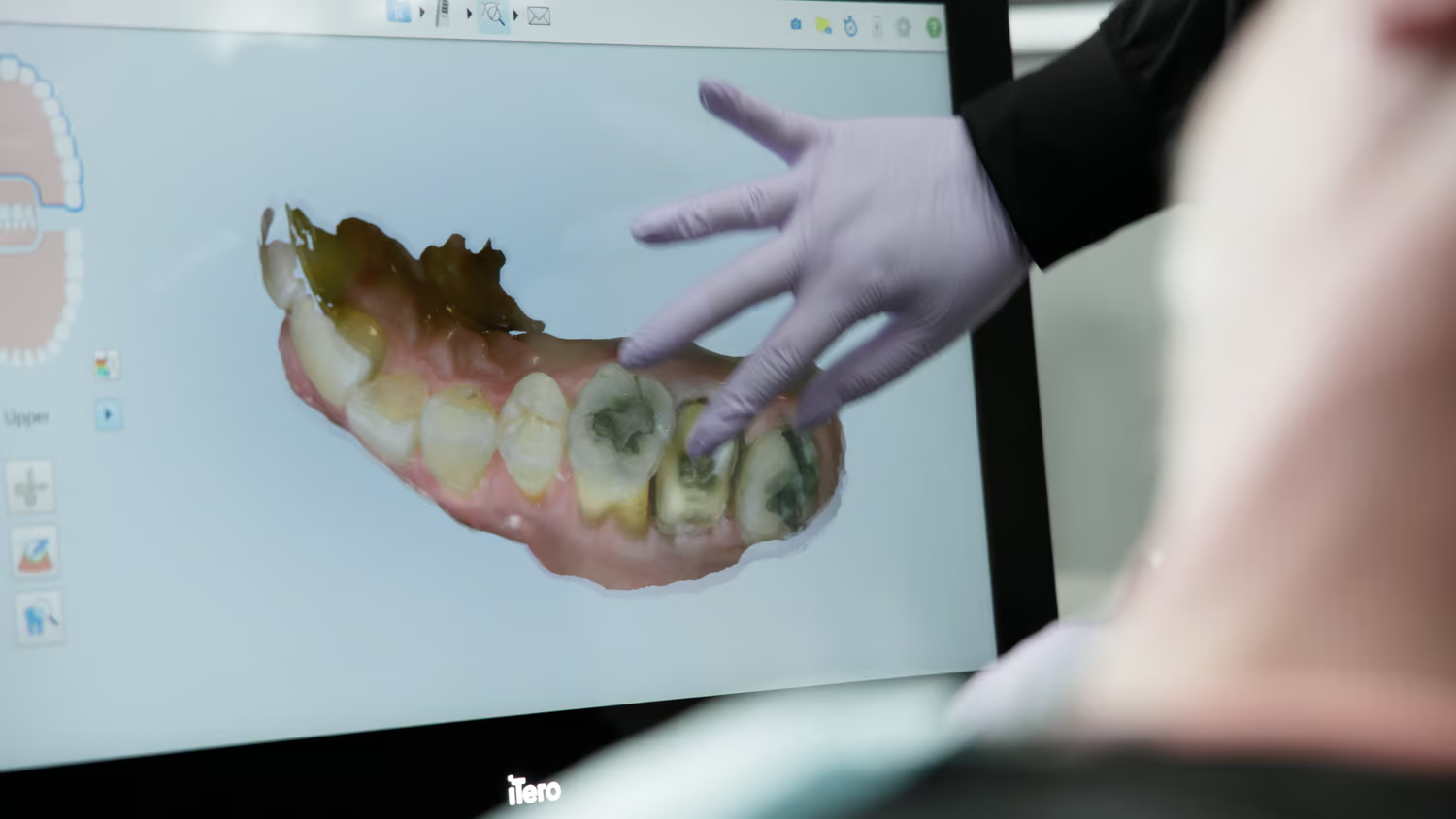
Not sure whether what you're feeling counts? That's a normal place to be - and it's a five-minute answer with a look and a picture.

02

When a Filling Isn't Enough

Here's the part most dental pages skip. A composite filling has a limit, and pushing past it costs you more later. Composite works best when there's still solid tooth left to hold it. Once too much structure is gone, the filling starts doing a job it wasn't built for.

Think of the tooth as a bowl. The walls hold everything together. Remove enough of those walls and the bowl flexes every time you chew. A large composite in that situation can crack the tooth from the inside out.

So when do we say no to a filling?

  • The decay wraps around more than one wall of a back tooth and the remaining edges are thin.
  • There's already a crack running under an old filling. Filling over a crack doesn't stop it.
  • The decay has reached the nerve. That's a root canal conversation first, restoration second.
  • The tooth has been filled and refilled over the years and there's more filling than tooth.

In those cases a crown usually makes more sense. We mill same-day crowns here in Peoria, so that path doesn't mean weeks in a temporary.

And now the other direction. Sometimes the honest answer is to leave it alone. Early demineralization, those chalky white spots near the gumline, isn't a cavity yet. It can remineralize with fluoride and better brushing. Drilling it turns something reversible into a permanent filling. We watch those spots at your next visit instead.

Same with tiny surface stains in a groove. Stain isn't decay. A sharp explorer catching on a groove doesn't automatically mean a hole.

We see this every week. Someone comes in with a treatment plan from elsewhere and half of it is watch-and-wait territory. That's why every set of x-rays here gets checked by a second dentist before we recommend anything. If your tooth can wait, we'll tell you it can wait.

03

What Happens During a Composite Filling Visit

Most people picture something worse than what happens. A single composite filling usually takes 30 to 60 minutes, start to finish. You're awake, you're comfortable, and you're out the door the same morning.

Here's the order it goes in.

  • We look at the tooth and the x-ray together, and we tell you what we see. At our Peoria office, a second dentist checks the x-rays before we treat.
  • We numb the area. A little gel first, then the shot. The numbing is the part people dread, and it's over in seconds.
  • We clear out the decay. This is the drill part. You'll feel pressure and vibration, not pain.
  • We clean and prep the space, then place the composite material in thin layers.
  • A curing light hardens each layer. It's bright, it's not hot, it takes about 20 seconds per layer.
  • We check your bite with thin colored paper and adjust until it feels right, then polish it smooth.

That bite check matters more than people think. If the filling sits even slightly high, that tooth takes the whole force of your chewing. You'll feel it by dinner. So speak up right there in the chair. Tell us if something feels tall or off, even if your lip is still numb and you're not sure.

You can eat as soon as the numbness wears off, usually two to three hours. Composite hardens all the way under the curing light. There's no waiting period like the old silver fillings had.

Some sensitivity to cold for a week or two is normal, especially on a deeper filling. It should be fading, not growing. If it's getting worse after two weeks, call us.

And if the decay turns out to be bigger than the x-ray showed? We stop and talk it through with you before we do anything else. We'd rather have that conversation mid-appointment than surprise you afterward.

Think you might have a cavity? Let's check.
04

Composite vs. Amalgam: Why Material Choice Matters

Silver fillings worked. Let's be fair about that. Amalgam held up under chewing pressure for decades, and plenty of people in Peoria are still walking around with 30-year-old silver in their back molars that's doing fine. So this isn't a story about a bad material getting replaced by a good one.

It's a story about how the two materials treat the tooth around them.

Amalgam doesn't bond. It sits in the tooth like a cork in a bottle, so the tooth has to be carved into a shape that locks it in place. That means cutting away healthy enamel that wasn't decayed at all. Composite bonds chemically to the tooth structure. We only remove what's damaged. On a small cavity, that difference can mean a conservative repair instead of losing a chunk of a tooth you'll never get back.

There's also the expansion issue. Metal moves with temperature. Hot coffee, then ice water, over and over for years, and that tiny flexing can stress the walls of the tooth. We see cracked cusps around old amalgams all the time, and nine times out of ten it's an upper molar that's been carrying a big silver filling since the 90s.

Here's where composite has limits, and you should know them going in:

  • It's technique sensitive. The tooth has to stay dry while it's placed, or the bond weakens.
  • It takes longer to place than amalgam, because it goes in and cures in layers.
  • On very large cavities under heavy bite force, a crown or onlay may hold up better than a big composite.

That last point matters. If a cavity has eaten most of a molar, packing it full of composite isn't doing you any favors. We'll tell you that at the exam rather than after the filling breaks.

05

How Composite Filling Costs Are Structured

Nobody likes asking about money at the front desk. So let's just talk about it here. Composite fillings aren't priced as one flat item. Across dentistry, the fee is built off two things: how many surfaces of the tooth are involved, and where that tooth sits in your mouth.

A surface is just a side of the tooth. Top, front, back, and the two sides that touch neighboring teeth. A small spot on the chewing surface is a one-surface filling. Decay that has crept between two teeth becomes two or three surfaces fast. More surfaces means more time in the chair and more material, so the fee climbs.

  • Number of surfaces involved, which is the single biggest driver
  • Front tooth versus back tooth, since front teeth take extra shade matching and polishing
  • Whether the decay reaches close to the nerve and needs a protective liner first
  • How deep the decay has gone, because a filling can turn into a crown or root canal recommendation

That last one matters more than people expect. Waiting six months on a one-surface cavity can turn it into a three-surface filling. Waiting longer can push it past what a filling can fix at all. The cheapest version of this treatment is almost always the one you get early.

Insurance adds another layer. Most plans treat fillings as a basic service and cover a portion after your deductible, but annual maximums and waiting periods vary a lot. We accept and bill most insurance, though we're not in-network with any plan, and we don't take Medicaid. CareCredit and 0% interest payment plans up to six months are available if you'd rather spread it out.

Before you agree to anything, anywhere, ask three questions. How many surfaces? Can I see the photo or x-ray? And what's my estimated portion after insurance? Any honest office will answer all three without blinking.

Peoria is a price-conscious town. Median household income here sits around $59,410. We'd rather show you the picture and let you decide than hand you a number with no explanation.

FAQ

Answers to the most common questions.

Something else on your mind?
Call us at (309) 690-4500.

How do I know if my tooth needs a filling or something more?

Cold sensitivity that fades quickly, floss that shreds in one spot, or a dark line on a chewing surface usually means a filling will work. Throbbing pain or pain that wakes you at night is different. That often means the nerve is involved, which is a root canal conversation instead. If you feel nothing at all, that's common too. Bitewing x-rays catch decay between teeth before you'd ever notice it yourself.

How long does a composite filling appointment take?

A single composite filling usually takes 30 to 60 minutes from start to finish. You're numbed, the decay is removed, and the composite is placed in thin layers that harden under a curing light. You'll leave the same morning without any waiting period. Most people picture something longer and more uncomfortable than what happens in the chair.

When can I eat after getting a composite filling?

You can eat as soon as the numbness wears off, usually two to three hours after your visit. Composite hardens completely under the curing light, so there's no waiting period like older silver fillings required. Some cold sensitivity for a week or two is normal, especially on a deeper filling. If it's getting worse instead of fading after two weeks, call our Peoria office.

Will my filling feel too high or uneven after treatment?

It shouldn't, but speak up right away if it does. We check your bite with thin colored paper and adjust before you leave, but sometimes you won't notice a tall spot until the numbness wears off. If a tooth feels off by dinner, call us. A high filling puts extra force on that tooth every time you chew, so we'd rather fix it fast.

What if the decay turns out to be worse than the x-ray showed?

We stop and talk it through with you before doing anything else. Sometimes decay looks smaller on an x-ray than it is once we're working on the tooth. At our Peoria office, every set of x-rays also gets a second look from another dentist before we recommend treatment, so surprises mid-appointment are rare. We'd rather pause and explain than move forward without you knowing.

Do I really need a filling, or can I just wait and watch it?

Sometimes waiting is the right call. Early chalky white spots near the gumline aren't cavities yet and can remineralize with fluoride and better brushing. Drilling those turns something reversible into a permanent filling. We see patients weekly with treatment plans from elsewhere that include watch-and-wait areas. If your tooth can wait, we'll tell you instead of filling it anyway.

Request an appointment

Call us at (309) 690-4500

Tell Us About Yourself

Are you new to Associates in Dentistry?

Preferred Day and Time (optional)
Thank you! Your submission has been received!

That didn't go through. Please try again, or call your office.