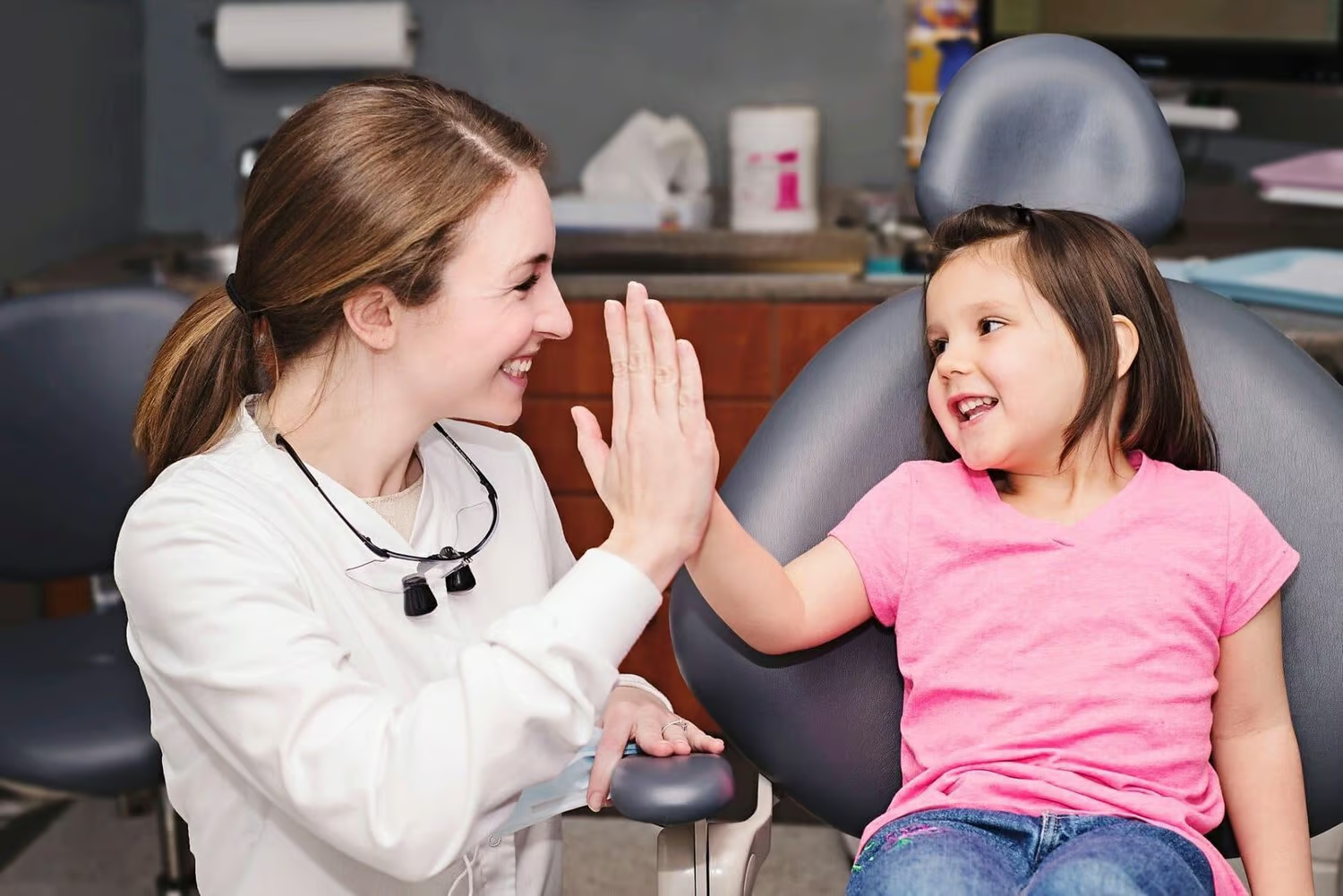



Dr. Horst giving a high five to a young girl in the dental chair
Your family's dental home

Pediatric Dental Exams in Peoria: A Calm Start to Your Child's Dental Care

Dr. Horst giving a high five to a young girl in the dental chair
The short answer
Reviewed by our
Peoria
doctors.
Dr. Michelle Horst, dentist at Associates in Dentistry in Peoria
Dr. Arian Rrushaj, dentist at Associates in Dentistry in Peoria
Dr. Jonathan Gifford, dentist at Associates in Dentistry in Peoria and Washington

Most Peoria families bring their child to the same office the rest of the family already visits. It's familiar, the scheduling is simpler, and a young child who watches a parent sit calmly in the chair usually settles faster. Most of our doctors examine child patients here and refer them to a pediatric dentist when treatment is needed.

01

Why Families Choose a General Dentist for a Child's First Exam

Here's what we hear a lot. "Do I need to find a separate kids' dentist?" For a first exam, usually not.

A pediatric dental exam at a general office has one big advantage, familiarity. The child has probably already been in the building. Maybe they sat on your lap while you had a cleaning. That matters more than people think. A kid who's seen the chair go up and down before isn't scared of it. And the whole visit goes faster because nobody's fighting the room.

There's a practical side too. One office, one trip, one set of paperwork. Parents with two or three kids know exactly what we mean.

But we want to be straight with you about where the line is. Most of our doctors will examine child patients, then send treatment cases to a pediatric dentist. That's on purpose. If your child needs sedation, a filling on a squirmy four-year-old, or care for a special health need, a pediatric specialist has training and equipment built around that. We'd rather hand you off well than stretch past what's right for your kid.

So the general office tends to be the right call when:

  • This is a first or routine check, not an active problem
  • The rest of the family already comes here
  • Your child is generally comfortable in new places
  • You want early guidance on brushing, thumb sucking, or spacing

Our Peoria office is our largest, with 11 operatories going to 15, so we have room to schedule kids at the easier times of day. Mornings, before the fussiness sets in. Nine times out of ten that alone makes the appointment go smoothly.
02

What a Routine Pediatric Dental Exam Covers

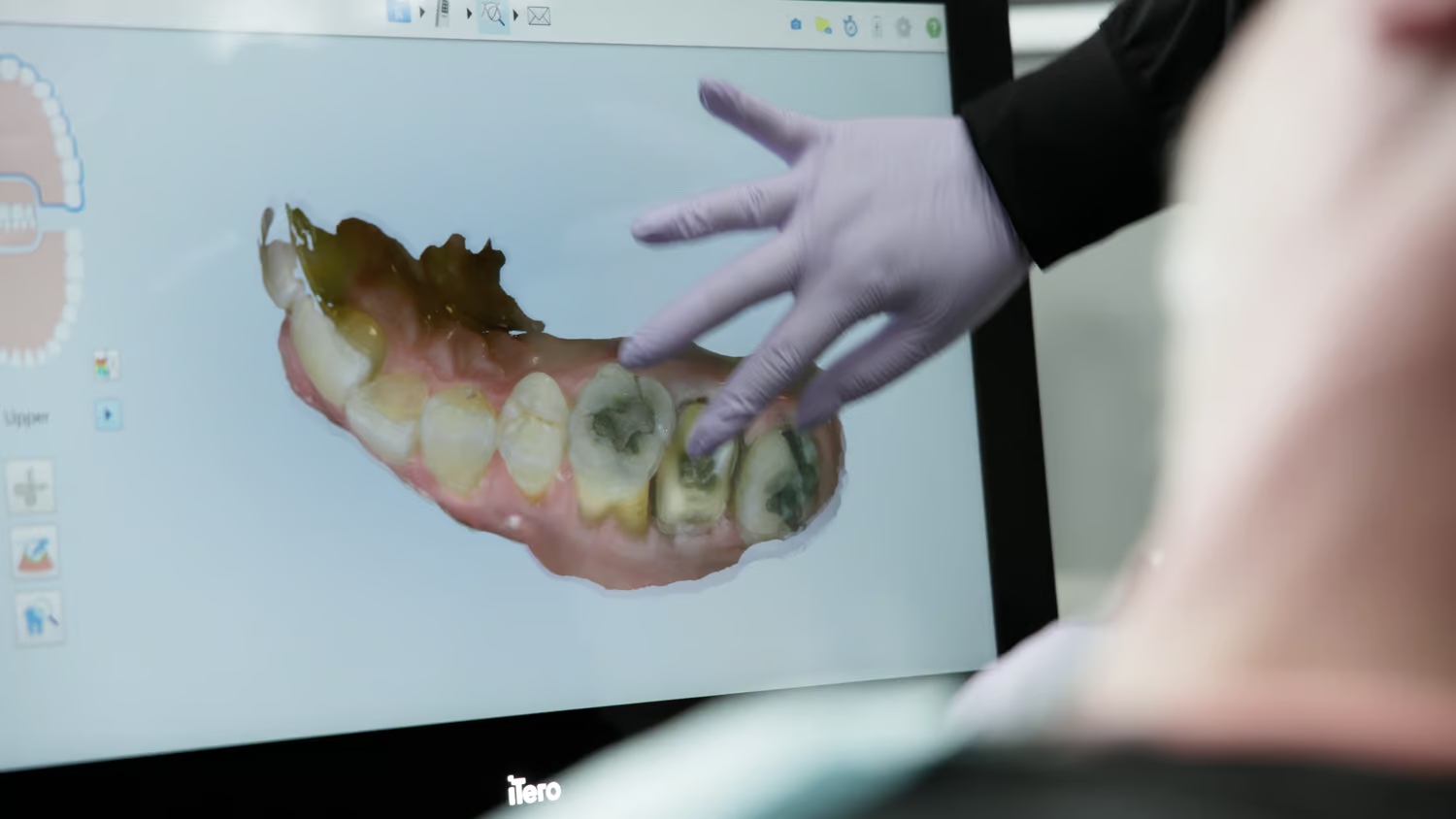
Most parents picture something bigger than it is. A pediatric dental exam is mostly looking, counting, and talking. We check every tooth that's in, and we check the spots where teeth haven't come in yet. Gums get a look too. So does the bite, the tongue, and the way the jaw moves when your child opens and closes.

Here's how a typical visit runs:

  • We ask about habits at home. Brushing, snacks, thumb sucking, sippy cups at bedtime.
  • Your child sits in the chair, usually with you right there. Little kids can sit on a parent's lap.
  • We count teeth out loud. Kids like this part, it turns the exam into a game.
  • We look for early decay, soft spots, and tooth wear from grinding.
  • We check gums, the tongue, and how the top and bottom teeth meet.
  • X-rays only if they're needed, and only the ones that answer a question.
  • We talk through what we saw and what to watch for before the next visit.

A cleaning often happens the same day. Sometimes it doesn't, and that's fine. If a child is having a hard morning, we'd rather get a good look and build some trust than push through and make the next visit worse.

Nine times out of ten, the exam itself takes less time than the drive over.

X-rays deserve a note. We don't take them at every visit, and we don't take them just because it's been a year. They get taken when we can't see between the teeth, when a permanent tooth seems late, or when something on the surface doesn't add up. At our Peoria office, x-rays go through a second-opinion review process, so a second set of eyes looks at anything we flag. That matters more with kids than most parents realize, because early decay on a baby molar can hide in a spot the naked eye won't reach.

And if we find something? We'll tell you plainly what it is, what it means, and whether it needs attention now or at the next checkup.

03

When a Referral to a Pediatric Specialist Makes Sense

Here's something a lot of dental offices won't say out loud. Sometimes we're not the right place for your child's treatment, and you deserve to hear that before you book.

Most of our doctors will examine child patients. We check the teeth, take a look at how the bite is coming in, watch for decay between the molars, and talk through what we see. But when treatment is needed, we usually send the case along to a pediatric dentist. That's not us passing the buck. Pediatric dentists complete extra years of training focused entirely on kids, and that training shows up most in the moments that are hardest for a child.

A few situations where a specialist is almost always the better call:

  • Your child needs fillings, crowns, or extractions and can't sit still long enough to get through them safely.
  • There's significant decay across several baby teeth, sometimes called early childhood caries.
  • Your child has a developmental disability, sensory sensitivity, or a medical condition that changes how care has to be delivered.
  • Sedation or general anesthesia is on the table.
  • A trauma case, like a tooth knocked out or pushed up into the gum after a fall.

There are also times when nothing needs to happen at all. A two-year-old with a small gap between the front teeth? Normal. A six-year-old whose new permanent tooth is coming in behind a loose baby tooth? Usually resolves on its own once the baby tooth falls out. We'd rather tell you to wait and watch than talk you into something.

What we can keep doing is the exam. Regular checkups, x-rays with a second-opinion review process, fluoride, and honest updates on what's changing. Some kids we see for years and never need a specialist visit at all. Others we hand off once and then welcome back later.

And one more thing worth mentioning. We do CO2 laser frenectomies for children here, so tongue-tie and lip-tie cases often don't need to go anywhere else.

Ready to book your child's first checkup?
04

Signs Your Child Should Be Seen Soon vs. at a Routine Visit

Most of what parents notice can wait for the next checkup. But not all of it. Here's how we tell the difference.

Call us the same week if you see any of these:

  • Pain that wakes your child up at night or keeps them from eating
  • Swelling in the gum, cheek, or jaw, especially with a fever
  • A tooth that got knocked loose or knocked out in a fall
  • A white or brown spot on a front tooth that wasn't there a few months ago
  • A chip or crack with a sharp edge your child keeps touching

Swelling with fever is the one that moves to the front of the schedule. That's usually an infection, and infections in kids move fast.

Now the other side. A lot of what worries parents is completely normal and doesn't need an extra trip.

A wiggly baby tooth? Let it wiggle. Kids lose them on their own schedule, and pulling one early rarely helps. A permanent tooth coming in behind a baby tooth looks alarming. We see it constantly, and it usually sorts itself out once the baby tooth falls. Brief sensitivity to cold that stops in a few seconds is fine. Bleeding when your child brushes after skipping a few days is just gums being gums, keep brushing and it settles down in about a week. And mild crowding in a six-year-old means almost nothing yet. Their jaw isn't done growing.

If you're on the fence, just call and describe what you're seeing.

We'd rather talk you through it on the phone and tell you it can wait than have you worry for three weeks. Nine times out of ten it can wait. That tenth time is why we ask.

05

Questions to Ask Before You Book, Including Insurance and Payment

Before you book anywhere, ask a few questions. Most parents don't, then they're surprised at checkout. A two-minute phone call fixes that.

Start with scope. Ask what's included in the pediatric dental exam. Does it come with a cleaning? Are x-rays taken that day or scheduled separately? Then ask the question almost nobody asks: what happens if you find something. Some offices examine kids but send treatment cases along to a pediatric specialist. That's how we work here for most cases, and it's worth knowing up front so you're not caught off guard.

  • Is a cleaning included, or booked separately?
  • Who reviews the x-rays, and does a second set of eyes look at them?
  • If a cavity shows up, do you treat it here or send us elsewhere?
  • How long should I plan to be there?
  • Can I sit in the room with my child?

On the x-ray question, we run a second-opinion review process at our Peoria office. Two doctors looking at the same image catch more than one. Small cavities on a six-year-old molar are easy to miss.

Now the money part.

We moved to fee-for-service in August 2024. That means we're not in-network with any plan. We still accept and bill most insurance, just not Medicaid. Your plan may still cover a good chunk of a preventive visit, benefits vary a lot plan to plan. Call your insurance and ask what they pay for an out-of-network preventive exam for a child. That number is the one that matters.

And if the timing is tight, we offer CareCredit and 0% interest payment plans up to six months. Peoria families watch their budgets closely, median household income here runs around $59,410. Nobody should skip a kid's exam over cash flow.

FAQ

Answers to the most common questions.

Something else on your mind?
Call us at (309) 690-4500.

Does my child need a separate pediatric dentist for a first exam?

Usually not. A first exam works well at a general office your family already visits, since your child has likely already been in the building. That familiarity helps kids settle faster in the chair. We examine child patients here and refer to a pediatric specialist only when actual treatment, like fillings or sedation, is needed. If it's just a routine check, one office and one trip usually makes the whole experience easier for everyone.

What happens during a pediatric dental exam?

It's mostly looking, counting, and talking, not drilling. We check every tooth that's in, look at spots where teeth haven't come in yet, and check gums, tongue, and how the jaw moves. We also ask about brushing habits and thumb sucking. X-rays only happen if we need them to answer a specific question. Most exams take less time than the drive to our Peoria office, and a cleaning often happens the same visit.

When should my child be referred to a pediatric dental specialist?

Referral makes sense when treatment goes beyond a routine checkup. This includes fillings, crowns, or extractions on a child who can't sit still safely, significant decay across several baby teeth, a developmental or sensory condition, sedation needs, or a trauma case like a knocked-out tooth. We examine your child first and only send treatment cases along, so you get an honest answer before anything gets scheduled.

Does my child need dental x-rays at every checkup?

No, we only take x-rays when they're needed to answer a specific question. That means we can't see between the teeth, a permanent tooth seems late, or something on the surface looks off. At our Peoria office, any x-rays we do take go through a second-opinion review, since early decay on a baby molar can hide in spots the naked eye can't reach. We'll always explain why one is or isn't needed.

What time of day is best to book a pediatric dental exam in Peoria?

Morning appointments tend to go smoothest, before fussiness sets in later in the day. Our Peoria office is our largest, expanding from 11 to 15 operatories, which gives us room to schedule kids at those easier morning slots. A calmer child means a faster, more accurate exam, and nine times out of ten that scheduling choice alone makes the visit go better for both you and your child.

Is a small gap or a slow-coming-in tooth something to worry about?

Often not. A small gap between a toddler's front teeth is normal, and a permanent tooth coming in behind a loose baby tooth usually resolves on its own once that baby tooth falls out. We'd rather tell you to wait and watch than push unnecessary treatment. Regular exams let us track these changes over time, so we catch the cases that do need attention while leaving the normal ones alone.

Request an appointment

Call us at (309) 690-4500

Tell Us About Yourself

Are you new to Associates in Dentistry?

Preferred Day and Time (optional)
Thank you! Your submission has been received!

That didn't go through. Please try again, or call your office.