
Woman holding her jaw and head in pain
Your family's dental home

TMJ/TMD Treatment in Peoria: Real Relief for Jaw Pain, Clicking, and Headaches

Woman holding her jaw and head in pain
The short answer
Reviewed by our
Peoria
doctors.
Dr. Michelle Horst, dentist at Associates in Dentistry in Peoria

TMJ disorder rarely shows up as one clear symptom. It usually arrives as a mix of jaw soreness, clicking, morning headaches, and ear pressure that seem unrelated. When those symptoms cluster together, the jaw joint is often the common thread.

01

Jaw Pain, Clicking, and Headaches Can Signal TMJ Disorder

Most people don't walk in saying they have a jaw problem. They say they wake up with a headache almost every day. Or their ear feels full and the doctor found no infection. We hear it constantly.

The temporomandibular joint sits right in front of each ear. It's the only joint in your body that has to work in a matched pair, and it moves thousands of times a day when you chew, talk, swallow, and yawn. When the muscles around it get overworked or the disc inside shifts, pain shows up in places that don't feel connected to teeth at all.

Here's what patients usually describe when TMJ disorder is the cause:

  • Soreness in front of the ear that's worse in the morning
  • Clicking, popping, or a gritty sound when opening wide
  • Headaches across the temples that start before noon
  • Ear fullness, ringing, or pressure with no infection
  • Jaw that catches, locks, or opens crooked
  • Teeth that feel sore or loose with no decay
  • Neck and shoulder tightness on the same side

Not every symptom on that list means you have a TMJ disorder. One click with no pain is common, and plenty of people live with it for decades. But when three or four of these show up together, and they've stuck around for more than a few weeks, that pattern matters.

Nighttime clenching is the quiet driver behind a lot of this. You can't feel it happening, your partner may hear the grinding, and by morning the muscles are already tired. That's why so many people say the pain is worst before they've even eaten breakfast.

Wondering if what you're feeling counts? That question alone is usually worth an exam - the joint leaves evidence on your teeth, and we can see it.


02

A Dentist Is Often the Right First Call for Jaw Pain

Most people with jaw pain start somewhere else. Urgent care. Their family doctor. Sometimes an ear specialist, because the ache sits right in front of the ear and feels like an infection. Those visits usually end with a muscle relaxer and a suggestion to rest. And the pain comes back, because nobody looked at how the teeth fit together.

That's the part a dentist sees every day.

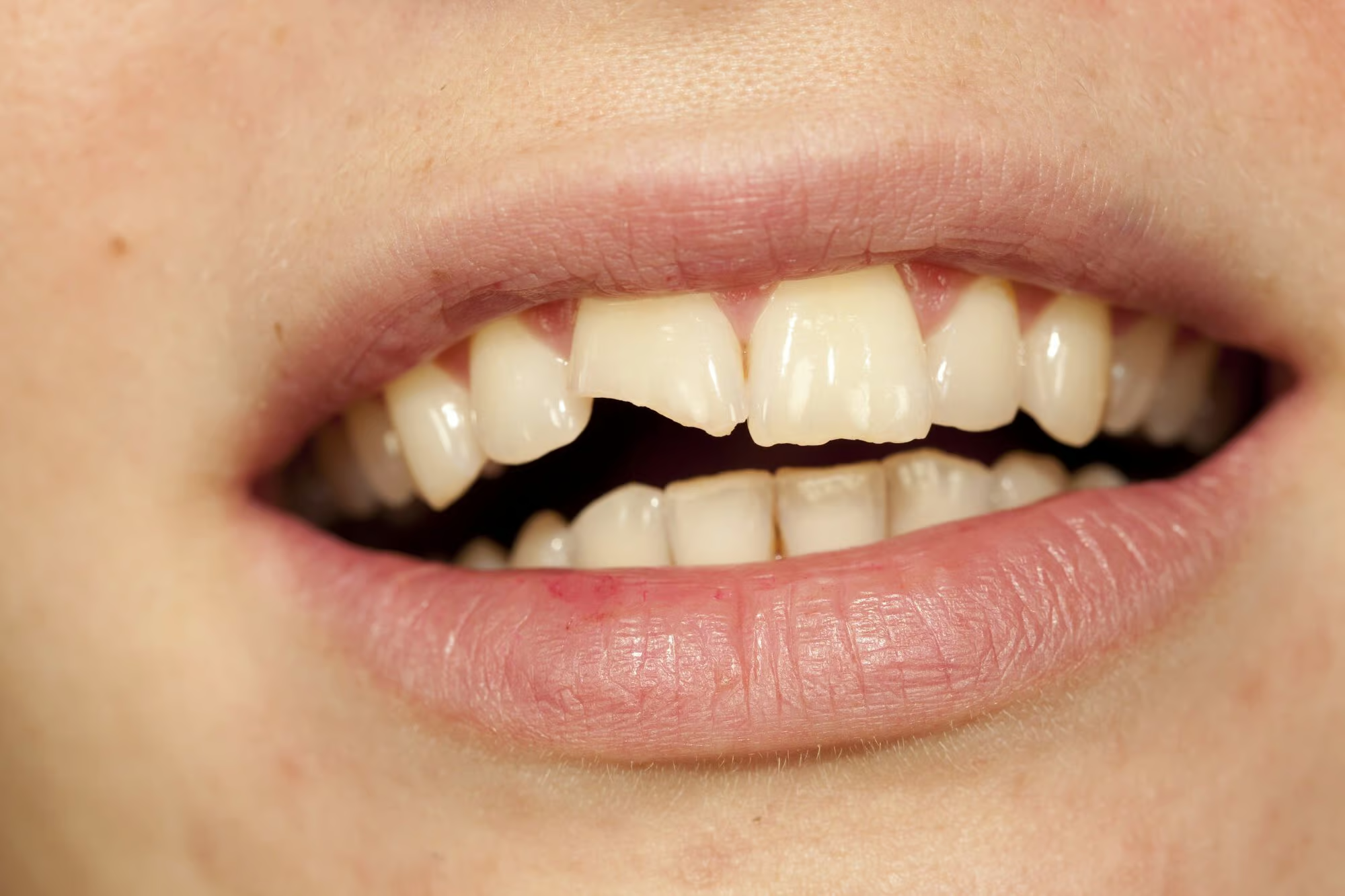
The jaw joint doesn't work alone. It works against your bite. If the teeth meet unevenly, the muscles have to hold the jaw in a position it doesn't want to sit in, and they hold it all day and all night. That's why so much jaw pain shows up with worn enamel, small chips along the front teeth, or a tooth that suddenly feels tall. Those are bite clues. A medical exam won't catch them.

Here's what we're checking when you come in for TMJ/TMD treatment:

  • How far you can open, and whether the jaw drifts to one side on the way down
  • Clicking, popping, or grinding, and whether it happens opening, closing, or both
  • Tenderness in the chewing muscles along the cheek and temple
  • Wear patterns, cracks, and flattened edges on the teeth themselves
  • Whether the back teeth hit before the front ones when you bite down

We'll also look at x-rays, and at our Peoria office those get a second-opinion review before anything gets planned. Nine times out of ten the exam points somewhere clear within twenty minutes.

So if you've already been told it's stress and nothing changed, you probably haven't had the bite examined yet. That's a different appointment, not a repeat of the same one.

03

When Jaw Clicking Does Not Require Treatment

Here's the part nobody wants to say out loud. A clicking jaw, all by itself, usually doesn't need treatment. Lots of people pop when they open wide and go their whole lives without a single day of pain. The joint makes noise. That's it.

So if you hear a click while you're brushing or yawning, and nothing hurts, and you can open wide enough to eat a sandwich, you're probably fine. We tell folks this every week. Some of them look almost disappointed.

Short-lived soreness usually settles down too. You had a long dental appointment, or you chewed gum all afternoon, or you slept funny. The muscles get tired, they ache for a few days, they quiet back down. Soft food, no gum, no ice chewing, warm compress. Give it two weeks before you assume something is wrong. Most of the time that's the whole fix.

But some things shouldn't wait.

  • Your jaw locks open or locks shut, even briefly
  • Pain that wakes you up or sticks around past two or three weeks
  • You can't open wide enough to eat normally
  • A sudden change in how your teeth come together
  • Headaches every morning, or flattened, chipped, sensitive teeth
  • Swelling or a fever near the joint

That last list is the line. Noise without symptoms, watch it. Pain with function loss, get it looked at.

One more honest note. If someone tells you a clicking joint means you need your bite permanently changed or all your teeth reshaped, slow down and get a second opinion. Conservative care comes first, and it works for most people. We'd rather send you home with a chewing rest plan than start something you can't undo.

Jaw pain or clicking? Let's check your bite.
04

What Happens During a TMJ Evaluation Visit

Nothing about this appointment should hurt. That surprises people. They come in bracing for something, and mostly what we do is listen and measure.

Here's how a TMJ/TMD Treatment evaluation usually goes at our Peoria office:

  • We ask about your history. When the pain started, what makes it worse, whether you wake up with it or build up to it by afternoon. Stress, a car accident years back, a night guard that never fit right. It all matters.
  • We watch you open and close. We measure how wide you can open and whether your jaw tracks straight or veers to one side.
  • We feel the joints and the muscles. Fingers just in front of your ears while you open. Then the cheeks, temples, and the sides of your neck, checking for tender spots you may not have noticed until we pressed on them.
  • We look at your teeth for wear patterns. Flattened edges, small chips, notches at the gum line. Your teeth keep a record of what your jaw does at night.
  • We check your bite and how the upper and lower teeth meet. A digital scan with our iTero Lumina gives us a model of that bite without any goopy impression material.
  • We review x-rays, and every set here goes through a second-opinion review before we tell you what we see.

Then we talk. Not in code, in plain words. Muscle pain and joint pain feel similar to you but they get treated differently, so we tell you which one we think we're dealing with and why.

Sometimes the answer is that your symptoms point somewhere else entirely. Sinus pressure, a cracked tooth, a nighttime breathing problem. We'd rather say that out loud than hand you an appliance and hope.

You'll leave knowing what we found. And what the next step looks like, including the option of doing nothing yet and watching it for a few weeks.

05

How TMJ Treatment Options Are Chosen and Priced

Here's the part nobody explains well. The treatment doesn't pick itself. What we find during the exam decides it. Jaw muscles that are tight from clenching get treated one way. A joint disc that slips and clicks gets treated another. And a bite that's been shifting for years is a third thing entirely. Same symptom, three different roads.

So we start small and reversible. Almost always.

That usually means a custom bite splint, some targeted home care, and a check-in to see what moved. If the pain drops, we learned something. If it doesn't, we learned something too. We'd rather find that out with a splint than with permanent work on your teeth.

On cost, TMJ/TMD treatment in this field isn't priced as one flat number. It's priced in pieces, and the pieces stack based on what you need.

  • The exam and imaging, which is where the diagnosis comes from
  • A lab-made custom splint, priced well above a drugstore night guard because it's built off a scan of your bite
  • Follow-up adjustment visits, since a splint that's never adjusted stops working
  • Any bite or restorative work that comes later, only if the splint phase shows it's needed

Insurance is its own maze here. TMJ/TMD treatment sometimes falls under medical coverage instead of dental, sometimes neither, and it varies plan to plan. We're not in-network with any plan, but we do bill most insurance and we'll tell you what we're seeing before you commit to anything. CareCredit and 0% payment plans up to six months are there if spreading it out helps.

Ask any provider one question. Why this treatment, for my specific findings? If the answer is vague, keep asking.

FAQ

Answers to the most common questions.

Something else on your mind?
Call us at (309) 690-4500.

How do I know if my jaw pain is TMJ disorder and not something else?

You likely have a TMJ disorder if you notice three or four symptoms together, like morning headaches, ear fullness, and jaw clicking. One symptom alone, like a click with no pain, usually isn't a problem. But when soreness, headaches, and popping show up as a pattern for more than a few weeks, that combination points to the jaw joint. An exam can confirm it by checking your bite and how your jaw moves.

Does jaw clicking always mean I need TMJ treatment?

No, jaw clicking by itself usually doesn't need treatment. Plenty of people pop when they open wide and never have a single day of pain. If nothing hurts and you can open wide enough to eat normally, you're probably fine. Treatment becomes worth discussing when clicking comes with pain, locking, or headaches that stick around past two or three weeks.

Should I see a dentist or a doctor for jaw pain?

A dentist is usually the right first call, because the jaw joint works against your bite, and that's something a medical exam won't catch. Many people start with urgent care or an ear doctor, get a muscle relaxer, and the pain comes back. Worn enamel, chips, or a tooth that suddenly feels tall are bite clues a dentist checks that others miss.

What happens during a TMJ evaluation appointment in Peoria?

A TMJ evaluation at our Peoria office starts with questions about your history, then we watch how you open and close your jaw. We check tenderness in the chewing muscles, listen for clicking, and look at wear patterns on your teeth. X-rays get a second-opinion review before anything gets planned. Most exams point somewhere clear within about twenty minutes, and nothing should hurt during the visit.

How long does jaw soreness usually last before I should worry?

Give it about two weeks before assuming something is wrong. Short-lived soreness, from a long dental visit or a night of clenching, usually settles with soft food, no gum, and a warm compress. But if pain wakes you up, your jaw locks, or you can't open wide enough to eat, don't wait it out. Those signs mean it's time to get examined.

Can nighttime teeth grinding cause my TMJ symptoms?

Yes, nighttime clenching is often the quiet driver behind TMJ pain. You can't feel it happening while you sleep, but your partner may hear the grinding, and your jaw muscles are already tired by morning. That's why so many people say their pain and headaches are worst before they've even eaten breakfast. An exam can check your teeth for wear patterns that confirm this pattern.

Request an appointment

Call us at (309) 690-4500

Tell Us About Yourself

Are you new to Associates in Dentistry?

Preferred Day and Time (optional)
Thank you! Your submission has been received!

That didn't go through. Please try again, or call your office.