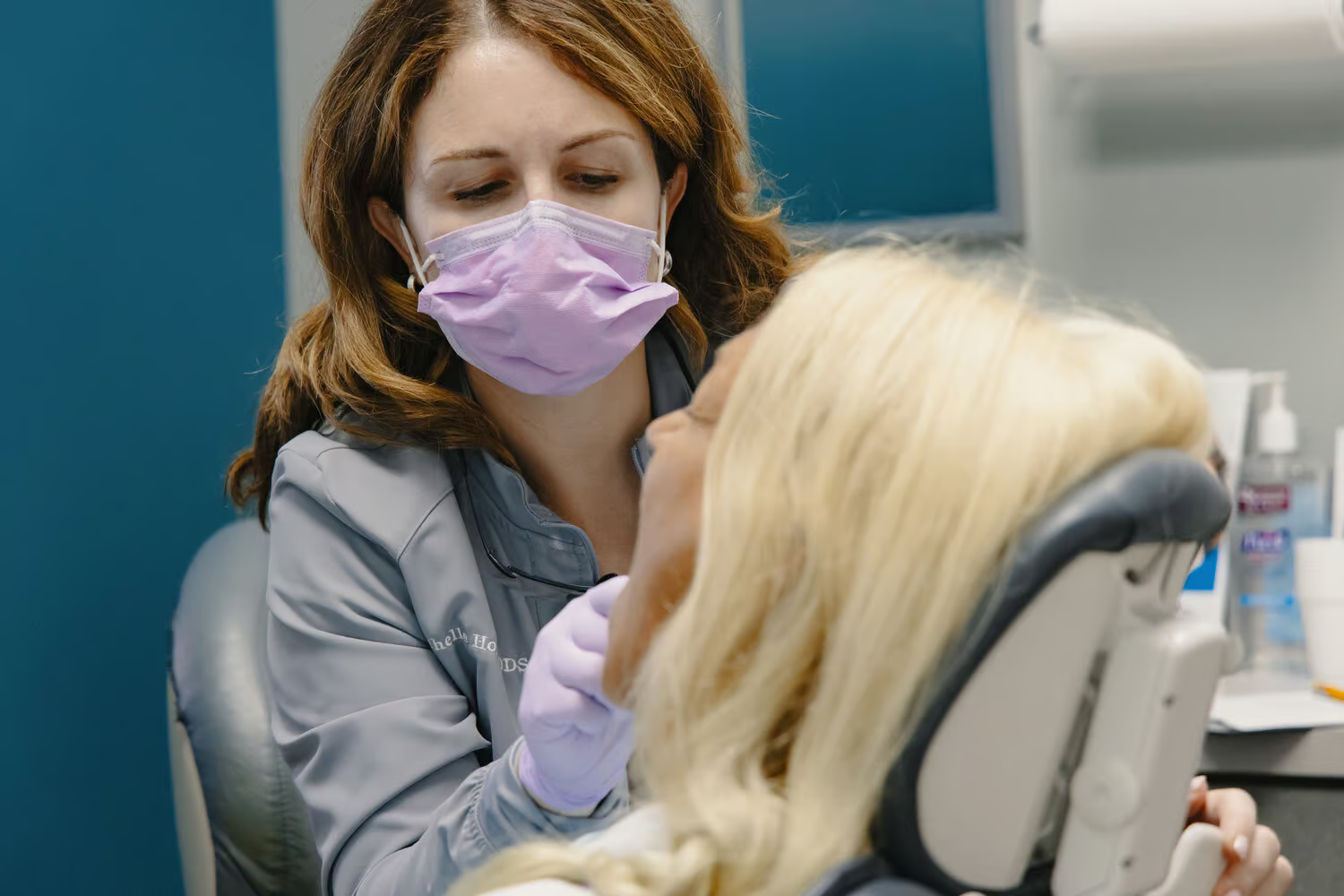



Dentist in a mask examining a patient seated in a dental chair
Your family's dental home

Dental Exams in Peoria: What to Expect at Your Next Visit

Dentist in a mask examining a patient seated in a dental chair
The short answer
Reviewed by our
Peoria
doctors.
Dr. Michelle Horst, dentist at Associates in Dentistry in Peoria
Dr. Arian Rrushaj, dentist at Associates in Dentistry in Peoria
Dr. Jonathan Gifford, dentist at Associates in Dentistry in Peoria and Washington

A dental exam is a head-to-neck check, not just a look at your teeth. Your dentist reviews x-rays, checks every tooth surface, measures the gum pockets, and screens the soft tissue for anything that shouldn't be there. Most of what we catch at this visit hasn't started hurting yet.

01

What A Dental Exam Covers

People picture a quick peek and a thumbs up. It's more than that. We're looking at bone levels, old fillings, bite wear, gum tissue, and the parts of your mouth you never think about.

This is part of General Dentistry in Peoria. Care is provided at our Peoria office by Dr. Michelle Horst, Dr. Arian Rrushaj and Dr. Jonathan Gifford.

X-rays come first for most patients. They show decay between teeth and bone loss under the gumline, and neither one is visible to the naked eye. At our Peoria office every set of x-rays goes through a second-opinion review, so two sets of eyes look at the same images before anything gets called a cavity.

Then we go tooth by tooth.

Here's what a dental exam typically includes:

  • Digital x-rays to find decay and bone loss you can't see
  • A surface-by-surface check of each tooth, including old fillings and crowns
  • Gum pocket measurements around every tooth to track periodontal health
  • An oral cancer screening of the tongue, cheeks, palate, and throat
  • A bite and jaw joint check for clenching, grinding, or TMJ symptoms
  • Digital scanning with our iTero Lumina when we need a precise 3D record

The gum measurements matter more than most folks realize. Numbers creeping from 3 to 5 millimeters means something is changing, and that change usually shows up years before a tooth feels loose. We see this every week in patients who swear nothing hurts.

The oral cancer screening takes about ninety seconds. It's quiet, it's easy to miss if you're not paying attention, and it's one of the most important parts of the visit. But nobody ever asks about it.

At the end, you get a straight answer. What's healthy, what we're watching, what needs attention now - and why.


02

Second Opinions Matter More Than You Think

Here's something most people don't know about reading x-rays. Two dentists can look at the same image and see slightly different things. That's not a knock on anybody. Shadows overlap. Early decay hides under an old filling. A hairline crack shows up on one angle and vanishes on another.

So at our Peoria office we built a second-opinion review process into how x-rays get read. Three doctors practice here, Dr. Horst, Dr. Rrushaj, and Dr. Gifford. When a film raises a question, it doesn't just sit with one opinion.

That cuts both ways, and that's the part patients care about.

It catches things a single reader might pass over. A spot between the back molars that's just starting to break through. Bone loss that's easy to call normal until you compare it to last year's film. But it also catches the other direction. Sometimes a second doctor looks and says that shadow is stable, we've been watching it for three years, leave it alone. We see this every week. Somebody comes in convinced they're about to be handed a long treatment list, and the honest answer is that most of what's there can be monitored.

Ever been told you need four fillings and wondered if that was really true? You're not being paranoid. You're being reasonable.

A dental exam should tell you what's happening in your mouth, including the boring answer. Nothing urgent. Come back in six months. And when something does need attention, you should be able to see it on the screen yourself. We'll pull the image up and point at it. If we can't show you the problem, we shouldn't be asking you to treat it.

Bring old x-rays if you have them. Comparison over time beats any single snapshot.

03

When You Don't Need A Full Exam Yet

Here's something you won't hear in a lot of dental ads. Sometimes a full exam isn't what you need right now. We'd rather tell you that up front than have you sit in a chair for an hour you didn't have to spend.

If you had a full set of x-rays and a checkup somewhere else four months ago, you don't need another one. Bring us the records instead. Most offices will send them over in a day or two, and we can look at what's already been done.

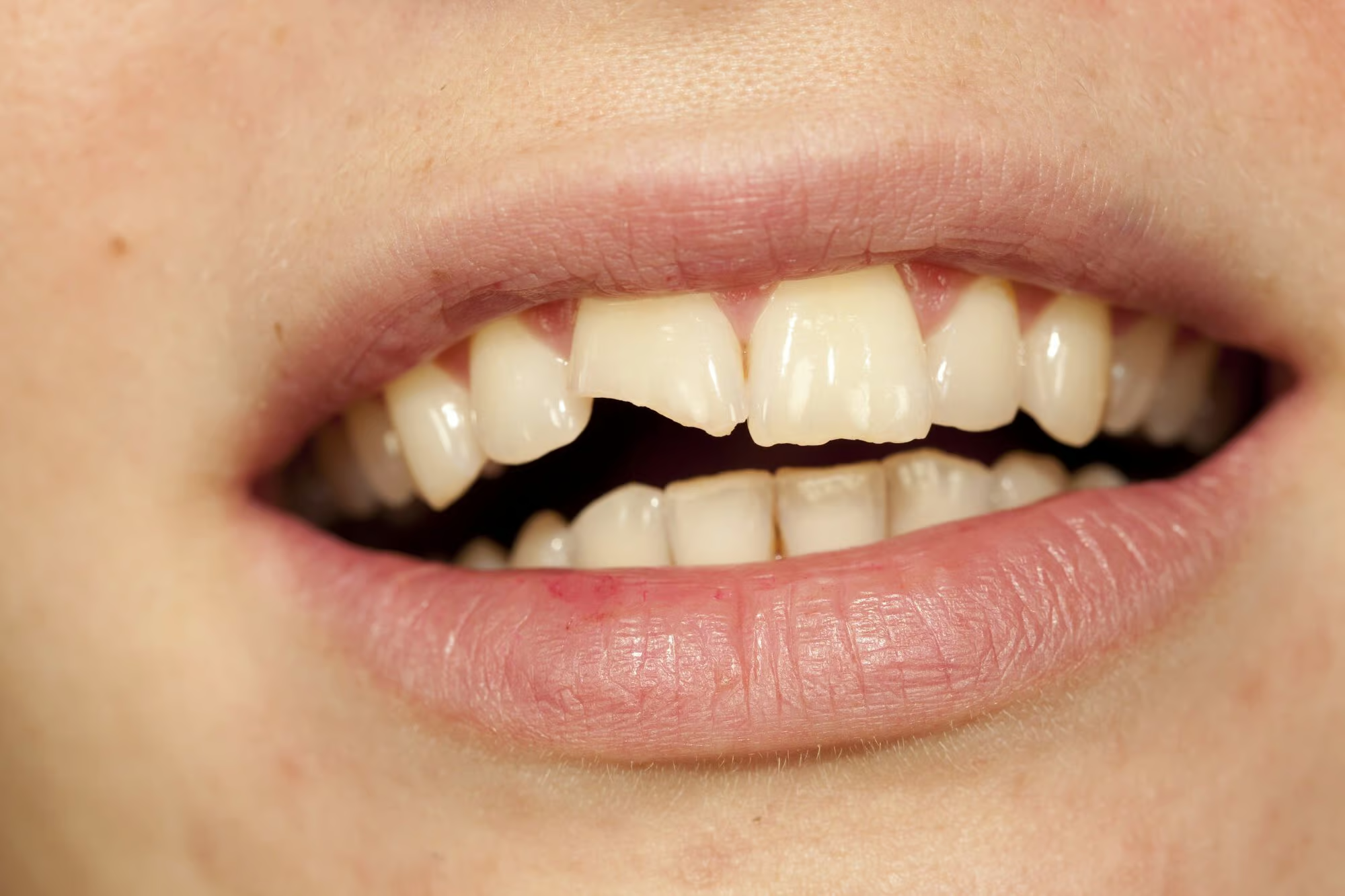
  • You have one cracked tooth and no other complaints. That's a broken tooth repair visit, not a full workup.
  • A crown popped off last night and the tooth underneath doesn't hurt. Bring the crown with you if you still have it.
  • You're in real pain right now. Pain gets handled first. We're not going to chart every surface of your mouth while you're hurting.
  • You had a cleaning and exam within the last six months and nothing has changed since.
  • You're a kid patient needing treatment, not just a look. Most of our doctors will examine children, then refer out to a pediatric dentist for the actual treatment.

Waiting is also fine in some cases. A small chip on a front tooth that doesn't catch your tongue and doesn't hurt? That can hold until your next regular visit. Same with a stain you don't like the look of. Cosmetic stuff isn't urgent, it's a choice you get to make on your own timeline.

The line we watch for is change. Swelling, a tooth that's suddenly sensitive to cold, gums that bleed every single time you brush, a bite that feels off. Those mean something shifted, and that's when the full picture earns its keep.

Nine times out of ten, people know. They just want someone to confirm it.

Due for a checkup? Let's see where things stand.
04

Preparing For A New Patient Exam In Peoria

Most folks show up with nothing but their keys. That's fine. But a few small things make the first visit go a lot smoother, and they help us catch things sooner.

Bring your insurance card if you have one. We bill most plans, though we aren't in-network with any of them, so knowing your coverage up front saves you a surprise later. If cost is on your mind, say so at the front desk. CareCredit and 0% payment plans up to six months are both options here, and it's easier to talk about before treatment than after.

  • Write down your medications, including vitamins and blood thinners. They change how we plan cleanings and extractions.
  • Note any tooth that's been sensitive, even briefly. A twinge you forget by Tuesday is often the first sign of a crack.
  • Tell us about snoring, morning headaches, or a jaw that pops. Those belong in a dental exam, not just a doctor's visit.
  • Ask for your old x-rays if you've seen another dentist recently. Comparing images over time tells us more than a single snapshot.
  • Come a few minutes early. Paperwork eats into chair time otherwise.

Here's what happens once you're in the chair. We take x-rays, then scan your teeth with the iTero Lumina. No goopy trays, no gagging. You'll see your own mouth on a screen while we talk through it.

Every set of x-rays here goes through a second-opinion review by another doctor. Two sets of eyes on the same image. Small shadows at the gumline are easy to miss when you're looking alone, and we'd rather catch one early than argue about it later.

And if it's been years since your last exam? Nobody's going to lecture you. We see it every week in this office, people who put it off during a job change or a rough stretch and finally came in. You'll get a plan, not a scolding.

05

How Exam Costs And Insurance Work

Let's talk about money, because most people are thinking about it anyway. Dental exams are billed differently than treatment. An exam is its own coded procedure, and x-rays are coded separately from the exam itself. So the number you see on a statement usually reflects two or three line items, not one flat charge.

Here's what moves that number up or down.

  • Whether you're a new patient or returning. First visits include more records and take longer.
  • How many x-rays are needed. A single problem tooth needs one image. A full baseline set is more.
  • Whether a 3D scan or intraoral scan is part of the visit.
  • Whether the exam is routine or an emergency visit for pain.
  • How long it's been since your last set of images.

Now the insurance part. We accept and bill most plans, but we're not in-network with any of them. We don't take Medicaid. That distinction matters, so to put it plainly: we'll submit the claim for you, and your plan pays what it pays, but we haven't signed a contract that caps our fees. We moved to a fee-for-service model in August 2024 so that treatment decisions come from the mouth in the chair, not from a network's fee schedule.

Does that mean you pay more out of pocket? Sometimes yes, sometimes no. It depends entirely on your plan, so ask us. We'd rather talk about cost up front than have it be a surprise.

We also offer CareCredit and 0% interest payment plans up to six months.

Before you book anywhere, ask three things. What's included in the exam fee. Whether x-rays are separate. And whether the office will submit your claim for you. Any honest office will answer all three without hedging, we do it on the phone every day.

FAQ

Answers to the most common questions.

Something else on your mind?
Call us at (309) 690-4500.

What does a dental exam check for?

A dental exam checks far more than your teeth. Your dentist reviews x-rays for decay and bone loss, measures gum pockets around every tooth, screens your tongue and cheeks for anything unusual, and checks your bite and jaw for signs of grinding. Most problems caught here haven't started hurting yet. That's the point. Catching gum changes or early decay while it's small means smaller treatment later, and a clearer picture of what's going on in your mouth.

Do I need a full exam if I just had one somewhere else?

No, not if it was recent. If you had a full set of x-rays and a checkup within the last several months, bring those records instead of starting over. Most offices can send them over in a day or two. We'd rather review existing films than repeat work you already paid for. Full exams make the most sense when time has passed, symptoms have changed, or you don't have prior records to compare against.

How long does a dental exam take?

A new patient exam typically covers x-rays, a tooth-by-tooth check, gum measurements, and an oral cancer screening, so plan for more than a quick fifteen-minute visit. The oral cancer screening alone takes about ninety seconds, and it's easy to miss if you're not paying attention. If you're only dealing with one issue, like a cracked tooth or a lost crown, that's a shorter, more focused visit instead of a full workup.

Why did two dentists disagree about what I need?

It happens because reading x-rays isn't always black and white. Shadows overlap, early decay can hide under an old filling, and a hairline crack shows up on one angle but not another. That's why our Peoria office has a second doctor review questionable films before anything gets called a cavity. Sometimes that catches something missed. Other times it means a spot that looked concerning has been stable for years and doesn't need treatment yet.

What should I bring to my first dental exam in Peoria?

Bring your insurance card and any old x-rays you have. Comparing this year's films to last year's shows changes that a single snapshot can't. If a crown or filling recently came out, bring it with you too. If cost is on your mind, mention it at the front desk when you arrive so it can be sorted out before you're in the chair, not after.

How do I know if I really need four fillings?

Ask to see it on the screen yourself. If a dentist can't point to the problem on your x-ray or in your mouth, you shouldn't be asked to treat it. We see patients every week who were told they needed a long list of work and the honest answer turned out to be far shorter. A second opinion built into how films get read helps sort out what needs attention now versus what can just be watched.

Request an appointment

Call us at (309) 690-4500

Tell Us About Yourself

Are you new to Associates in Dentistry?

Preferred Day and Time (optional)
Thank you! Your submission has been received!

That didn't go through. Please try again, or call your office.