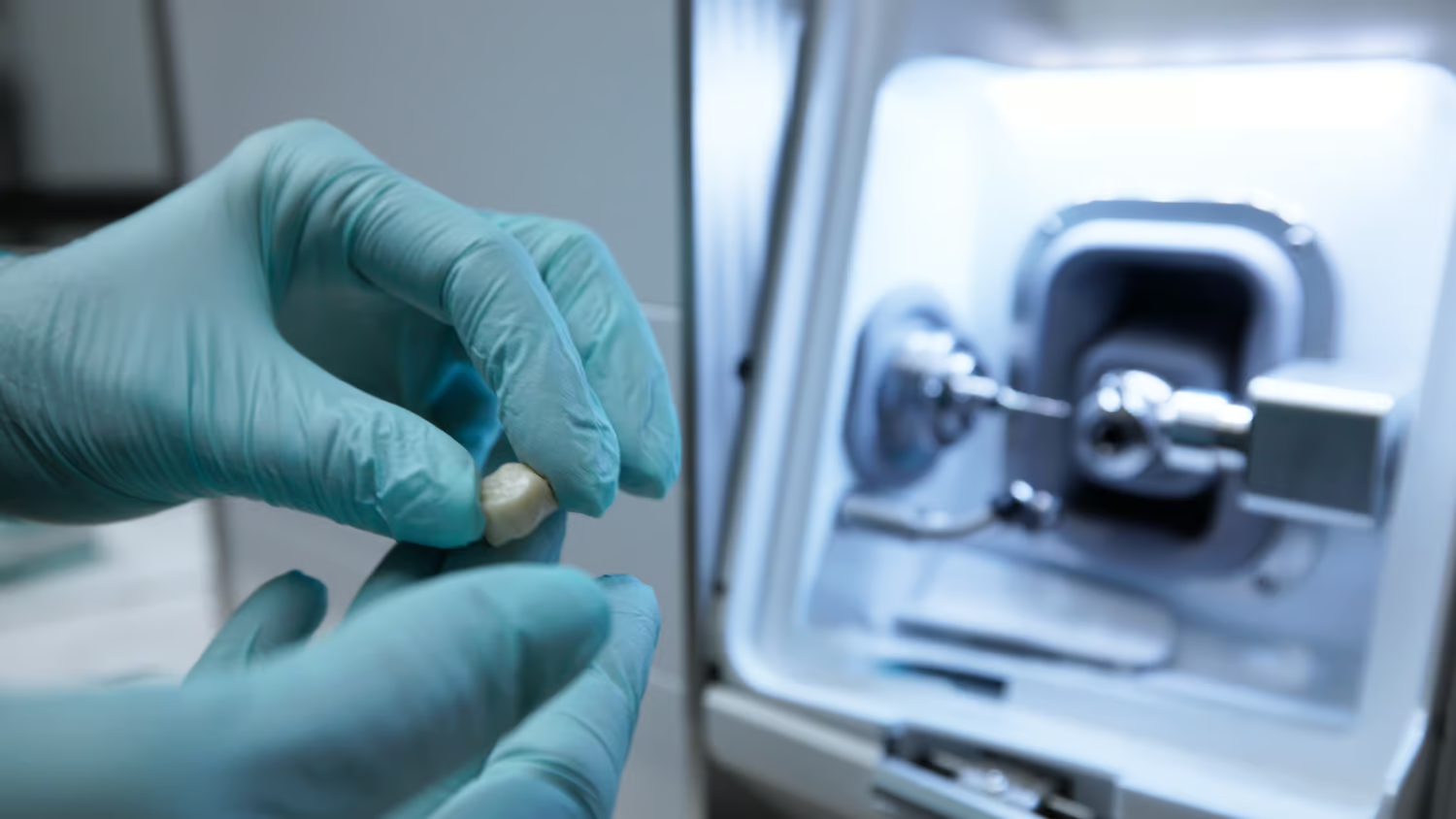



Gloved hands holding a newly milled crown beside an in-office milling machine
Your family's dental home

Same-Day Crowns in Peoria: One Visit, One Restored Tooth

Gloved hands holding a newly milled crown beside an in-office milling machine
The short answer
Reviewed by our
Peoria
doctors.
Dr. Michelle Horst, dentist at Associates in Dentistry in Peoria
Dr. Arian Rrushaj, dentist at Associates in Dentistry in Peoria
Dr. Jonathan Gifford, dentist at Associates in Dentistry in Peoria and Washington

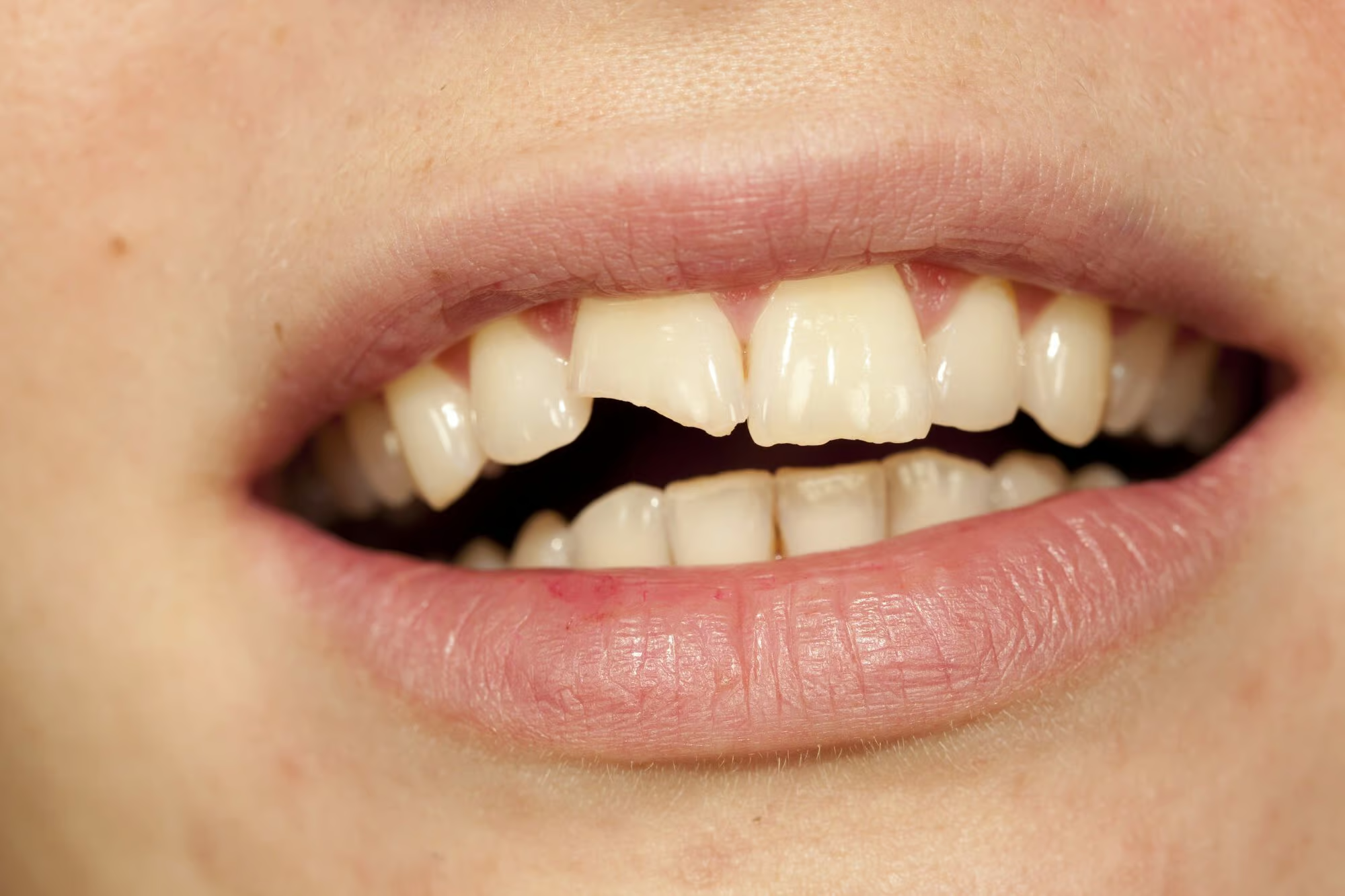
Most teeth that need a crown give you warning first. Sharp pain when you bite down and release, sensitivity to cold that lingers, or a rough edge you keep catching with your tongue are the three we hear about most. A crack that's caught early can usually be crowned before it splits below the gum line, and that's the difference between saving the tooth and losing it.

01

Signs a Cracked or Failing Tooth Needs a Crown

Cracked teeth are sneaky. They don't always hurt when you'd expect them to. The classic one is pain on release, you bite into something, feel nothing, then get a jolt when you let go. That's the crack flexing open and closing again.

This is part of General Dentistry in Peoria. Care is provided at our Peoria office by Dr. Michelle Horst, Dr. Arian Rrushaj and Dr. Jonathan Gifford.

Here's what we hear about most often from patients who end up needing a crown.

  • Sharp pain when you bite down on one specific spot, especially on release
  • Cold sensitivity that hangs around for more than a few seconds after the cold is gone
  • A rough or sharp edge your tongue keeps finding
  • An old silver filling that's bigger than the tooth around it
  • A tooth that's turned gray or darker than its neighbors
  • Food packing into the same spot every single meal

That last one gets ignored a lot. But food trapping in one place usually means the tooth structure has broken down or the filling has pulled away from the edge. It's not a flossing problem.

A tooth that's already had a root canal is another one to watch. Those teeth get brittle. We've seen plenty of them crack years later with no warning at all, usually on something soft like a dinner roll.

Nine times out of ten, the people who wait are the ones who end up needing more than a crown.

So when should you pick up the phone? If pain wakes you up, if the tooth hurts to touch, or if you can see a visible piece missing, that's same-week territory. Digital scanning at our Peoria office lets us look at the tooth closely and figure out whether a crown is the right call before anything gets drilled.


02

Same-Day Crowns Compared to Traditional Lab Crowns

The big difference isn't the crown. It's the waiting.

With a traditional lab crown, we prep the tooth, take an impression or scan, then send it out. You go home in a temporary crown and come back two or three weeks later. That temporary is plastic and it's held on with soft cement, on purpose, so we can pop it off later. It works fine for most people. But temporaries come loose. They come loose on popcorn, on bagels, on caramel, and almost always on a Friday night.

Same-day crowns skip that whole middle chapter. We scan the tooth, design the crown on screen, and mill it in the office. You leave with the finished crown cemented in place.

Here's the honest comparison, tooth by tooth:

  • Visits: same-day crowns are usually one appointment. Lab crowns are two, sometimes three if the bite needs work.
  • Fit: both fit well. A digital scan skips the goopy impression tray, and that alone removes a common source of error.
  • Material: milled ceramic is strong and looks natural. For certain front teeth, a skilled lab technician can layer color by hand in a way a mill can't match.
  • Complex cases: heavy grinding, multiple crowns side by side, or a tooth that needs a root canal first may still do better with a lab.
  • Cost structure: in this industry, a crown is typically one fee regardless of how it's made. What moves the number is the material and whether the tooth needs extra work underneath, not the mill.

So which one do you need? Depends on the tooth. Our Peoria office mills crowns in house, and we still send certain cases out because that's the better crown for that patient. Nine times out of ten it's a back molar and the answer is simple - we can do it today.

03

When a Same-Day Crown Is Not the Right Fit

Here's the part most websites skip. A same-day crown isn't always the right call, and we'd rather say so up front than have you find out in the chair.

The milled crowns we make in the office are ceramic. Strong stuff. But if you grind your teeth hard at night, a lab-made crown in a different material sometimes holds up better on a back molar. We'd talk that through with you before we start. Same goes for front teeth when the shade match has to be perfect across several teeth. A lab technician can layer color by hand in ways a milling unit can't. That's not a knock on the technology, it's just what it is.

Some situations mean we slow down instead of finishing in one visit:

  • The tooth needs a root canal first, and the nerve hasn't calmed down yet.
  • Gum tissue around the tooth is swollen or bleeding, so the scan won't read a clean margin.
  • There isn't enough healthy tooth left to hold a crown, and the tooth may need to come out.
  • You're mid-treatment with Invisalign or another plan that will change how your bite lands.
  • Cosmetic work across your front teeth where matching several shades matters more than speed.

And sometimes the answer is simpler than a crown. A chipped corner might only need cosmetic bonding. A tooth with a small crack and no pain might just need watching at your next cleaning. We see people come in braced for the worst and leave with a filling.

So ask us. If a crown can wait six months, we'll tell you that. If it can't, we'll tell you that too, and explain why.

The goal isn't to finish fast. It's to put something on your tooth you don't have to think about again.

Want your crown finished in a single visit?
04

What Happens During a Same-Day Crown Visit

Most folks picture something complicated. It really isn't. You sit down once, and you leave with the finished tooth in your mouth.

Here's how the visit runs at our Peoria office, start to finish.

  • We numb the area and talk through what we're seeing. No surprises mid-appointment.
  • The tooth gets shaped. We clear out decay or old filling material and give the crown something solid to sit on.
  • We scan with the iTero Lumina. It's a small wand, no goopy tray, no gagging. Takes a couple of minutes.
  • The doctor designs your crown on screen. Shape, bite, contact with the neighboring teeth. You can watch if you want.
  • The mill carves the crown out of a solid ceramic block right here in the building.
  • We try it in, check your bite, adjust the fit, then bond it in place.

Total chair time usually lands in the two-hour range. There's a stretch in the middle while the mill runs, and people use it however they want. Bring a book. Answer emails. Some patients nap, and that's the best use of it.

We had a patient come in on a lunch break after cracking a molar on a popcorn kernel. She was back at her desk that afternoon with a permanent crown, not a temporary.

You'll be numb for a few hours after. Eat carefully until that wears off, mostly so you don't bite your cheek. But there's no waiting period before you use the tooth. The bond is set when you walk out.

Nine times out of ten the thing people mention afterward is how normal it feels. No adjustment period, no temporary crown popping off on a bagel two days later - just your tooth, back to work.

05

How Crown Costs and Insurance Coverage Typically Work

Let's talk money, because this is the question we get before anyone asks about the tooth. Dental crowns are usually billed as one fee per tooth. That fee covers the prep, the crown itself, and seating it. Milling a crown in our office doesn't add a separate lab charge, but it isn't a discount procedure either. Same-Day Crowns are priced like crowns. What you're saving is a second appointment, a second numbing, and a few weeks in a temporary.

Most dental plans treat crowns as a major service. That usually means they cover a percentage rather than the whole thing, and that percentage kicks in only after your deductible. Plans also carry an annual maximum. Once you hit it, you're paying the rest yourself that year.

Here's what's worth asking before you sit down in the chair.

  • What percentage does my plan pay for a crown, and have I met my deductible?
  • How much of my annual maximum is left this calendar year?
  • Does my plan have a waiting period for major services?
  • Is there a frequency limit, like one crown per tooth every five years?
  • Will my plan cover the material the tooth needs?

We're a fee-for-service practice. We accept and bill most insurance, Medicaid excluded, but we're not in-network with any plan. Some people hear that and assume it means more out of pocket. Sometimes it does. Sometimes it doesn't, because in-network fee schedules can also limit which materials and which approach a dentist is allowed to use on your tooth. We'd rather tell you the number up front and let you decide.

And if the timing is rough, say so. CareCredit is available, and we offer 0% interest payment plans up to six months. We know a crown rarely shows up in a convenient month.

FAQ

Answers to the most common questions.

Something else on your mind?
Call us at (309) 690-4500.

How long does a same-day crown appointment take?

A same-day crown appointment usually takes one visit, often two to three hours from start to finish. We numb the tooth, shape it, scan it, and mill the crown right in our Peoria office while you wait. You leave with the finished crown cemented in place. There's no temporary crown and no second appointment. For most back molars, this is the whole process, start to done, in one sitting.

Does getting a same-day crown hurt?

No, getting a same-day crown shouldn't hurt. We numb the area before shaping the tooth, so the prep work is the same as a filling. Some soreness around the gum line is normal for a day or two afterward. If you're already in pain from a cracked tooth, that pain usually improves once the crown is on and protecting the tooth from further stress.

How do I know if my tooth needs a crown instead of a filling?

You likely need a crown if you feel sharp pain when releasing a bite, lingering cold sensitivity, or notice food packing into the same spot every meal. A filling works when the damage is small. A crown becomes necessary when too much tooth structure is gone or a crack threatens to split the tooth. Our Peoria office uses digital scanning to check the tooth before recommending either option.

Can a same-day crown handle a tooth I've been grinding at night?

Sometimes, but not always. Milled ceramic crowns are strong, but heavy nighttime grinding can wear down a same-day crown faster on a back molar. In those cases, a lab-made crown in a different material sometimes holds up better long term. We'd talk this through with you first, before starting any work, so you know which option fits how hard you grind.

What if my cracked tooth also needs a root canal?

If the tooth needs a root canal, we usually wait on the crown until the nerve has calmed down. Scanning a tooth right after root canal treatment doesn't give us a clean, accurate read for milling. We'll handle the root canal first, let things settle, then move forward with the crown. This staged approach gives you a better-fitting, longer-lasting result.

Is it normal for food to keep getting stuck in the same tooth?

No, and it's one of the clearest signs you might need a crown. Food packing into the same spot every meal usually means the tooth structure has broken down or a filling has pulled away from its edge. It's not a flossing habit problem. If this keeps happening in one specific spot, call our Peoria office so we can check the tooth before it worsens.

Request an appointment

Call us at (309) 690-4500

Tell Us About Yourself

Are you new to Associates in Dentistry?

Preferred Day and Time (optional)
Thank you! Your submission has been received!

That didn't go through. Please try again, or call your office.