.svg)
The right dental service depends on what’s happening with your teeth, gums, or dentures. This guide explains the options at our office so you can decide what to ask about when you call.
If you’re looking for a Dentist in Washington, you may already know something feels wrong. Or you may simply be due for a visit and want to find care close to home. At Associates in Dentistry, we help you sort out which service fits your needs, from dental exams and cleaning to care for damaged or missing teeth.
Some choices sound more alike than they are. A filling and a crown both repair a tooth, but they handle different amounts of damage. A partial denture and a complete denture both replace teeth, but the teeth you still have matter. You don’t have to settle those questions before you come in. An exam gives us a chance to look, listen, and explain what we find.
Our office was added in 1974. Dr. Dennis Burton and Dr. Jonathan Gifford see patients here. Today, the goal is straightforward: help you understand your options and take the next step that makes sense for your mouth. Contact Associates in Dentistry to schedule a visit at our Peoria Street office.
General Dentistry at Associates in Dentistry
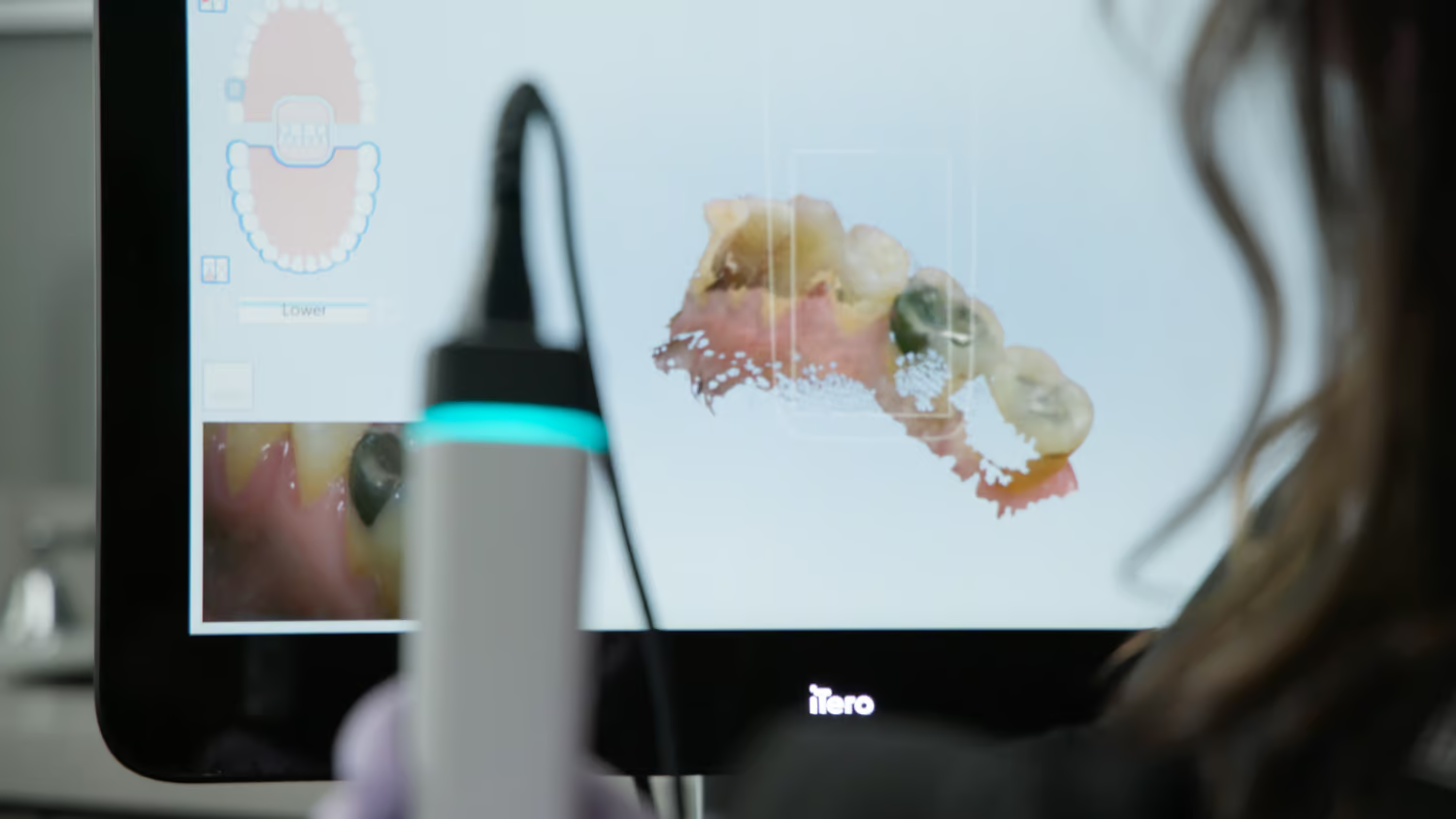
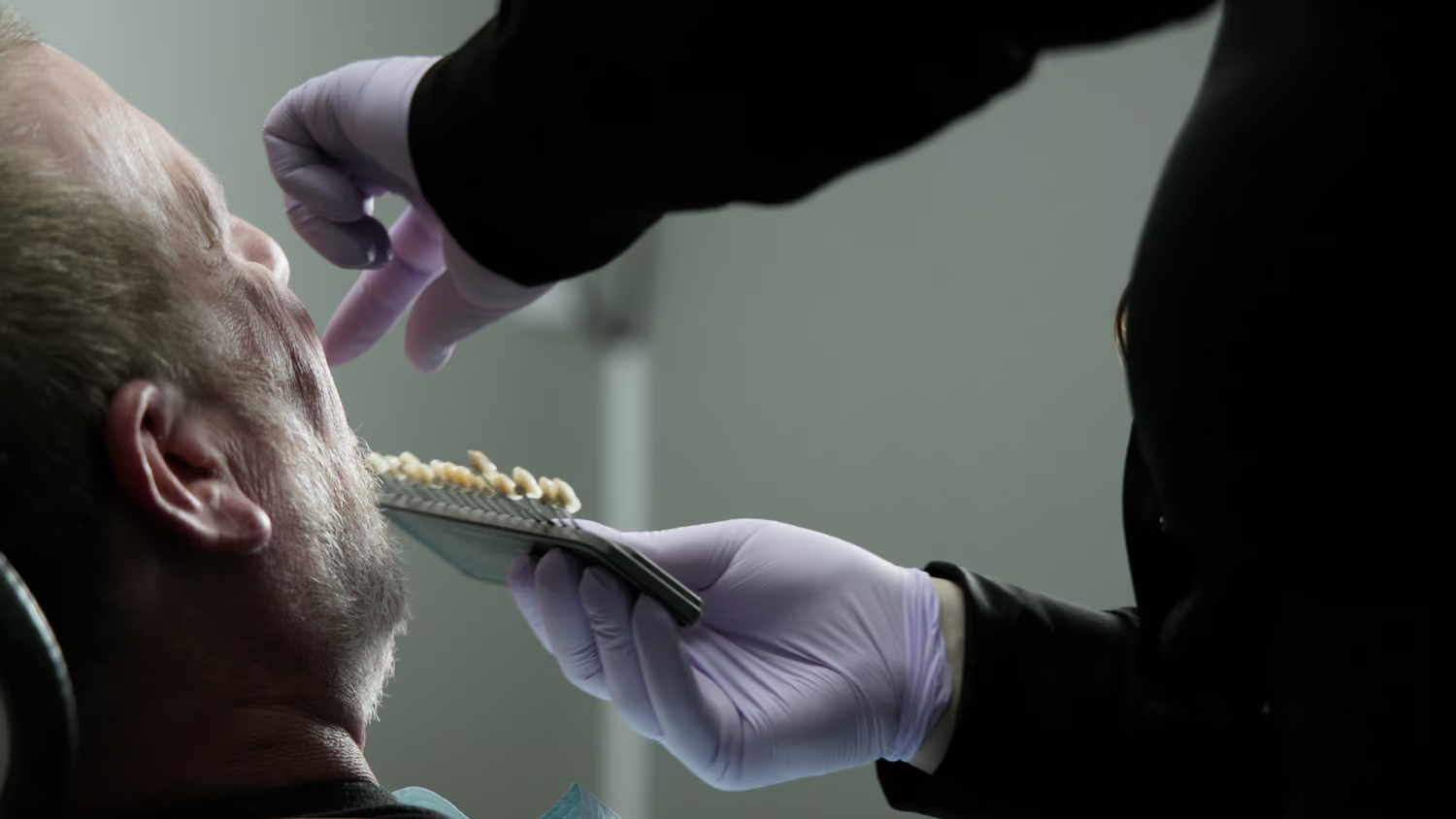
The right care depends on what's happening with your teeth, gums or dentures. Our Washington office offers exams, cleanings, fillings, crowns, bridges, root canals, oral surgery and dentures. You don't need to know which service to ask for. An exam can help determine what you need.
General Dental Treatments We Offer
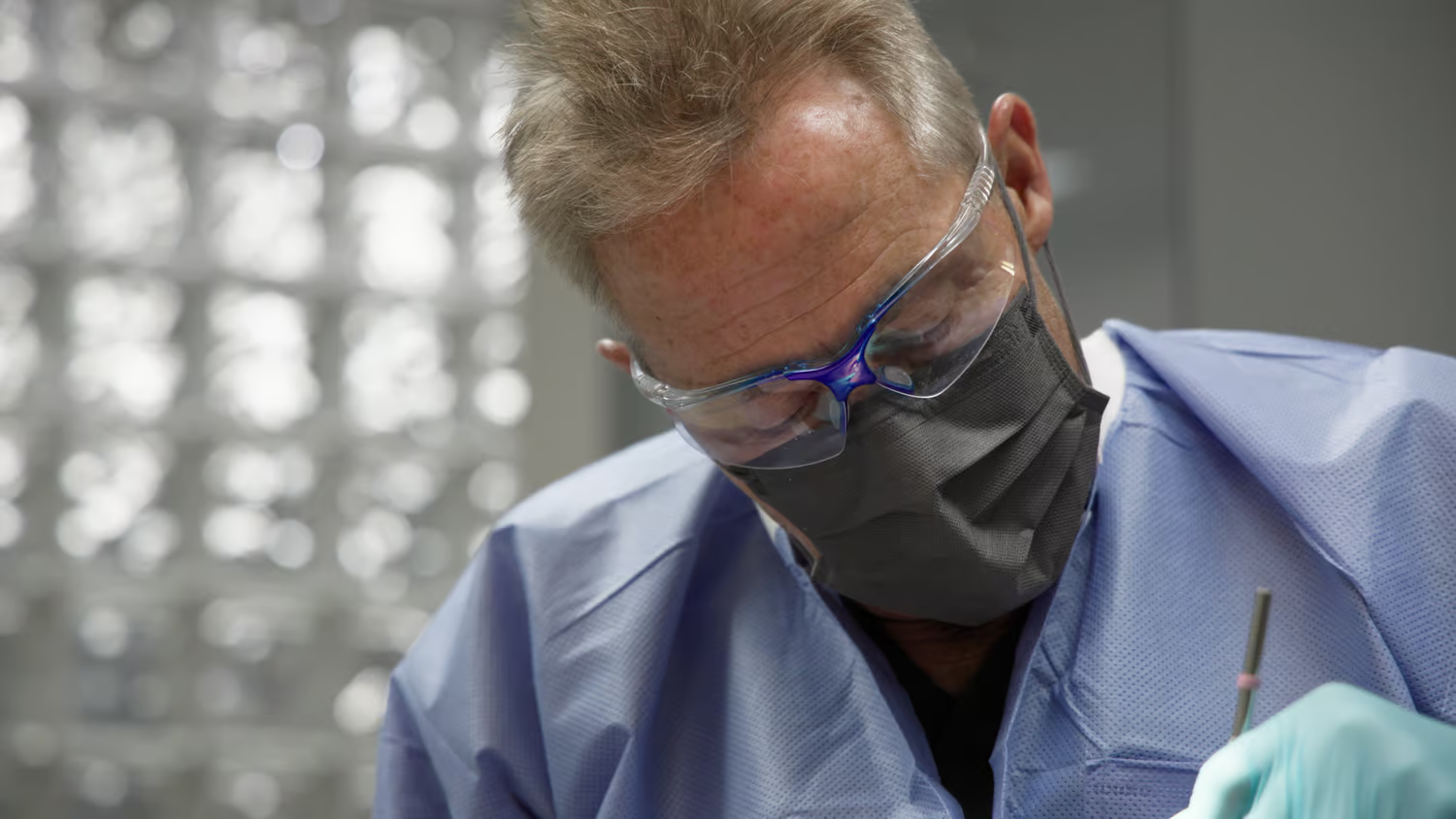
Dental Exams Start Every Visit at This Washington Office
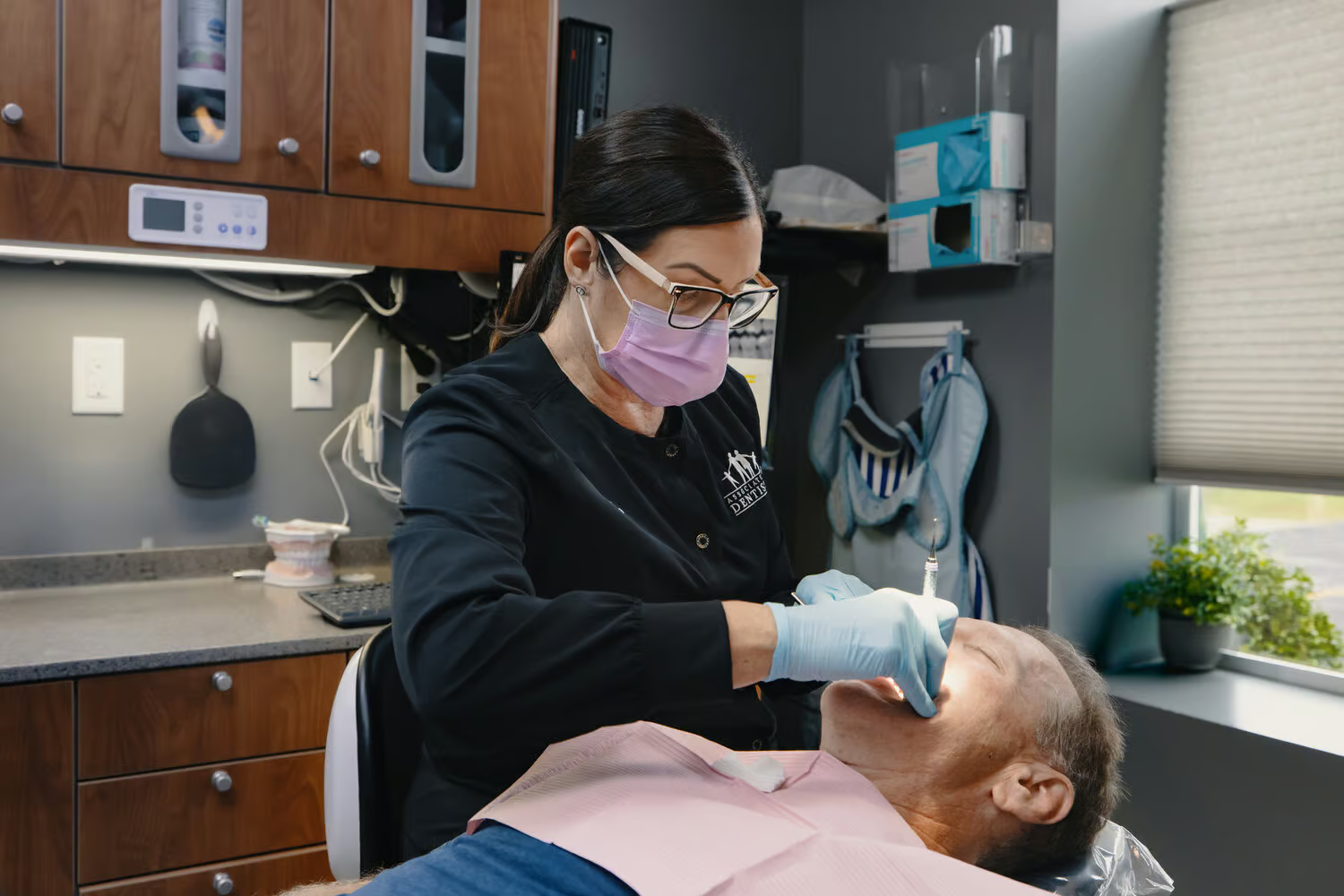
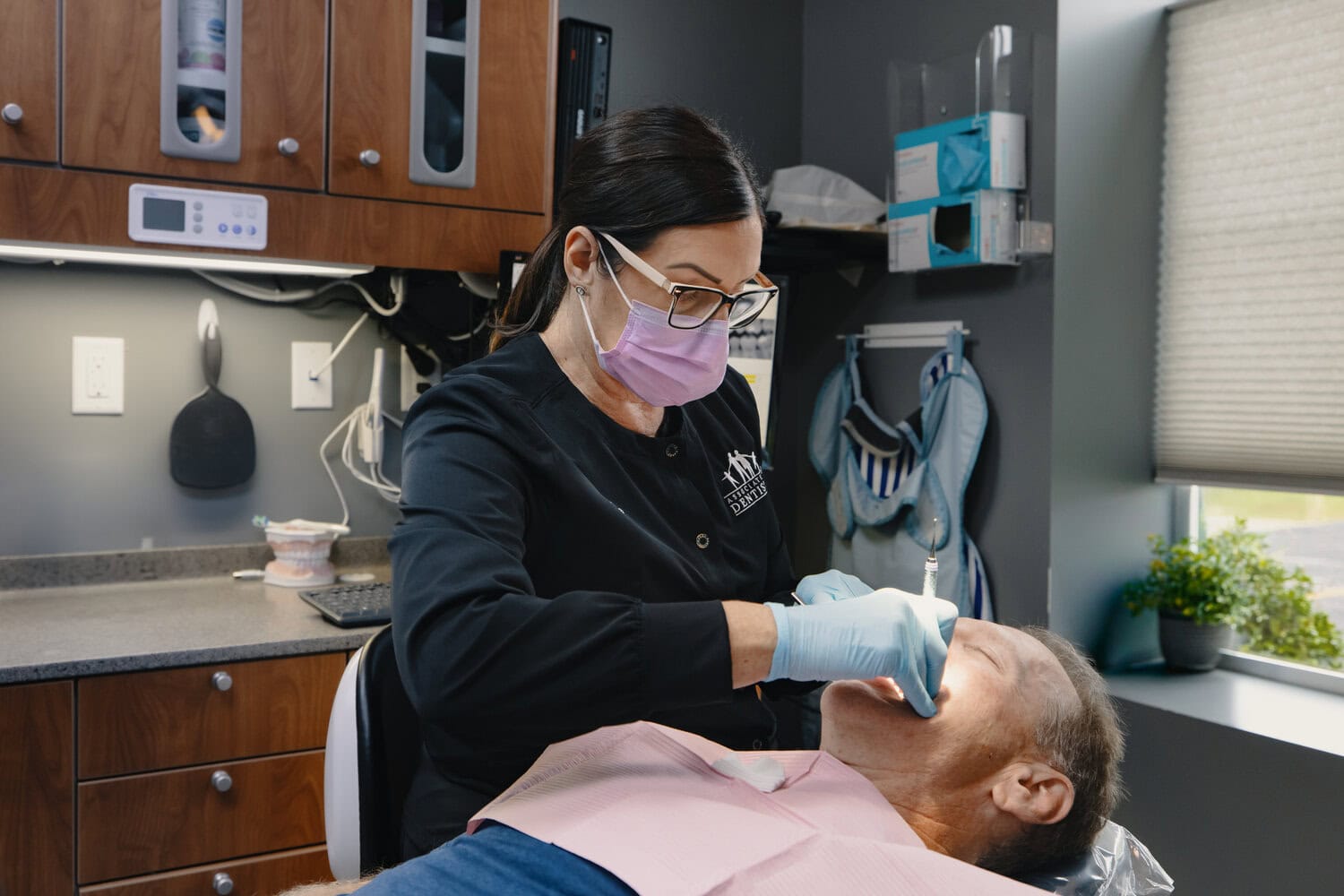
You’ve just moved to Washington and need to get back on track with dental visits. A dental exam is a good place to start. It lets us check your teeth, gums, and bite, and hear about anything that’s been bothering you. You can bring up a sore spot, a tooth that feels different when you chew, or a change you’ve noticed but can’t quite explain.
During dental exams, we look for signs of decay and other problems that may not be obvious to you yet. We’ll also talk through what we see rather than leave you guessing. If something needs attention, the next step depends on the tooth and the problem. If everything looks stable, the exam still gives you a useful picture of your oral health.
You don’t need to know what treatment to ask for before making an appointment. Start with the concern that brought you in, even if it seems small. For a closer look at what a checkup covers, read about Dental Exams in Washington.
Dental Cleaning Removes Plaque Exams Alone Cannot Catch
A dental cleaning does work you can’t do just by brushing at home. Plaque builds up on teeth, and some of it hardens into tartar. A cleaning removes that buildup, including along the gumline. It helps lower the risk of cavities and gum problems while giving your mouth a fresh start.
Dental cleaning and dental exams often happen during the same visit, but they serve different purposes. An exam checks for problems. A cleaning removes buildup that can contribute to them. That distinction matters if you’ve been away from dental care for a while. You may want both a clear picture of your oral health and help getting back to regular care.
There’s no need to feel awkward about a gap between cleanings. Tell us how long it’s been and whether your gums have felt tender or bled when you brush. That information helps us understand what’s going on. If you’re planning a maintenance visit at our office, learn more about Dental Cleaning in Washington.
Composite Fillings Repair Teeth With Minor to Moderate Decay
A small cavity doesn’t always make a tooth hurt. It may turn up during an exam, or you might notice mild sensitivity when you eat or drink. Composite fillings repair areas of minor to moderate decay with a tooth-colored material. The goal is to remove the decay and restore the tooth’s shape so you can use it comfortably.
The size of the damaged area matters more than how dramatic the tooth feels. A tooth can be quiet and still need care. Another tooth can feel sensitive for a reason that isn’t a cavity. We’ll examine it before recommending a filling, so you know what we’re treating and why.
Composite fillings work when enough healthy tooth remains to support the repair. If decay or a crack has weakened too much of the tooth, a dental crown may be the better way to protect it. That’s the choice many people try to make by looking in a mirror, but the damage isn’t always easy to see. Read more about Composite Fillings in Washington before your visit.
Dental Crowns Protect Teeth Too Damaged for a Filling
What if a tooth is cracked or has too much damage for a filling? A dental crown covers the visible part of an existing tooth. It restores the tooth’s shape and helps protect what remains. Dental crowns may also be considered for a tooth that’s had a root canal, depending on the tooth and how much structure is left.
A crown and a filling aren’t two names for the same repair. Composite fillings replace a smaller damaged area within a tooth. Dental crowns cover a tooth when that smaller repair may not give it enough support. We’ll look at the condition of your tooth and explain why one option fits better.
There’s another distinction worth knowing: a dental crown saves and covers a tooth you still have. A dental bridge fills a gap where a tooth is already missing. If you’ve been told you need a crown, it’s fair to ask what part of the tooth needs protection and what the next steps involve. Learn more about Dental Crowns in Washington and how they restore damaged teeth.
Dental Bridges Fill Gaps Left by Missing Teeth
A missing tooth can change how you chew or how you feel when you smile. A dental bridge fills that gap with a replacement tooth anchored to nearby teeth. If more than one tooth is missing, the size and location of the gap help determine whether a bridge is an option.
Dental bridges are fixed in place. That’s an important difference from partial dentures, which also replace some missing teeth but can be removed. A bridge also differs from a dental crown: the crown covers an existing damaged tooth, while the bridge replaces a tooth that’s gone. You don’t need to pick between them based on a picture. We’ll check the gap and the neighboring teeth before talking through what may work.
If you’ve been chewing mostly on one side or avoiding certain foods because of a gap, tell us. Those everyday details help explain what you want to get back to doing. We can discuss how a dental bridge might affect chewing and speech, along with what’s involved in caring for it. Explore Dental Bridges in Washington for a closer look.
Root Canals Save Infected Teeth Before Extraction Is Needed
Tooth pain can leave you wondering if the tooth has to come out. Not always. Root canals treat infection inside a tooth when the tooth can still be saved. The infected tissue is removed, and the inside of the tooth is sealed. A dental crown is often considered afterward to protect the treated tooth.
It helps to tell us what you’ve noticed, even if the pain comes and goes:
Pain when you bite or chew
Sensitivity that lingers
Swelling near a tooth
These signs don’t tell us on their own whether you need a root canal. We’ll examine the tooth before discussing treatment. The key question is whether enough of it can be kept. Root canals aim to save a tooth; oral surgery may be needed when removal is the better path. If you’re worried about a painful tooth, don’t assume you already know the answer. Read about Root Canals in Washington, then call us to arrange an exam.
Oral Surgery Removes Teeth That Cannot Be Restored
Sometimes a tooth is too badly damaged, infected, or impacted to keep. Oral surgery can remove that tooth so the area can heal. We know that hearing a tooth may need to come out can raise questions. We’ll start by explaining what we found and why removal is being considered.
Oral surgery and root canals can come up in a conversation about the same painful tooth, but they take different paths. A root canal treats the inside of a tooth that can still be saved. Oral surgery removes a tooth that can’t be restored. The decision depends on an exam, not on pain alone. A tooth that hurts badly isn’t automatically beyond saving.
If removal is needed, you can ask what to expect at the visit and what choices you’ll have for the space afterward. A dental bridge or denture may be worth discussing once we understand your mouth and your goals. You don’t have to plan all of that by yourself before coming in. For more on this service at our office, see Oral Surgery in Washington.
Complete Dentures Replace a Full Arch of Missing Teeth
Complete dentures replace all the teeth in an upper or lower arch. They’re removable and made to fit your mouth. If you have no natural teeth left in that arch, a complete denture can restore the look of a full set of teeth and help with everyday tasks such as eating and speaking.
The word “complete” describes how many teeth are being replaced, not how much help you need. Partial dentures are for an arch that still has some natural teeth. Complete dentures are for an arch with none remaining. That’s the first difference to understand if you’re comparing the two.
Washington has longtime residents as well as families new to the area, and denture care is part of serving people through different stages of life. If you’re considering complete dentures, bring your questions about fit, daily use, and what happens during visits. We’ll look at your mouth and talk through what applies to you. You deserve an explanation that makes sense without a lot of dental terms. Find more detail about Complete Dentures in Washington.
Partial Dentures Replace Some Teeth While Keeping Others
You can have several missing teeth and still have healthy teeth worth keeping. Partial dentures fill those gaps while fitting around the natural teeth that remain. They’re removable, so they’re different from dental bridges, which stay fixed in place. The right choice depends in part on where the gaps are and the condition of the nearby teeth.
Partial dentures also differ from complete dentures in a simple way. A partial denture works with teeth you still have. A complete denture replaces every tooth in an upper or lower arch. You don’t have to wait until all your teeth are gone to ask about a denture. Keeping healthy teeth can be part of the plan.
Tell us if a gap makes chewing difficult or leaves you unsure about smiling in photos. Those concerns help us understand what you hope to change. We’ll examine your remaining teeth and explain whether a partial denture is a reasonable fit for your mouth. If you want to see what’s involved before making an appointment, read about Partial Dentures in Washington.
Denture Repair & Relines Fix Dentures Patients Already Own
A denture that used to fit well can start to feel loose. It may also crack or become uncomfortable to wear. Denture repair & relines focus on the appliance you already own. A repair addresses damage, while a reline changes how the denture fits against your mouth. Depending on its condition, you may not need a new denture.
It’s worth having your denture checked if you notice:
A crack or broken part
Slipping while you talk or eat
Sore spots where the denture rests
Don’t try to guess from the discomfort alone whether the denture can be fixed. We’ll look at the appliance and its fit before explaining your options. Denture repair & relines are different from partial dentures or complete dentures made as new appliances. The question here is whether the one you have can be restored or refit.
If your denture isn’t working the way it used to, learn more about Denture Repair & Relines in Washington. Call Associates in Dentistry today to book an appointment or ask which service fits your needs.
How do I know if I need a filling or a crown?
What's the difference between a dental bridge and a partial denture?
How often should I really go to the dentist?
I haven't been to the dentist in years. What should I expect at my first visit?
Where is Associates in Dentistry located in Washington, and is it easy to find?
How can I fix my teeth if I'm worried about what it will involve?
Every service below is offered at our Washington office, by the same team.