
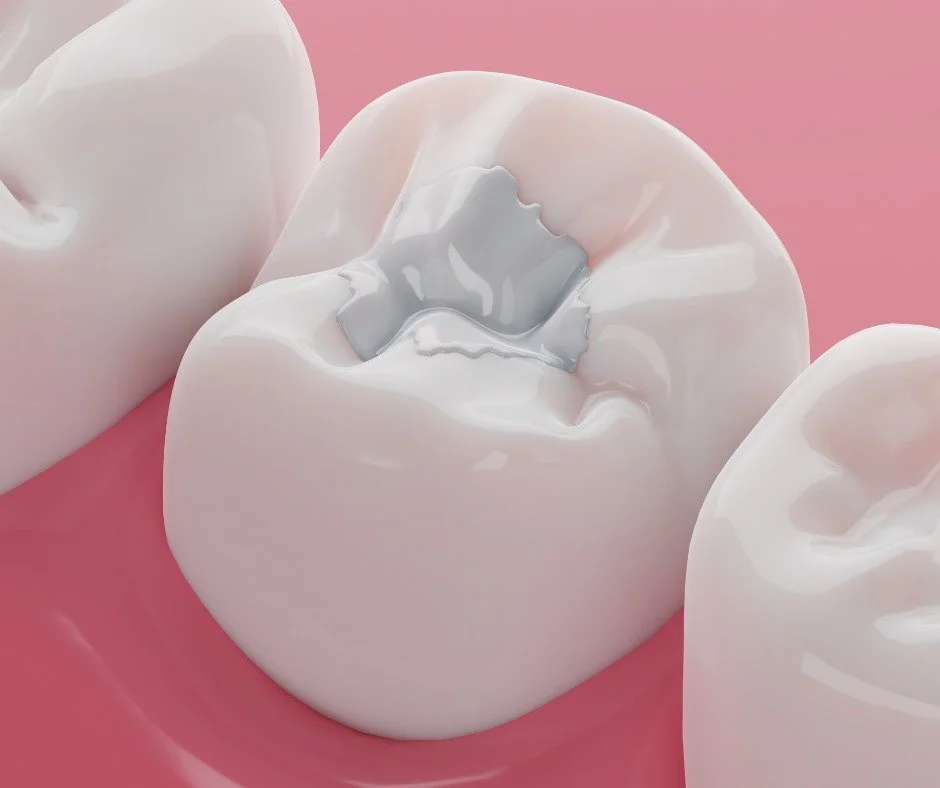


Illustration of a molar with a tooth-colored filling
Your family's dental home

Composite Fillings in Washington

Illustration of a molar with a tooth-colored filling
The short answer
Reviewed by our
Washington
doctors.
Dr. Dennis Burton, dentist at Associates in Dentistry in Washington
Dr. Jonathan Gifford, dentist at Associates in Dentistry in Peoria and Washington

A composite filling repairs a limited area of decay or damage when enough healthy tooth remains to support it. It's tooth-colored, so it blends in with your natural teeth. If a tooth is too weakened or cracked for a filling, a crown may be a better option.

01

Signs a Composite Filling Is the Right Fix

Composite Fillings can repair a small area of decay or damage when enough sound tooth remains. What you see or feel can point to a problem, but it can't tell you on its own whether a filling is the right fix.

A filling replaces a damaged part of a tooth rather than covering the whole tooth. That makes the size of the problem important. A spot that looks small in the mirror may reach farther than you can see, while a dark mark may just be a stain. A dental exam can help tell the difference.

You can see or feel a small hole or rough spot. Food may catch there, but a rough edge doesn't always mean there's decay.

A corner of a tooth has chipped. A filling may be an option if the damage is limited and the rest of the tooth is strong enough.

An older filling looks cracked, feels loose, or has a new edge you can catch with your tongue. The tooth and the filling both need to be checked before deciding what needs repair.

You might also notice a brief twinge when you eat something sweet or cold. That can happen for more than one reason, so it isn't a reliable way to judge the size of a cavity. The same goes for pain when you bite. Tell the dentist exactly what you feel and where you feel it, even if the tooth looks normal to you.

The key question is how much healthy tooth is left around the damaged area. If there's enough to support a repair, a composite filling may be a sensible choice. If much more of the tooth is affected, a filling may not be enough. You shouldn't have to make that call from a photo or a glance in the mirror.

At our office on Peoria St, Dental Exams and Composite Fillings are available. If you've noticed one of these changes, an exam can give you a clearer answer about whether a filling fits the tooth you have.
02

When a Filling Is Not Enough

A composite filling isn't needed just because a tooth looks different. A dark line may be a stain. An older filling may change color at the edge but still be sound. Color alone can't tell you whether there's decay or whether an existing filling needs to be replaced. If the tooth is sound, leaving it alone may make more sense than repairing it. That can be a relief if you've been watching one spot in the mirror and expecting bad news.

At the other end, a filling may be too small a repair for a badly weakened tooth. Picture a tooth that has lost a large piece after years of wear or several past repairs. Filling the open space doesn't necessarily leave enough strong tooth to handle chewing. The same concern applies when a crack reaches beyond the part you can see. A filling can replace missing material, but it can't make a weak tooth whole again. The question isn't only whether the space can be filled. It's whether the tooth left around it can support that repair.

Where the damage sits matters too. A break at the edge of a tooth isn't the same as one that extends under the gumline. The visible piece may look small even when the damage goes farther. In that situation, choosing a filling based on what shows above the gum could leave the larger problem unanswered. That doesn't mean you can tell from home what repair is needed. It means a close look at the whole tooth matters more than the size of the piece that came off.

Pain isn't proof that a filling will solve the problem, either. A sore tooth may have an issue deeper than the area a filling would repair. Pain can also come from something other than a cavity. It helps to describe the feeling, but you don't have to name the cause before you come in. General dentistry in Washington includes dental exams, which can help sort out whether the concern is a tooth that needs repair or one that doesn't need a filling at all.

There's no benefit in choosing the smallest-sounding repair if it won't fit the tooth, and there's no reason to repair a sound tooth just because it has a mark. Sometimes the honest answer is that a filling won't do enough. Sometimes it's that no filling is needed. Either answer gives you a clearer choice than trying to judge the tooth by how it looks or feels alone.

03

Urgent Versus Can-Wait Symptoms

How soon a tooth needs attention is a different question from whether it needs a composite filling. A spot you noticed weeks ago isn't the same as pain that started today and is getting worse. Neither tells you which repair fits, but the change in symptoms matters when you describe the problem.

A mark that hasn't changed and doesn't hurt may be less pressing than a new problem that makes it hard to eat. It still deserves a look if you're concerned. You don't have to decide whether it's decay before making an appointment. Tell us what you noticed, when you first saw it, and whether anything has changed since then.

Pain that lingers, wakes you up, or grows stronger is a different concern from a brief twinge. So is swelling near a tooth or in your face. Those symptoms don't mean you need a filling, and they shouldn't be treated as a simple question about filling material. If you're describing them when you contact a dental office, say so plainly rather than just asking for a filling.

Think about what has changed since you first noticed the tooth. Is the discomfort staying about the same, or does it keep getting harder to ignore? Can you chew as you normally would? Is there swelling you can see? These details give a clearer picture than saying only that you think you have a cavity. They also help separate a cosmetic concern from one that's affecting your day.

If a piece of tooth breaks off, the amount you can see isn't the whole story. The more useful detail for an urgency conversation is what happened next. A tooth that feels unchanged after you notice a small rough edge presents differently from one that becomes painful or is difficult to bite on. You don't need to test the tooth repeatedly to give a useful description of what you already feel.

At our office on Peoria St, Dental Exams and Emergency Dental Pain Treatment are available. When you contact us about a tooth you think may need a filling, let us know if pain or swelling is part of the reason. That keeps the conversation focused on the concern you're having now, not on a repair that may or may not be right.

Think you might have a cavity? Let's check.
04

What Happens During a Composite Filling Visit

If you're coming in for a possible filling, you don't need to know which tooth needs work or how large the repair should be. Tell the dentist what brought you in. Point out a spot that catches food, an edge that feels different, or the tooth you think has a problem. If you have an older filling there, mention it. That gives you a starting point for a conversation about the tooth, rather than a decision based only on what you can see.

Before you agree to a composite filling, ask what needs to be repaired and whether there's enough sound tooth left to support it. A composite filling uses tooth-colored material to repair a limited area. The useful question isn't simply whether the material can fill a space. It's whether that repair fits the tooth. If the answer isn't clear to you, ask the dentist to point out the concern and explain why a filling is being recommended. You can also ask whether an older filling needs to be replaced or whether it can stay as it is.

It's worth asking what to expect on the day of the repair. If you're worried about discomfort, say so before treatment begins. If you have a hard time keeping your mouth open, tell the team. You can ask how long to allow for the appointment and whether the exam and filling need separate visits. Those details can depend on the tooth and the appointment, so it's better to ask than to plan your day around a guess. You don't have to wait until you're in the chair to bring up a concern that could affect your visit.

Before you leave, make sure you understand what was repaired and what you should expect afterward. Ask when you can eat normally and whom to contact if something doesn't feel right. Those are fair questions, especially if this is your first filling or the tooth has bothered you for a while. You should also know whether the dentist found anything else that needs attention, without feeling that you have to decide on more work during the same conversation.

Composite Fillings and Dental Exams are available at our office at 300 Peoria St. When you make your appointment, describe the tooth concern as best you can and ask what kind of visit to schedule. That way, you're asking for help with the tooth, not committing yourself to a filling before anyone has looked at it.

05

Questions to Ask Before Treatment

Before treatment, you should know what you're agreeing to and what it may cost. You don't need a long list of technical questions. Start with the tooth, the repair, and the estimate.

Which tooth needs a filling, and how much of it needs repair? If you came in worried about one spot, make sure you understand whether that's the spot being treated. Ask if the estimate covers one tooth or more than one.

Will the filling show when I smile? Composite is tooth-colored, but the position of the tooth matters to you. If appearance is a concern, say so before you agree to treatment. Ask what you can reasonably expect the repaired area to look like.

What does the estimate include? Ask whether the exam and any other proposed work are listed separately. If a different repair is recommended after the tooth is examined, ask for its cost before making a decision.

How does my insurance plan affect what I pay? Associates in Dentistry is a fee-for-service practice and accepts and bills most insurance plans. Ask the office what fee-for-service means for your visit, whether your plan applies, and how you'll find out what you owe.

An estimate is most useful when you can match each charge to a tooth and a proposed repair. If you don't understand a line, ask what it means. You can also ask whether the amount could change if the dentist finds more damage than expected. That doesn't mean it will change. It means you'll know what to discuss before any additional work.

If you're weighing a filling against another recommendation, ask what each choice would mean for the tooth. You don't have to decide based on which option sounds smaller or which estimate is lower. What matters is understanding why the dentist thinks one repair fits and what concern remains with the other. It's okay to ask for a simpler explanation if the first one doesn't make sense.

You can bring your insurance information and any estimate you've already received, then ask about anything that doesn't match what you expected. A clear answer before treatment is easier to act on than a surprise afterward. Contact our office if you'd like to book a dental exam and talk through whether a composite filling is the right choice for your tooth.

FAQ

Answers to the most common questions.

Something else on your mind?
Call us at (309) 444-8481.

What are the downsides of composite fillings?

The main downside is that a composite filling only works if enough healthy tooth remains to support it. If a tooth has lost too much structure from decay, wear, or past repairs, a filling may not hold up under normal chewing. Color can also be harder to judge over time, since an older filling may shift slightly at the edge even when it's still sound. These are reasons to have the tooth checked before deciding on a repair, rather than reasons to rule out composite on its own.

How much does a composite filling cost?

Cost depends on the tooth, how much repair it needs, and your insurance plan, so it's best to get a written estimate before treatment. Ask whether the estimate covers one tooth or more, and whether the exam is billed separately from the filling. If your insurance applies, ask the office how your plan affects what you pay before you agree to treatment.

How do I know if I need a composite filling?

An exam is the best way to tell. A small cavity, chip, or damaged filling may be repairable with composite when enough healthy tooth remains.

Are composite fillings tooth-colored?

Yes. Composite filling material is tooth-colored, so it can blend with the surrounding tooth.

When is a crown better than a filling?

A crown may make more sense when a tooth has too much damage for a filling to provide enough support. The decision depends on how much healthy tooth remains.

Can a filling fix a chipped tooth?

Sometimes. A limited chip may be repaired with composite, but the dentist needs to check the tooth first to make sure the remaining structure can support the repair.

Request an appointment

Call us at (309) 444-8481

Tell Us About Yourself

Are you new to Associates in Dentistry?

Preferred Day and Time (optional)
Thank you! Your submission has been received!

That didn't go through. Please try again, or call your office.