



Illustration of a dental implant post with a crown, set between natural teeth
Your family's dental home

Dental Implant Restoration in Washington

Illustration of a dental implant post with a crown, set between natural teeth
The short answer
Reviewed by our
Washington
doctors.
Dr. Dennis Burton, dentist at Associates in Dentistry in Washington
Dr. Jonathan Gifford, dentist at Associates in Dentistry in Peoria and Washington

Implant restoration is the crown, bridge or denture that attaches to an implant post once it has healed. It's a separate step from placing the post. Our Washington office provides implant restoration but doesn't place implants, and we can often restore implants that were placed elsewhere.

01

Dental Implant and Implant Restoration Are Two Different Steps

A dental implant is the post that sits in your jawbone like a tooth root. The implant restoration is the crown, bridge, or denture attached to that post, the part you see, smile with, and chew on. They're separate steps, often done at separate times, and both have to be right for the tooth to work well.

This is part of Dental Implants & Gum Care in Washington. Care is provided at our Washington office.

People often use "implant" to mean the whole new tooth. In practice, it comes in two parts, and it helps to know which is which.

The first part is the implant itself. It's a small post placed in your jawbone where the old tooth root used to be. Once it's in, your body needs time to heal around it. The bone grows snug against the post, and that's what makes it steady enough to hold a tooth. You can't see the post once the gum heals over or around it.

The second part is the restoration. It's the piece that goes on top, and it's what you'll notice every day. A small connector, often called an abutment, links the post to the new tooth. The restoration is usually one of these:

A single crown, when you're replacing one tooth.

A bridge, when a few teeth in a row are missing and two or more implants hold them up.

A denture that snaps or locks onto implants, so it stays put better than one that rests on your gums alone.

We have separate pages on crowns, bridges, and dentures if you'd like more on any of those.

The two steps matter for different reasons. The implant has to be solid in the bone. The restoration has to fit your mouth. That means the right shape, the right height, and a shade that blends with the teeth next to it. It also means a bite that lines up when you close. If the new tooth sits a little too high, you may feel it hit first when you chew. Over time that can make your jaw sore or put extra stress on the implant. If the edges don't meet your gums cleanly, food can collect there and your gums can get puffy or tender.

So a good restoration isn't just about looks. It's what makes the implant feel like your own tooth instead of something you have to think about.

Because they're separate steps, they don't always happen at the same office or at the same time. Some people have the post placed, heal for a while, and then come back for the top. Others had an implant placed years ago and only need help now. Maybe the crown cracked, came loose, or never felt quite right. If the post underneath is still healthy, the top part can often be redone without starting over.

That second step is what our office offers. Implant restoration is one of the services at our location at 300 Peoria St, with Dr. Dennis Burton and Dr. Jonathan Gifford. If you have an implant waiting for its tooth, or a restoration that's giving you trouble, this is the step where we can help.

02

Signs Your Implant Needs a New or Repaired Restoration

Most people don't think about their implant tooth at all, and that's how it should be. So when you start noticing it, that's worth paying attention to. Often the trouble is in the top part, not the post in your bone.

Here are the signs people tend to notice first:

The tooth feels loose or shifts a little when you bite or brush.

You hear or feel a small click when you chew.

The crown has a chip, a crack, or a rough spot your tongue keeps finding.

Your bite feels different than it used to, or that tooth seems to land first.

Food gets stuck around it more than it does around your other teeth.

The gum around it looks red or puffy, bleeds when you brush, or feels tender.

An implant denture doesn't snap in as firmly as it once did, or it rocks when you eat.

The crown looks darker or a different color than the teeth beside it.

A loose feeling is the one that worries people most. It helps to know that a wobble doesn't always mean the implant has failed. The crown sits on a connector, and the connector is held by a small screw or cement. Those parts can loosen over time while the post itself stays solid in the bone. It's hard to tell which part is moving just by feel, though. That's why it's best to have it checked instead of guessing.

Changes in your bite are easy to brush off. Your other teeth can shift a little over the years, and a crown that fit well at first may not line up the same way later. You might notice it as a sore jaw in the morning or one tooth that seems to take the hit when you chew. As we covered above, a bite that's off can put extra stress on the implant, so it's not something to just live with.

Gum changes deserve a closer look too. Puffy or bleeding gums around an implant can come from food and plaque collecting at the edge of the crown. Sometimes the shape of the restoration makes that spot hard to clean. A better-shaped crown can make daily care easier. Gum health around implants is also tied to the periodontal care we offer, which has its own page.

Implant dentures have their own wear pattern. The small parts that hold the denture onto the implants can wear down with daily use. When that happens, the denture starts to feel less secure even though the implants underneath are fine.

Not every sign means a brand-new crown. Some problems need only a small fix to the part that's loose or worn. Others call for a new restoration. Starting over with a new implant is a different and bigger question, and it's rarely the first answer when the post is still healthy.

If you're not sure whether your issue is the top part or the implant itself, our page on implant dentistry in Washington explains how the whole process fits together. Either way, a quick look can usually tell you which part needs help.

03

When Implant Restoration Is Not the Right Service

Implant restoration fixes or replaces the top part of an implant tooth. That's a narrow job. Sometimes it's not the help you need, or not yet. Here are the times we'd tell you so.

You don't have an implant yet. If you're missing a tooth and nothing has been placed, there's no post for a restoration to sit on. Getting the post placed is its own step, and it comes first. It's also worth knowing that an implant isn't the only way to fill a gap. A bridge or a partial denture can replace missing teeth too. Each has its own page if you'd like to compare.

Your implant is still healing. The bone needs time to settle around the post before it can hold a tooth. If yours was placed recently, the best thing you can do is wait. Follow the plan from the dentist who placed it, and check with them about when it's ready. Putting a crown on too soon doesn't speed anything up.

The problem is the post, not the top. A new crown can't fix an implant that's moving in the bone, or one where the bone around it has worn away. If the post itself is the problem, a restoration won't solve it. You'd need that looked at first, and the answer may be a bigger conversation than a new crown.

Your gums need care first. When the gum around an implant is swollen or bleeding, it usually makes sense to calm it down before anything new goes on. A new crown placed on sore, puffy gums can't fit as well as it should. Our periodontal care page covers that side of things.

The pain is coming from somewhere else. Mouth pain can be hard to pin down. An ache that seems to sit in your implant tooth might be coming from the natural tooth next to it. A cavity, a cracked tooth, or a tooth that needs a root canal can all feel like an implant problem. Replacing a crown that's working fine wouldn't help.

You're thinking about whitening. Whitening can brighten your natural teeth, but it won't change the color of a crown. If you plan to whiten, it's usually smarter to do that first. Then a new crown can be matched to your brighter shade. If you just want a lighter smile and your implant crown fits well, whitening alone may be the answer.

Nothing feels wrong. If your implant tooth looks fine, chews fine, and your gums are calm, you don't need a new restoration. An older crown isn't a problem just because it's older. Keep up with brushing, flossing around the implant, and your regular exams and cleanings. That's enough.

No implant placed yet: the post comes first, or you can compare a bridge or partial denture.

Implant still healing: wait for the go-ahead from the dentist who placed it.

Post loose in the bone: a new top won't fix it.

Swollen or bleeding gums: treat the gums first.

Ache that could be a nearby tooth: find the source before replacing anything.

Implant feels fine: keep up regular care and leave it alone.

If you can't tell which of these fits you, that's normal. It's often hard to know from the outside. An exam can show whether the trouble is the top, the post, your gums, or a nearby tooth. Then you only fix what needs fixing.

Is your implant ready for its crown? Let's check.
04

What Happens During an Implant Restoration Visit

Restoring an implant usually takes more than one visit. The first visit is about checking and measuring. A later visit is when the new tooth goes on. Here's the general shape of it so nothing catches you off guard. Your dentist will explain how it fits your own mouth.

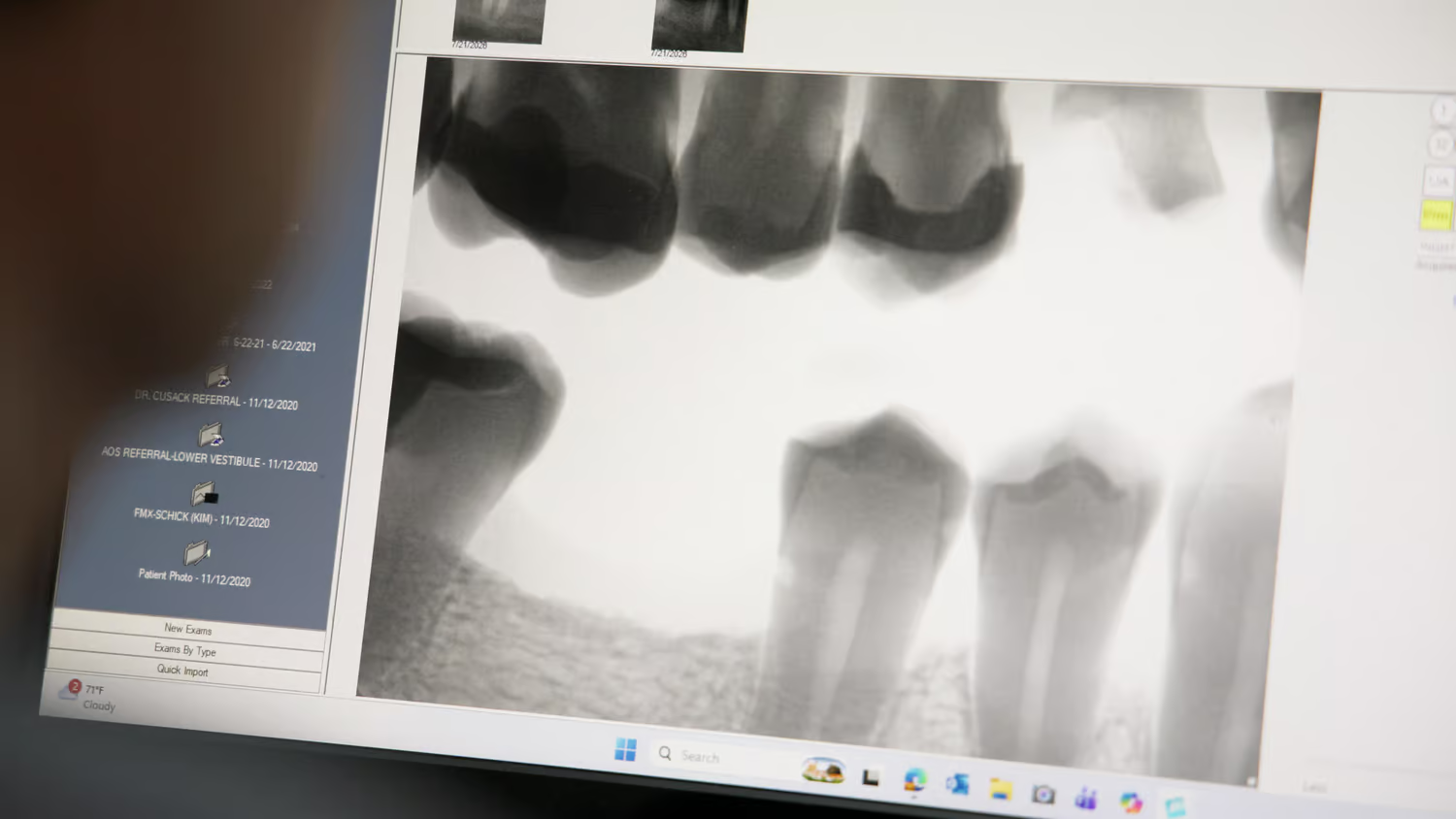
It starts with a look at what's already there. The dentist checks your gums and the area around the implant. An X-ray shows the bone around the post, so you both know it's solid before anything new is made. If you're replacing an older crown, the next question is how it's attached. Some crowns are held by a small screw and can often be taken off. Others are cemented on and may need to be removed in pieces.

Next comes measuring. The dentist takes a mold or a scan of the implant and the teeth around it, depending on the office. They'll also match the shade to your neighboring teeth so the new one blends in. Most implant crowns, bridges, and denture parts are then made by a dental lab, which takes some time. You may go home with a temporary tooth in the meantime.

At the next visit, the new restoration gets tried in before it's attached for good. This is the careful part, and it's worth the time. The dentist usually checks a few things:

How the edges meet your gums, so there's no gap where food can collect

How it touches the teeth beside it, so floss slides through but food doesn't wedge in

How your teeth come together, often by having you bite on thin marking paper

How the shade looks in your mouth, not just next to a color guide

Small adjustments are normal at this stage. Getting the bite right now is what keeps that tooth from landing first, the problem we covered earlier. Once it fits, the restoration is attached. A screw-held crown is tightened, and the small opening on top is filled with a tooth-colored material. A cemented crown is set in place, and any extra cement is cleaned away from the gumline.

Many people expect this to hurt more than it does. The implant post has no nerve, so the work on top is often easier than work on a natural tooth. Your gums can still feel tender, and numbing can help when it's needed. Ask about it ahead of time if you're nervous.

Implant dentures can be simpler. When the only problem is worn snap-in parts, swapping them out is often a smaller job than making a new denture. A denture that has worn down or cracked may need more work.

Your new tooth may feel a little different for a few days while your tongue gets used to it. That's normal. If your bite still feels off after that, or one spot feels high, say so. It's a quick fix and better caught early.

One tip helps if your implant was placed somewhere else. Bring any records you have, like the date it was placed and the name of the office that did it. Those details help the dentist order the right parts for your post.

05

Getting a Restoration for an Implant Placed Elsewhere

It's very common to have the post placed at one office and the tooth finished at another. Maybe a surgeon placed your implant and sent you back to a general dentist for the top. Maybe you moved to the Washington area after your implant went in. Or maybe the dentist who did your crown has retired. None of that means you're stuck or that you have to start over.

The main thing to know is that implants aren't all built the same. Many companies make implant posts, and each one has its own connection, the spot where the abutment and crown attach. A new restoration has to use parts that match that connection. That's why the records we mentioned earlier help so much. When the system is known, the right parts can be ordered. When it isn't, an X-ray and a close look at the post can often narrow it down.

Once in a while, an older or less common system is hard to match. Parts may be discontinued or harder to find. That doesn't automatically mean a new implant. It may just mean more steps, like a custom part made by the lab. Your dentist can walk you through the choices once they know what's in your mouth.

Cost works the same way. It depends on what your mouth needs, so it's hard to give one number without an exam. A few things tend to push the cost up or down:

What's being made: a single crown, a bridge, or a denture that attaches to implants

Whether the old abutment can be reused or needs to be replaced

How easily parts for your implant system can be found

Whether an old cemented crown has to be cut off first

Whether your gums need care before the new tooth goes on

Insurance can be confusing here too. Some plans treat the implant post and the restoration on top as separate items, and they may cover one differently from the other. It's worth calling your plan and asking how they handle an implant crown, an abutment, and implant denture parts. Associates in Dentistry accepts and bills most insurance plans, and you can ask for a written estimate before you decide anything.

Here are a few good questions to bring to any office, including ours:

Can you tell which implant system I have?

Can my current abutment be reused, or does it need replacing?

Will my new tooth be held by a screw or by cement, and why?

What will my insurance likely cover, and what will I owe?

At our office, you'll see Dr. Dennis Burton or Dr. Jonathan Gifford. Dr. Burton joined the practice in 1988, so he's been part of this office for more than 30 years. Dr. Gifford splits his time between our Peoria and Washington offices. Either one can look at your implant, tell you what they find, and help you decide what makes sense next.

FAQ

Answers to the most common questions.

Something else on your mind?
Call us at (309) 444-8481.

What is implant restoration?

Implant restoration is the crown or other tooth replacement attached to an implant post after the post is ready to receive the restoration.

Does implant restoration include placing the implant post?

No. Implant placement and implant restoration are separate steps.

Can you restore an implant placed by another dentist?

Often, yes. We can evaluate the implant and determine whether restoration is appropriate.

What if I have an implant post but no replacement tooth?

That is the stage implant restoration addresses. The dentist will examine the implant and surrounding tissues and determine what restoration is appropriate.

What if my implant restoration is damaged?

An implant-supported restoration that is loose, damaged, or no longer functioning as it should should be evaluated. The dentist can determine whether the restoration can be repaired or needs replacement.

Request an appointment

Call us at (309) 444-8481

Tell Us About Yourself

Are you new to Associates in Dentistry?

Preferred Day and Time (optional)
Thank you! Your submission has been received!

That didn't go through. Please try again, or call your office.