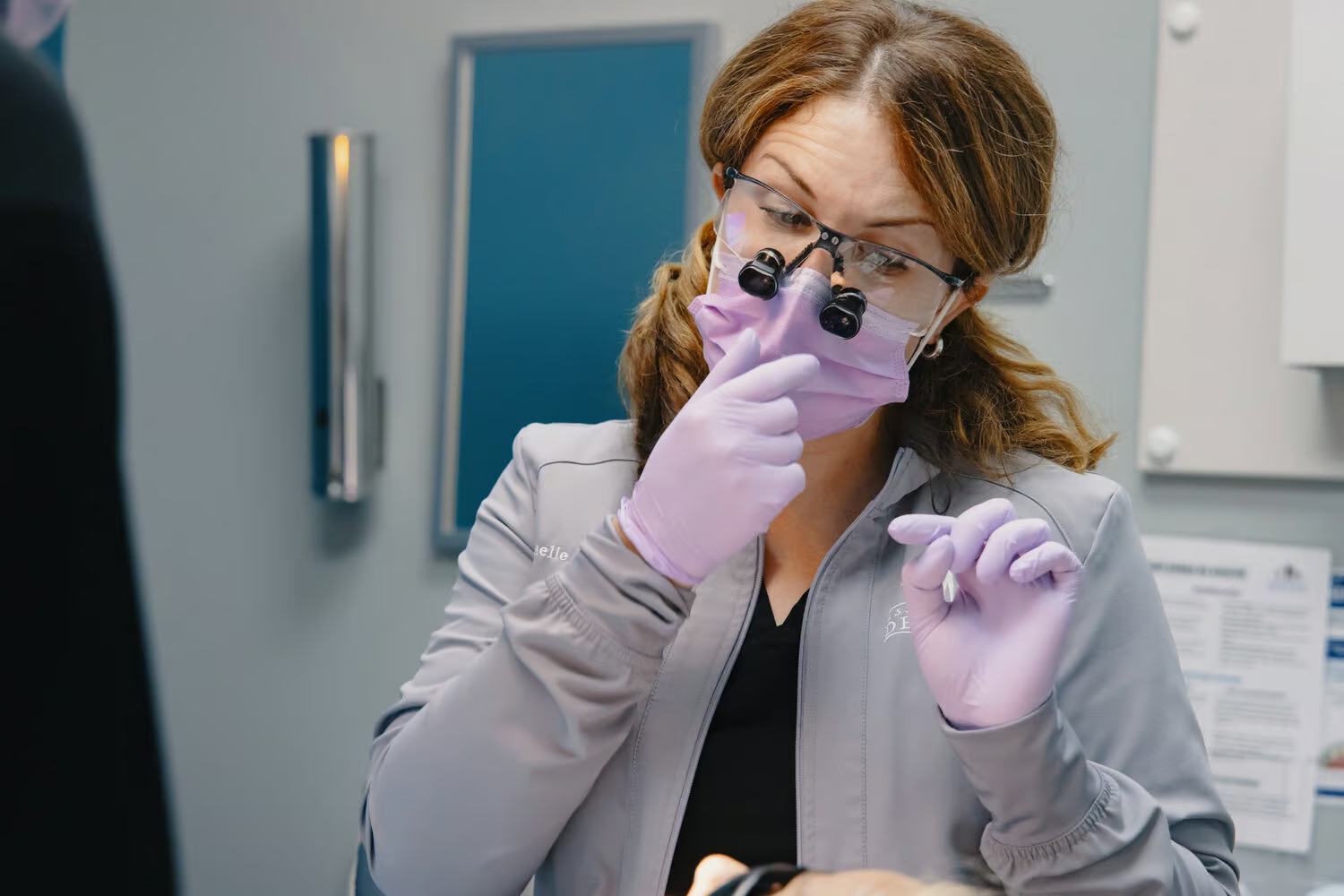


Dr. Burton talking with a patient at a counter in the dental office
Your family's dental home

Complete Dentures in Washington

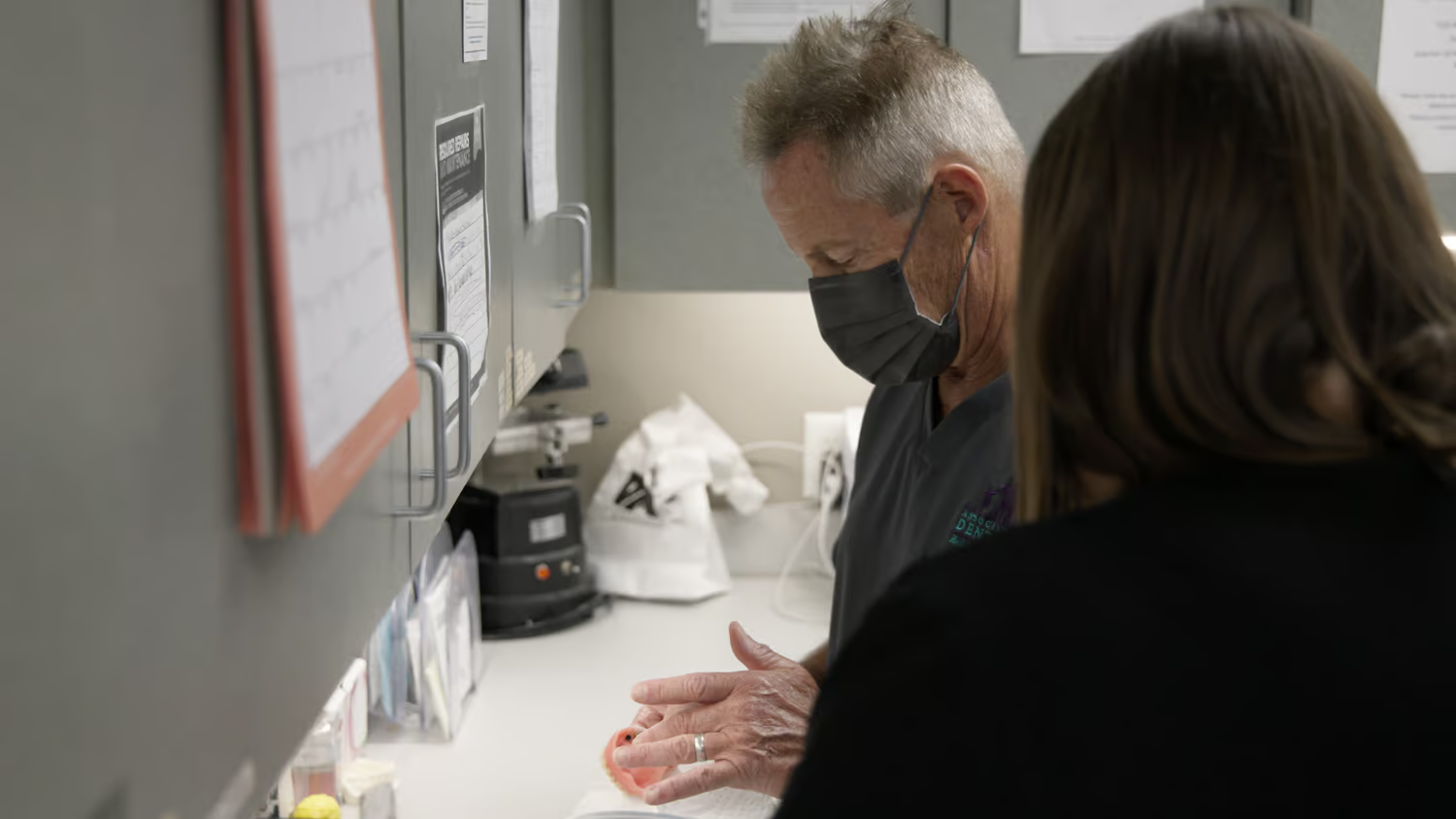
Dr. Burton talking with a patient at a counter in the dental office
The short answer
Reviewed by our
Washington
doctors.
Dr. Dennis Burton, dentist at Associates in Dentistry in Washington
Dr. Jonathan Gifford, dentist at Associates in Dentistry in Peoria and Washington

A complete denture replaces every tooth in the upper or lower jaw. You can have one in one jaw while keeping natural teeth in the other. A loose or uncomfortable denture doesn't always need replacing, since a reline or repair may solve the problem.

01

Decide Whether a New Complete Denture Is the Right Call

A complete denture replaces all the teeth in your upper or lower jaw. It may be the right choice if no teeth remain in that jaw, but a loose or uncomfortable denture doesn't always need to be replaced.

Start by thinking about your upper and lower teeth separately. You might need a complete denture for one jaw while keeping natural teeth in the other. If some teeth remain, their condition matters more than the number alone. A dentist can help you understand whether those teeth can stay. Partial dentures are a separate option when some natural teeth can be kept.

If you wear a complete denture now, ask what has changed. Does it feel loose when you talk or eat? Is a tooth or part of the base broken? Does it still fit, but no longer look the way you want? Those problems don't all point to the same answer. Denture repair and relines are separate services that may address problems with a denture you already have.

A new denture becomes a stronger possibility when the existing one no longer meets your needs and fixing it won't solve the problem. Try to describe what bothers you in everyday terms: where it feels loose, what you have trouble eating, or whether you avoid wearing it. That gives the dentist more to work with than saying it just doesn't feel right. It also helps keep the conversation focused on the change you want.

It's worth being clear about your expectations, too. A complete denture gives you a full row of replacement teeth, but it won't feel exactly like natural teeth. Fit, comfort, and chewing all matter when you're deciding whether your current denture is still working for you. If you're considering your first one, those same questions can help you talk through the choice without assuming every concern has a quick fix.

Associates in Dentistry offers complete dentures at 300 Peoria St in Washington. You don't need to decide on a new denture by yourself before coming in. The useful starting point is knowing whether you're missing all the teeth in one or both jaws, whether you have a denture now, and what isn't working. From there, the choice is about which option fits your mouth and your needs, not simply whether your denture is old.
02

Tell a Reline or Repair Apart from a Need for New Dentures

The question isn't just whether your denture feels loose or has a broken part. It's whether the denture itself is still worth keeping. A reline, a repair, and a new complete denture address different problems. Knowing which problem you have can save you from replacing a denture that still works, or putting more work into one that doesn't.

A reline is about how the denture fits against your gums. The shape of your mouth can change while the denture stays the same. If the denture is otherwise in good condition, improving that fit may be enough. But a reline won't change worn chewing surfaces or fix a denture whose overall shape no longer works for you. A denture may sit more snugly and still leave you struggling to chew.

A repair is about damage to the denture, such as a broken tooth or a crack in its base. The useful question is how much of the denture still works once that damage is set aside. One damaged part on an otherwise usable denture is different from a denture with several problems at once. If it was already hard to wear before it broke, fixing the break alone may not address what bothered you.

Sometimes fit and damage overlap. A denture might rock when you bite and also have a cracked base. That doesn't tell you, by itself, whether the crack is the whole problem or one sign of a denture that's no longer working well. The same is true if a denture has needed attention more than once. The number of fixes matters less than whether the result lets you use it comfortably for the things that matter to you.

A new complete denture is a different choice because it replaces the whole appliance. That may make sense when the teeth, base, and fit all need attention, rather than one part needing a fix. It isn't automatically the better choice because a denture is old, and keeping the current one isn't automatically cheaper in the long run. The useful comparison is what each option can address and what would still be wrong afterward.

At our office, complete dentures, denture repairs, and relines are available. You can discuss the condition of your current denture and the changes you want from it without treating replacement as a foregone conclusion.

03

Choose Between Immediate and Conventional Dentures

If you still have teeth in the jaw that needs a complete denture, timing becomes part of the decision. An immediate denture is made to be worn when those teeth are removed. A conventional denture is made after your mouth has healed. The main question isn't which sounds faster. It's how important it is to you to have teeth in place right away, and how you'll handle changes in fit as your mouth heals.

An immediate denture can appeal to you if you're worried about being without upper or lower teeth. But the mouth it rests on won't stay the same shape during healing. That means its first fit isn't a promise of its long-term fit. Before choosing this route, ask what changes to expect and what might be needed if the denture becomes loose. You should also know whether the plan calls for keeping that denture or making another one later. Those answers can affect both the work involved and the total cost.

With a conventional denture, you wait until after healing to have the denture made. That gives the dentist a more settled shape to work from, though it doesn't mean the fit can never change. The tradeoff is the time between losing the remaining teeth and receiving the denture. If that gap would make it hard for you to eat, speak, or feel comfortable around other people, say so. If you'd rather wait than start with a denture made for a mouth that's still changing, say that too.

You don't have to make the same choice for both jaws. For example, you may be replacing the last few upper teeth while you still have your lower teeth. What matters is which teeth remain, whether they need to be removed, and what you'd need to manage during healing. Don't assume an immediate denture is possible just because you have a date in mind. Ask a dentist to explain which approach makes sense for your mouth before you plan around it.

When you discuss complete dentures at our office, be clear about the part you're most concerned about. Is it going without teeth, living with a fit that may change, or not knowing what the full plan includes? Ask whether an immediate or conventional denture suits you, what each plan includes, and whether more denture work may be needed later. That gives you a useful way to compare the two choices without treating the quickest start as the whole answer.

Ready for a full set of teeth that fits right?
04

Know What the Fitting Process Involves

A complete denture needs to rest against your gums and work with the teeth or denture in your other jaw. Fitting is about more than whether it stays in place while you're sitting still. Ask how the fit and bite will be checked, and how you'll be able to speak up if something feels wrong. That matters whether this is your first denture or you've worn one for years.

Think about what the denture needs to help you do each day. If your current one tips when you chew, say where it moves. If you hold back from talking because it feels unsteady, say that too. These details make the conversation more useful than saying it doesn't fit. Your upper and lower jaws may have different needs, so describe each one separately.

Ask what you'll have a chance to check before the denture is finished. How should you describe a spot that rubs? What should you mention if your bite feels uneven or a word is hard to say? A denture may look right but still feel awkward when you use it. You shouldn't have to guess whether to bring up a concern. Ask who to contact and what the next step would be if the fit bothers you.

You'll also want to know what the plan involves after you start wearing the denture. Your mouth can change, especially after teeth have been removed. Ask whether later fit checks or changes are part of the plan and what might cost extra. If you need to arrange a ride or time off work, ask how many visits to expect. There isn't much value in knowing when you'll first receive a denture if you don't know what may come afterward.

If you wear a denture now, bring it along so you can point to what's working and what isn't. If this is your first, think about the foods you eat and the times when clear speech matters to you. Associates in Dentistry offers complete dentures at our office. You don't need to know the technical terms before you come in. Knowing what you want to ask about fit, use, and follow-up is enough to start a useful conversation.

05

Set Realistic Expectations for Eating and Speaking

A complete denture can give you a full row of replacement teeth, but eating and speaking with it may take some getting used to. It won't feel or work exactly like natural teeth. That's worth knowing before you decide, especially if your main hope is to eat everything you used to eat without thinking about it. The better question is what you'd like to do more comfortably in an ordinary day.

Eating isn't one single test. Chewing a soft meal, biting into a sandwich, and handling something firm all place different demands on a denture. You may find some foods easier than others, even with a denture that looks good and feels secure while you're talking. A new denture also won't automatically give you the same biting strength you had with natural teeth. If meals are your main concern, think about which foods you miss and what happens when you try to eat them.

Speech can feel different too. Your tongue and lips have to work around the denture, and certain words may sound unfamiliar to you at first. That doesn't mean everyone else will hear the same change. Still, it's fair to care about how you sound on the phone, at work, or across the dinner table. If you wear a denture now, you may have a clearer goal: perhaps you want to speak without worrying that it will move.

Your upper and lower jaws may give you different experiences. An upper denture and a lower denture don't rest on the same shape of gum, and your tongue shares space with the lower one. So a denture that feels steady in one jaw doesn't tell you exactly how the other will feel. If you're replacing both, it helps to think about each one rather than expecting them to behave alike.

Try to separate what you hope a denture will improve from what you expect it to make possible. Wanting to enjoy meals and join a conversation without thinking about your teeth is understandable. Expecting the denture to feel just like the teeth you grew up with could leave you disappointed. Bring your everyday concerns to the discussion at Associates in Dentistry in Washington. They give us a clearer picture of what matters to you than a request for a denture that simply looks right.

FAQ

Answers to the most common questions.

Something else on your mind?
Call us at (309) 444-8481.

What is a complete denture?

A complete denture replaces all of the teeth in the upper or lower jaw. You can have a complete denture in one jaw while keeping natural teeth in the other.

Do I need a new denture if my current one is loose?

Not necessarily. A loose denture may need a reline if the appliance is otherwise in good condition. If the denture has several problems, replacement may make more sense.

What is the difference between an immediate and conventional denture?

An immediate denture is made to be worn when remaining teeth are removed. A conventional denture is made after the mouth has healed, so the fit is based on a more settled shape.

Can I eat normally with complete dentures?

Eating with a new denture takes an adjustment period. Softer foods and smaller bites can be easier at first, and your dentist can help if chewing remains difficult.

How long do complete dentures last?

There isn't one fixed lifespan. Fit, wear, changes in your mouth, and the condition of the denture all matter. Regular visits can help determine when a reline, repair, or replacement is appropriate.

Request an appointment

Call us at (309) 444-8481

Tell Us About Yourself

Are you new to Associates in Dentistry?

Preferred Day and Time (optional)
Thank you! Your submission has been received!

That didn't go through. Please try again, or call your office.