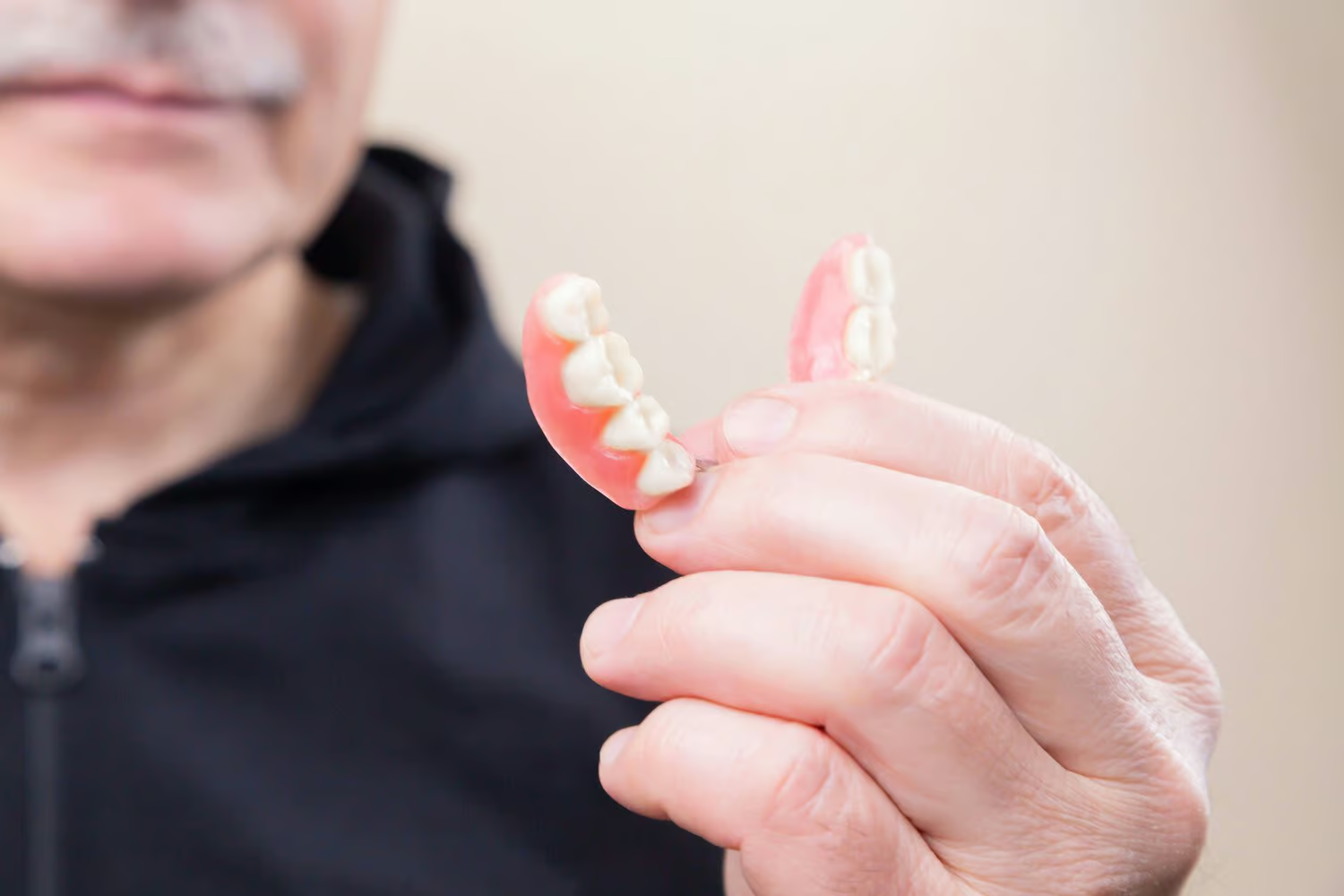


Man holding a partial denture in his hand
Your family's dental home

Partial Dentures in Washington

Man holding a partial denture in his hand
The short answer
Reviewed by our
Washington
doctors.
Dr. Dennis Burton, dentist at Associates in Dentistry in Washington
Dr. Jonathan Gifford, dentist at Associates in Dentistry in Peoria and Washington

A partial denture fills gaps from missing teeth while your remaining natural teeth stay in place. It's removable, so it comes out for cleaning. Whether it's the right choice depends on which teeth are missing, which teeth remain and the type of replacement that fits your needs.

01

A Partial Denture Replaces Some Teeth, Not All of Them

If you're missing some teeth but still have others, Partial Dentures may be worth considering. A partial fills spaces in your smile without replacing every tooth. The main question isn't just how many teeth are missing. It's whether a removable replacement makes sense alongside the teeth you still have. Associates in Dentistry offers partial dentures at our office, and you don't have to know the answer before you ask.

Think of a gap where two teeth used to be, with natural teeth still on either side. A partial denture can carry replacement teeth for that gap. It can also be made for gaps in more than one spot. A partial isn't a standard row of teeth that fits anyone with a space. The number and position of your remaining teeth matter when you're considering this option.

A partial denture replaces missing teeth while leaving your remaining natural teeth in place. It comes out of your mouth, unlike a replacement that's fixed in place. Whether it's a good choice depends on the teeth you have left and the gaps you want to fill.

You might be thinking about the space people can see when you smile. You might be more concerned about a missing tooth farther back. Both are fair reasons to ask, but they aren't the same question. Where the gap sits can affect how you feel about eating, speaking, and showing your teeth. Tell us which part bothers you. That gives the conversation a useful starting point instead of treating every missing tooth as the same problem.

A partial also asks something of you. You'll be taking a removable piece in and out rather than leaving it in place all the time. Some people like having that option. Others find the idea inconvenient. Neither reaction is wrong. It helps to say what you're comfortable with before deciding. If you've worn a partial before, describe what worked for you and what didn't. A replacement for missing teeth should fit your life, not just fill a space on a diagram.

At our office at 300 Peoria St in Washington, Dr. Dennis Burton and Dr. Jonathan Gifford offer partial dentures. You can come in with a clear idea of what you want, or simply explain which teeth are missing and what you're hoping to change. You don't need to decide on a partial before that conversation. What matters first is understanding whether keeping your natural teeth and filling the gaps with a removable appliance is the right direction for you.
02

Signs a Bridge or Implant May Serve You Better

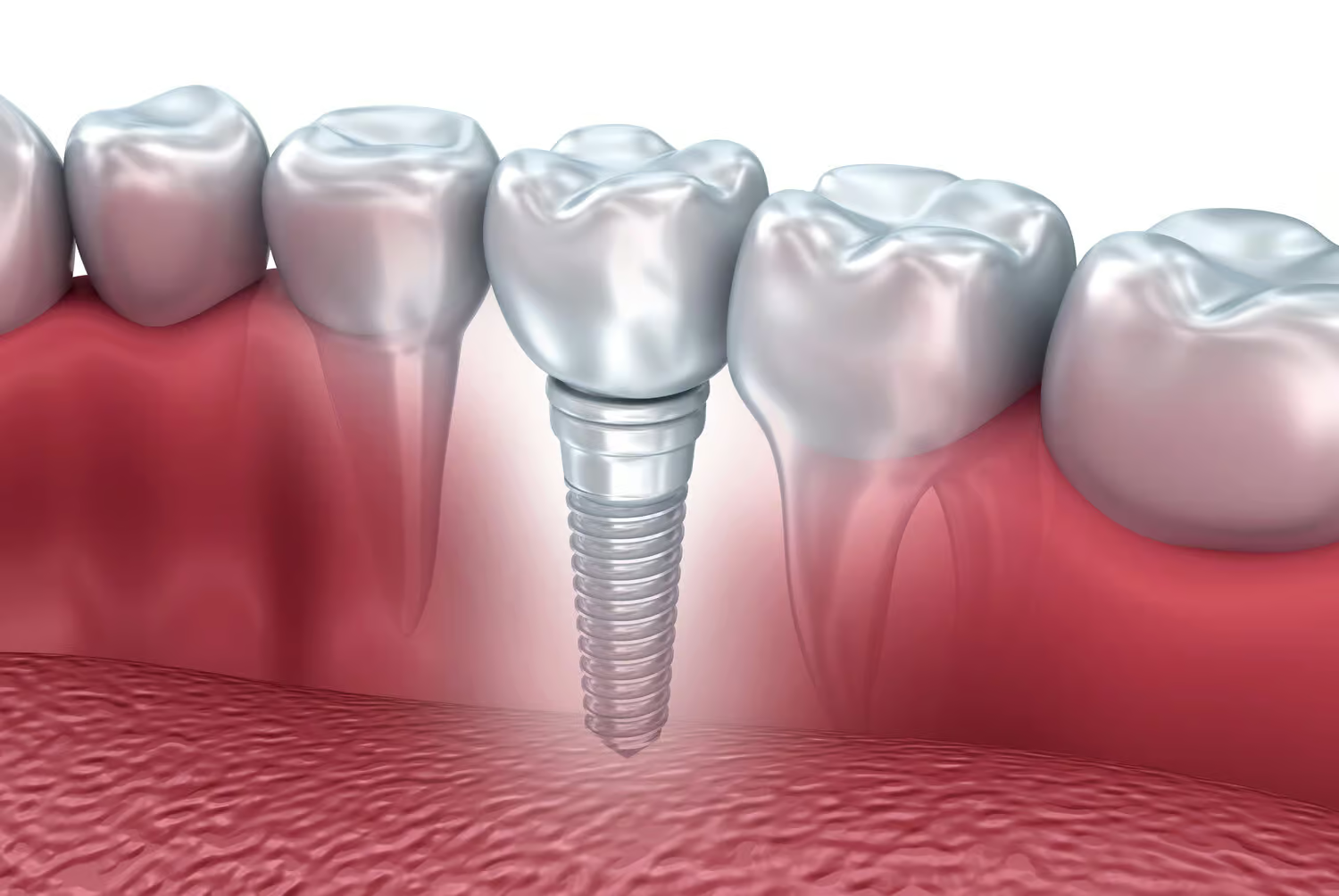
If you know you don't want to take a replacement out, say so. A partial denture may fill the right spaces and still be the wrong choice for you. A bridge or an implant-supported replacement stays in place. That difference matters if you're already worried you'll find a removable piece hard to live with.

A bridge may be worth discussing when the teeth near a gap can support it. Picture one missing tooth between two teeth you want to keep. It's reasonable to ask whether those teeth could support a bridge instead of choosing a partial for one space. But don't assume that having teeth on both sides settles it. Their condition matters. A bridge also won't answer every pattern of missing teeth, especially when a gap doesn't have the support it needs.

An implant-supported replacement may appeal to you if you want a fixed option but don't want to rely on nearby teeth to hold a bridge. Whether it's possible depends on your mouth, not just your preference. Our office offers implant restoration, which means providing the replacement that attaches to an implant. Implant placement is a separate service that isn't offered at this office. If you're considering an implant, ask what care you'd need and where each part would take place before you make plans.

The choice can also change when you're missing teeth in several places. One fixed replacement might address the gap that bothers you most without answering what to do about the others. You don't have to choose the same approach for every space, but you do need a clear picture of what each choice would replace. If you already have a partial and the issue is a poor fit rather than a change of mind about wearing one, denture repair and relines are another service offered at this office. A fit problem alone doesn't tell you that you need a different kind of replacement.

Our general dentistry in Washington includes dental exams. An exam can help you discuss the condition of the teeth you still have before deciding what should fill the gaps. Tell us which teeth are missing, whether you've worn a partial before, and what you don't want to deal with day to day. If a fixed option matters most to you, that belongs at the start of the conversation, not after you've agreed to a removable one.

03

What Happens from Exam to Fitted Appliance

You don't need to arrive knowing what kind of partial denture you need. Start with the teeth you're missing and what you want to do more comfortably. If chewing is your main concern, say which side you avoid. If you're most concerned about how the replacement will look, say that too. Those details help make the conversation about your mouth, not a standard appliance.

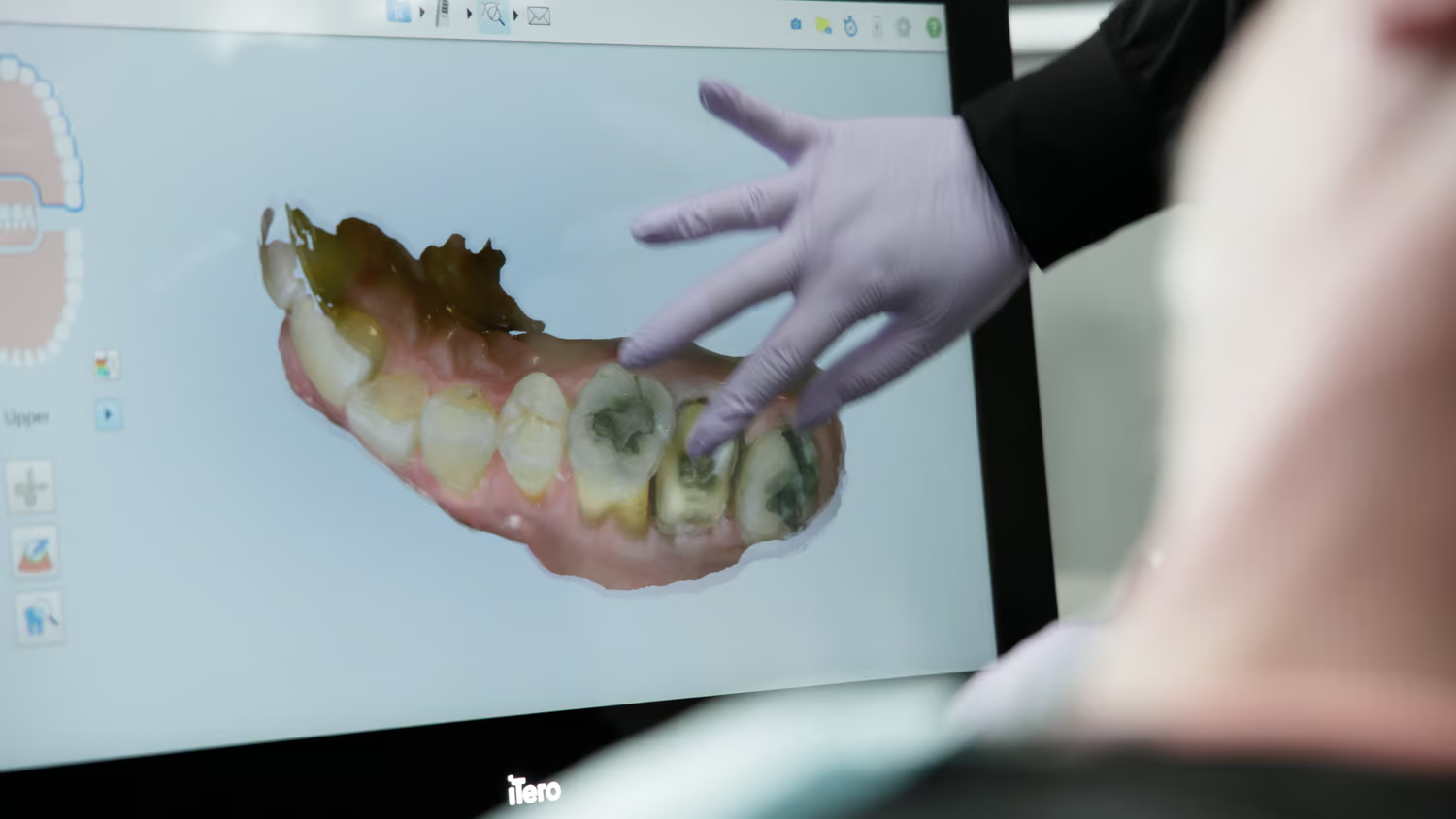
An exam helps put the remaining teeth into that conversation. Before you agree to a partial, ask which teeth the proposed design would rely on and why that design makes sense for your gaps. You should understand what the appliance is meant to replace and what it won't change. If you have concerns about a tooth that's still there, bring them up before you settle on a plan.

It's also fair to ask what choices you have for how the partial will look and feel. Some people worry about whether part of it will show when they smile. Others wonder how much space it will take up in their mouth. Tell the dentist what matters most to you, and ask them to explain the trade-offs of the design they recommend. A choice that sounds fine on paper may not match what you're willing to wear each day.

Before you move ahead, get clear on the steps proposed for your case. Ask what information is needed to make the appliance, whether you'll need more than one appointment, and when you'll have a chance to discuss its fit. Don't assume you'll leave the first visit with a finished partial. The useful question is what you can expect at each visit and what decisions you'll be asked to make along the way.

When you're assessing the finished partial, describe what you notice in plain words. Does one spot feel crowded? Does it seem to move when you speak? Is there a part you can't comfortably ignore? You don't have to decide on your own whether that feeling is normal. Ask what can be adjusted and how to tell if the fit still needs attention. Being specific gives the dentist more to work with than saying it just feels wrong.

If you already wear a partial, bring it to the conversation and explain what's changed. A poor fit and a wish for a different replacement aren't the same problem. Associates in Dentistry offers denture repair and relines as well as partial dentures in Washington, so it's worth explaining whether you're concerned about the appliance you have or thinking about a new one. The goal is to understand the choice before you commit to it.

Missing a few teeth? Let's see if a partial fits.
04

Adjusting to a New Partial Denture

A new partial denture may feel unfamiliar even when you knew what to expect. Your tongue can notice parts of it that no one else can see. You may also notice the difference between having your natural teeth meet and having a replacement in one of those spaces. That first impression matters, but it doesn't tell you everything about how the partial will fit into your day.

Pay attention to ordinary moments. Are certain words harder to say clearly? Does eating feel different on one side? Do you find yourself thinking about the partial every time you speak, or only when you first put it in? Those details are more useful than trying to decide whether it feels “normal.” They also help you explain what you want to change.

A partial can affect more than the space where a tooth is missing. You may notice how it sits near your remaining teeth, how it feels against your tongue, or whether you can speak without thinking about it. One person may care most about eating with friends. Another may care about talking through a workday. The right questions depend on your life, not just on how the appliance looks.

It helps to separate “this feels new” from “this gets in the way.” A new shape in your mouth may catch your attention. A particular place that keeps bothering you is a more specific concern. You don't need the right dental words to describe either one. “I notice it when I say this word” or “this side bothers me during meals” gives a dentist something clear to discuss with you.

The removable part is an adjustment, too. Some people like being able to take a partial out. Others find that handling it takes more thought than they expected. Be honest with yourself about that part of daily life. If the main difficulty is the routine of wearing a removable piece, changing how it fits may not answer the concern that matters most to you.

You don't have to promise yourself that you'll get used to every sensation, and you don't have to judge the whole choice by one awkward moment. Notice what you can do comfortably and what still feels difficult. That's a better way to talk about whether the partial is meeting the reason you chose it: filling the gaps while keeping the teeth you still have.

05

Keeping a Partial Denture Working Long-Term

A partial denture doesn't work on its own. It sits alongside the teeth you still have, so caring for those teeth is part of keeping the partial useful. When you get yours, ask how to clean and store that particular appliance. Also ask how to care for the teeth it sits near. The answers should be clear enough that you know what to do at home.

Over time, pay attention to whether the partial still does the job you chose it for. Maybe it once felt steady during a meal, but now it seems to shift. Maybe it still fills the space, yet you're avoiding one side when you chew. Those changes are worth describing as they happen. You don't need to figure out for yourself whether the appliance has changed or the teeth around it have.

The teeth you keep can change, too. A sore tooth, a new gap, or work done on a tooth next to the partial could affect what the appliance needs to do. That's why the question isn't only, “Does my partial still fit?” It's also, “Are the teeth it depends on doing well?” Dental exams give you a chance to raise both questions. Bring the partial with you and explain what feels different from when it worked well.

If the appliance itself is the problem, you may not need to start over. Associates in Dentistry offers denture repair and relines at our office. A repair addresses damage. A reline changes the surface that rests against your mouth. Neither is automatically the right answer for a partial that moves or feels uncomfortable. The useful next step is to explain what's changed and ask whether the appliance you have can still meet your needs.

It's also reasonable to ask about the cost before choosing what to do. Repairing, relining, and making a new partial are different kinds of work. What you need depends on the condition of the appliance and your mouth. Ask what the proposed work includes and whether it addresses the problem you've noticed. That gives you something more useful to weigh than the name of a service alone.

A partial should keep serving a purpose, not just stay in a drawer because it no longer feels worth wearing. If yours isn't working as it used to, or you're considering your first one, book an appointment with Associates in Dentistry at 300 Peoria St in Washington. Tell us what you want to be able to do comfortably, and we'll start there.

FAQ

Answers to the most common questions.

Something else on your mind?
Call us at (309) 444-8481.

Do dentists still make partial dentures, or has something else replaced them?

Yes, partial dentures are still a common way to fill gaps while keeping your remaining natural teeth. They remain a practical option when a bridge or implant isn't the right fit for your mouth or your budget. The right choice still depends on which teeth you have left and where your gaps are.

What are the downsides of wearing a partial denture?

The biggest downside is that it's removable, which some people find inconvenient day to day. You may also notice it near your remaining teeth or against your tongue while you adjust to it. It also depends on your natural teeth staying healthy, since a sore tooth or new gap nearby can change how well it fits.

What is a partial denture?

A partial denture replaces some missing teeth while natural teeth remain in the same jaw.

How is a partial denture different from a bridge?

A partial denture is removable. A bridge is fixed in place and uses nearby teeth for support.

Could a partial denture be right for me?

That depends on which teeth are missing, which natural teeth remain, and the health of your mouth. An exam can help determine whether a partial denture is a reasonable option.

What should I expect when I first get a partial denture?

It can take time to get used to the fit, speech, and chewing. Your dentist can check the fit and make adjustments if needed.

Request an appointment

Call us at (309) 444-8481

Tell Us About Yourself

Are you new to Associates in Dentistry?

Preferred Day and Time (optional)
Thank you! Your submission has been received!

That didn't go through. Please try again, or call your office.