.svg)
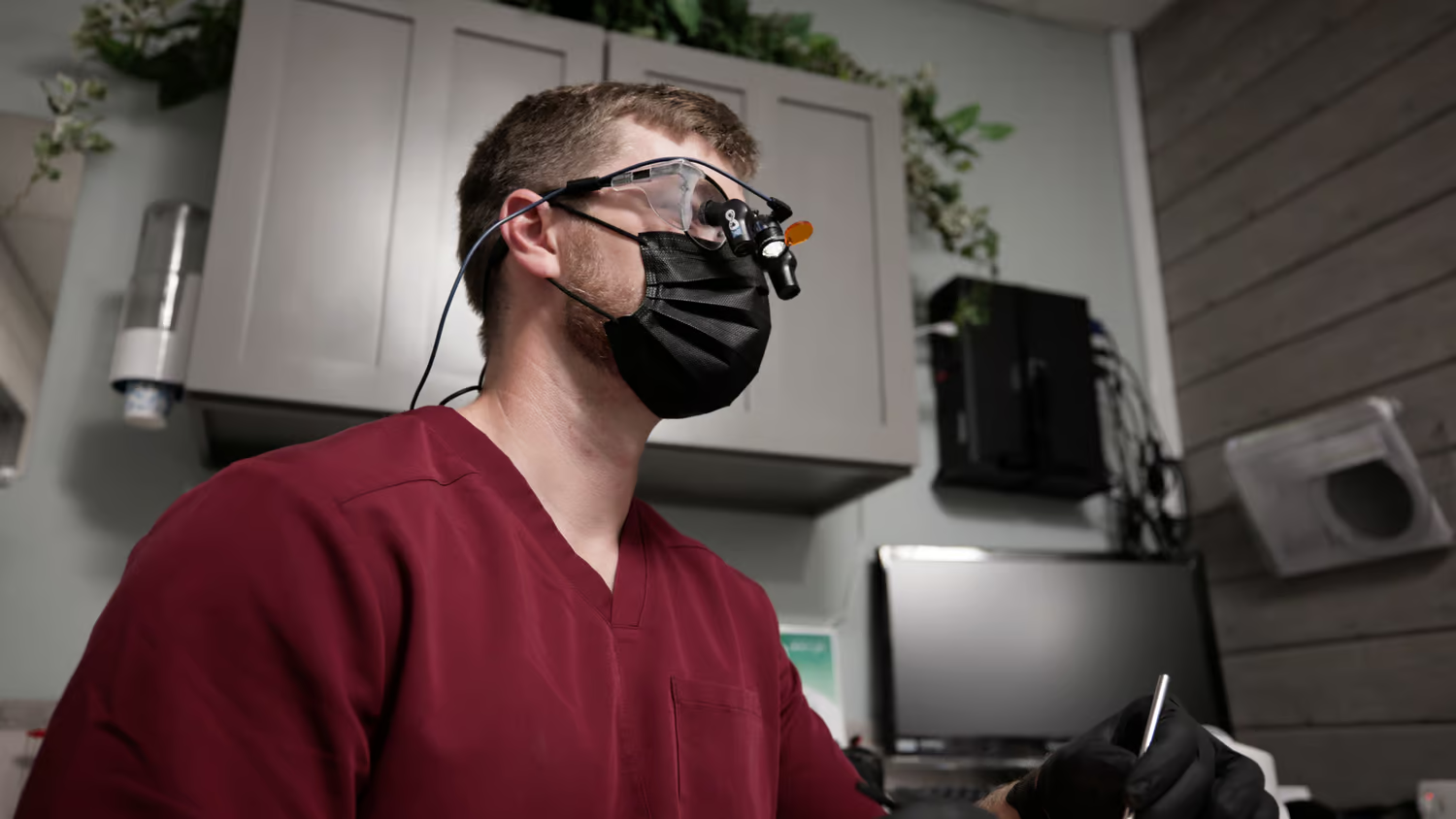
A tooth starts hurting, or a denture stops fitting. That’s often when finding a dentist in Canton moves to the top of your list. You don’t need to know the name of the service before you call. At Associates in Dentistry, we’ll help you understand what’s going on and which kind of visit makes sense. Our office has one doctor, Dr. Aaron Thum, who was born and raised in Canton.
This page is a guide to the general dentistry services we offer here. Dental exams and dental cleaning help you keep track of your oral health. Composite fillings and dental crowns address different amounts of tooth damage. Root canals treat infection inside a tooth. If teeth are missing, dental bridges, partial dentures, and complete dentures offer different ways to fill the space. Denture repair & relines address problems with a denture you already wear. You can read about each service below, then follow its link for more detail.
General Dentistry at Associates in Dentistry
A dental exam can help you find out what your teeth need, while a broken or loose denture may call for care of the denture you already have. If you’re unsure where to start, contact our office and tell us what’s going on.
General Dental Treatments We Offer
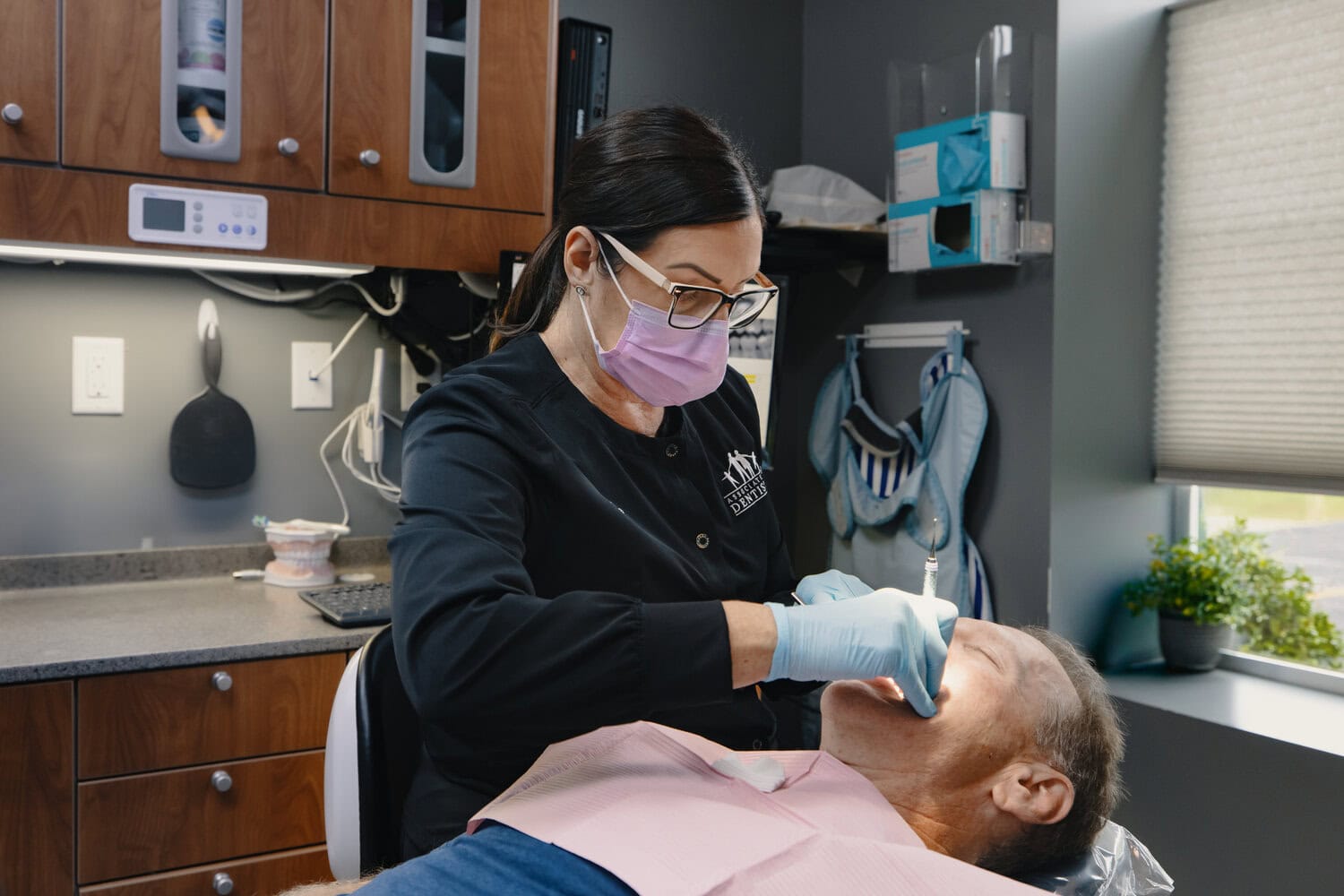
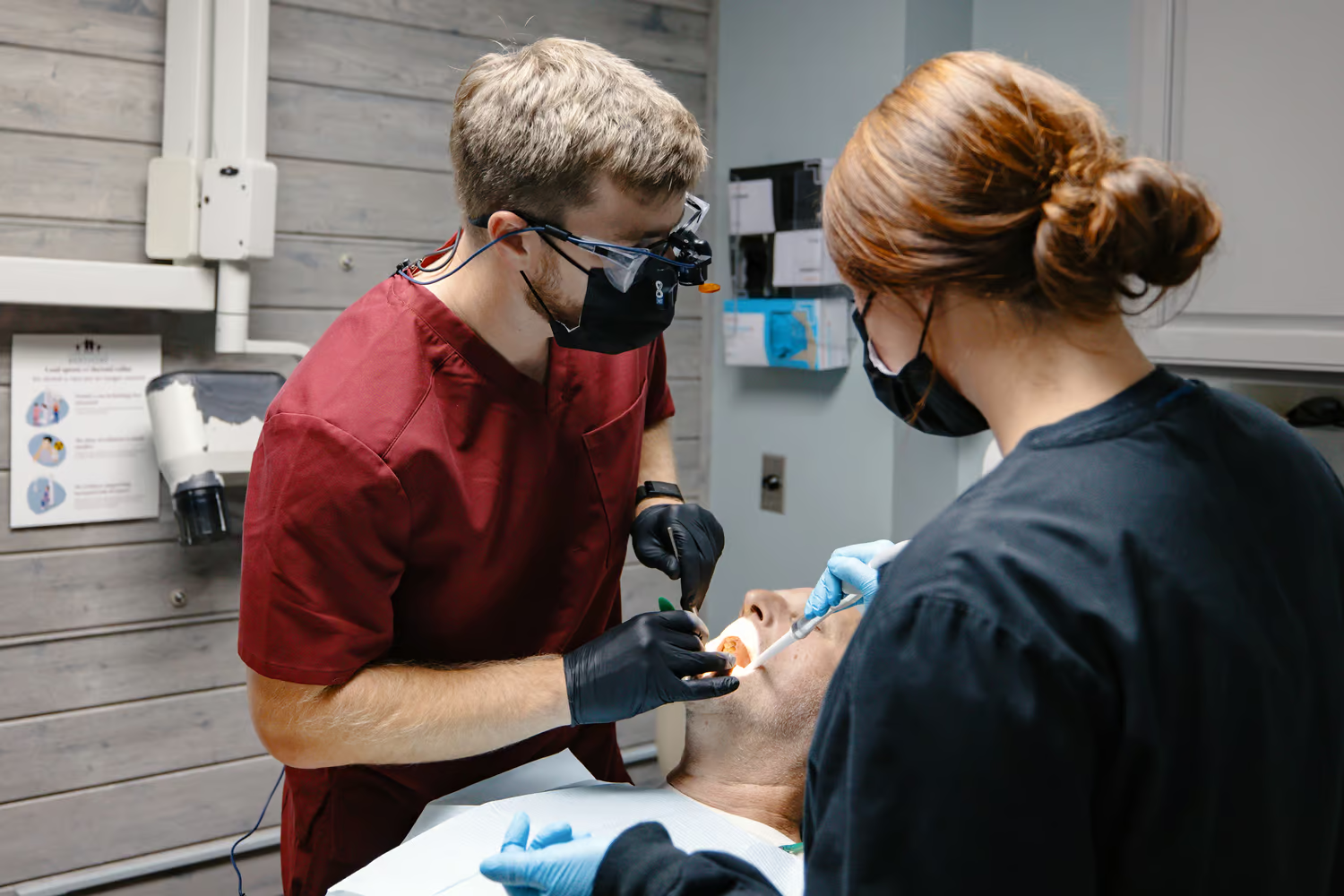
Dental Exams Find Problems Before They Grow
If you’ve just moved to Canton, a dental exam is a good place to start. It also makes sense if it’s been a while since anyone checked your teeth. You can tell us about a sore spot, trouble chewing, or a change you’ve noticed. You don’t have to decide what treatment you need before the visit.
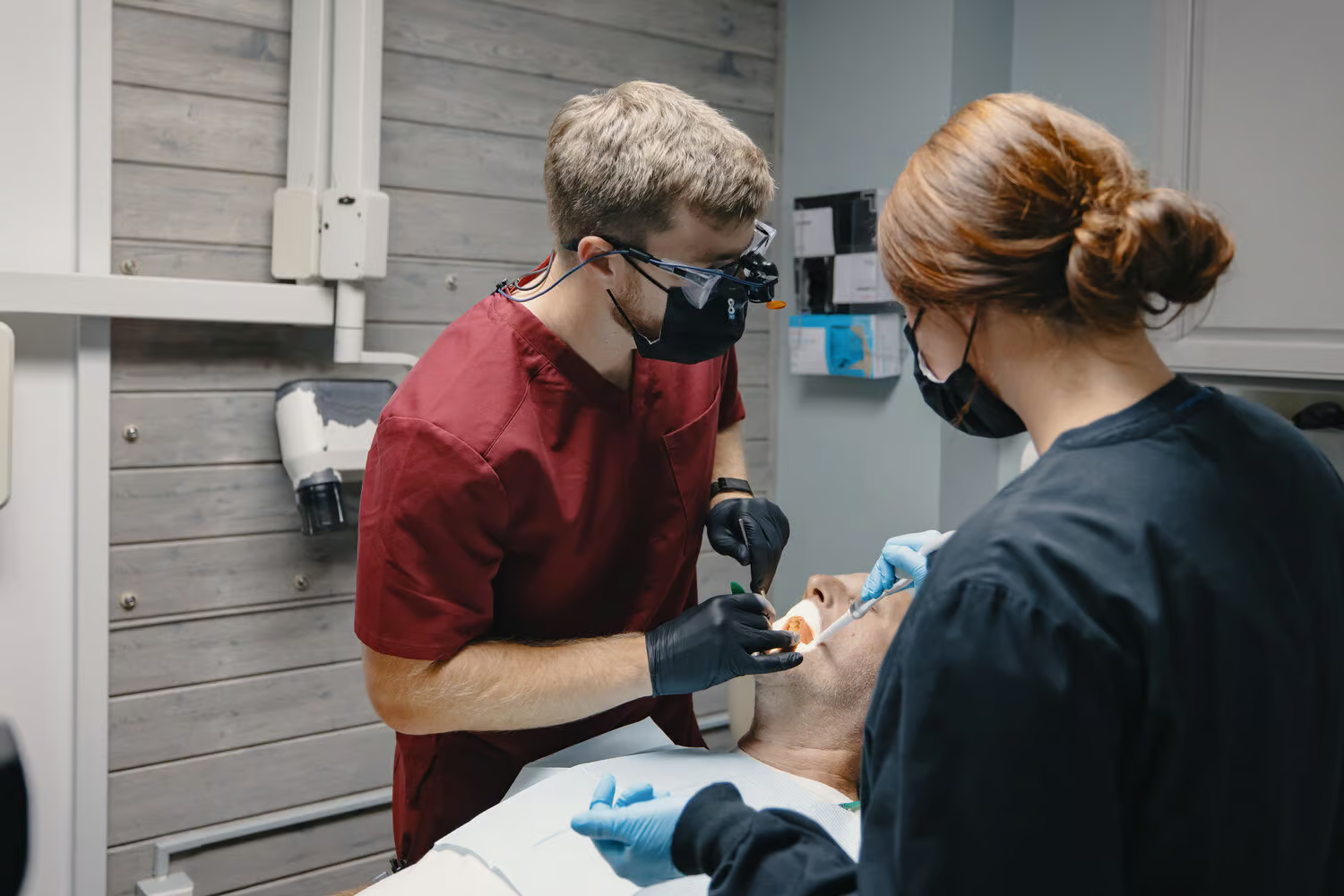
During dental exams, we look at your teeth, gums, and bite. We’re checking for signs of decay, wear, or gum problems that may not be clear to you yet. We’ll also pay attention to the concern that brought you in. A small cavity can be easier to address before more of the tooth is damaged, but an exam is what helps us understand its size.
The first step is often simpler than people expect: come in, show us what’s bothering you, and ask questions. You should leave knowing what we found and what we recommend next. If you’re ready to set up a checkup, read more about Dental Exams in Canton.
Dental Cleaning Keeps Gums and Teeth Healthy
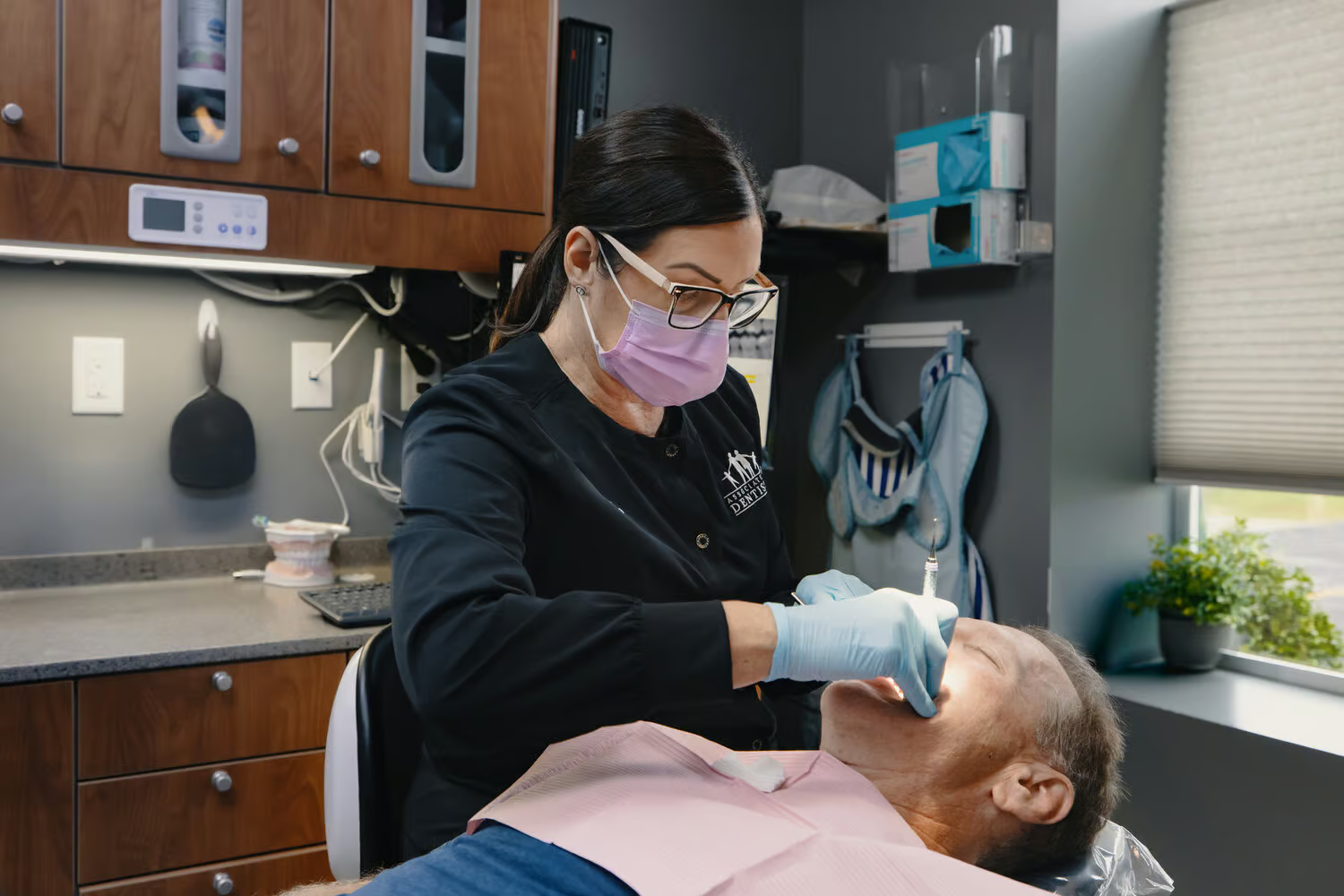
A dental cleaning removes buildup that your toothbrush and floss can’t fully clear away. Plaque can harden into tartar, especially along the gumline and in spots that are hard to reach. Removing that buildup helps lower the risk of cavities and gum problems over time.
Dental cleaning is routine care, even when your teeth feel fine. It’s also a chance to mention bleeding when you brush, a rough spot you keep feeling, or a place that’s hard to keep clean. Those details help us understand what you’re dealing with at home. We can talk through brushing and flossing questions without making you feel like you’ve done something wrong.
People often schedule dental cleaning around the same time as a dental exam, but they serve different purposes: the cleaning removes buildup, and the exam checks your oral health. How often you need a cleaning depends on your mouth and what we find. If you’re trying to get back into a steady routine in Canton, learn what to expect from Dental Cleaning in Canton.
Composite Fillings Repair Small Areas of Decay
Maybe an exam found a small cavity, but the tooth hasn’t hurt at all. Composite fillings can repair a limited area of decay before that area grows. We remove the damaged part and place tooth-colored filling material to restore the tooth’s shape. You can usually have this done in one visit.
The size of the damaged area matters. Composite fillings work when enough healthy tooth remains to support the repair. If a large part of the tooth is weak or missing, a dental crown may be the stronger choice because it covers the tooth rather than filling one area. We’ll explain what we see before recommending either option.
You may also notice a small chip or a spot where food keeps catching. Those are worth showing us, even if you aren’t sure there’s decay. We can check the tooth and tell you if a filling fits the problem. For a closer look at how we repair smaller areas of tooth damage, visit Composite Fillings in Canton.
Dental Crowns Rebuild Teeth With Major Damage
What happens when too much of a tooth is damaged for a filling to hold? A dental crown covers the visible part of a tooth that’s still in place. It can restore shape and help protect a tooth with a large cavity, a crack, or damage after a root canal.
You might come in because chewing on one side feels uncomfortable, or because a piece of tooth has broken. We’ll look at how much healthy tooth remains and talk through what it needs. A crown isn’t the answer to every crack or cavity. The point of the visit is to understand the damage before choosing a repair.
Dental crowns and dental bridges can sound alike, but they solve different problems. A crown covers a damaged tooth you still have. A bridge replaces a tooth that’s missing. That difference is useful if you’ve been told you may need one but can’t recall which. Learn more about Dental Crowns in Canton.
Root Canals Save Teeth With Deep Infection
Root canals treat infection inside a tooth, where a filling can’t reach. If the soft tissue there becomes infected, the tooth may ache, feel sensitive to hot or cold, or hurt when you bite. Swelling can be another sign. You can’t tell from pain alone that you need a root canal, so it’s important to have the tooth checked.
A root canal removes the infected tissue from inside the tooth. The goal is to relieve the source of pain and keep the natural tooth in place. The tooth often needs a dental crown afterward to protect and strengthen it. We’ll explain what we find and what the tooth needs before treatment.
It’s understandable to put off a visit when you’re worried about what the answer might be. Still, you don’t have to sort through every possible cause yourself. Tell us where it hurts, when it started, and what makes it worse. We’ll start there. If you’d like to understand the treatment before your visit, read about Root Canals in Canton.
Dental Bridges Replace Missing Teeth Without Removal
A gap from a missing tooth can change how you chew or how you feel about smiling. Dental bridges replace one or more missing teeth with a fixed option. A bridge uses teeth beside the gap for support, so the replacement stays in your mouth instead of coming out for cleaning.
People often ask how a bridge differs from a partial denture. The simplest answer is that a dental bridge is fixed, while a partial denture is removable. The teeth beside the gap also matter: we need to look at them before we can say if a bridge is a good fit. What works for one gap may not work for another.
If you’ve recently lost a tooth or have lived with a gap for a while, you can bring that question to a visit. We’ll look at the space, the nearby teeth, and what you want from a replacement. You won’t need to arrive with a decision already made. To see more about the fixed option, visit Dental Bridges in Canton.
Partial Dentures Replace Some Missing Teeth
You still have natural teeth, but several spaces make eating or smiling feel different. Partial dentures can fill those gaps with a removable appliance supported by remaining teeth. They replace only the teeth that are missing, rather than a whole upper or lower row.
That’s what sets partial dentures apart from complete dentures. A complete denture replaces every tooth in an arch when no natural teeth remain there. Partial dentures are made for a mouth where some natural teeth are still present. They also differ from dental bridges: you take a partial denture out to clean it, while a bridge stays fixed in place.
The best place to begin is with a look at the teeth you still have and the spaces you’d like to fill. We can talk about fit, daily care, and what you hope to do more comfortably. It’s okay if you don’t know whether a removable option is right for you yet. Learn more about Partial Dentures in Canton.
Complete Dentures Replace a Full Arch of Teeth
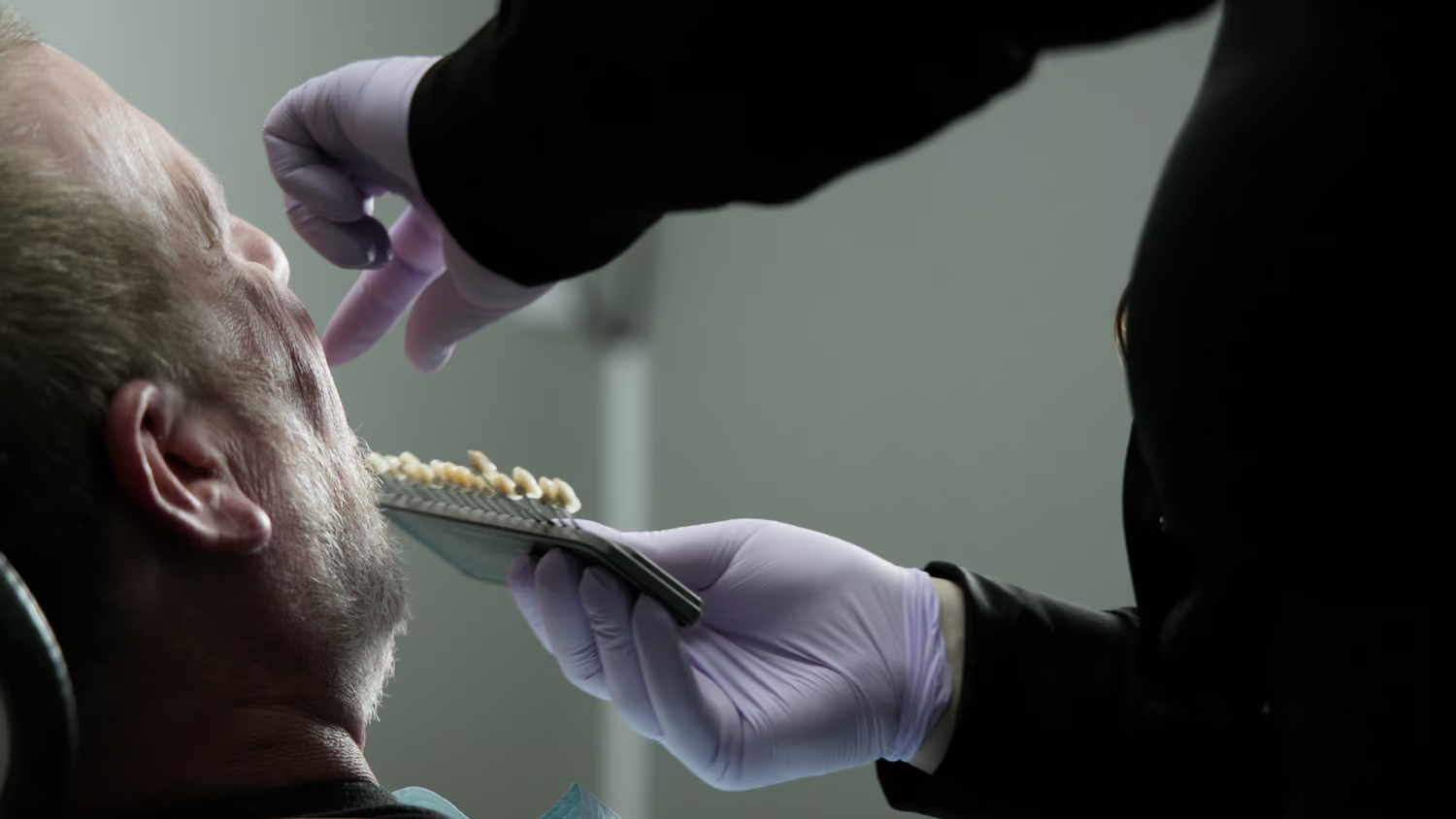
In Canton, questions about replacing a full row of teeth are an important part of dental care. Complete dentures replace all the teeth in an upper or lower arch, or in both arches. They’re removable and made to fit your mouth, with the goal of helping you eat, speak, and smile more comfortably.
Complete dentures aren’t the same as partial dentures. A partial denture fills gaps while some natural teeth remain. A complete denture takes the place of every tooth in an arch. If you’re unsure which term describes your situation, don’t worry about getting it right before you call. We can look at your mouth and talk through the difference.
A new denture also isn’t always the answer when an older one feels loose. Fit can change over time, and an existing denture may need a reline instead. We’ll help you understand what your current situation calls for rather than asking you to guess. If you’re considering a new full upper or lower denture, read about Complete Dentures in Canton.
Denture Repair & Relines Fix Existing Dentures
A denture that once fit well can become loose as your gums and bone change shape. A denture can also crack or break. Denture repair & relines are for problems with a denture you already own. A repair addresses damage; a reline changes the part that rests against your gums to improve its fit.
Those are different needs, so tell us what has changed. Does the denture move when you eat or talk? Has a piece broken off? Is one spot rubbing? We’ll look at the denture and your mouth before recommending what to do. Please don’t try to glue a broken denture yourself, since that can make a proper repair harder.
Here’s the part people often overthink: a loose or cracked denture doesn’t automatically call for a new one. Denture repair & relines work on an existing appliance; partial dentures and complete dentures are made new. Sometimes a new denture is needed, but we’ll assess yours first. Find out more about Denture Repair & Relines in Canton.
How do I know if I need a dental exam or a root canal?
What's the difference between a dental crown and a dental bridge?
When should I call a dentist in Canton instead of waiting it out?
Should I get a composite filling or a dental crown for a damaged tooth?
How often should Canton residents schedule a dental cleaning?
Who will I see at Associates in Dentistry in Canton?
Every service below is offered at our Canton office, by the same team.