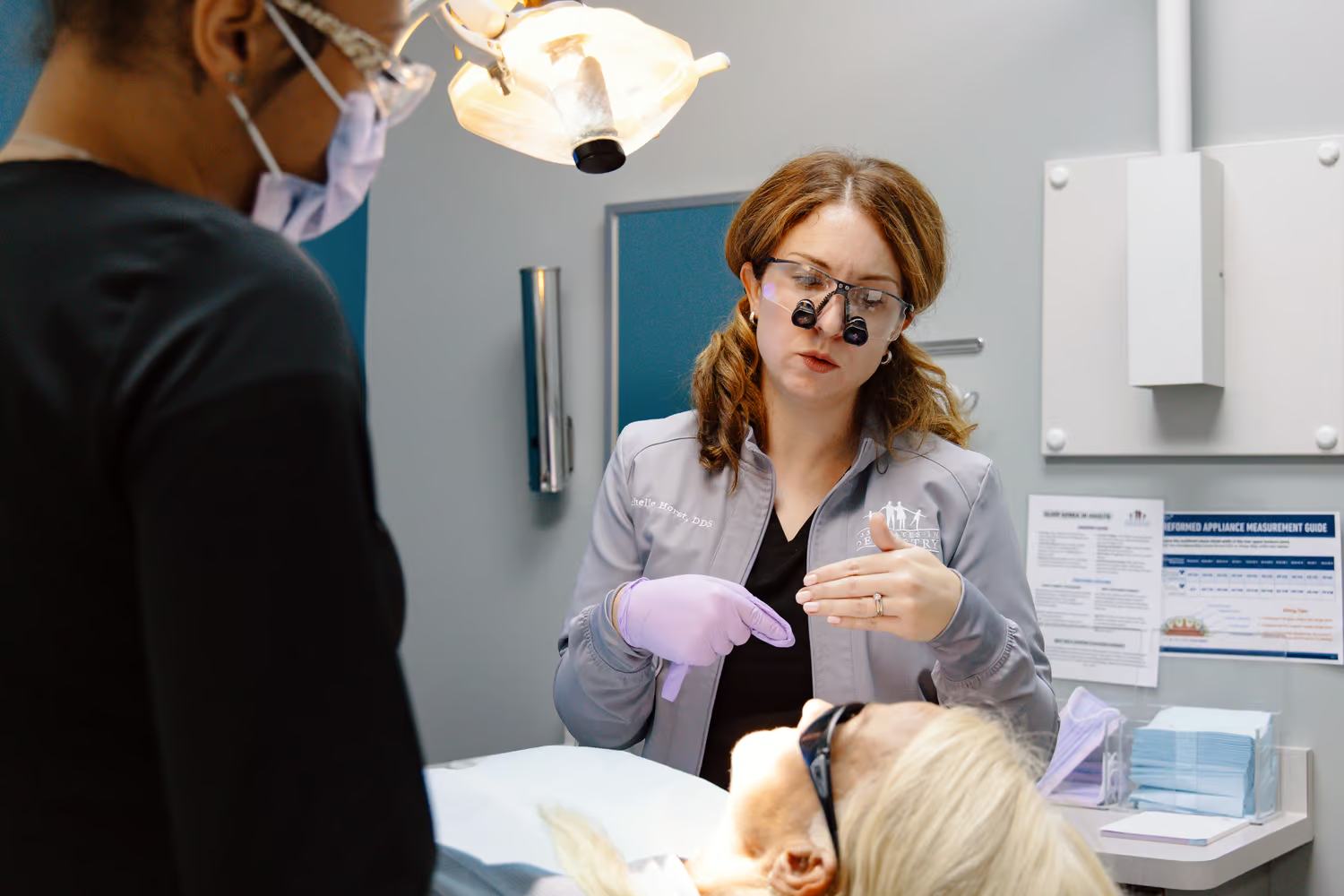


Smiling older woman with glasses showing a full set of teeth
Your family's dental home

Denture Repair & Relines in Canton: Fix It or Replace It?

Smiling older woman with glasses showing a full set of teeth
The short answer
Reviewed by our
Canton
doctors.
Dr. Aaron Thum, dentist at Associates in Dentistry in Canton

A repair addresses damage to the denture, such as a crack or a broken tooth. A reline addresses how the denture fits against your gums. If it's damaged and loose, you may need more than one kind of work.

01

Decide Whether Your Denture Needs a Repair or a Reline

Start with what you can see and feel. Is a piece broken, or does the whole denture shift when you talk or eat? That difference helps you describe the problem, but you don't have to choose the treatment yourself. A loose denture can also have damage you haven't noticed, and a sore spot doesn't always mean a reline is the answer.

  • Think repair if a tooth has come off the denture, the base is cracked, or a part of a partial denture is damaged. Tell us what broke and whether you still have the loose piece. A repair deals with the damaged part, but it won't necessarily correct an overall loose fit.
  • Think reline if the denture looks intact but doesn't sit as it used to. A reline changes the surface that rests against your gums so it can fit more closely. It won't mend a crack or replace a missing denture tooth.
  • Mention both problems if the denture is loose and something has broken. Fixing only the visible damage may leave you with the same fit problem. Changing the fit alone won't make a damaged denture whole.

A good clue is whether the trouble is in one spot or affects how the entire denture sits. If a single denture tooth is missing but the rest still feels steady, describe the missing tooth. If you find yourself shifting the denture back into place during a meal, describe the movement. Neither clue is a diagnosis. It's a useful way to explain what's changed.

Fit can change even when you've taken care of your denture. The shape of the gums and the bone beneath them can change over time, while the denture keeps its old shape. That's why a denture that once felt secure may start to move without any obvious break. Still, a reline isn't automatically the right fix for every loose denture. The condition of the denture matters too.

When you contact Associates in Dentistry at 336 N Main St in Canton, you can keep it simple: tell us whether the denture is cracked, missing a piece, moving, or causing a sore spot, and when you first noticed it. Canton dentist Dr. Aaron Thum, who was born and raised here, offers denture repair and relines. You don't need to know which one to request before you reach out.
02

Know When a Denture Cannot Be Repaired

A denture may be beyond repair when there isn't enough sound material left to support a lasting fix. That's different from saying every large crack means you need a new denture. The size of the break matters, but so do the condition of the base, the parts around the break, and whether the denture can still fit well enough to use.

A crack that keeps returning is worth looking at as more than a broken spot. If the base has grown thin or worn, joining that spot again may leave the same weak area under stress. Several breaks across the denture raise a similar question. Each piece might look fixable on its own, while the denture as a whole no longer gives a repair much to hold onto. With a partial denture, damage to the parts that help it stay in place can also change the answer.

Fit matters just as much. Picture a denture that's cracked and has been rocking when you eat. Repairing the crack wouldn't necessarily stop that movement. If the denture's overall shape or condition no longer lets it fit well, fixing the break alone may leave you with something that still doesn't work for you. General dentistry in Canton can help answer the larger question: can this denture still serve you well after the damage is addressed?

None of those signs lets you decide for certain just by looking at the denture. An older denture isn't automatically beyond repair, and a newer one isn't automatically repairable. Even a small-looking break can affect a part that matters to its strength. Damage that looks dramatic may not tell the full story about what can be fixed. It makes sense to ask about the whole denture rather than judge it by the most visible spot.

If you're hoping to keep the denture you have, say so. That's a fair question, even when the damage looks bad. The useful answer isn't simply whether a broken piece can be put back on. It's whether the denture left afterward would fit and function well enough to make the repair worthwhile. If it can't, knowing that before paying for a repair helps you make a clearer choice.

03

Stop Before You Try a Home Repair Kit

A home repair kit can look tempting when you need your denture for dinner or work tomorrow. The hard part isn't just getting two pieces to stick. It's knowing whether they line up as they did before and whether the denture still sits comfortably once they're joined. A fix that looks neat on the counter may feel different when you put it in your mouth.

Picture a tooth that has come off a denture. You might be able to see where it belongs, but a small change in its position can change how your teeth meet. The same goes for a cracked base: joining the visible edges doesn't tell you whether the denture's shape has changed. A kit may address what you can see without answering whether the result will work for you.

That's why the label on a kit, which federal rules require to limit it to emergency use and direct you to see a dentist without delay, isn't enough to guide the decision. Even one sold for dentures can't assess the condition of yours. It can't tell you how much usable material remains around a break, or whether added repair material will get in the way of a closer fit later. If you've been adjusting the denture to make it feel right, an at-home patch may make it harder to tell which problem came first.

Before you spend time on a kit, ask yourself what you need from the fix. Is it enough for the denture to look whole in your hand, or do you need to know it'll feel right when you speak and eat? That's the difference a dentist's assessment can address. It also gives you a chance to ask whether the denture is worth repairing before you put more work into it.

If you've already tried a kit, you don't need to be embarrassed about it. When you contact a dentist, say what product you used, where you put it, and whether any pieces shifted afterward. If you no longer have the package, just describe what you remember. Those details give the dentist a clearer picture of what's been changed; you don't have to figure out the next step on your own.

Denture cracked or loose? Let's get it fixed.
04

What Happens During a Denture Repair or Reline Visit

At a denture repair or reline visit, the first thing to sort out is what's changed and what you need the denture to do again. Tell the dentist when the trouble began and what happens when you wear it. Does it slip during a meal, or does a broken edge catch when you put it in? If you've stopped wearing it because it bothers you, say that too. You don't need to decide in advance which work to ask for.

Bring the denture you're concerned about, even if it's in more than one piece. If you still have a piece that came off, bring that as well. It also helps to mention any work already done on the denture, including an at-home fix. These details give the dentist a fuller picture than a description over the phone can.

The decision isn't just whether the visible problem can be fixed. It's whether the proposed work is likely to leave you with a denture you can use comfortably. Ask what the dentist thinks is causing the trouble, what the proposed work would address, and what it wouldn't. If more than one kind of work is being considered, ask why. You should understand the choice before you agree to it, especially if keeping your current denture is important to you.

If you rely on your denture every day, ask about timing before work begins. Will you need to leave it, and when can you expect to know when it'll be ready? Don't assume you can wait for it or that every repair and reline takes the same amount of time. The answer depends on what your denture needs, so it's worth asking about your own situation rather than planning around a guess.

Cost is another fair question to raise before you decide. Ask what work the estimate covers and whether the price would change if the dentist finds that the fit needs attention along with the damage. If a repair may not give you a denture that works well, ask about that before paying to fix one broken spot. You can also ask what you should notice when you wear the denture again and whom to tell if it still feels wrong.

05

What Drives the Cost of Denture Repair and Relines

The cost depends on what's wrong with your denture and how much work it needs. A broken denture tooth, a cracked base, and a denture that needs a closer fit aren't the same job. The number of dentures involved matters, too. If both your upper and lower dentures need attention, ask for a price that covers both rather than assuming one estimate does.

Damage to a partial denture can affect its cost in a different way from damage to a complete denture. The part that broke and the condition of the material around it both matter. A missing tooth may be one issue; a break in a part that helps hold a partial in place may call for different work. What looks like a small break doesn't always mean a small bill, so it's worth getting an estimate for your actual denture.

Relines have their own costs because they address fit rather than a broken part. If your denture needs both a repair and a reline, ask whether the estimate includes both. A quote for fixing a crack alone won't tell you the full cost of addressing a loose denture. Likewise, don't assume a quoted reline includes work on a damaged tooth or base.

How the work is priced can vary. An estimate may cover a specific repair, a reline, or several pieces of work together. Ask for the work to be named in plain language and for any separate charges to be clear. If additional damage turns up, ask whether you'll get a new estimate before deciding on more work. That gives you a better basis for comparing the cost with what you'll get from the denture afterward.

Associates in Dentistry uses a fee-for-service model and accepts and bills most insurance plans. That doesn't mean every plan covers denture repair or relines. Coverage may depend on your plan and the work proposed. Ask our team what information they can give you about your plan, what amount you'd be responsible for, and when payment would be due. If you're relying on insurance, check your benefits before you make a decision based on an expected payment.

You don't need to know a price before you call. Tell us what's happened to the denture and ask how you can get an estimate for the work it needs.

FAQ

Answers to the most common questions.

Something else on your mind?
Call us at (309) 647-3331.

Can I eat while my denture is being repaired or relined?

You'll receive specific instructions based on the type of repair or reline being done. Our team will let you know when it's safe to wear and eat with your denture again.

Is it safe to wear a cracked or loose denture?

A damaged or poorly fitting denture can cause irritation or sores, so it's best to have it evaluated rather than continuing to wear it if it's causing problems.

Can you repair a denture with more than one damaged part?

The answer depends on the condition of the denture and the type of damage. We'll examine it and let you know whether it can be repaired or whether replacement makes more sense.

What's the difference between a denture repair and a reline?

A repair fixes damage to the denture itself, such as a crack or broken tooth. A reline changes the inside surface of the denture to improve its fit against your gums.

Can I repair my denture at home?

It's best to avoid home repair kits and household glue. They can damage the denture or make a professional repair more difficult.

When should I replace a denture instead of repairing it?

Replacement may make more sense when a denture needs repeated repairs, has significant wear or still doesn't fit properly after a reline. We'll evaluate the condition of your denture and discuss your options.

Request an appointment

Call us at (309) 647-3331

Tell Us About Yourself

Are you new to Associates in Dentistry?

Preferred Day and Time (optional)
Thank you! Your submission has been received!

That didn't go through. Please try again, or call your office.