
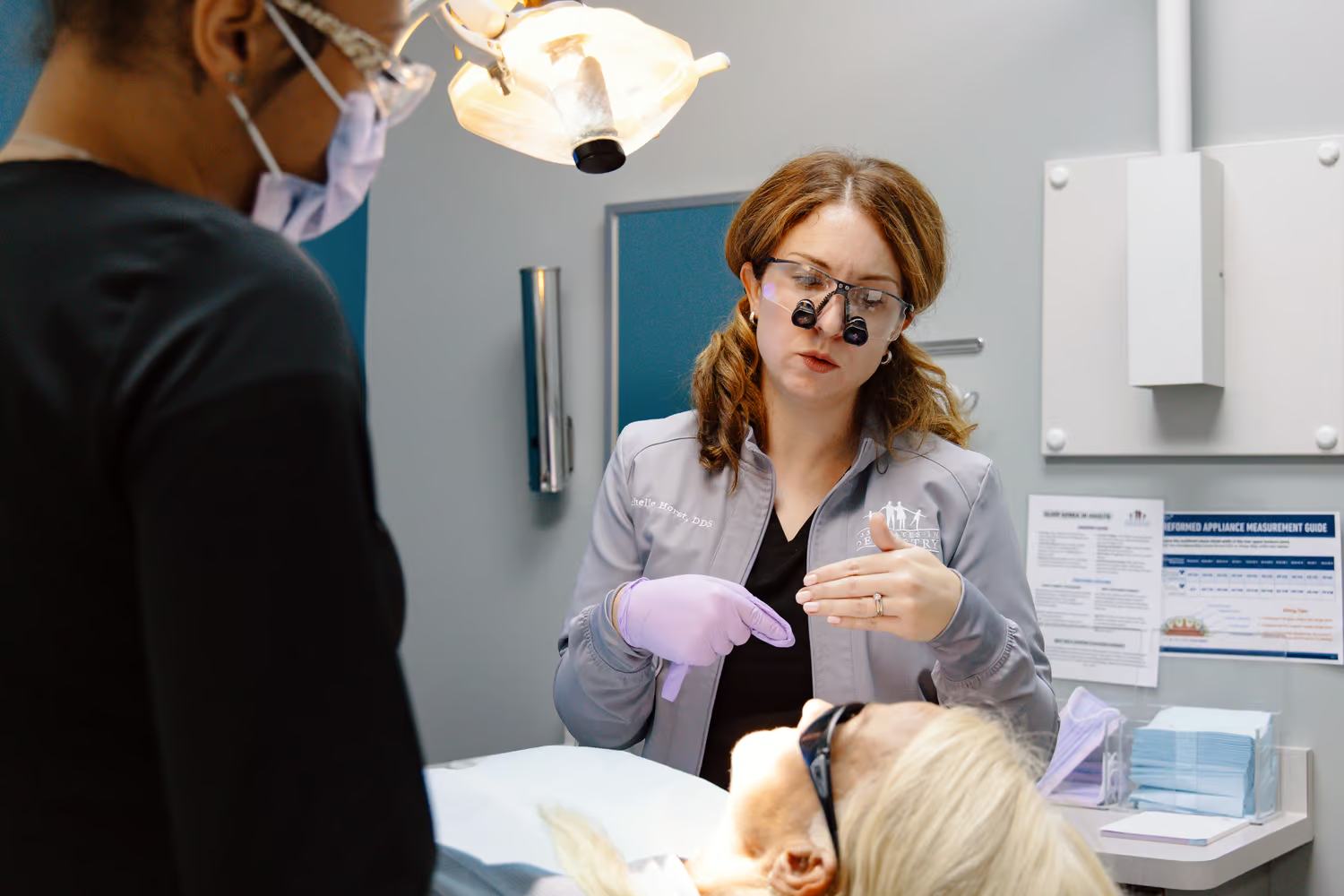

Dentist wearing loupes and an assistant treating a patient in a bright treatment room
Your family's dental home

Laser Gum Treatment in Canton: Do You Need It or Just a Cleaning?

Dentist wearing loupes and an assistant treating a patient in a bright treatment room
The short answer
Reviewed by our
Canton
doctors.
Dr. Aaron Thum, dentist at Associates in Dentistry in Canton

Laser Gum Treatment in Canton isn’t the right answer for every gum concern. A periodontal exam helps show what’s happening around your teeth so the treatment choice fits the problem.

01

A Periodontal Exam Decides If You Need Laser Treatment

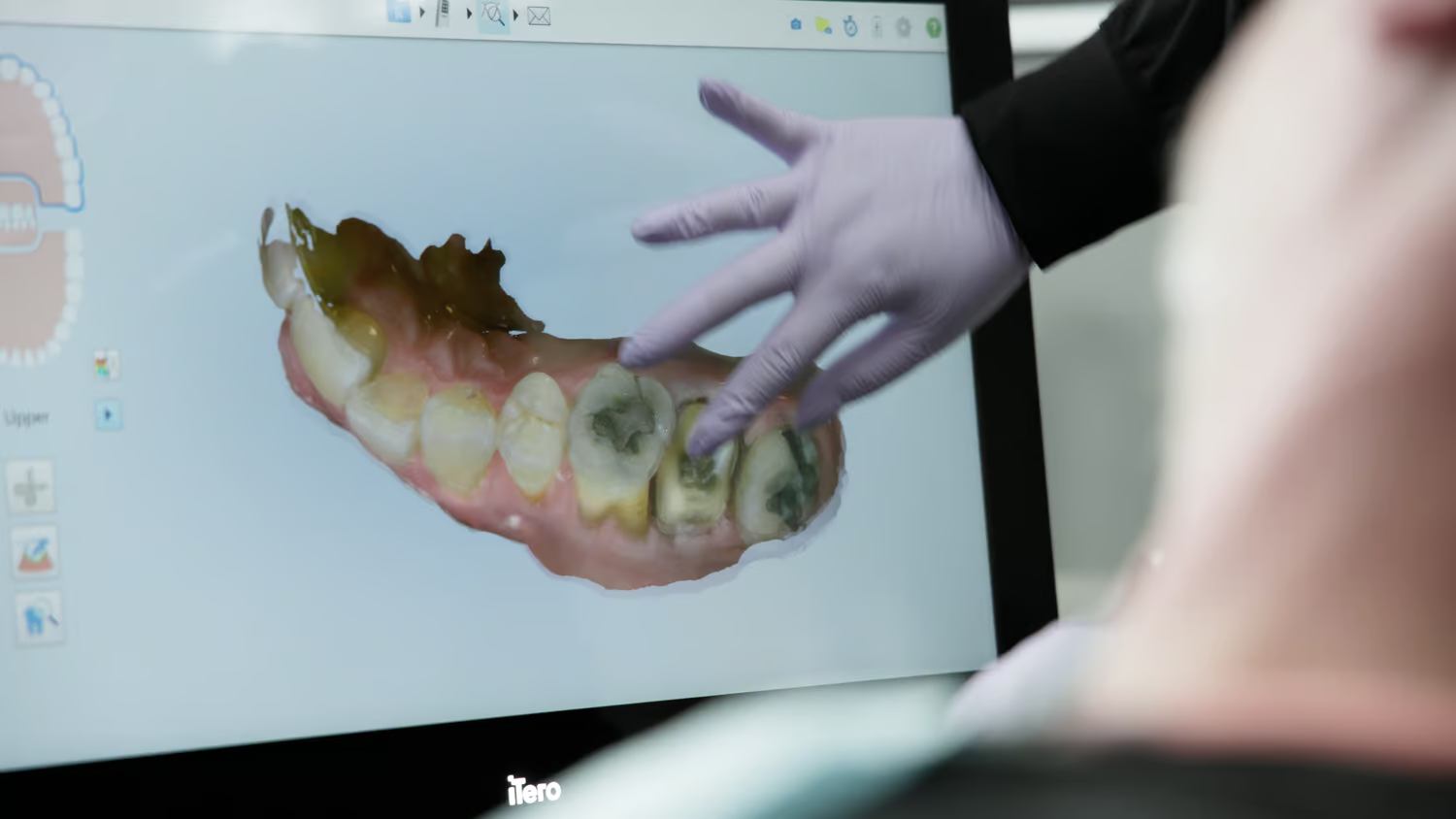
If your gums bleed or look swollen, it’s reasonable to wonder whether a laser would help. Those signs tell you something needs attention, but they don’t tell you which treatment you need. Gum disease can affect the tissue you see and the support around a tooth that you can’t see. The useful question isn’t simply, “Can you use a laser?” It’s, “What’s causing this, and what would the laser be treating?”

An exam gives the dentist a fuller picture than a quick look in the mirror can. The condition of your gums, the spaces between your teeth and gums, and the support around your teeth all matter to the decision. A spot that bleeds when you brush isn’t, by itself, proof that you need laser treatment. And gums that don’t hurt aren’t, by themselves, proof that everything’s fine. The treatment should follow what the exam finds, not the other way around.

  • What’s the concern? Point out where you’ve noticed bleeding, swelling, tenderness, or a change in how your gums look.
  • How much of the gum is involved? A concern in one area may call for a different decision than changes around several teeth.
  • What’s the goal of treatment? Ask what the recommended care is meant to address and why a laser is, or isn’t, part of that plan.

You don’t need to arrive knowing which tool to ask for. You should leave the decision with a clear reason behind it. If laser treatment is recommended, you can ask which areas need it and what the dentist found there. If it isn’t recommended, you can ask what the exam showed instead. That’s a more useful answer than choosing treatment from a symptom alone.

Associates in Dentistry offers laser gum treatment at its 336 N Main St office in Canton. Dr. Aaron Thum, who was born and raised in Canton, is the dentist at this location. The important first step is finding out what your gums need. From there, you can make a treatment decision with a reason you understand.

02

Signs Your Gums May Need More Than a Cleaning

A cleaning helps care for your teeth and gums, but it doesn’t answer every gum concern. If something has changed, tell the dentist what you’ve noticed rather than assuming a cleaning will take care of it. The change may be small, and you may feel no pain. What matters is whether it points to a problem a routine cleaning alone can’t address.

  • Your teeth look longer than they used to. The gumline may have moved back, even if the change happened slowly enough that you didn’t notice it at first.
  • A tooth feels loose, or your teeth seem to fit together differently when you bite. Those changes deserve attention because the concern may go beyond the visible gumline.
  • You have a bad taste or breath that keeps coming back. It doesn’t prove you have gum disease, but it’s worth mentioning along with any other changes you’ve noticed.
  • One area keeps bothering you while the rest of your mouth feels fine. You can point to the spot. You don’t have to decide whether the concern is limited to that spot.

It’s easy to explain away one of these signs. You might think a tooth only looks longer because you’ve been brushing harder, or that a different bite is just something you’ll get used to. You don’t need to work out the cause on your own. A clear description of what changed is more useful than a guess about what treatment you need.

Pay attention to the pattern, too. Is the change in one place or several? Did you notice it recently, or has it been there for a while? Does it seem to come and go? You don’t need exact dates. Even a simple detail, like “this tooth feels different when I chew,” helps explain your concern. That’s especially useful when a change isn’t easy to see.

None of these signs means you need laser treatment. They also don’t tell you that a cleaning is enough. The point is to make sure the concern gets considered before you settle on a service. Associates in Dentistry offers Dental Cleaning and Periodontal Treatment in Canton as well as laser gum treatment. Which care fits depends on what’s happening with your gums, not on which symptom brought it to your attention.

03

When a Regular Cleaning Is Enough

If your gums are healthy and the exam finds no problem that needs more care, a regular dental cleaning may be enough. You don’t need laser treatment simply because it’s available. A cleaning and laser gum treatment have different purposes. The better choice is the one that fits what’s happening in your mouth, not the one that sounds more advanced.

Say you’re due for a cleaning and haven’t noticed a change in your gums. You might wonder whether asking for a laser would do more to protect them. There’s no reason to choose a treatment for a problem that hasn’t been found. Keeping up with routine care is a good decision in its own right. It isn’t a lesser version of gum treatment.

The same goes for a concern that turns out not to need treatment beyond a cleaning. A gum concern can feel more serious before you know what’s causing it. If the exam shows that a regular cleaning fits your needs, it’s okay to stop there. You don’t have to add a laser to make the care complete.

It also helps to separate what you want from what a treatment can do. If your goal is routine care, ask for a cleaning. If you’re worried about a particular change, describe it so it can be considered during your visit. You don’t need to choose between those paths before anyone has looked at your gums. Naming a concern doesn’t commit you to laser treatment, and booking a cleaning doesn’t mean you’ve agreed to ignore it.

Sometimes the hardest part is trusting a simple answer. If you came in expecting to need more, “a cleaning is enough” might sound too easy. You can still ask why. The answer should make sense in light of what was found, rather than leave you wondering whether something was missed. If no separate gum treatment is recommended, you shouldn’t feel you have to request one just to be thorough.

A regular cleaning is enough when it meets the need at hand. Laser treatment has a place when there’s a reason for it, but it isn’t an upgrade to add to every visit. You can feel comfortable choosing the simpler care when that’s what your gums need.

Bleeding gums? Let's see if laser care fits.
04

What to Expect From Exam to Follow-Up

If laser gum treatment is recommended, ask for a plan you can picture. Which areas need care? What is the laser meant to address in those areas? Will other periodontal treatment be part of the plan? You don't need to learn dental terms to make a sound choice. You do need to know what you're agreeing to and why.

Before you schedule treatment, talk through what the appointment may involve for you. Ask how long to allow, whether your mouth may feel different afterward, and whether you'll need to change what you eat or do for a while. Those answers depend on the care being recommended. If you have a long drive home, work later that day, or someone who depends on you, mention it. It's easier to plan around care when the dentist knows what your day looks like.

Bring a list of medicines you take and tell the dentist about any health concerns that could affect your care. Don't stop or change a medicine on your own. If something about the proposed treatment worries you, say so before it begins. It might be discomfort, time away from work, or simply not knowing what the laser will do. A clear answer to your concern matters more than a general promise that everything will be fine.

It's also worth asking what follow-up the dentist recommends for your particular case. Find out when your gums should be checked again, what they'll look for, and what you should do if you have a question after treatment. That gives you a way to understand your progress instead of trying to judge it from how your gums look on a single day. If part of the plan isn't clear, ask for it in plain words before you leave.

Cost deserves the same clarity. The amount of care needed, the areas being treated, and any other recommended periodontal care can affect the total. Associates in Dentistry is a fee-for-service practice and accepts and bills most insurance plans. Before you commit, ask for the proposed cost and what information is available about your plan's benefits. That way, you can weigh the care and the expense together.

05

Getting Laser Gum Treatment Close to Home in Canton

You don't have to assume laser gum treatment means a trip out of Canton. Associates in Dentistry offers the service at 336 N Main St. Dr. Aaron Thum is the dentist at this location. If you're weighing where to seek care, those are useful facts: the service is available in town, at an office you can identify before you make plans.

Local availability matters most when it makes the care practical for you. You may need to fit an appointment around work, a ride, or someone else's schedule. Knowing the Canton address lets you judge the trip without guessing where treatment would take place. It doesn't tell you how many appointments your care might take. That depends on what's recommended for your gums.

It's worth being clear about the service when you contact the office. Laser gum treatment and periodontal treatment are both offered in Canton, but listing both doesn't mean every patient needs both. You can say that you're concerned about your gums and want to find out whether a laser belongs in your care. That gives the conversation a better starting point than asking to book a procedure you may not need.

If travel is a deciding factor, say so. For example, you may be able to get to the N Main St office easily but need to arrange a ride for any other trip. Ask which appointments would be at the office once you know what's being recommended. It's a practical question, not a reason to choose one treatment over another.

Canton is where Associates in Dentistry began in 1972. That history may be familiar to some families, but it isn't what determines whether a laser is right for you. What matters now is that the service is available at the office and that you can make a choice based on your own gum health. If staying close to home helps you follow through on needed care, it's reasonable to make that part of the conversation.

FAQ

Answers to the most common questions.

Something else on your mind?
Call us at (309) 647-3331.

How do I know if I need laser gum treatment instead of a regular cleaning?

A periodontal exam and gum measurements help determine what type of treatment you need. Laser treatment isn't necessary for every case of gum disease.

What are the signs that I need more than a routine cleaning?

Bleeding, red or swollen gums, gum recession, persistent bad breath and loose teeth can be signs of gum disease that requires more than a routine cleaning.

What happens during laser gum treatment?

The area is numbed first, and the laser is used to treat infected gum tissue around the affected teeth. Dr. Thum will explain what treatment is appropriate for your gums before getting started.

What is recovery like after laser gum treatment?

You may have some tenderness for a few days. You'll receive instructions for brushing, eating and caring for your gums while they heal.

Will I need follow-up visits after laser gum treatment?

Yes. Follow-up visits allow Dr. Thum to check how your gums are responding to treatment. You may also need more frequent cleanings to help maintain your results.

Is laser gum treatment available in Canton?

Yes. Laser gum treatment is available at our Canton office. Dr. Thum can evaluate your gums and determine whether it's appropriate for you.

Request an appointment

Call us at (309) 647-3331

Tell Us About Yourself

Are you new to Associates in Dentistry?

Preferred Day and Time (optional)
Thank you! Your submission has been received!

That didn't go through. Please try again, or call your office.