

A Dental Bridge Replaces One or More Missing Teeth
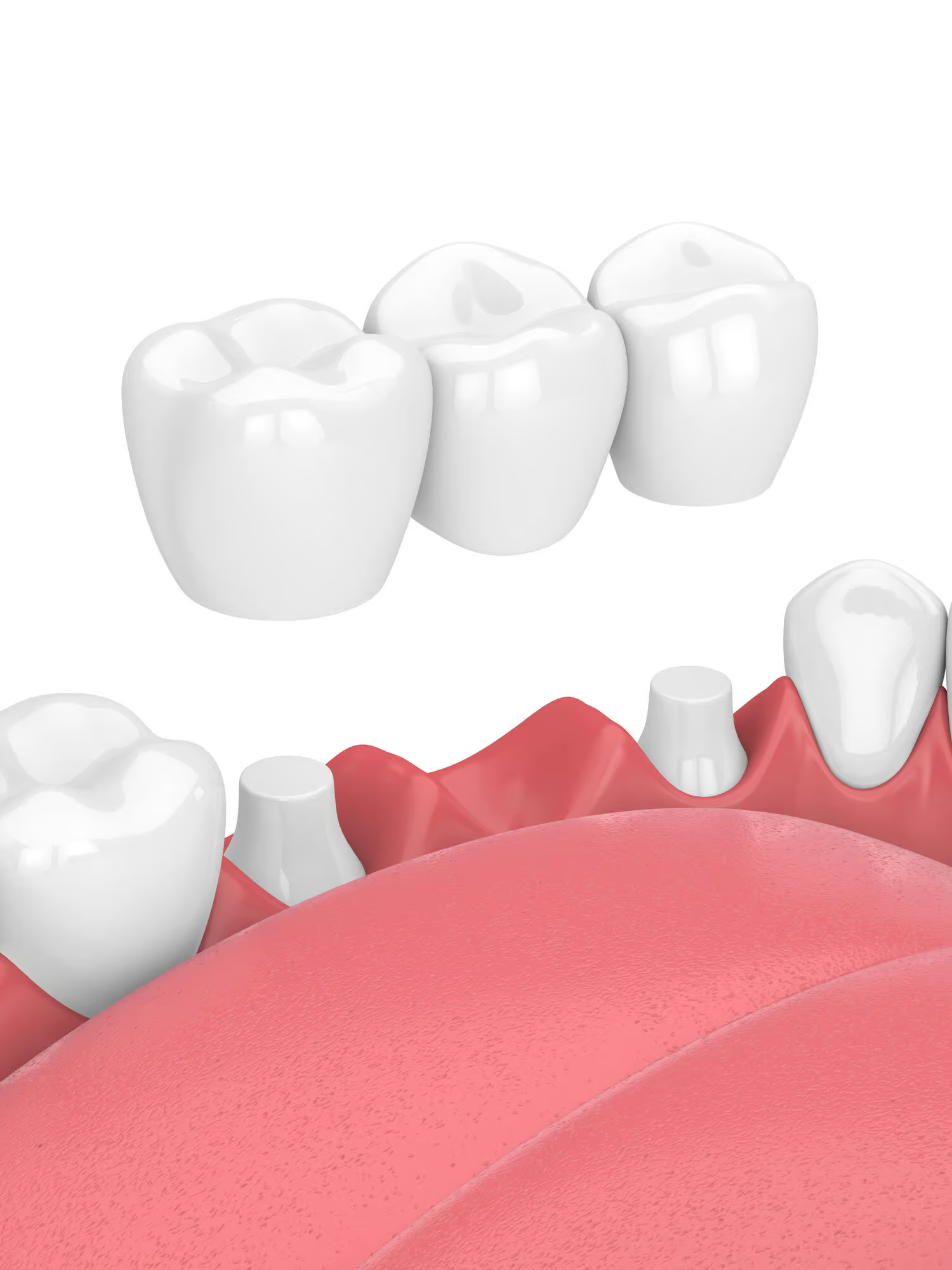
Dental bridges do just what the name says. They span a gap. A bridge fills the space left by one missing tooth, or by a few missing teeth in a row. The false tooth in the middle is called a pontic. It's held up by crowns that fit over the teeth on each side of the gap. Those support teeth are called abutments. The whole piece is cemented in place, so you don't take it out to clean it or sleep. That's the big difference from a partial denture, which is removable.
A gap may not hurt, so it's easy to put off. But teeth lean on each other. When one is gone, the teeth beside it can start to tilt into the open space. The tooth above or below the gap can drift too, since nothing is there to meet it. Over time, your bite can feel off. Food can get trapped in new places. You may start chewing more on one side without even noticing.
There's more than one kind of bridge. The right one depends on where the gap is and what's around it:
- Traditional bridge: a false tooth held by crowns on the teeth on both sides of the gap. This is the most common type.
- Cantilever bridge: the false tooth is held by a crown on one side only. It's used when there's a healthy tooth on just one side.
- Maryland bridge: the false tooth is held by a thin wing bonded to the back of the neighboring teeth. It often works for front teeth that don't take heavy chewing force.
- Implant-supported bridge: the bridge rests on dental implants instead of natural teeth. It can be a good fit when several teeth in a row are missing.
Here's the part that matters most when you're deciding. A traditional bridge needs crowns on the teeth next to the gap. To fit a crown, the dentist has to reshape that tooth. If those teeth already have large fillings, cracks, or old crowns, that's often a good trade. They needed the protection anyway, and the bridge puts that work to good use. But if those teeth are healthy and untouched, reshaping them is a real cost. In that case, it's worth asking about other options before you choose.
Say you lost a lower back tooth a few years ago. Lately you've noticed the tooth behind the gap leaning forward, and food keeps catching there when you eat. If the tooth in front already has a big filling, a bridge may make a lot of sense. If both neighbors are strong and healthy, you might weigh a different fix.
At our office at 336 N Main St, you'll see Dr. Aaron Thum, who was born and raised in Canton. Bridges, crowns, partial dentures, and implant restoration are all offered here. That means you can talk through each option in one place and pick the one that fits your teeth, not just the gap.