
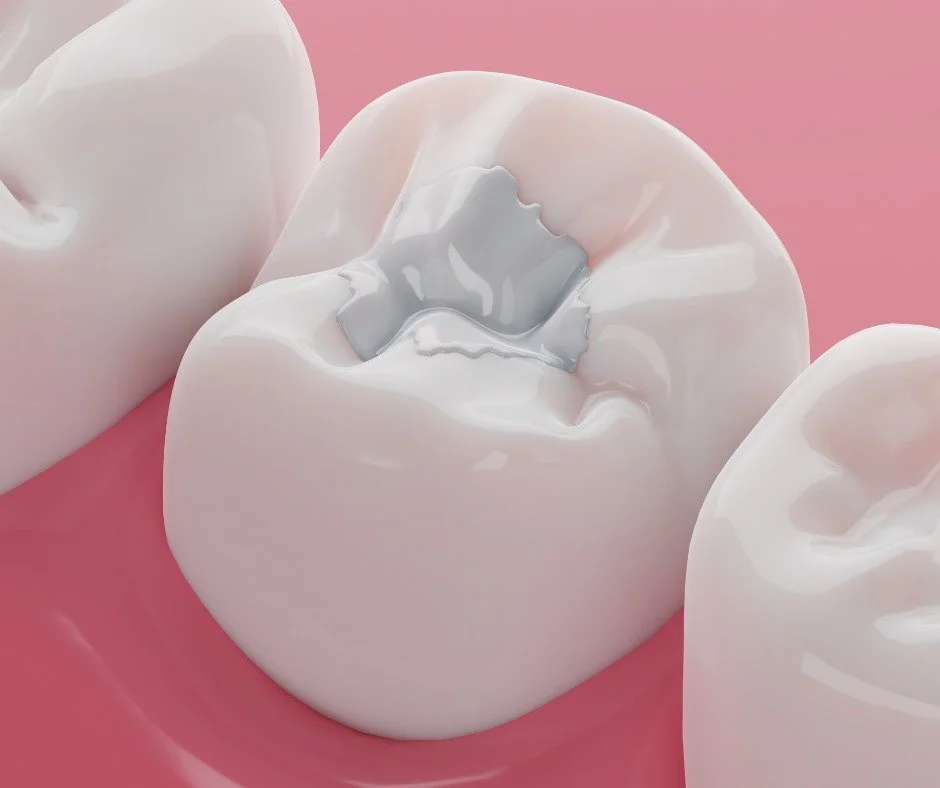

Illustration of a molar with a tooth-colored filling
Your family's dental home

Composite Fillings in Canton

Illustration of a molar with a tooth-colored filling
The short answer
Reviewed by our
Canton
doctors.
Dr. Aaron Thum, dentist at Associates in Dentistry in Canton

A composite filling repairs a tooth that has a small area of decay or minor damage, using a tooth-colored material bonded right to the tooth. The real value is timing. A small repair keeps more of your own tooth, while a problem left to grow often needs a bigger fix later.

01

What a Composite Filling Treats and Why It Matters

A cavity is a spot where decay has worn a hole through the hard outer layer of a tooth. It won't heal on its own. A composite filling cleans out that soft, damaged spot and fills it with a material that matches the color of your tooth. Once it sets, the tooth can chew and bite like it did before.

Cavities are the most common reason for a filling, but they aren't the only one. Composite works well for a few everyday problems:

  • A new cavity found at a checkup, often before you've felt anything at all
  • A small chip or a rough edge from biting down on something hard
  • A spot near the gumline where the tooth has worn away
  • An old filling that's cracked, leaking, or pulling away from the tooth
  • An older silver filling you'd like to swap for one that blends in

Here's why the size of the problem matters so much. When decay is caught early, the hole is small. Only a little of the tooth needs to be cleaned out. The rest of the healthy tooth stays just as it is. Because composite bonds to the tooth, it can fill a small space without much extra trimming. That means more of your natural tooth stays in your mouth.

Decay doesn't stay put, though. Over time it can spread deeper into the tooth or wider across it. A cavity that could have been a quick filling may grow until there isn't enough strong tooth left to hold a filling. At that point the tooth may need a crown, which is a cap that covers the whole tooth. If decay reaches the soft nerve inside, a root canal may be needed to save the tooth. Both are good, proven repairs, and we offer them here in Canton. They're simply bigger jobs than a filling.

A lot of people notice the warning signs and then wait. Maybe cold water stings a little on one side. Maybe floss keeps catching on the same tooth, or you spot a dark line that wasn't there last year. None of these things hurt much at first, so it's easy to put off. But a small sting is often the easiest stage to fix.

That's really the heart of it. A composite filling isn't about making a big change to your smile. It's a small, quiet repair that keeps a tooth strong and keeps a minor problem from turning into a bigger one. Dr. Aaron Thum grew up right here in Canton, and he'll be straight with you about what he sees and whether a filling makes sense for your tooth.

02

What Happens During a Composite Filling Visit

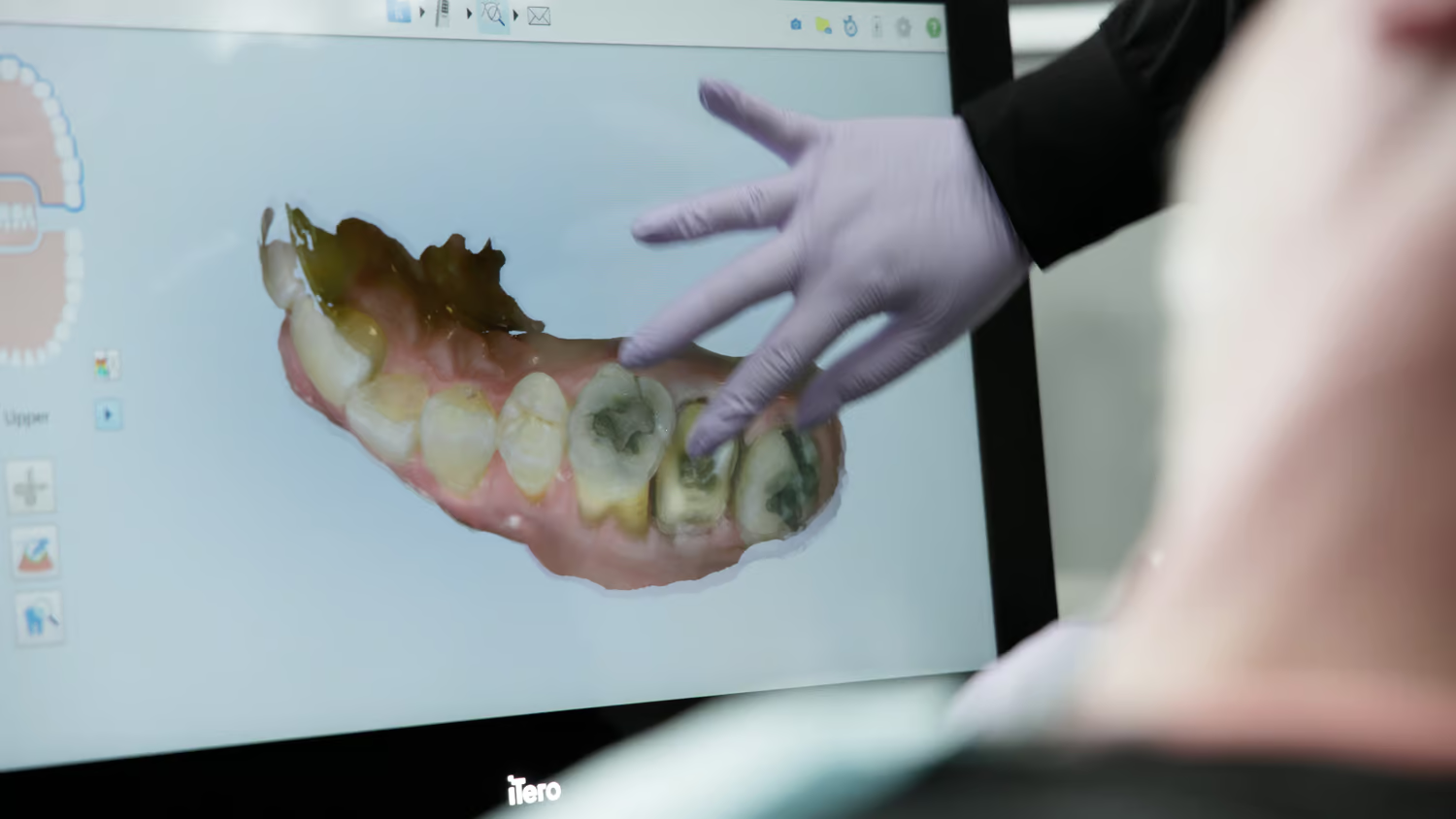
A composite filling is usually done in one visit. Most of the time goes into cleaning out the decay and building the filling up in thin layers. Many people head back to work or school the same day. If you know what's coming, it tends to feel a lot less like a big deal.

At our office, the dentist you'll see is Dr. Aaron Thum, since he's the doctor at this location. Here's what a composite filling generally involves, step by step.

  • A close look first. The dentist checks the tooth and may use an X-ray to see how deep the decay goes. This shows how big the filling needs to be.
  • Numbing the area. Most fillings start with a local numbing shot near the tooth, so you feel pressure but not pain. A very small, shallow spot sometimes doesn't need it.
  • Cleaning out the decay. The soft, damaged part of the tooth is removed. Because composite bonds to the tooth, the healthy part around it can usually stay put.
  • Keeping the tooth dry. Composite doesn't bond well to a wet surface. That's why you may notice cotton rolls or a thin barrier keeping the tooth dry while the work is done.
  • Getting the surface ready. The tooth is treated with a mild gel, then a bonding liquid. This helps the filling grip the tooth tightly.
  • Matching the color. A shade is picked to blend with your tooth, so the filling is hard to spot once it's done.
  • Building it in layers. The composite goes in a little at a time. Each layer is hardened with a small blue light, which takes only seconds.
  • Shaping and polishing. The filling is shaped to fit your bite. You may be asked to bite down on a thin strip of colored paper so any high spots show up. Then it's polished smooth.

How long it takes depends mostly on the size and spot. A small filling on a front tooth can go fast. A larger one on a back molar, where you do your heavy chewing, takes more time to shape so your bite lines up right.

Because the blue light sets each layer, the filling is hard by the time you leave. The bigger thing to watch is the numbness. Your lip and cheek may stay numb for a few hours, and it's easy to bite them without noticing. Many people wait until feeling comes back before they eat anything chewy.

For a few days, it's common for the tooth to feel a bit touchy with cold drinks. That usually fades on its own. If your bite feels off, or one tooth seems to hit first when you close, give us a call. A small change to the shape of the filling can often fix that.

A filling is one of the everyday repairs that make up general dentistry in Canton, along with the exams and cleanings that help catch the next small problem early. If cost is on your mind before the visit, it's worth knowing that Associates in Dentistry accepts and bills most insurance plans. You can ask about your plan when you schedule.

03

When a Filling Can Wait and When It Can't

Not every spot on a tooth needs a filling today. Some don't need one at all. The honest answer depends on what's going on with the tooth, and that's something a dentist can tell you after a look and, often, an X-ray.

Here are some times when a filling can often wait, or may not be needed:

  • A very early soft spot that hasn't broken through the outer layer. At this stage, a dentist may suggest watching it and using fluoride at home to help harden the area. Some early spots stay the same for a long time.
  • A stain, not a hole. Coffee, tea, and old grooves can leave dark marks that look worrying but aren't decay. If the surface is still hard and smooth, there may be nothing to fix.
  • An old silver filling that's still sealed and solid. If it isn't cracked or leaking, swapping it for composite is a choice about looks, not a health need. There's no rush, and it's fine to leave it alone.
  • A tiny chip that isn't sharp or sensitive. Smoothing a rough edge or bonding it later is often an option when you're ready.

If you're being told to watch a spot, the plan only works if someone checks it again. That's one of the quiet reasons regular checkups matter. They give a small problem a chance to stay small, or to get fixed the moment it starts to change.

Then there are times when waiting usually isn't a good trade:

  • Cold or sweets bring a sting that lingers instead of fading right away.
  • Food keeps packing into the same spot, or floss tears on one tooth every time.
  • You can feel a hole or a sharp edge with your tongue.
  • An old filling has cracked, chipped, or feels loose.
  • The tooth hurts when you bite down, or it aches on its own.

Each of these points to something that's already open or failing, and an open spot won't close up by itself. A filling at this stage is still a small repair. The longer it goes, the more likely the conversation shifts to one of the bigger fixes covered earlier.

Real, ongoing pain is a little different. If a tooth throbs, keeps you up at night, or comes with swelling, that's past the point of planning a routine filling. Our office offers emergency dental pain treatment, so you don't have to wait for a regular checkup to get it looked at.

A lot of people land somewhere in the middle. Maybe a tooth has felt a bit off for a few months, but nothing you'd call pain. That's a fair time to ask. The answer might be that the spot is fine to watch. It might be that a small filling now saves more of the tooth. Either way, you'll know which one it is, and you can decide from there.

What you shouldn't feel is pushed. A filling on a tooth that doesn't need one isn't a favor to you. Dr. Thum would rather tell you a spot can wait than fix something that's doing just fine on its own.

Think you might have a cavity? Let's check.
04

Composite Fillings Versus Cosmetic Fixes

A composite filling and a cosmetic fix can use the same tooth-colored material. They aren't the same job, though. A filling repairs a tooth that's been damaged by decay or wear. A cosmetic fix changes how a healthy tooth looks. Knowing which one you're after makes the visit, the plan, and the bill a lot easier to understand.

Here's a simple way to sort it out. If something is wrong with the tooth itself, like a hole, a leaking old filling, or a worn spot that's sensitive, that's a repair. If the tooth is healthy and you just don't love the color, shape, or a small gap, that's cosmetic. Some people come in with a bit of both, and that's fine too.

Our office offers a few cosmetic options, and each has its own page if you'd like to read more:

  • Cosmetic bonding uses composite to reshape a tooth, close a small gap, or cover a mark on a tooth that isn't decayed.
  • Veneers are thin covers placed over the front of a tooth to change its look more fully.
  • Teeth whitening lightens the color of your natural teeth.

One timing tip is worth knowing if you're thinking about whitening. Whitening lightens natural tooth, but it doesn't change the color of a composite filling. A filling is matched to the shade your teeth are now. If you whiten later, a front-tooth filling can end up looking a little darker than the teeth around it. So if brighter teeth are on your list, mention it before a filling on a front tooth. It's often smart to whiten first and then match the filling to your new shade. For a back tooth that nobody sees, it matters a lot less.

The difference also shows up in cost. A filling's price usually depends on the size of the repair, how many sides of the tooth it covers, and whether it's on a front tooth or a back molar. Many dental plans treat a filling as a needed repair. Cosmetic work done only for looks is often covered less, or not at all. Plans vary a lot, so it's worth asking a few questions before you decide:

  • Is this a repair for decay or damage, or is it mainly for looks?
  • How many surfaces of the tooth will the filling cover?
  • Does my plan treat this as a repair or as cosmetic work?
  • If I'm thinking about whitening, should that happen first?

Associates in Dentistry accepts and bills most insurance plans, so there's a good chance someone can help you sort out how yours handles each option.

The main point is that you shouldn't have to guess. If a tooth needs a repair, a filling keeps it strong while the problem is still small. If it's healthy and you'd just like it to look different, that's a separate choice you can make on your own time. Dr. Thum will tell you plainly which one you're looking at, so you're only paying for what your tooth needs, plus anything extra you decide you want.

05

How Filling Costs Work and What Affects the Price

A filling doesn't have one set price. Dental offices usually price fillings by the tooth and by the number of surfaces the filling covers. A tooth has up to five sides that can need repair: the chewing top, the cheek side, the tongue side, and the two sides that face the teeth next to it. A small spot on the top of a molar is a one-surface filling. A cavity that wraps from the top down between two teeth might cover two or three surfaces, and it costs more because there's more to clean out, rebuild, and shape.

Along with the size and location of the tooth mentioned earlier, a few other things can move the price:

  • Taking out an old filling first. Replacing a cracked or leaking filling means removing the old one before the new one goes in.
  • The exam and X-rays. These are often billed as separate items from the filling itself, so they may show up as their own lines on a bill or estimate.
  • More than one tooth. If two or three spots get fixed in one visit, each tooth is usually counted on its own.
  • How deep the decay goes. A cavity that's close to the nerve can take extra care to protect the tooth.

Insurance is where most of the surprises come from, and it's usually the plan's rules, not the filling, that cause them. Here are a few things many dental plans have in common. A deductible is the amount you pay before the plan starts paying. Many plans cover fillings as basic care at a set percentage, not the full amount. Most have a yearly maximum, the most the plan will pay in a year. Some plans also limit how often a filling on the same tooth can be replaced.

One rule catches a lot of people off guard. Some plans will pay for a tooth-colored filling on a back tooth only at the rate of an older silver filling. You'd then pay the difference. It's not something the office decides. It's written into the plan, and it's worth checking before your visit.

It also helps to know that Associates in Dentistry moved to a fee-for-service model in August 2024. In dentistry, that generally means the practice sets its own fees instead of following an insurance network's price list. Since the practice accepts and bills most insurance plans, the best move is to ask how fee-for-service works with your plan when you call, so you know where you stand before treatment.

Before you say yes, these questions can save you a surprise:

  • How many surfaces will this filling cover?
  • Are the exam and X-rays billed separately?
  • Does my plan pay the full rate for a tooth-colored filling on a back tooth?
  • How much of my deductible and yearly maximum is left?

The biggest cost factor is timing, though. A one-surface filling on a small spot is about the simplest repair a tooth can get. When decay is left to spread, the same tooth may end up needing a crown or a root canal, and both cost more than a filling. Catching a spot while it's small is the easiest way to keep the bill small too. Dr. Thum will tell you how big the repair is before any work starts, so the number won't come out of nowhere.

FAQ

Answers to the most common questions.

Something else on your mind?
Call us at (309) 647-3331.

How long do composite fillings last?

The lifespan of a filling depends on factors such as its size, location and how well you care for your teeth. Regular brushing, flossing and dental exams can help your fillings last longer.

Can I eat after getting a composite filling?

You can generally eat after a composite filling once the procedure is complete, although you may want to wait until any numbness has worn off so you don't accidentally bite your cheek or tongue.

Will a composite filling affect my bite?

Your dentist checks your bite before you leave and can make adjustments if the filling feels too high or uncomfortable when you bite down.

How do I know if I need a filling?

Sensitivity, food getting caught in a particular area or a rough edge can be signs that a tooth needs attention. Cavities don't always cause symptoms, so a dental exam can sometimes find decay before you notice a problem.

Can I wait to treat a cavity if it doesn't hurt?

A cavity can continue to grow even when it doesn't hurt. Waiting can allow the decay to reach more of the tooth and may eventually require a crown or root canal instead of a filling.

Will my filling match my tooth?

Yes. Composite fillings are tooth-colored, and the shade can be matched to your natural tooth so the filling blends in with your smile.

Request an appointment

Call us at (309) 647-3331

Tell Us About Yourself

Are you new to Associates in Dentistry?

Preferred Day and Time (optional)
Thank you! Your submission has been received!

That didn't go through. Please try again, or call your office.