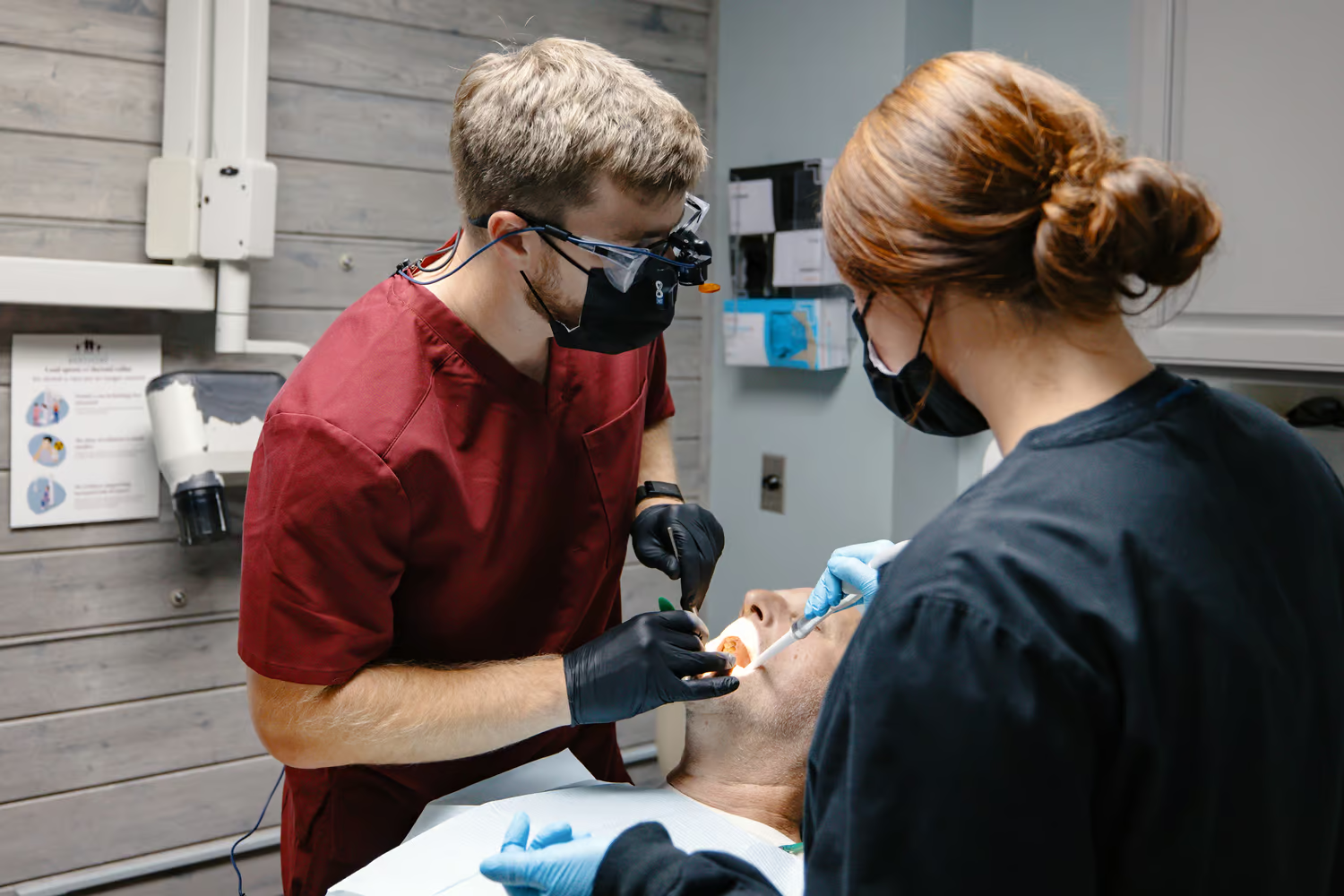

Dentist wearing loupes and an assistant working on a reclined patient
Your family's dental home

Dental Exams in Canton: What to Expect at Associates in Dentistry

Dentist wearing loupes and an assistant working on a reclined patient
The short answer
Reviewed by our
Canton
doctors.
Dr. Aaron Thum, dentist at Associates in Dentistry in Canton

A dental exam checks your teeth, your gums, your old dental work, and the soft tissue of your mouth. Most of what it finds can't be felt yet, and that's the point: small problems are simpler to fix than big ones. In Canton, that exam is with Dr. Aaron Thum, who was born and raised here.

01

A Dental Exam Covers More Than a Quick Look

A lot of people picture a dental exam as a few seconds with a mirror and a pick. It's more than that. Your dentist looks at your whole mouth, not just the tooth that's been bugging you. Most problems in the mouth start quiet. A small cavity doesn't hurt. Early gum disease often doesn't either. By the time something aches, it's usually been growing for a while.

This is part of General Dentistry in Canton. Care is provided at our Canton office by Dr. Aaron Thum.

Here's what a dental exam usually looks at:

  • Your teeth. The dentist checks each one for soft spots, cracks, and early decay, including the tight spaces between teeth where cavities like to hide.
  • Your old dental work. Fillings and crowns don't last forever. The dentist looks for edges that have worn, chipped, or started to leak.
  • Your gums. Healthy gums fit snug around each tooth. The dentist checks for puffiness, bleeding, and pockets that have gotten deeper than they should be.
  • Your mouth beyond the teeth. That means your tongue, cheeks, lips, the roof and floor of your mouth, and your throat. Spots or sores that don't belong are worth catching early.
  • Your bite. The dentist notices how your teeth meet and whether there are signs of grinding or uneven wear.
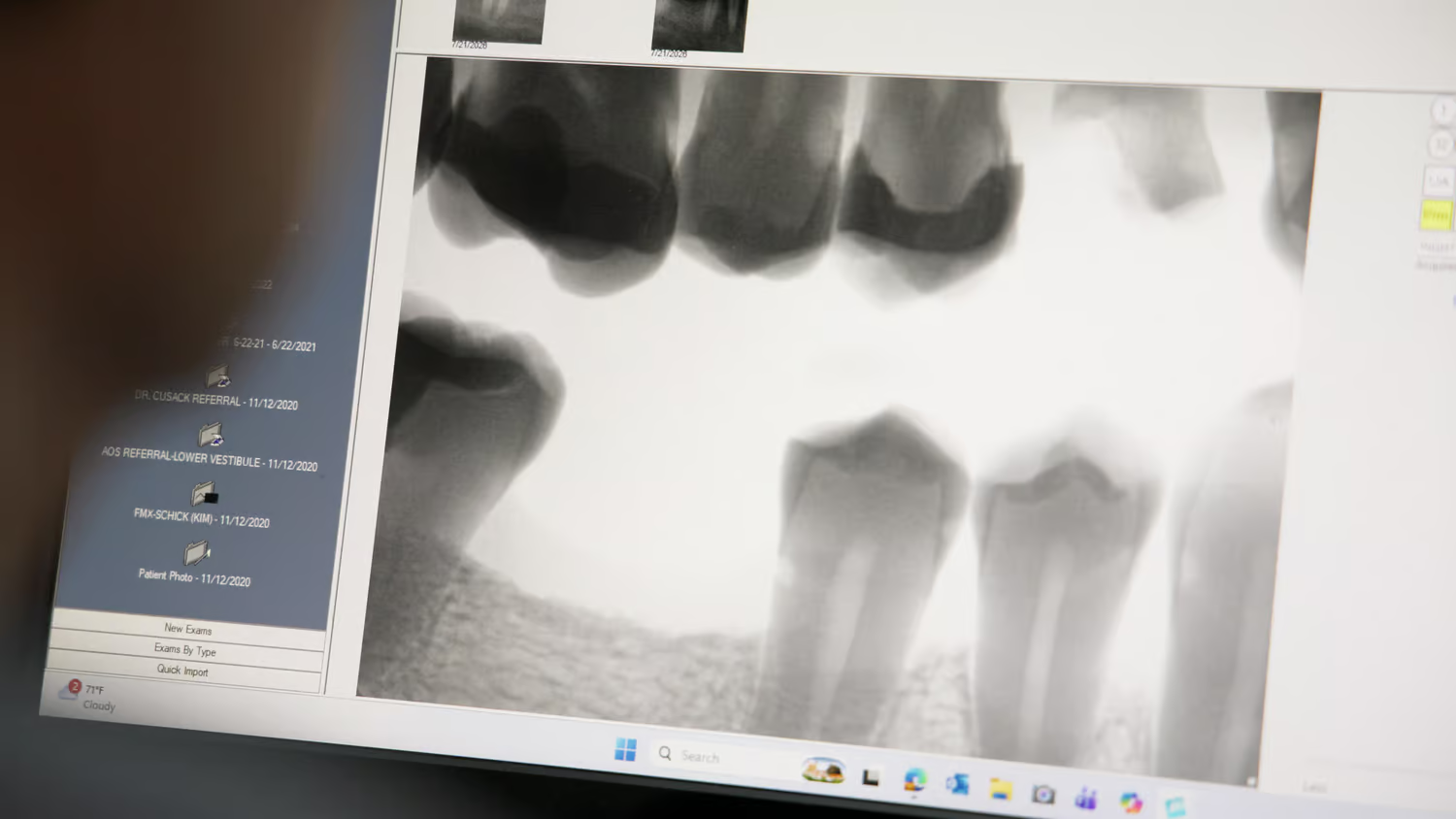
  • X-rays, when you need them. They show what eyes can't, like decay under a filling, problems at the root, or bone around the teeth.

If you wear a partial or complete denture, the exam matters just as much. Gums and bone change shape over time, so a denture that fit well a few years ago can start to rub or slip. The dentist checks the fit and the tissue underneath it.

Say your gums bleed a little when you floss, but nothing hurts. It's easy to shrug that off. An exam is where someone with trained eyes tells you whether it's nothing, or whether it's the start of something worth treating while it's still simple.

When the exam does turn something up, you don't have to go far for the fix. Our office on North Main Street offers fillings, crowns, root canals, periodontal treatment, and laser gum treatment, along with denture repair and relines. You'll talk it through with Dr. Thum first, so you know what he found and what your choices are before anything gets done.

One thing to know before you book: our office doesn't do pediatric dental exams. Those are offered at other Associates in Dentistry locations. Adults are seen right here in Canton.

So a dental exam isn't really a quick look. It's a careful check of the things you can't see or feel on your own. Doing it while things are still small is what keeps your next visit easy.


02

Routine Exams Versus Problems That Need Attention Now

Most people who come in for a dental exam feel fine. Nothing hurts. Nothing looks wrong. That's the best time to come in, because the whole idea is to find small things while they're still small. You don't need a reason beyond "it's been a while."

A routine exam is the right call if any of these sound like you:

  • You can't remember your last checkup, or you know it's been a couple of years.
  • You're new to Canton or new to the area and need a dentist to keep an eye on things.
  • You've noticed something small, like a little sensitivity to cold that comes and goes, or gums that bleed now and then when you floss.
  • You have older fillings or crowns and want to know how they're holding up.
  • Your denture feels a bit looser than it used to, but it isn't hurting you.

None of those are emergencies. They're exactly the kind of thing an exam is for. Write them down so you remember to bring them up. A small detail you mention can help Dr. Thum know where to look closer.

Some problems shouldn't wait for a regular checkup, though. If something is clearly wrong, call us instead of booking out like it's routine. That includes:

  • Tooth pain that's strong, steady, or keeping you up at night.
  • Swelling in your gums, face, or jaw.
  • A tooth that's cracked, chipped, or broken.
  • A filling or crown that fell out.
  • A bad taste or bump on the gum near a sore tooth.
  • A sore or spot in your mouth that isn't going away.

Our office offers emergency dental pain treatment and emergency tooth extraction, so a painful problem doesn't have to mean a drive to Peoria. When you call, tell us what's going on. That helps our team understand what kind of visit you need.

There's also a middle ground, worth being honest about. Say a tooth twinged once when you bit down on something hard, and it hasn't bothered you since. That's not an emergency. It's still worth mentioning at your next exam. If it starts happening more often, that's your cue to call sooner. You know your mouth better than anyone. If something feels off and you're not sure, a quick call is better than guessing.

Either way, you end up in the same place. Exams, cleanings, and fixes like fillings and crowns all fall under general dentistry in Canton, and they're handled right here on North Main Street by the same doctor who did your exam. Dr. Thum grew up in Canton, so the person looking at your teeth is someone from your own hometown. The only real difference between a routine visit and an urgent one is timing. The earlier you come in, the more likely the fix is a small one.

03

Seeing One Doctor in Canton Instead of a Rotating Schedule

At a lot of dental offices, you see whoever is on the schedule that day. Our office works differently. There's one doctor here, Dr. Aaron Thum. The dentist doing your exam this year is the same dentist who did it last year, and the same one who'll do it next year.

That matters more than it might seem. Much of what a dentist catches during an exam is change. A gum pocket is a little deeper than it was. A filling edge has started to wear. A spot on your cheek is new. Changes like these are easier to judge when the person looking has seen your mouth before with their own eyes. A new dentist every visit has to start from a chart. A familiar one has the chart and the memory of what your teeth looked like last time.

It matters for you, too. You don't have to retell your whole dental story each time you sit down. If you get nervous at the dentist, the person in the room already knows that about you. Small questions feel easier to ask someone you've talked with before.

Here's what one doctor in Canton means in plain terms:

  • The dentist who finds a problem at your exam is the same dentist who'll treat it, whether that's a filling, a crown, or a denture reline.
  • Your history stays with one person, so changes from one visit to the next are easier to spot.
  • You're seeing a dentist who grew up here, not someone passing through.

Dr. Thum isn't on his own, either. Associates in Dentistry is an independent practice. It isn't part of a corporate chain. Canton is where the practice started back in 1972, before it opened in Washington, Bartonville, and Peoria.

To be straight with you, a few things aren't offered in Canton. Oral surgery, sleep apnea treatment, TMJ treatment, and same-day crown milling are all handled at our other locations. If you need one of those, we'll point you to the right office. For your exam, and for most of the work that can come out of one, you can stay right here in Canton.

If you're wondering about insurance, Associates in Dentistry accepts and bills most insurance plans. When you call, ask whether yours is one of them. Our team can walk you through how it works before your visit.

Due for a checkup? Let's see where things stand.
04

How Insurance and Fees Work for an Exam Visit

Cost is often the real reason people put off an exam. They aren't afraid of the chair. They're afraid of the bill. Here's how it usually works, in plain terms.

An exam visit isn't always one single charge. At most dental offices, the exam, the X-rays, and the cleaning are each their own line on the bill. That's why two people can come in for a checkup and leave with different totals. It isn't random. It depends on what each person's mouth needed that day.

A few things tend to change what an exam visit costs:

  • Whether you're a new patient. A first exam is usually more thorough, because the dentist is learning your mouth from the start. Later checkups build on that.
  • Whether you need X-rays this time. Not every visit calls for them. When they're needed, they're usually a separate charge.
  • Whether it's a routine checkup or a visit for one problem. A visit for a single sore tooth is often billed differently than a full checkup.
  • What kind of cleaning you need. A routine cleaning is different from the deeper cleaning that gum disease can call for.

Insurance is the other half of the picture. Many dental plans treat exams and cleanings as preventive care, and they often cover preventive care better than fillings or crowns. Plans also have limits. Many cap how many exams they'll pay for each year. Many have a yearly maximum, too. Every plan is a little different, so the details of your plan matter more than any general rule.

Associates in Dentistry moved to a fee-for-service model in August 2024. The practice still accepts and bills most insurance plans, as we mentioned above. If you've heard the term fee-for-service and aren't sure what it means for you, just ask when you call. Our team would much rather explain it up front than have you guess.

Before your visit, it helps to ask your insurance company a few simple questions:

  • How many exams and cleanings does my plan cover each year?
  • Are X-rays covered, and how often?
  • Do I have a deductible for preventive care, or only for other work?
  • How much of my yearly maximum is left?
  • When does my plan year start over?

That last question is easy to forget. Some plans reset in January, and some reset on a different date. Knowing yours helps you time your visit so you're using benefits you've already paid for.

It's also fair to ask us questions. If the exam turns up something that needs work, you can ask what it will cost and what your choices are before anything gets done. Dr. Thum will talk it through with you first, so the plan makes sense to you and to your budget.

Here's the plain truth about cost. An exam is usually the least expensive visit you'll have at the dentist. The bigger bills tend to come from problems that waited too long. A small cavity caught early is a simpler fix than one that's reached the nerve.

If cost has been the thing holding you back, give our office on North Main Street a call. Have your insurance card handy, tell us what plan you have, and we'll help you understand what to expect before you come in for your exam with Dr. Thum.

05

Staying on Schedule Prevents Bigger Problems Later

One exam is helpful. A steady string of them is where the real value is. Each visit gives your dentist a fresh look to compare with the last one. That's how small changes get caught before they turn into big ones.

Most dental problems don't jump straight from fine to serious. They creep. Here's how that often goes when checkups get skipped:

  • A tiny cavity that could have been a small filling keeps growing. A year or two later, it may need a bigger filling or a crown.
  • If decay keeps going and reaches the nerve, the fix can become a root canal instead of a filling.
  • Gums that bleed a little when you floss can slowly turn into gum disease. Early on, a good cleaning and better habits may be enough. Later, it can take periodontal treatment to get things back under control.
  • An old filling with a worn edge can let decay sneak in underneath, where you can't see or feel it.
  • A denture that's slowly loosening can start rubbing sore spots on your gums. A reline is a simpler fix when it's caught early.

None of this is meant to scare you. It's just how teeth and gums work. Time is the thing that turns a small fix into a bigger one, and regular exams are how you stay ahead of it.

How often should you come in? It depends on your mouth. Many people do well with a checkup about twice a year. Some people need to come in more often, like if you've had gum disease, get cavities easily, or have a lot of older dental work. Others with very healthy mouths may be fine coming in less often. Dr. Thum will tell you what makes sense for you, and why. You don't have to guess.

If you've fallen off schedule, you're not in trouble. Life gets busy. Plenty of people go a few years between visits. The best thing you can do is come back in. There's no lecture waiting for you, just a fresh starting point.

A few simple habits can make it easier to stay on track:

  • Tie your exam to something you already remember, like a birthday month or the start of a new school year.
  • Put your next visit on your calendar as soon as you know the date, so it doesn't slip.
  • If your insurance plan resets each year, plan your visits so you use the benefits you already have.
  • Keep a short note on your phone of anything that bugs you between visits, so you remember to bring it up.

Staying on schedule is also easier when it's close to home. Our office is right on North Main Street in Canton, so a checkup doesn't have to mean a long drive. You'll see Dr. Thum, a dentist who grew up here, every time. When something does need work, most of the fixes can happen in the same office.

FAQ

Answers to the most common questions.

Something else on your mind?
Call us at (309) 647-3331.

What does a dental exam check for?

A dental exam looks for problems such as cavities, cracks, gum disease and issues with existing dental work. Your dentist also checks the soft tissues in your mouth, and X-rays may be taken when needed.

How often should I have a dental exam?

Many patients have dental exams every six months. Your dentist may recommend a different schedule if you have ongoing dental concerns or need closer monitoring.

Will I see the same dentist at each visit in Canton?

Dr. Aaron Thum is the dentist at our Canton office, so he can provide continuity from one visit to the next.

Will I need X-rays at every dental exam?

Not necessarily. X-rays are recommended based on your dental history, symptoms, previous images and the amount of time since your last X-rays.

What happens if my dentist finds a problem?

Dr. Thum will explain what he found, how urgent it is and what treatment options are available before moving forward with treatment.

Does insurance cover dental exams?

Coverage depends on your individual dental insurance plan. Associates in Dentistry has been fee-for-service since August 2024, and our team can help you understand your estimated costs and insurance coverage.

Request an appointment

Call us at (309) 647-3331

Tell Us About Yourself

Are you new to Associates in Dentistry?

Preferred Day and Time (optional)
Thank you! Your submission has been received!

That didn't go through. Please try again, or call your office.