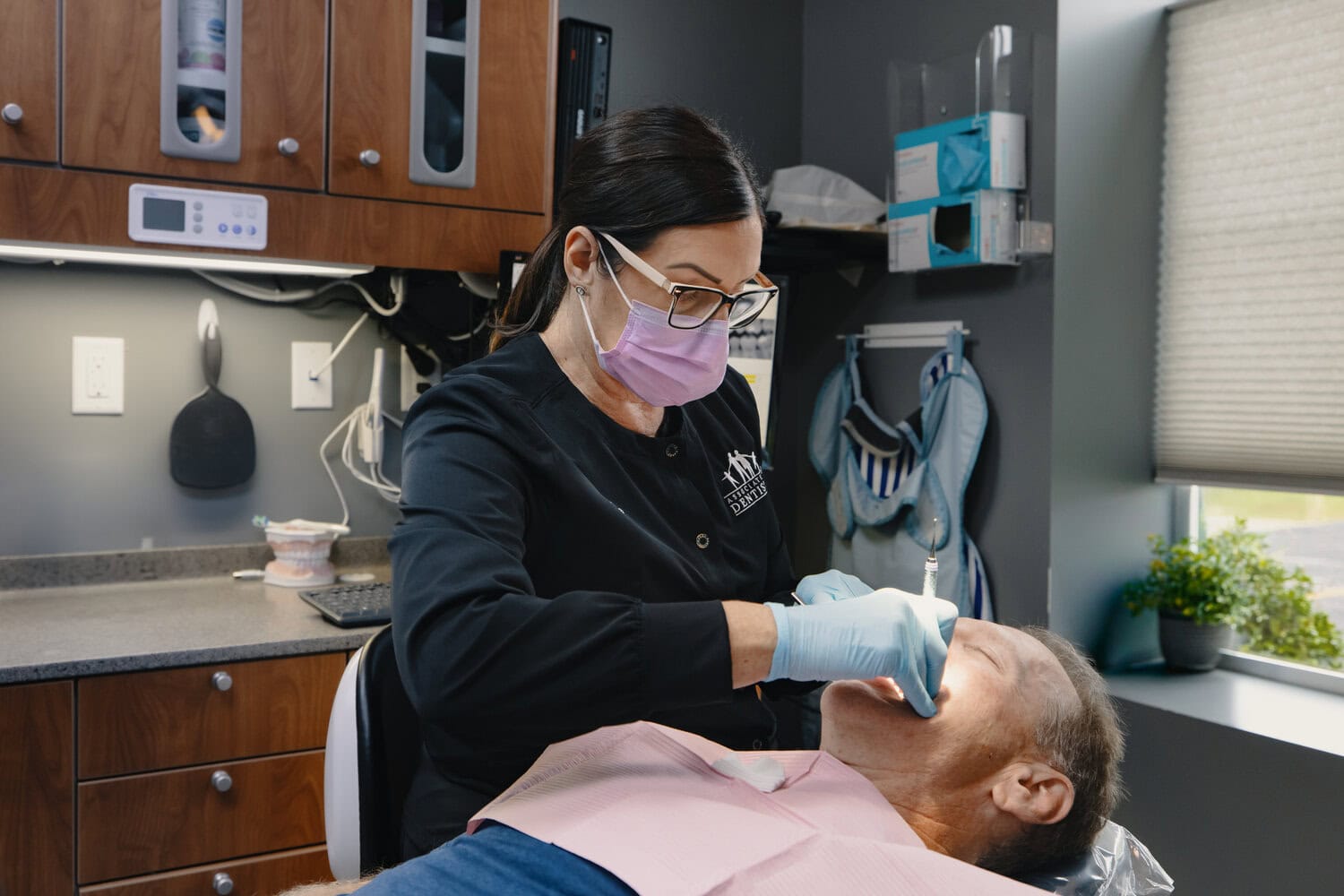

Hygienist in a mask cleaning a patient's teeth in a dental chair
Your family's dental home

Dental Cleaning in Canton: Know When a Routine Visit Is Enough

Hygienist in a mask cleaning a patient's teeth in a dental chair
The short answer
Reviewed by our
Canton
doctors.
Dr. Aaron Thum, dentist at Associates in Dentistry in Canton

A routine dental cleaning fits when your gums are mostly healthy and you're keeping up with regular care. If your gums bleed, feel puffy, or have pulled back, or if you're in pain, a different kind of visit may come first. You don't have to sort that out alone, because the exam is where the answer becomes clear.

01

Deciding If a Routine Cleaning Fits Your Situation

Most people booking a cleaning just want to know one thing: is this a normal visit, or something more? That's a fair question. The honest answer depends on what's going on below your gumline, not on how long it's been since your last visit.

This is part of General Dentistry in Canton. Care is provided at our Canton office.

A routine cleaning is built for maintenance. It removes the plaque and hardened buildup that brushing and flossing miss, mostly on and just around your teeth. It works best when your gums are in decent shape to begin with. A routine cleaning is likely a good fit if:

  • Your gums look pink and firm, and they don't bleed much when you brush or floss.
  • You've had cleanings on a regular schedule, even if you missed one along the way.
  • You don't have a toothache, swelling, or a tooth that feels loose.
  • You mostly want a fresh start, a check-in, and a smoother feel on your teeth.

Sometimes a routine cleaning isn't the right tool, and we'd rather tell you that straight than clean around a bigger problem. When gum disease has set in, buildup can collect in deeper pockets between the gum and the tooth. A regular cleaning doesn't reach that far. Signs you may notice at home include gums that bleed easily, gums that look red or swollen, breath that stays bad even after brushing, or teeth that look longer because the gums have pulled back.

If that sounds like you, don't panic and don't wait for it to get worse. It just means your first visit may point toward periodontal treatment instead of a routine cleaning. Our office offers periodontal treatment and laser gum treatment, so you won't need to go elsewhere to get it.

Pain is a separate issue. If a tooth hurts, throbs, or keeps you up at night, a cleaning isn't what you need first. That calls for emergency dental pain treatment, which Canton also offers. Getting comfortable comes before a cleaning.

Cost often follows this same line. Across dentistry, a routine cleaning and a deeper gum cleaning are usually billed as different services. Deeper cleanings are often priced by section of the mouth rather than as one visit. Insurance plans also tend to treat them differently. It's worth asking your plan how it handles each one. Associates in Dentistry accepts and bills most insurance plans, and our front desk can help you check before you commit to anything.

Here's the good news. You don't have to diagnose yourself before you call. Plenty of people can't tell whether their gums bleed "a little" or "too much," and that's okay. In Canton, Dr. Aaron Thum is the dentist you'll see. He was born and raised here, and he'll look at your gums, explain what he finds in plain words, and tell you which kind of cleaning makes sense. If it's a routine visit, great. If it's something more, you'll know why before anything starts.


02

Signs You Need Periodontal Care Instead of a Standard Cleaning

Bleeding and puffy gums are the signs most people know. But gum disease can be quiet. It often doesn't hurt, especially early on. That's why some people are surprised to hear a routine cleaning isn't enough, even when their mouth feels fine. A few less obvious changes are worth mentioning when you call.

  • A tooth that feels a little loose, or shifts when you bite into something firm, like an apple.
  • Your bite feels different, or a partial denture fits differently than it used to.
  • New gaps showing up between teeth that used to sit close together.
  • A bad taste that keeps coming back, or a bit of pus near the gumline.
  • Teeth that feel sensitive right at the gumline, where the gum meets the tooth.
  • Floss that catches or shreds in the same spot every single time.

None of these mean something serious on their own. They're clues. Put a few together, though, and it's a good reason to let the dentist take a closer look before you settle on a standard cleaning.

Some people are also more likely to need gum care. Smoking or chewing tobacco, diabetes, pregnancy, medicines that leave your mouth dry, and a family history of gum problems can all raise the odds. If any of those fit you, say so when you book. It helps the visit start with the right questions.

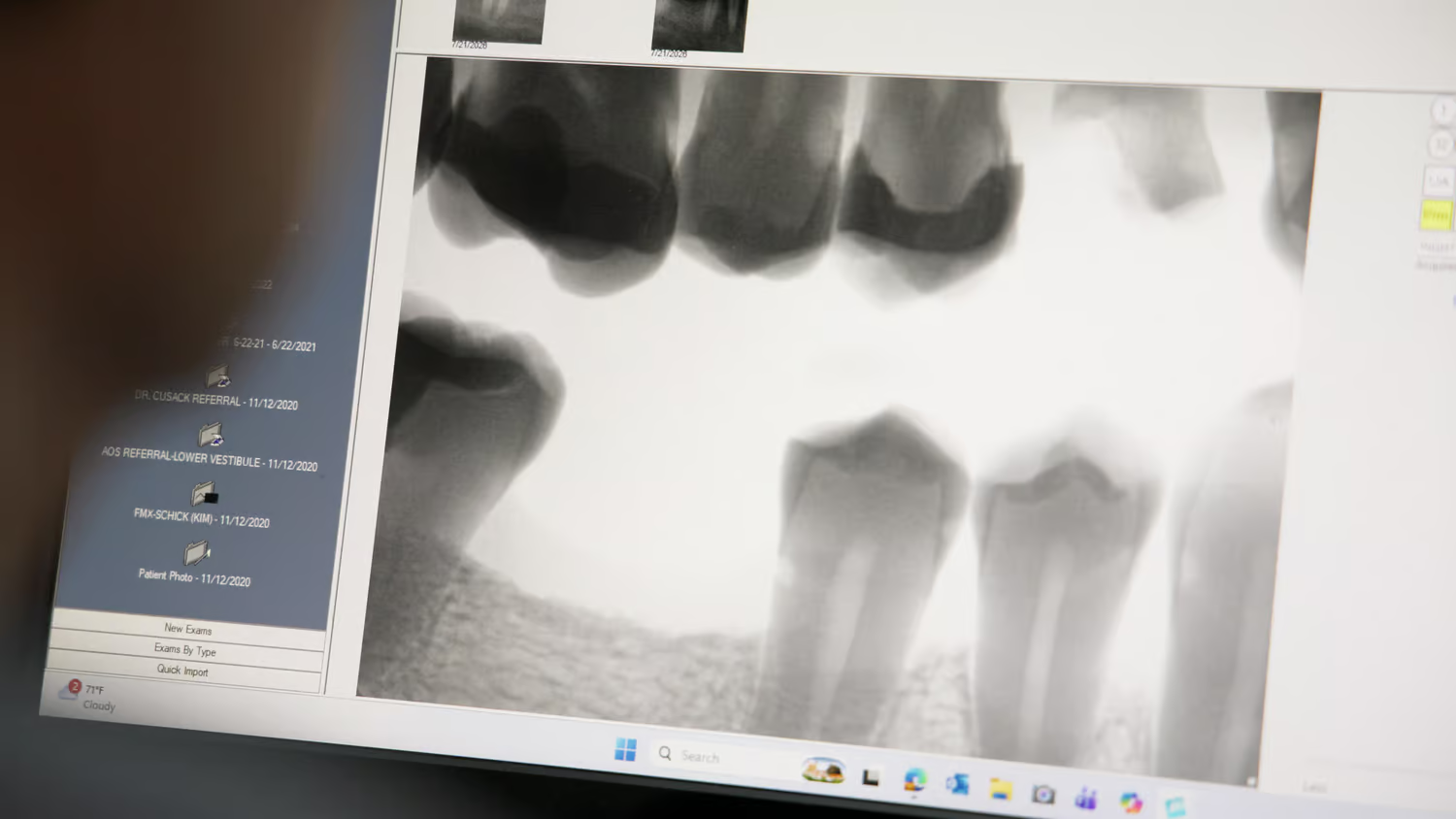
So how does a dentist tell? In most dental offices, it comes down to measuring. A thin tool with small markings slides gently between your tooth and gum to check how deep that space is. Healthy gums fit snug around the tooth. Deeper spaces can trap buildup that a toothbrush can't reach and a routine cleaning won't clear. X-rays can also show whether the bone around a tooth has changed. Together, those give a clear picture instead of a guess.

Across dentistry, a deeper gum cleaning is often called scaling and root planing. The goal is to clean below the gumline and smooth the root surface, so the gum has a better chance to heal tight against the tooth. The area is usually numbed first, so you stay comfortable. Afterward, many patients come back for cleanings more often than twice a year for a while, which gives the gums time to settle and stay that way.

Gum care isn't separate from your regular checkups. It's part of the same general dentistry in Canton that covers your exams, cleanings, and fillings. That means the dentist who checks your gums today is the one who can see whether they're doing better at your next visit.

If you noticed yourself in that list, take it as useful information, not bad news. Gum problems found earlier tend to need simpler care than ones left alone for years. Knowing what you're walking into also makes the visit itself a lot easier to face.

03

What Happens During a Routine Cleaning Visit

A routine cleaning is one of the calmer things that happens in a dental chair. It doesn't need numbing, and nothing gets drilled or cut. Most of it is careful scraping, polishing, and rinsing. Knowing the steps ahead of time makes it easier to settle in and let it happen.

Across dentistry, a routine cleaning usually follows the same basic order:

  • A quick catch-up on your health. Expect questions about any new medicines, health changes, or spots in your mouth that have been bothering you. This matters more than it seems, because some medicines and conditions affect your gums.
  • A look around your mouth. Your teeth and gums get checked before any cleaning starts. This is also when your gums may be measured, the way we covered above.
  • Removing plaque and tartar. Soft plaque can be brushed away at home. Tartar can't. Tartar is plaque that has hardened onto your teeth, and it takes special tools to lift off. You'll hear some scraping, and you may feel a vibration or a light spray of water. Spots near the gumline and behind your lower front teeth often take the most time.
  • Polishing. A slightly gritty paste smooths the surface of your teeth. That's the part that leaves your teeth feeling slick when you run your tongue over them afterward.
  • Flossing and rinsing. This clears out anything left between your teeth.
  • Fluoride, sometimes. Many offices offer a fluoride treatment at the end to help protect your enamel.

X-rays aren't part of every cleaning. How often you need them depends on your age, your history, and what the dentist is watching for. If it's been a few years since your last set, or you're new to the office, you may need them at this visit.

The visit usually ends with a dental exam. In Canton, that's Dr. Aaron Thum. He'll look over what the cleaning turned up, check for cavities or worn spots, and tell you plainly what he sees. If everything looks good, you're done until next time. If something needs attention, like a small cavity, you'll hear what it is and what your options are. You don't have to decide anything on the spot.

Does a cleaning hurt? For most people with healthy gums, it doesn't. It can feel odd, and a few spots might be tender, especially if there's a lot of tartar or your teeth are sensitive near the gumline. If something feels sharp or uncomfortable, say so. It's fine to ask for a break, or to ask what's happening at any point.

If it's been a long time since your last cleaning, the visit may run a little longer, because there's more tartar to remove. That isn't a mark against you, and nobody's going to lecture you. You came in, and that's the hard part. Your gums may feel a bit tender or bleed lightly for a day or so, and that usually settles down quickly.

When you leave, your teeth should feel smooth and clean. You'll also know where things stand, which is really the point of the visit. A cleaning keeps small problems small, and it gives you a clear picture of your mouth so nothing catches you off guard later.

Due for a cleaning? Let's get you scheduled.
04

Insurance and Cost Questions to Ask Before You Book

Nobody likes opening a bill they didn't see coming. The good news is that most cleaning cost surprises come from a few plan details. You can check them with one phone call before your visit.

Call the number on the back of your insurance card and ask these questions. Write the answers down, along with the name of the person you spoke with.

  • How many cleanings does my plan cover each year? Many plans cover two. Some count by calendar year. Others need a set amount of time between visits.
  • When was my last covered cleaning? If you switched dentists or plans, it's easy to lose track. Booking a few days too early can mean the visit isn't covered.
  • Are the exam and X-rays covered on the same terms as the cleaning? These are often billed as separate items, and each can have its own limits.
  • Is fluoride covered for adults? Some plans only cover it for kids.
  • Do I have a deductible, and how much of it have I met this year?
  • If I'm on a new plan, is there a waiting period before cleanings are covered?
  • If I need a deeper gum cleaning, how is that covered? Does it count against my routine cleaning limit?

That last question matters because routine and deeper cleanings are billed differently, as we covered above. It's better to know your plan's answer before the exam than after.

There's one more thing to ask about our office in particular. Associates in Dentistry moved to a fee-for-service model in August 2024. We still accept and bill most insurance plans. When you call to book, ask how your plan works with our office. That gives you a clear answer about your own coverage instead of a general guess.

If you don't have dental insurance, you can still ask good questions. Ask what's included in a routine cleaning visit. Does it include the exam? What about X-rays, if you need them? Ask what would change the cost if the dentist finds something during the exam.

Here's a simple rule that works at any dental office. If the exam shows you need more than a routine cleaning, ask for the cost before that work starts. In Canton, Dr. Aaron Thum will explain what he sees and why. You can take time to check your coverage before you decide. A small cavity or early gum changes usually don't need to be fixed that same day.

A few minutes on the phone now can save you a lot of guessing later. Cost shouldn't be the reason a cleaning keeps getting pushed back. Once you know where you stand, the rest is just picking a time.

05

Staying Ahead of Gum Disease Between Visits

A cleaning resets things. What you do at home decides how long that reset lasts. Plaque starts building again within hours of leaving the chair. If it stays put, it hardens into tartar, and you can't brush tartar off. So the daily job is simple: clear away the soft stuff before it has a chance to harden.

You don't need fancy tools or a long routine. You need a few habits you'll keep.

  • Brush twice a day with a soft brush. Tilt the bristles toward your gums so they reach the spot where gum meets tooth. That's where plaque likes to hide, and scrubbing hard won't help. Gentle, small circles work better.
  • Clean between your teeth once a day. Floss is great, but it isn't the only option. Little picks, tiny brushes, and water flossers all work. The best one is the one you'll use every night.
  • Don't skip the back teeth. The far molars and the backs of your lower front teeth are easy to miss, and they often collect the most buildup.
  • Swap your toothbrush when the bristles start to splay out. A worn brush just pushes plaque around.

If your gums bleed a little when you start flossing again, don't stop. That's common when gums aren't used to it, and it often eases up as you keep going. If the bleeding keeps up, or it gets worse, tell us at your next visit. That's useful for the dentist to know.

If you wear a partial or complete denture, your gums still need care. Clean the denture every day, and gently brush your gums and any natural teeth you have left. A partial can trap plaque against the teeth it hooks onto, so give those teeth extra attention. If your denture starts to rub or feels loose, a reline or repair may help, and Canton offers both.

Some of the things that raise the odds of gum trouble, like tobacco or diabetes, were covered above. You can't change all of them. But you can work on the ones in your hands. Cutting back on tobacco and keeping blood sugar steady both give your gums a better shot. Drinking water through the day helps too, especially if a medicine leaves your mouth dry.

Keep half an eye on the signs we listed earlier, too. You don't need to check your gums in the mirror every morning. Just notice if something changes and stays changed for more than a week or two, then mention it.

The last habit might matter most. Keep your next cleaning on the calendar. Busy months have a way of turning six months into two years. It helps to set a date while you're already thinking about it, so it doesn't slip.

None of this has to be perfect. Missing a night of flossing won't undo your last visit. What counts is the pattern over months. Patients who keep up with the basics tend to have cleanings that feel quick and easy. When Dr. Thum looks at your gums next time, the best news is hearing that nothing's changed.

FAQ

Answers to the most common questions.

Something else on your mind?
Call us at (309) 647-3331.

How often should I get my teeth cleaned?

Many patients have their teeth cleaned every six months. If you have gum disease or other ongoing concerns, you may need cleanings more often.

What happens during a routine dental cleaning?

A dental cleaning removes plaque and tartar from your teeth and around the gumline. Your hygienist will also polish and floss your teeth. Cleanings are typically done as part of a regular dental exam.

Is it normal for my gums to bleed during a cleaning?

Bleeding can happen when gums are irritated by plaque and buildup. If your gums bleed regularly, though, it can be a sign of gum disease and should be evaluated.

What's the difference between a regular cleaning and a deep cleaning?

A routine cleaning removes plaque and tartar from above the gumline and areas just below it when the gums are healthy. A deep cleaning, also called scaling and root planing, treats buildup below the gumline when gum disease is present. Periodontal probing helps determine which type of cleaning you need.

Does a dental cleaning hurt?

Most patients don't find routine cleanings painful. You may feel some scraping or sensitivity, particularly around areas with more buildup. Let your hygienist know if anything feels uncomfortable.

Does dental insurance cover cleanings?

Coverage depends on your specific insurance plan. Associates in Dentistry has been fee-for-service since August 2024, and our team can help you understand your estimated costs and insurance coverage.

Request an appointment

Call us at (309) 647-3331

Tell Us About Yourself

Are you new to Associates in Dentistry?

Preferred Day and Time (optional)
Thank you! Your submission has been received!

That didn't go through. Please try again, or call your office.