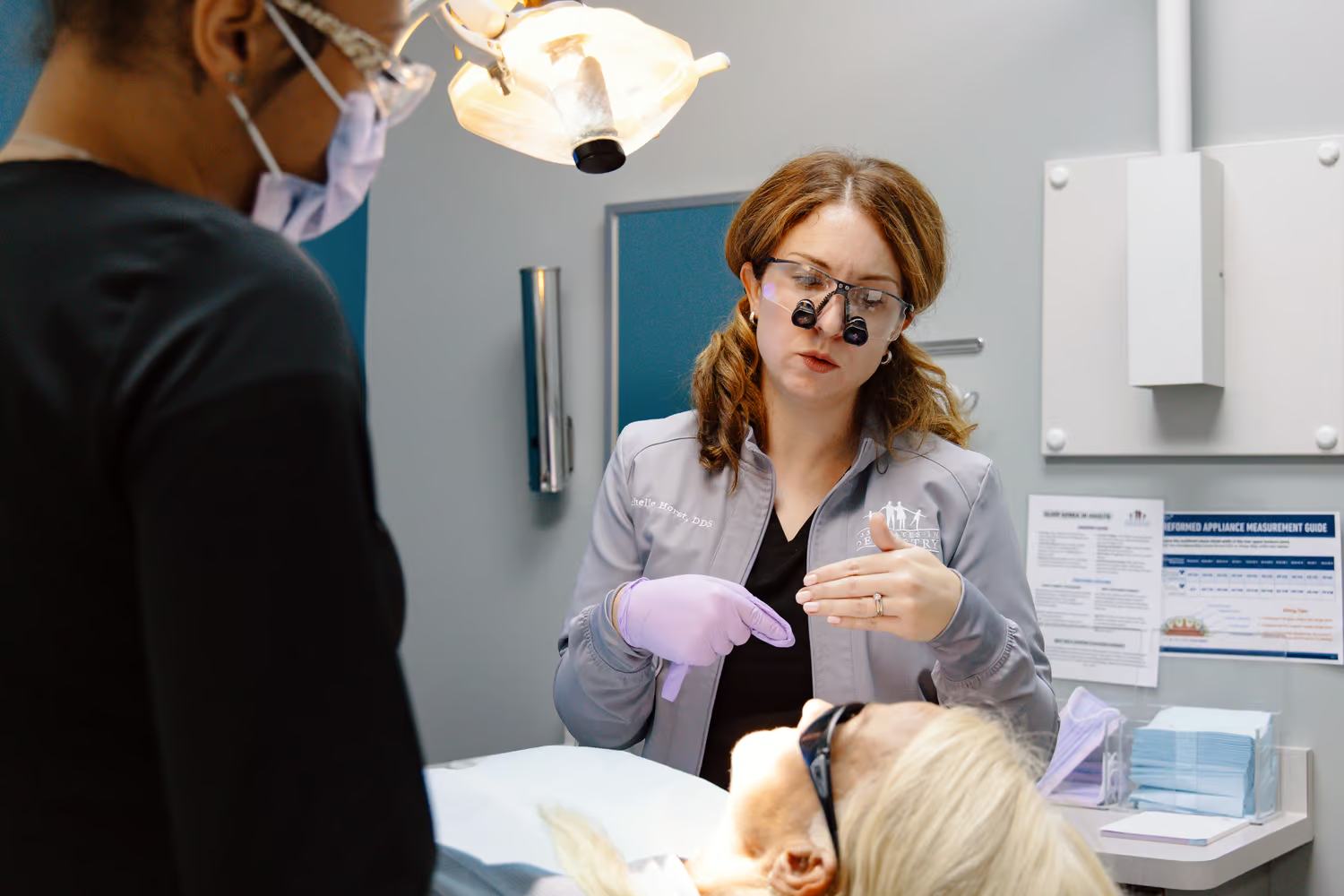
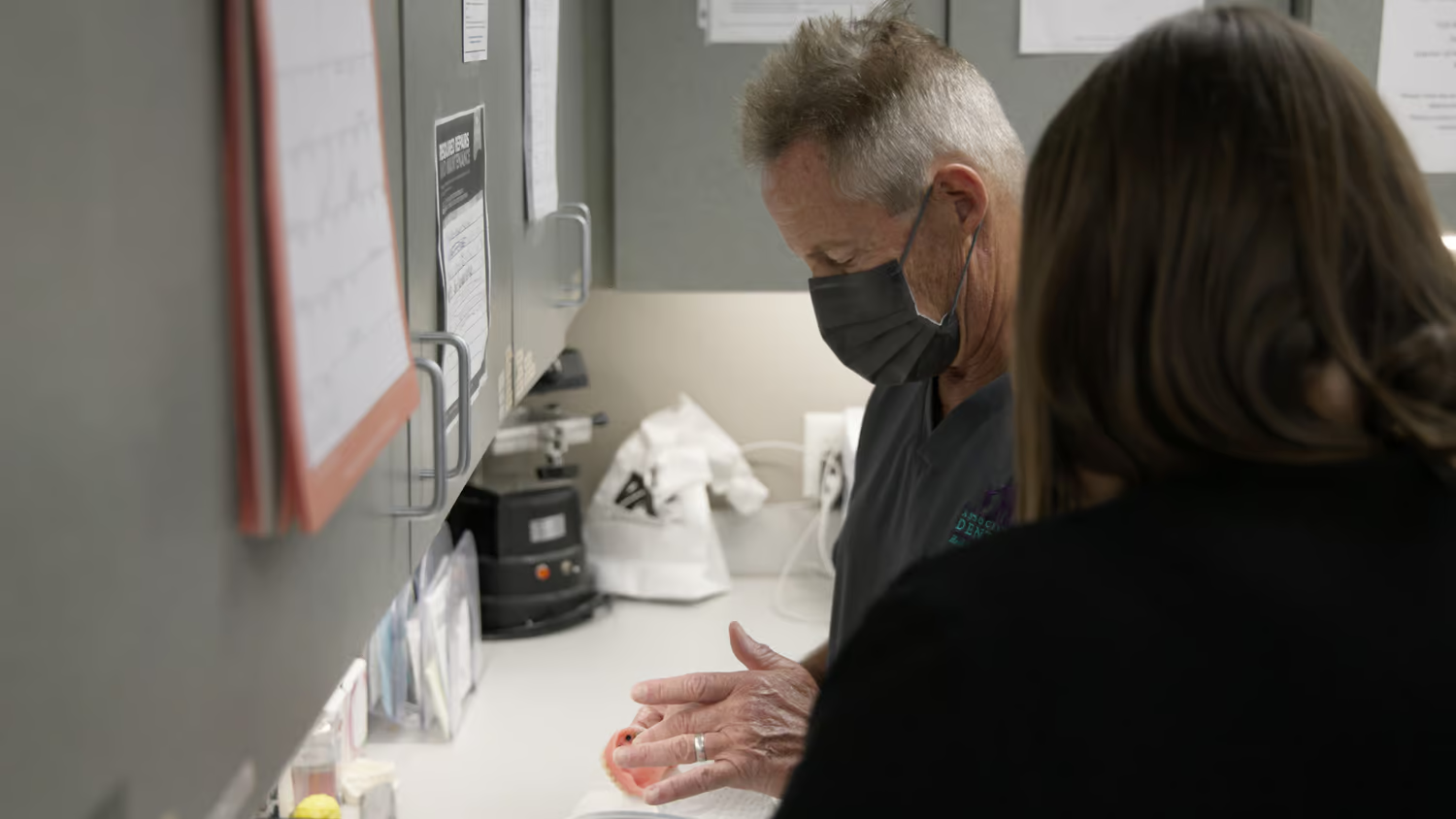

Dr. Burton talking with a patient at a counter in the dental office
Your family's dental home

Complete Dentures in Canton: Make Sure It's the Right Fit First

Dr. Burton talking with a patient at a counter in the dental office
The short answer
Reviewed by our
Canton
doctors.
Dr. Aaron Thum, dentist at Associates in Dentistry in Canton

Complete Dentures in Canton replace every tooth in an upper or lower jaw. The key question is whether you have any natural teeth left in that jaw, because a complete denture isn't made to fit around them.

01

Complete Dentures Replace an Entire Arch of Teeth

You can need a complete denture for your upper teeth, your lower teeth, or both. "Complete" describes the set of teeth it replaces, not how many dentures you need. If your upper teeth are all gone but you still have lower teeth, the upper jaw may call for a complete denture while the lower jaw needs a different answer. Looking at each jaw on its own makes the choice easier to understand.

A complete denture has replacement teeth set in a base that rests against your gums. It gives you a set of teeth where there are no natural teeth left in that jaw. That can help you chew, speak, and smile, but it won't feel exactly like the teeth you grew up with. Knowing that difference matters when you're deciding what you want from a denture.

If you still have natural teeth in the same jaw, a complete denture may not be the right choice. The question isn't just how many teeth you're missing. It's which teeth remain and whether they can be kept. This practice also offers Partial Dentures for people who need to replace some teeth rather than an entire arch. You don't need to settle that distinction before talking with a dentist.

Already have a complete denture that's loose or damaged? That's a different question from replacing an entire arch for the first time. Denture Repair & Relines is also offered here. It helps to say whether you're asking about your own teeth, an existing denture, or both. Those details make it clearer which service you want to discuss.

You'll find Associates in Dentistry at 336 N Main St. Dr. Aaron Thum, who was born and raised in Canton, is the dentist at this location. If you're unsure whether a complete denture fits your situation, you can start with a simple description of what's going on: which jaw is affected and whether any natural teeth remain there.
02

Signs You May Need Complete Dentures Instead of a Partial Fix

The number of teeth you have left is only part of the decision. What matters just as much is whether those teeth are healthy and steady enough to keep. If they are, replacing only the missing teeth may make more sense. If most of them are badly damaged or loose, a complete denture may be worth discussing. You don't have to make that call by looking in the mirror.

Think about what has changed, not just what is missing. Maybe you can still see several teeth, but some move when you eat. Maybe a tooth has broken close to the gum, or you've had trouble with one tooth after another. Those details matter more than a simple count. A tooth that's present may not be able to do the job you need it to do for much longer, while a tooth that looks worn to you might still be worth keeping.

A partial denture you're already wearing can also raise the question. If you've lost more teeth since it was made, the gaps have changed. That doesn't mean you automatically need a complete denture. If the partial is loose or uncomfortable but the remaining teeth are sound, the problem may be with the denture rather than with those teeth. Denture Repair & Relines is available, but deciding what needs attention starts with telling those two concerns apart.

Pain or trouble chewing can make this choice feel urgent, but neither one tells you by itself that all the remaining teeth should be removed. The same goes for a tooth that looks dark or chipped. Each tooth has its own condition. It's reasonable to ask which teeth might be kept and whether keeping them would give you a useful way to replace the ones you've lost.

Dr. Aaron Thum provides dental exams as part of general dentistry. If you're weighing a partial fix against a complete denture, the useful starting point is simple: tell him which teeth bother you, which ones feel steady, and what has changed since your last denture, if you have one. That gives you a clearer question to settle than "Do I have enough teeth left?" The answer depends on the teeth themselves, not just how many you can count.

03

When Complete Dentures Are Not the Right Answer

A complete denture isn't the right answer just because you want your smile to look better or eating has become frustrating. It's meant to replace every tooth in one jaw. If the problem is limited to one area, replacing a whole set of teeth may be more than you need. It's worth being clear about what you want to change before making a choice that affects the entire jaw.

If you have teeth that can still serve you well, don't assume they need to go so you can get a complete denture. You may need to replace missing teeth, but that doesn't make the teeth you still have a problem. Ask which ones could stay and what that would mean for your choices. Keeping a useful tooth matters more than making the decision sound simple.

A new complete denture also may not be the answer if you already have one and your concern is how it fits. A denture can feel different as your mouth changes. That doesn't tell you, on its own, whether you need a replacement. If it used to feel fine but now slips or rubs, describe what changed. That points to a different question than whether you need a full set of replacement teeth.

The same goes for a crack or a broken tooth in an existing denture. Damage doesn't automatically mean the whole denture has to be replaced. Denture Repair & Relines is offered here. You don't have to decide whether your current denture can be kept before you explain what's wrong with it.

Think, too, about what you expect a denture to feel like. A complete denture rests on your gums and can be taken out. It isn't the same as having your natural teeth back. If you want teeth that stay fixed in your mouth, say that plainly rather than assuming every full-tooth replacement works the same way. Knowing what matters most to you can rule out an option that looks right on paper but doesn't fit your daily life.

And if your current denture works well for you, its age alone isn't a reason to replace it. You don't need to make a change just because you think there must be a newer answer. A complete denture makes sense when it solves the problem you have, not when it creates a bigger decision than the problem calls for.

Ready for a full set of teeth that fits right?
04

What the Complete Denture Process Generally Involves

There isn't one schedule that fits everyone getting a complete denture. The plan depends in part on whether the teeth in that jaw are already gone or some still need attention. Before you commit, ask what decisions have to be made first and what the path would look like for your mouth. That matters more than a general estimate of how long dentures take.

Be specific about what you want to change. If chewing is your main concern, say which foods give you trouble. If you're worried about speaking at work or smiling in photos, say that too. Those aren't small details. They tell the dentist what you hope a denture will help you do, and they give you a way to discuss what it may not be able to do.

If you still have teeth in the affected jaw, ask for an explanation of what would happen to each one under the proposed plan. You should understand why a complete denture is being considered before making a choice about those teeth. You can also ask which decisions need to be made now and which depend on what the dentist finds.

Timing is worth discussing plainly. Ask when you might have a denture to wear, whether there could be a period without one, and what could change the schedule. Don't assume the answer will be the same for someone whose teeth are already gone and someone who still has teeth. If a date matters to you, such as a family event, bring it up early so you can understand what is and isn't realistic.

Talk about fit in terms you can notice. A denture that looks good still has to work for you when you speak and eat. Ask what you should expect at first, what concerns you should report, and whom to contact if it doesn't feel right. You don't need to know dental terms. Saying that it rubs in one spot or moves when you talk gives the dentist a clearer picture than saying only that it feels wrong.

Before agreeing to a plan, make sure you know what's included in it and what might call for a separate decision. You can ask how many visits to expect, what happens if the plan changes, and when you'll receive guidance on using and caring for the denture. At Associates in Dentistry's office, Dr. Aaron Thum is the dentist you can speak with about your choices. The goal is to leave that conversation knowing what you're deciding, not feeling that you have to guess how the rest will go.

05

Adjusting to New Dentures Takes Time

Choosing a complete denture means thinking beyond how your new teeth will look. You'll also need time to get used to how they feel in your mouth. That's part of the decision, especially if you've spent years eating and speaking with your natural teeth. A denture can replace the teeth in a jaw, but it won't feel exactly like the teeth it replaces.

Speaking may feel strange at first. You might notice certain words more than others, or feel more aware of your tongue as you talk. That can be unsettling when you're chatting with family or answering a question at work. It doesn't mean every conversation will feel that way. It does mean your own experience matters more than how a denture looks when you smile.

Eating can take some getting used to, too. A denture rests on your gums, so biting and chewing won't feel quite the way they did with natural teeth. You may notice movement or find that a food you used to eat without thinking takes more attention. That's a useful thing to discuss before you decide. If enjoying meals is your main goal, you deserve a clear picture of what a complete denture may help with and what could still feel different.

There's also a difference between feeling unfamiliar and feeling like something doesn't fit. A new shape in your mouth can draw your attention simply because it's new. A spot that rubs in the same place, though, is a more specific concern. So is a denture that shifts during something you do every day. You don't have to label the problem. Describing where you feel it and what you're doing when it happens gives the dentist something concrete to discuss with you.

No one can tell you exactly how your own adjustment will feel from someone else's story. Before choosing complete dentures, think about the parts of daily life you most want to protect: sharing a meal, talking comfortably, or feeling at ease in a photo. Those details help you ask better questions about the choice in front of you. A good decision isn't just about replacing missing teeth. It's about understanding what it may be like to live with the replacement.

FAQ

Answers to the most common questions.

Something else on your mind?
Call us at (309) 647-3331.

What's the difference between complete and partial dentures?

Complete dentures replace all of the teeth in an arch, while partial dentures replace some missing teeth when healthy natural teeth remain.

How long does it take to get complete dentures?

The timeline depends on your individual situation, including whether teeth need to be removed and how long your gums need to heal. Several visits are typically needed to make sure the dentures fit properly.

Will it take time to get used to complete dentures?

Yes. It's normal for a new denture to take some time to feel comfortable. You may notice sore spots or changes in how you speak and eat at first. Adjustments can help improve the fit as you get used to them.

How do I care for complete dentures?

Clean your dentures with a denture brush and denture cleaner rather than regular toothpaste, which can be abrasive. Rinse them after eating, handle them carefully over a towel or water, and follow our instructions about whether to wear them overnight. Regular checkups are also important.

Can I eat normally with complete dentures?

It takes some time to get comfortable eating with new dentures. Start with softer foods cut into small pieces, chew on both sides of your mouth and gradually add more foods as you adjust. Very sticky or hard foods may be more difficult at first.

How long do complete dentures last?

Complete dentures don't last forever. Changes in your gums and jaw can affect the fit over time, and the denture itself can become worn or damaged. Regular dental visits allow Dr. Thum to check the fit and let you know when an adjustment, reline or replacement may be appropriate.

Request an appointment

Call us at (309) 647-3331

Tell Us About Yourself

Are you new to Associates in Dentistry?

Preferred Day and Time (optional)
Thank you! Your submission has been received!

That didn't go through. Please try again, or call your office.