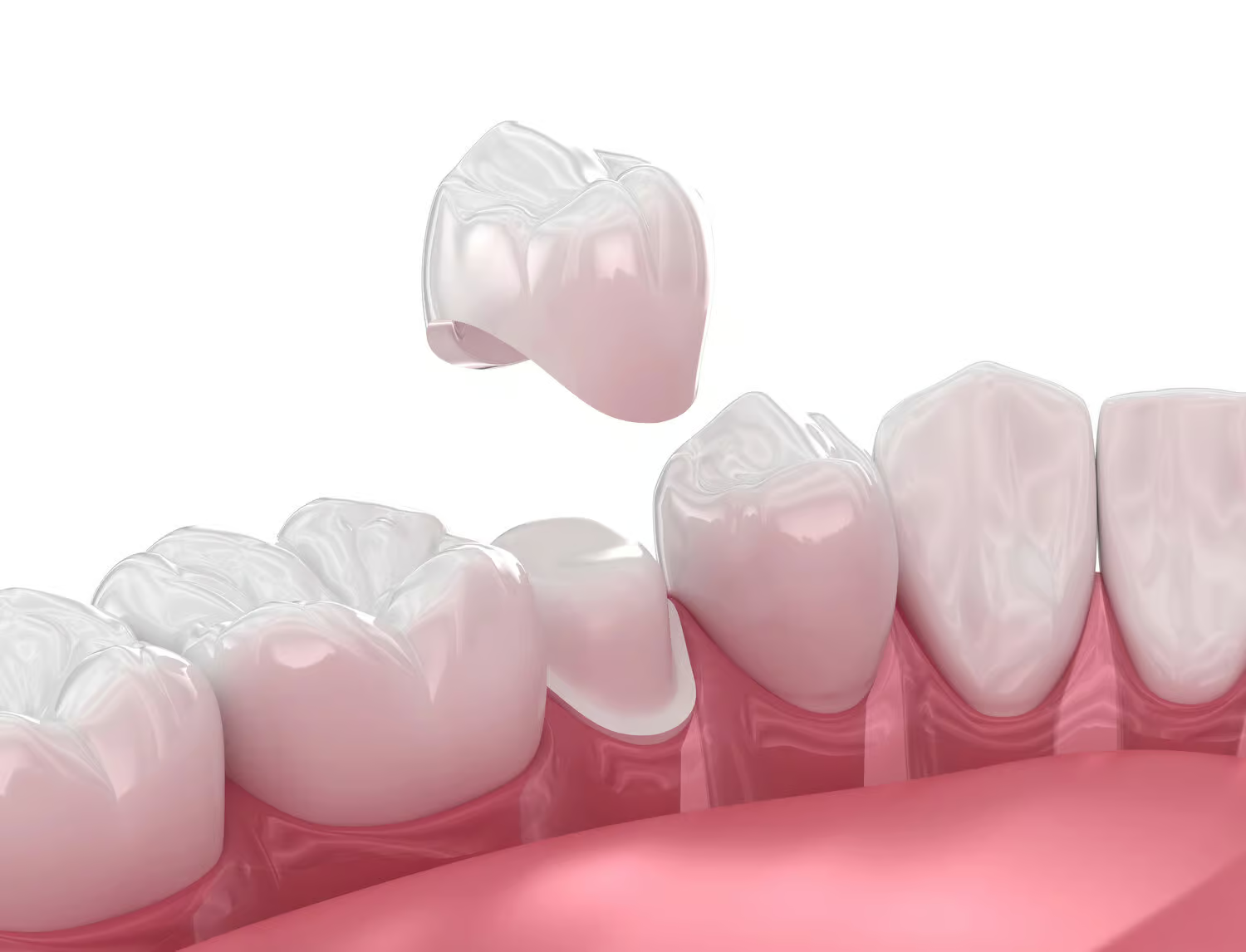

Illustration of a dental crown being placed onto a prepared tooth
Your family's dental home

Dental Crowns in Canton: What Your Visit Looks Like

Illustration of a dental crown being placed onto a prepared tooth
The short answer
Reviewed by our
Canton
doctors.
Dr. Aaron Thum, dentist at Associates in Dentistry in Canton

A tooth usually needs a Dental Crown in Canton when too much of it is cracked, broken, worn, or filled for a smaller repair to hold up. Sharp pain when you bite, a big old filling that's breaking down, or a back tooth that's had a root canal are the most common clues. A small cavity or a tiny chip usually doesn't call for a crown at all.

01

Signs a Tooth Needs a Crown

Most people don't notice a crown problem all at once. They notice something small. Maybe a tooth twinges when you chew on one side. Maybe your tongue keeps finding a rough edge that wasn't there last month. These are the signs that tend to point toward a crown.

  • Pain when you bite down or let go. A quick, sharp pain that shows up when you release a bite can mean a crack in the tooth. Cracks are often too thin to see in a mirror. A crown holds the tooth together so the crack doesn't spread.
  • A large filling that's cracking or wearing out. Big fillings leave less natural tooth around them. Over time, the tooth walls can get thin and weak. When there isn't enough tooth left to hold a new filling, a crown covers and protects what's there.
  • A broken or badly chipped tooth. If a corner or cusp breaks off a back tooth, a filling may not have enough to grab onto. A crown rebuilds the shape so you can chew normally again.
  • A back tooth that's had a root canal. A root canal saves the tooth, but molars and premolars take a lot of chewing force. A crown is often placed afterward to help keep the treated tooth from cracking.
  • Teeth that are worn down flat. Grinding or clenching can wear teeth short over the years. When a tooth has lost a lot of height, a crown can bring it back.
  • Decay that's too big for a filling. A cavity that has spread through much of the tooth may need more coverage than a filling can give.

Crowns also come up in a couple of other cases. An implant needs a crown on top to work like a tooth, and that falls under implant restoration. A tooth that's badly misshapen or stained can sometimes be covered with a crown, too, though veneers or bonding may fit better for front teeth.

Not every tooth problem means a crown. A small cavity is usually fixed with a filling. A minor chip on a front tooth can often be smoothed or repaired with cosmetic bonding. Cold sensitivity that comes and goes may have nothing to do with the tooth's strength. A crown makes sense when the tooth needs protection, not just a patch.

The hard part is that two teeth can feel the same and need very different things. A sore bite might be a crack, a high filling, or a gum issue. That's why an exam matters more than any checklist. At our office, Dr. Thum can look at the tooth, tell you what's going on, and explain whether a crown is the right repair or whether something simpler will do the job.
02

When a Filling or Bonding Works Instead

A crown isn't a step up from a filling. It's a different tool for a different problem. If your tooth still has strong walls around the damaged spot, a filling or bonding is often the better choice, because it keeps more of your natural tooth.

That last part matters. To fit a crown, the tooth has to be shaped down on every side so the cap can slide over it. That enamel doesn't grow back. A filling only removes the damaged part and fills the hole. So when a smaller repair will hold, it's usually the kinder one for the tooth.

Here are the cases where a crown often isn't needed:

  • A cavity that's moderate, not huge. If decay is caught while plenty of healthy tooth surrounds it, a composite filling can seal it up and match the color of your tooth.
  • An old filling that needs replacing, but the tooth around it is still thick. Swapping a worn filling for a new one doesn't automatically mean you've moved into crown territory.
  • A small chip on the edge of a front tooth. Cosmetic bonding uses tooth-colored material shaped right onto the tooth, often with little or no drilling.
  • Fine surface lines in the enamel. Lots of adult teeth have faint lines you can see in good light. Many of them only affect the outer layer and don't weaken the tooth.
  • A gap, rough spot, or uneven edge you just don't like the look of. Bonding can often smooth these out without covering the whole tooth.

Sometimes the right answer is to wait. An older filling that's intact, sealed, and not bothering you doesn't have to be replaced just because it's been there a long time. Keeping an eye on it at your regular checkups can be perfectly reasonable.

Smaller repairs do have limits, and it's fair to know them up front. Bonding can pick up stains from coffee or tea over time, and it can chip if you bite hard things with that tooth. It may need a touch-up down the road. A filling that's asked to rebuild too much of a back tooth can crack or pull loose, since the tooth no longer has enough structure to support it. That's the point where a crown starts to make sense, and it's the line the exam is meant to find.

Think of it like this. Picture a molar with a cavity on one side. The other three walls are solid. A filling fits that tooth well. Now picture a molar where an old filling takes up most of the top, and one corner has already cracked off. A new filling would be patching a shell. Those two teeth might feel almost the same to you, but they need very different repairs.

Fillings, bonding, and crowns are all part of general dentistry in Canton, so you don't have to go somewhere else to get the smaller fix if that's what your tooth needs. Dr. Thum will look at how much healthy tooth you have left and talk you through what each option would mean for that tooth. If a filling or bonding will do the job, that's a good outcome, not a lesser one.

03

What Happens During a Crown Appointment at This Office

Getting a crown at our office usually takes two visits. This location doesn't mill crowns in-house on the same day, so your crown is made after your first visit and placed at your second. Here's what each step looks like, so nothing catches you off guard.

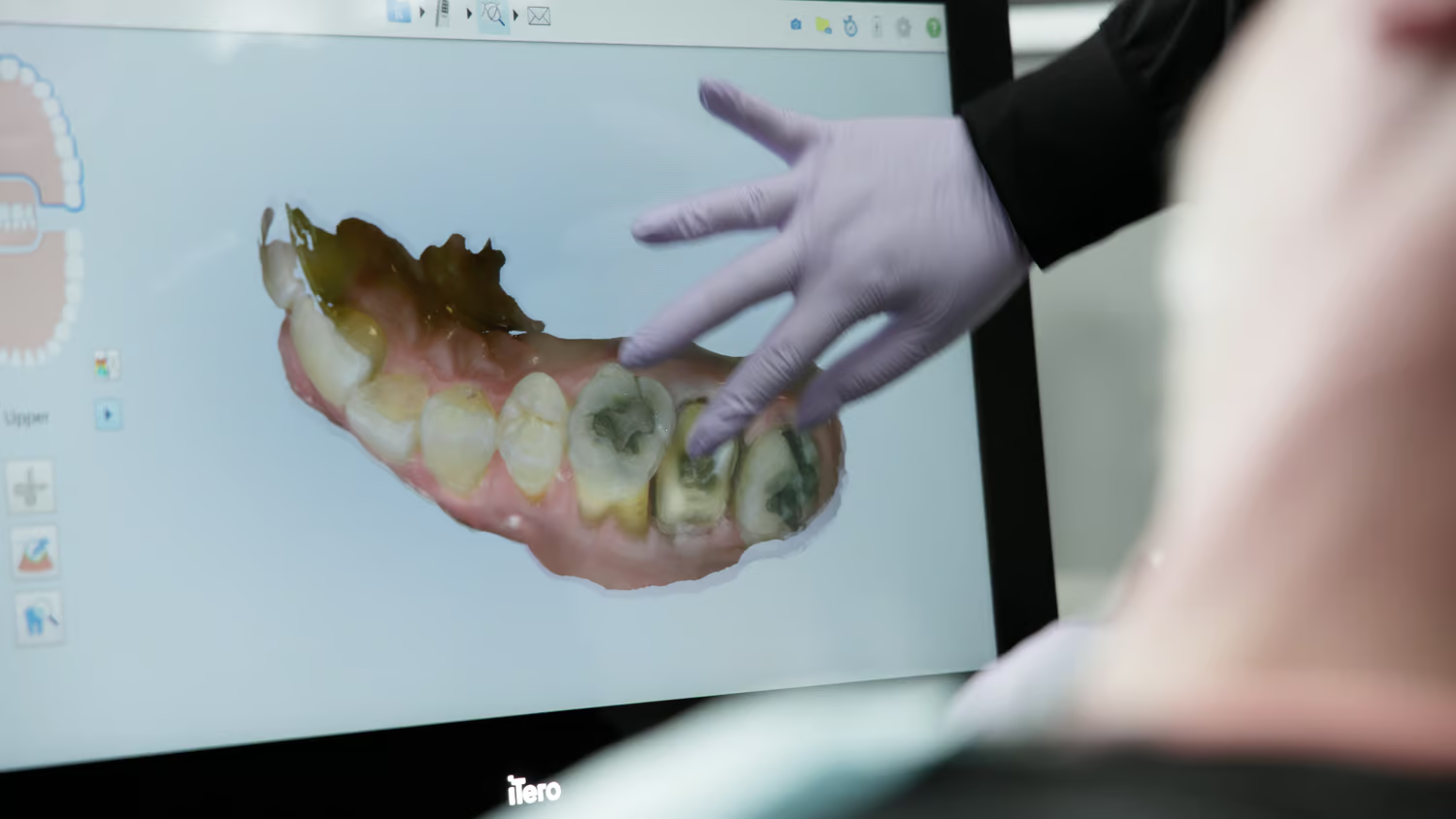
Visit one is about getting the tooth ready. First, Dr. Thum takes one more look at the tooth to make sure a crown is still the right call. Then the area is numbed. Most people feel pressure and hear some noise, but not sharp pain. Next, the tooth is shaped down on every side so the crown can fit over it, as we covered earlier. After that, an impression of the tooth is taken. That impression is used to build a crown that fits your tooth and lines up with the teeth it bites against.

Before you leave, a temporary crown goes on. It covers the shaped tooth and lets you eat and smile normally while your real crown is being made.

A temporary crown does its job, but it isn't as strong as the final one. Many people chew a little more carefully on that side for a while. It's a good idea to ask what foods to go easy on while you're wearing it. If it feels loose or something seems off, give us a call.

Visit two is when your crown goes in. The temporary comes off and the new crown is tried on first. The fit, the shape, and the color all get checked before anything is made permanent. You'll be asked to bite down a few times so your bite can be checked. A crown that sits even a little too high can make the tooth sore, so this step matters. Once everything feels right, the crown is cemented in place.

A new crown can feel a bit strange for a few days. Your tongue notices the new shape, and some people have mild sensitivity at first. That usually settles as you get used to it. If your bite still feels uneven after a few days, let us know. A small adjustment is often all it takes.

One nice thing about a small office is that you'll see the same dentist at both visits. Canton is staffed by one doctor, Dr. Thum. He's also the person who looked at the tooth in the first place. You won't have to explain your history twice or meet someone new halfway through.

If finishing in a single day is important to you, just ask. Same-day crown milling isn't offered in Canton, but it is offered at some of the other Associates in Dentistry locations. For many people, two visits close to home is the easier choice. Either way, you'll know your options before anything is scheduled.

Wondering if that tooth needs a crown?
04

Caring for a Temporary Crown Between Visits

Your temporary crown does more than fill a gap. It covers the shaped tooth so air and cold drinks don't hit it directly. It also holds the space, so the teeth next to it and across from it stay where they belong. That matters because your final crown is built to fit that exact space. A little care in between helps it slide right into place at your second visit.

Food is where most of the trouble starts. Temporary crowns are held on with a softer cement on purpose, so they can come off easily when it's time for the real one. That also means sticky or hard foods can pull them loose.

  • Skip sticky foods like caramel, taffy, gummy candy, and chewing gum. They can grab the temporary and lift it right off.
  • Go easy on hard foods like ice, nuts, popcorn kernels, and hard candy. Biting down on them can crack the temporary.
  • Chew on the other side of your mouth when you can, especially with tougher foods like steak or crusty bread.
  • Cut things into smaller bites so you're not tearing food with that tooth.

Keep brushing that tooth. It's tempting to leave it alone, but plaque can still build up along the gumline and make your gums sore before your second visit. Brush gently with a soft brush. When you floss, slide the floss down between the teeth like normal, then pull it out sideways instead of snapping it back up. Pulling straight up can catch the edge of the temporary and pop it loose.

Some things are normal for a temporary. The tooth may feel a little sensitive to hot or cold for a few days. Your gums around it may be a bit tender. The temporary may feel slightly different from your other teeth, since it isn't shaped as precisely as your final crown will be. Those things usually ease up on their own.

Other things are worth a phone call. Call the office if the temporary comes off, cracks, or feels loose when you press on it with your tongue. Call if your bite feels high, or if the tooth hurts more as the days go by instead of less. Swelling around the tooth is also a reason to check in.

If your temporary comes off, keep it and bring it with you. Don't try to glue it back with household glue or superglue. Those products aren't safe for your mouth and can make the tooth harder to work on. Until it's put back on, chew on the other side and keep the area clean.

A loose temporary isn't an emergency in most cases, but don't leave the shaped tooth uncovered for long. Without its cover, the tooth can get sensitive, and nearby teeth can start to drift into the space. Since your crown appointments are right here at our office on North Main Street, getting a temporary put back on is a short trip, not a drive across the county. The goal is simple. Get to your second visit with the tooth protected, your gums healthy, and the space held, so your final crown fits the way it should.

05

How Crown Costs and Insurance Work Here

There isn't one price for a crown, and anyone who quotes you a number before looking at the tooth is guessing. The cost depends on what your tooth needs and what your insurance plan covers. Once you know those two things, the number stops being a mystery.

Here's what tends to move the cost of a crown up or down:

  • The material. Crowns can be made from porcelain, ceramic, metal, or a mix. Each has a different cost and suits different spots in the mouth.
  • Where the tooth is. A front tooth may call for a material picked for looks. A back molar may call for one picked for strength.
  • Whether the tooth needs work first. If there isn't enough tooth left to hold a crown, a core buildup may be needed. If the nerve is involved, a root canal may come before the crown. Each step is its own charge.
  • Whether the crown sits on an implant. An implant crown is a different procedure from a crown on a natural tooth, and it's priced differently.
  • Your insurance plan. Two people with the same tooth can pay very different amounts because their plans are built differently.

Most dental plans treat a crown as a major service. That usually means the plan pays a smaller share than it does for cleanings or fillings. A few plan details make a big difference:

  • Your annual maximum. This is the most your plan will pay in a year. A crown can use up a good part of it.
  • Your deductible. You may need to pay this amount before coverage starts.
  • Waiting periods. Some newer plans won't cover major work until you've had the plan for a set amount of time.
  • Replacement limits. Many plans only pay to replace a crown after a certain number of years.
  • Material rules. Some plans pay for a basic material and leave the difference to you if you choose another one.

Associates in Dentistry moved to a fee-for-service model in August 2024. The practice accepts and bills most insurance plans. So if you have dental coverage, there's a good chance your plan is one we already work with. How much your plan pays still depends on your plan, not on us. The best way to know for sure is to ask before your crown is scheduled.

Good questions to bring to the office on North Main Street:

  • Do you work with my insurance plan?
  • What would the total cost be, including any buildup or other steps the tooth needs?
  • How much of my annual maximum have I already used this year?
  • Is there a lower-cost repair, like a filling, that would still hold up for this tooth?
  • If I wait, what could change with this tooth, and would that change the cost?

Timing can matter too. If your plan resets in January and you've already used most of this year's maximum, it may make sense to plan around that, as long as the tooth is stable enough to wait. A cracked tooth that hurts when you bite is a different story, since a crack can spread and turn a crown into a bigger repair. That's a fair thing to talk through with Dr. Thum. Knowing the cost ahead of time lets you make the choice calmly instead of being surprised later.

FAQ

Answers to the most common questions.

Something else on your mind?
Call us at (309) 647-3331.

How long does a dental crown last?

A dental crown can last for many years with good oral hygiene and regular dental care. Its lifespan depends on the tooth, the crown and how well you care for it.

Will getting a crown hurt?

The tooth is numbed during the procedure, so you shouldn't feel the preparation itself. Some sensitivity or tenderness afterward is possible.

Can I eat after getting a permanent crown?

You can generally eat after your permanent crown is placed. If your mouth is still numb, wait until the numbness wears off so you don't accidentally bite your cheek or tongue.

Do I need a filling or a crown?

It depends on how much healthy tooth remains and how extensive the damage is. A filling or bonding may be enough when the tooth has plenty of healthy structure. A crown may be recommended when a tooth has a larger crack, break, amount of wear or filling.

How many visits does a crown take in Canton?

A crown typically takes two visits. At the first appointment, the tooth is prepared and a temporary crown is placed. At the second, the permanent crown is fitted and placed.

How should I care for a temporary crown?

Avoid sticky or hard foods and try to chew on the other side of your mouth. When flossing around a temporary crown, slide the floss out to the side rather than pulling it straight back up. Call us if the temporary crown becomes loose or comes off.

Request an appointment

Call us at (309) 647-3331

Tell Us About Yourself

Are you new to Associates in Dentistry?

Preferred Day and Time (optional)
Thank you! Your submission has been received!

That didn't go through. Please try again, or call your office.