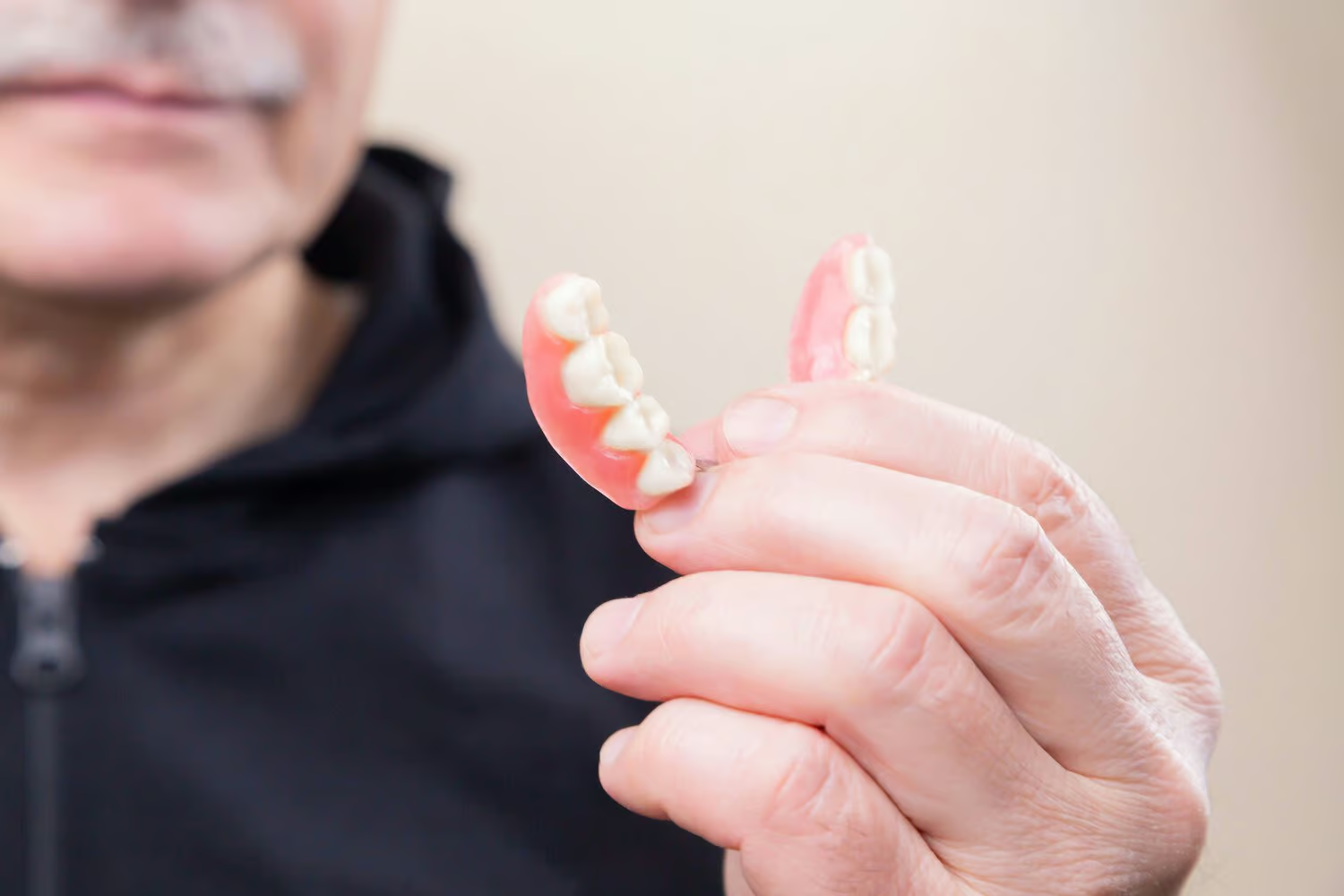

Man holding a partial denture in his hand
Your family's dental home

Partial Dentures in Canton: Finding the Right Fit for Your Missing Teeth

Man holding a partial denture in his hand
The short answer
Reviewed by our
Canton
doctors.
Dr. Aaron Thum, dentist at Associates in Dentistry in Canton

A partial denture may be a good fit when you're missing some teeth but still have natural teeth you want to keep. It's removable, so the choice comes down to which teeth remain, where the gaps are, and how you feel about taking it out.

01

Decide If a Partial Denture Fits Your Situation

The number of missing teeth doesn't tell the whole story. Say you have a gap near the front and another farther back. A partial may replace teeth in both spaces with one removable piece. If your missing teeth sit together, a partial may still work. The position and condition of the teeth you have left matter just as much as the gaps.

It also matters what you want from the replacement. A partial can fill a visible gap and give you teeth to chew with in that area, but it won't feel exactly like your natural teeth. You'll notice that it's a removable appliance in your mouth. If you strongly prefer something that stays in place, say so. That preference is part of the decision, not a small detail to bring up later.

Your remaining teeth and gums need to be considered before anyone can tell you whether a partial is suitable. Teeth that look fine to you may still have problems that affect the choice. The way your upper and lower teeth meet can affect it, too. Counting the missing teeth at home tells you what you'd like to replace, but not which kind of replacement will fit your mouth.

Think about what's bothering you most. Is it a front gap you notice when you talk, or a back gap that makes meals less comfortable? Do you want to replace teeth in more than one spot? Those answers help make the conversation specific to you. At Associates in Dentistry, partial dentures and dental exams are available at 336 N Main St in Canton. Dr. Aaron Thum, who was born and raised in Canton, is the dentist at this location. You don't need to know which replacement to choose before you come in. The useful starting point is knowing what you want to change and what you'd be comfortable wearing.
02

Know When a Partial Denture Is Not the Next Step

If the tooth you're worried about is still there, you may not need to plan for a partial denture yet. A tooth can look badly damaged without telling you whether it can be kept. It's fair to ask about saving it before thinking of it as a missing tooth. Our general dentistry in Canton includes care for existing teeth, which is a different decision from replacing one that's gone. You don't have to settle the replacement question while the first question is still open.

The same distinction matters if pain is what's making you think about new teeth. A partial denture fills a gap. It won't explain why another tooth hurts or why your gums feel sore. Even if you have a gap you'd eventually like to fill, that pain is its own concern. It's easy to put both problems under the heading of "I need teeth," but they don't have the same answer. A replacement might still make sense later. It just isn't a substitute for finding out what's causing the discomfort now.

If you already wear a partial, a new one isn't always the answer to a new problem with it. Think about what has changed. Is a piece broken, or does it no longer sit the way it used to? Those are different questions from whether you need a different set of replacement teeth. Associates in Dentistry offers denture repair and relines, so it's worth describing the trouble rather than assuming the whole denture needs to be replaced. If it still fits and works well for you, its age alone doesn't explain why you'd need a new one.

A partial also isn't the right name for a denture that replaces every tooth in your upper or lower jaw. If no natural teeth remain in that jaw, you're asking about a complete denture instead. You may still have teeth in the other jaw, and that doesn't change which kind of denture you need for the one with no teeth left. Associates in Dentistry offers complete dentures, but it's a separate choice. Being clear about which teeth are missing helps keep the conversation focused on the replacement that fits the situation.

You can also hold off on choosing a partial if you're still deciding what to do about a tooth you expect to lose. Planning ahead is sensible, but an expected gap isn't the same as one that's already there. The useful question may be whether that tooth can stay, not what will take its place. That can be hard to separate when you're tired of working around a problem tooth. You don't have to commit to a removable replacement just to show you're ready to deal with it.

03

What Happens From Exam to Fitting

The exam is where the plan gets specific. A partial has to work with the teeth you still have, your gums, and the way your teeth meet. That matters more than choosing a replacement based on the gaps alone. Tell the dentist what you hope the partial will help with. If a front gap bothers you when you speak, say that. If you're finding it hard to chew on one side, say that too. Those details give the dentist a clearer picture of what matters to you.

It helps to ask what needs to happen before the partial is ready to fit. Is there anything about the teeth or gums that affects the plan? What choices do you have about how the partial will sit in your mouth? How many appointments should you expect? You don't have to know the technical terms. Ask the question in your own words, especially if something about a removable denture makes you uneasy.

At the fitting, pay attention to more than how the partial looks. Notice how it feels when your mouth is at rest, when you talk, and when you bring your teeth together. Does it feel bulky in one spot? Does it seem to move? Can you tell which part feels uncomfortable? Those are useful things to describe. "It feels wrong" is a fair starting point, but pointing to the spot or describing when you notice it can make the conversation more useful.

A partial is something you'll take out and put back in, so make sure you understand how yours is meant to be handled before you leave a fitting. You can also ask what sensations may be unfamiliar at first and what concerns you should bring back to the dentist. You shouldn't have to guess whether a feeling is expected or whether the fit needs another look.

If you already wear a partial, describe what works about it as well as what doesn't. That gives the dentist a better starting point than its age alone. And if you're getting your first one, it's fine to say you're worried about speaking or eating with it. The point of the exam-to-fitting conversation is to make the plan fit your mouth and your daily life, not to expect you to quietly get used to something you haven't had a chance to ask about.

Missing a few teeth? Let's see if a partial fits.
04

Plan for Long-Term Fit and Repairs

The right partial isn't just one that fills the gaps today. It also needs to be a choice you can live with as your mouth changes. Your remaining teeth and gums may change over time, and a partial that once felt comfortable may begin to feel different. That doesn't tell you, by itself, whether you need a small change to the fit or a new denture. It does mean long-term fit is worth thinking about before you choose one.

Daily care is part of that choice. A partial is removable, and you'll be responsible for handling it at home. Ask how to clean yours, how to store it when it's out, and what to do if it's hard to put in or take out. You should leave with instructions that make sense to you, not a list of terms you're afraid to ask about. If taking care of a removable appliance sounds like too much, that's worth saying before you commit.

It helps to know what the words mean if something changes later. A reline addresses how a denture fits against the tissue beneath it. A repair addresses damage to the denture itself. Neither word is a promise that every fit problem or break can be fixed that way. Associates in Dentistry offers denture repair and relines in Canton, so those are services you can ask about. The useful question is which option makes sense for the problem you have.

Think beyond the appliance, too. The natural teeth you keep are part of what makes a partial work, so questions about those teeth don't end once you have it. You can ask what changes in your mouth might affect the fit and what to pay attention to over time. That gives you a clearer picture of the upkeep involved without asking you to predict what will happen years from now.

Before you decide, ask what's included in the proposed cost and what would be a separate charge if you need a reline or repair later. Associates in Dentistry is fee-for-service and accepts and bills most insurance plans, but what your plan pays depends on its terms. Ask for the expected charges and check your benefits so you can weigh the cost of the partial along with its day-to-day care.

05

Understand How Partial Denture Costs Are Determined

A partial denture usually isn't priced by counting missing teeth. The cost depends on what it takes to make a removable appliance that works with the teeth you still have. Two people can each be missing three teeth and need different designs. One may have a single gap. The other may have gaps on both sides of the mouth. That difference can affect the materials, the design, and the work involved.

The type of partial matters, too. Some use an acrylic base, while others use a metal framework with replacement teeth attached. The way a partial is held in place can also vary. These aren't just price choices. Your remaining teeth, the location of the gaps, and how your teeth come together help determine which designs make sense. If you're offered more than one option, ask what you'd gain or give up with each one. A lower initial cost won't help much if the design doesn't meet the need that brought you in.

Before you compare estimates, make sure they're describing the same scope of care. An appliance cost may be only one part of the total. Care for a tooth or gum problem, if needed, may be listed separately. Don't assume that a quote from one office and a quote from another include the same things just because both say "partial denture." Ask for a written breakdown you can read at home. It should be clear what the proposed partial is made of and which charges are for other care.

Insurance can make the amount you pay harder to judge from an estimate alone. A plan may cover only certain types of dentures, pay a percentage of an allowed amount, or limit how often it pays for a replacement. A deductible or yearly benefit limit can also affect your share. Before you decide, ask your insurer how it treats the proposed type of partial, not just whether it covers dentures in general. You'll want to know what you'd owe if the plan pays less than expected.

You don't need to pick the cheapest material or the most costly one on sight. Ask which design fits your mouth and why its cost differs from the other choices, if there are any. Then compare the full expected cost with what matters to you: replacing the gaps you want filled, wearing a removable appliance, and caring for it day to day. That's a more useful decision than a price with no explanation behind it.

FAQ

Answers to the most common questions.

Something else on your mind?
Call us at (309) 647-3331.

How long does it take to get used to a partial denture?

It can take some time for your mouth to adjust to a new partial denture. You may notice changes in how it feels, how you speak or how you chew at first.

Should a partial denture feel loose?

A partial denture should fit securely enough to function comfortably. Some movement can occur, but significant looseness or discomfort should be evaluated.

What's the difference between a partial and complete denture?

A partial denture replaces some missing teeth when natural teeth remain. A complete denture replaces all of the teeth in an arch.

Will my partial denture look natural?

Partial dentures are designed to blend with your natural teeth and gums. Depending on the design, some clasps may be visible.

How do I clean a partial denture?

Clean your partial denture with a denture brush and denture cleaner, and continue brushing and flossing your natural teeth. Keeping both the denture and remaining teeth clean helps protect your oral health.

When is a partial denture not the right choice?

A partial denture may not be the best option if your remaining teeth need significant treatment or if another type of fixed restoration would be more appropriate. Dr. Thum can discuss the available options after examining your teeth.

Request an appointment

Call us at (309) 647-3331

Tell Us About Yourself

Are you new to Associates in Dentistry?

Preferred Day and Time (optional)
Thank you! Your submission has been received!

That didn't go through. Please try again, or call your office.