




Illustration of a dental implant post with a crown, set between natural teeth
Your family's dental home

Implant Restoration in Peoria: How We Know When Your Implant Is Ready for Its Crown

Illustration of a dental implant post with a crown, set between natural teeth
The short answer
Reviewed by our
Peoria
doctors.
Dr. Michelle Horst, dentist at Associates in Dentistry in Peoria
Dr. Arian Rrushaj, dentist at Associates in Dentistry in Peoria
Dr. Jonathan Gifford, dentist at Associates in Dentistry in Peoria and Washington

Implant restoration is the second half of getting a dental implant. The post is placed in your jaw first, then the restoration adds the connector and the crown that you chew with. It's the part people see, feel, and live with every day.

01

What Implant Restoration Means

Most folks hear "dental implant" and picture one thing. It's really two.

This is part of Dental Implants & Gum Care in Peoria. Care is provided at our Peoria office by Dr. Michelle Horst, Dr. Arian Rrushaj and Dr. Jonathan Gifford.

First comes the surgical part. A small titanium post goes into the jawbone where the tooth root used to be. Then the bone grows around it and locks it in place. That takes a few months in most cases. After that, the implant is stable but it's not a tooth yet. There's nothing on top to bite with.

That's where implant restoration comes in. We build the visible tooth and attach it to the post.

There are three pieces to the whole thing, and knowing the names helps when you're reading a treatment plan:

  • The implant post. The titanium screw in the bone. Placed surgically, then left alone to heal.
  • The abutment. A small connector that screws into the post and sticks up through the gum.
  • The crown. The porcelain tooth that attaches to the abutment. This is what you see and chew with.

Usually an oral surgeon or periodontist places the post, then you come back to your general dentist for the restoration. That's how it works here. A surgeon places the post, and we build and fit the tooth at our Peoria office.

Here's the part people underestimate. The post is the foundation, but the crown is the tooth. Height, shape, bite contact, how it meets the gum. All of that gets decided during the restoration. We see patients every month whose implant is solid as a rock but whose crown sits a hair too tall. And a hair is enough to make chewing feel wrong. More often than not, that's a restorative problem, not a surgical one.

02

Signs You Are Ready for the Restoration Phase

So how do you know the waiting is over? Most people are told a number of months and then left to wonder. Healing isn't a calendar, it's a condition. The post has to fuse to the bone before anything gets screwed onto it.

Here's what we look for when someone comes in asking if it's time.

  • The gum tissue around the site looks calm. No puffiness, no redness, no tenderness when you brush near it.
  • The area feels like nothing. Not sore, not tight, not throbbing when you chew on the other side.
  • Your surgeon or dentist cleared you, or your healing window has passed and nothing has changed in weeks.
  • A healing cap or cover screw is visible and stable, not loose or shifting.
  • An x-ray shows solid bone contact around the post.

That last one matters most, and it's the one you can't check yourself. We take the image, and at our Peoria office a second doctor reviews x-rays before we move forward. Two sets of eyes on a decision that's hard to undo.

Now the other side of it. Some people shouldn't be restored yet, and we tell them so. If the post moves even slightly when tested, we stop. If the gum keeps getting irritated, we find out why first. Patients who smoke heavily or have uncontrolled diabetes sometimes need more healing time, that's not a lecture, it's just how bone behaves. And if you've had bone grafting, your timeline is usually longer than the standard one you read online.

Waiting an extra six weeks costs you a little patience. Restoring too early can cost you the implant.

Had surgery somewhere else and lost track of where you stand? Bring whatever records you have, even a phone photo of the paperwork. We see this every week, and we can usually sort out your next step in one visit.

03

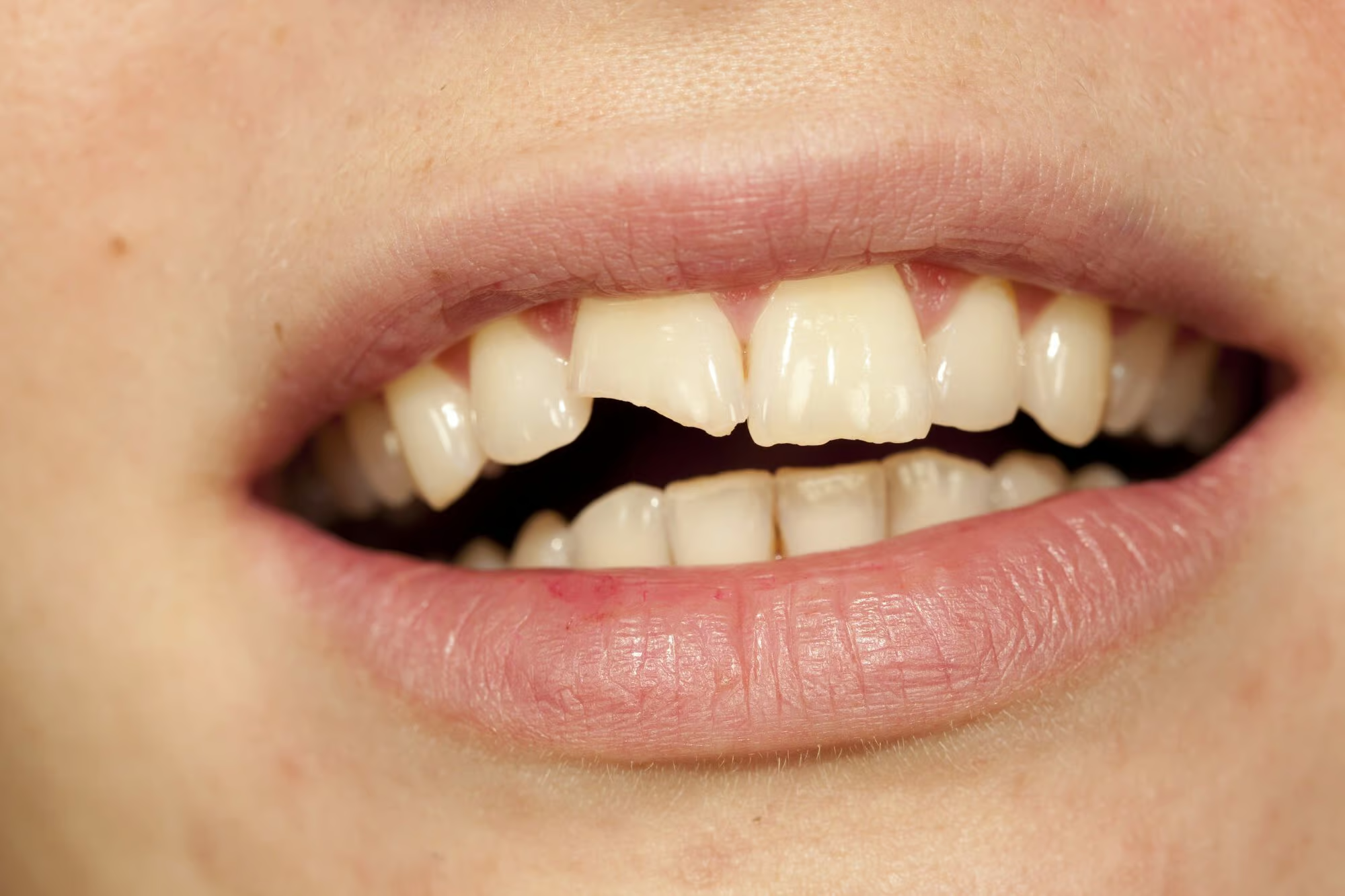
When a Broken or Loose Restoration Needs Attention

Here's the thing most people don't know. The crown on top and the implant in the bone are two separate parts. A crown can chip, loosen, or come off completely while the implant underneath is perfectly healthy. That's good news. It also means the fix is usually smaller than you're picturing.

But a loose crown isn't something to sit on. When the crown moves, food and bacteria get into the space around the abutment screw. Give that a few months and the gum tissue gets irritated, sometimes the bone around the implant starts to react. Now you've turned a simple retightening into a real problem. We see this every few weeks, someone comes in after living with a wiggly implant crown all summer.

Call us when you notice any of these:

  • The crown rocks, clicks, or turns when you press on it with your tongue
  • A chip or crack in the porcelain, even a small one
  • Food packing between the implant tooth and its neighbor every single meal
  • Gums around the implant that bleed, swell, or pull away
  • A bad taste or smell coming from that one spot
  • The crown came off entirely and you're holding it

Now the honest part. Not everything needs a same-week appointment. Mild soreness for a day or two after a hygiene visit is normal. So is a little sensitivity in the gum when you switch to a new floss threader or water flosser. Those usually settle on their own. Wait a few days before you worry.

What shouldn't wait is pain deep in the bone, or a crown that feels loose. Deep pain can mean the implant itself is struggling, and that's a different conversation. If you're not sure which one you've got, just ask. A quick look and a scan tells us fast.

And if your crown fell off, save it. Bring it with you. Plenty of the time it goes right back on.

Is your implant ready for its crown? Let's check.
04

When Implant Restoration Is Not the Right Fit

Sometimes the honest answer is not yet. Or not this. An implant post has to be solid and the gum around it has to be healthy before anything gets built on top. If either of those is off, putting a crown on it just hides a problem that gets worse under the surface. We'd rather tell you that in the chair than six months later.

Here's what usually makes us pump the brakes.

  • The implant moves at all. A post that shifts under pressure isn't integrated with the bone, and no crown fixes that.
  • Active infection or bleeding gums around the site. That gets treated first, on its own timeline.
  • You're still healing from placement surgery. Bone needs months, not weeks, and rushing it is the most common way implants fail.
  • Heavy grinding or clenching that hasn't been addressed. An implant crown doesn't feel pressure the way a natural tooth does, so you can overload it without realizing.
  • One missing tooth with healthy teeth on both sides. A bridge can be the simpler answer, and we'll say so.

Uncontrolled diabetes and active smoking both slow healing in the gum and bone. Neither one rules you out forever. They just change the order of things.

And if your implant was placed years ago by someone else and you're not sure what parts were used, that's worth sorting out before anyone touches it. We scan it, look at the x-rays, and figure out what we're working with. Our Peoria office runs a second-opinion review on x-rays, so a tricky case gets more than one set of eyes.

Waiting a few extra weeks usually costs you nothing. Redoing failed work costs you plenty.

05

How the Restoration Visit Works From Start to Finish

Most people picture something far worse than what happens. The implant post is already in your jaw and healed. It has no nerve. So the restoration visit is mostly measuring, fitting, and checking your bite.

Here's the order we work in.

  • If the implant is still covered by gum, it's uncovered and fitted with a healing cap so the tissue shapes around it.
  • We scan with the iTero Lumina instead of packing your mouth with goopy impression trays.
  • We pick the abutment, the connector piece that links the post to the crown, and match the shade to the teeth beside it.
  • The crown gets made, and at our Peoria office we mill same-day crowns in house for many cases.
  • We seat it, check how it hits when you bite and slide side to side, then adjust until it feels like nothing.

That last step is the one people rush and shouldn't. An implant crown can't feel pressure the way a real tooth does. Your natural teeth have a ligament that tells your brain to back off. An implant doesn't. So if the bite is even slightly high, you'll grind on it without knowing, and that's how screws loosen and porcelain chips.

We spend more time on bite adjustment than on anything else in the appointment. That's usually what separates a crown that lasts from one that keeps coming back.

Numbing? Usually just a little, and often none at all for the final seating. Some folks are surprised they didn't need it.

You'll leave chewing on it the same day.

FAQ

Answers to the most common questions.

Something else on your mind?
Call us at (309) 690-4500.

How do I know if my implant is ready for the crown?

You know it's ready when the gum tissue looks calm and the area feels like nothing when you chew. We also check an x-ray for solid bone contact around the post before moving forward. At our Peoria office, a second doctor reviews that x-ray with us. If your post moves even slightly when tested, we wait longer. Restoring too early can cost you the implant, so patience matters here.

My implant crown feels loose. Is that an emergency?

A loose crown needs attention soon, but it's usually not the implant itself failing. The crown and the implant post are separate parts, so a wiggly crown often just needs retightening. Waiting too long lets food and bacteria get around the abutment screw, which can irritate the gum and bone. Call us when the crown rocks, clicks, or turns. Bring it with you if it fell off completely.

How long does the whole implant restoration process take in Peoria?

Most people wait a few months after surgery before the restoration phase begins, but healing isn't set by a calendar. It depends on your bone fusing solidly around the post. Patients who smoke heavily, have uncontrolled diabetes, or had bone grafting often need extra healing time. We check your gum tissue, comfort level, and x-ray before scheduling your crown appointment, rather than guessing off a generic timeline.

Can a different dentist finish my implant if the surgery was done elsewhere?

Yes, this is completely normal. Bring whatever records you have, even a phone photo of the paperwork from your surgeon. We can usually figure out where you stand in the healing process in one visit, and from there we take over the restoration and your ongoing care for that implant.

What are signs my implant crown or gums need to be checked out?

Watch for a crown that rocks or clicks, chipped porcelain, food packing between teeth, or gums that bleed or swell around the implant. A bad taste or smell near that tooth is also worth a call. Mild soreness after a cleaning or new flosser usually settles in a few days on its own. But deep pain or a loose crown means the implant may need a closer look.

Is it bad if food keeps getting stuck around my implant tooth?

Yes, food packing at every meal is a sign something has shifted and shouldn't be ignored. It usually means the crown has loosened slightly or the contact with the neighboring tooth has changed. Left alone, trapped food irritates the gum tissue and can eventually affect the bone around the implant. A quick check and scan at our office tells us fast whether it's a simple fix or something more.

Request an appointment

Call us at (309) 690-4500

Tell Us About Yourself

Are you new to Associates in Dentistry?

Preferred Day and Time (optional)
Thank you! Your submission has been received!

That didn't go through. Please try again, or call your office.