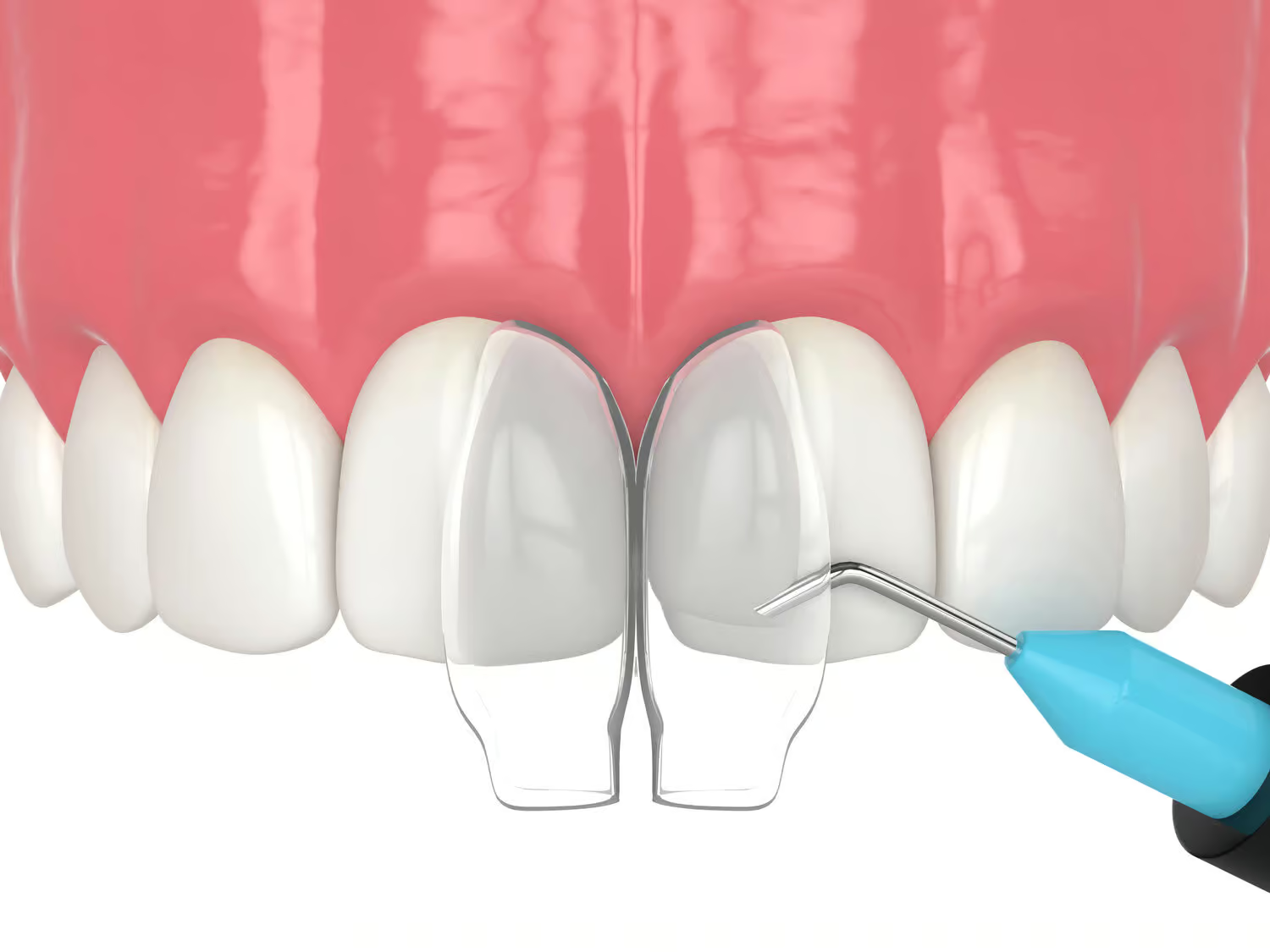



Illustration of tooth-colored bonding being applied to close a gap between front teeth
Your family's dental home

Cosmetic Bonding in Peoria: A Fast Fix for Chips, Gaps, and Stains

Illustration of tooth-colored bonding being applied to close a gap between front teeth
The short answer
Reviewed by our
Peoria
doctors.
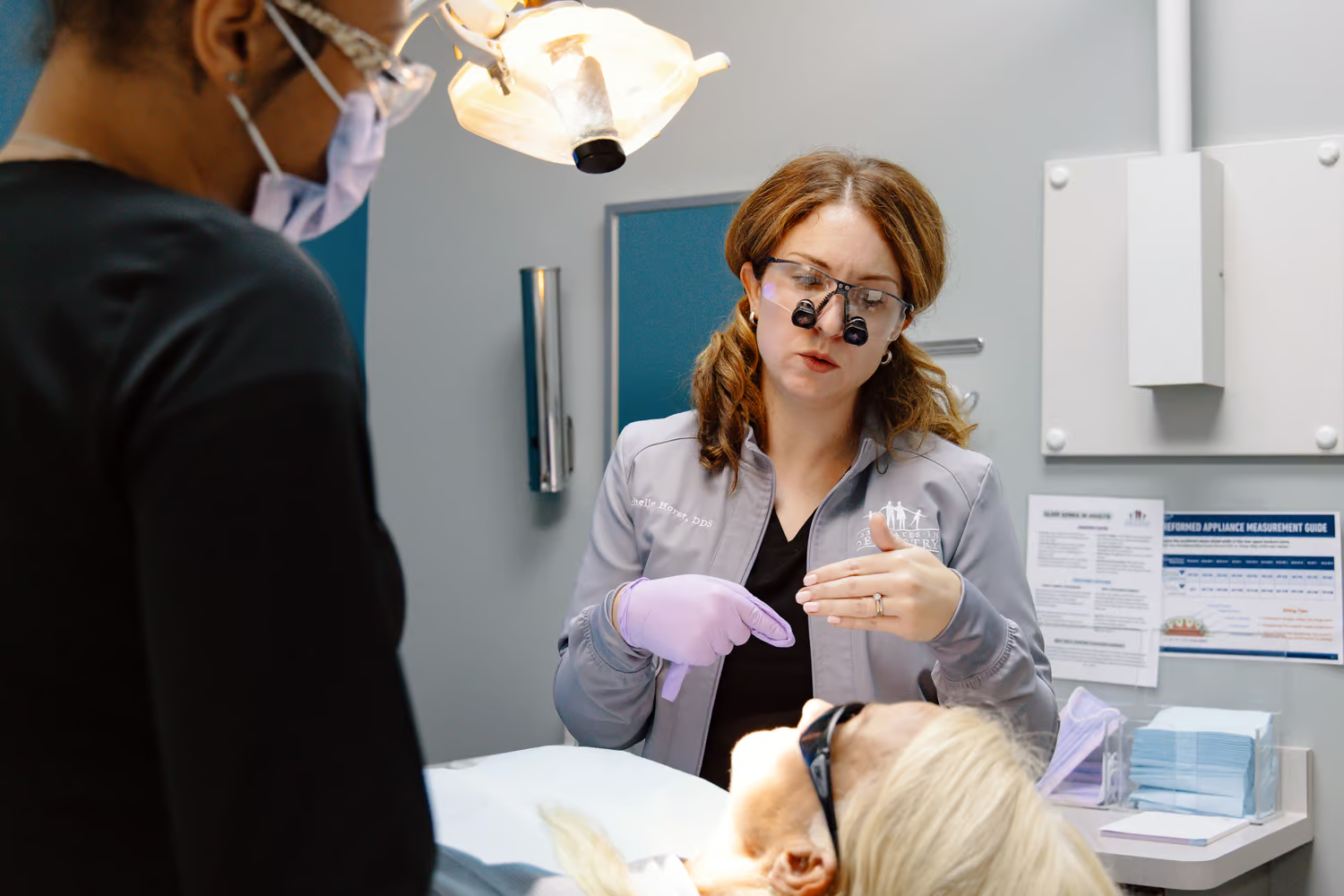
Dr. Michelle Horst, dentist at Associates in Dentistry in Peoria
Dr. Arian Rrushaj, dentist at Associates in Dentistry in Peoria
Dr. Jonathan Gifford, dentist at Associates in Dentistry in Peoria and Washington

Cosmetic bonding works best on small, contained problems. Chipped front edges, small gaps between teeth, worn edges, and stains that whitening won't lift are all good candidates. The composite is shaped right onto your tooth in one visit, so nothing gets sent to a lab.

01

Chips, Gaps, and Stains That Bonding Can Fix

The most common thing we see? A chipped front tooth. Somebody bites a fork wrong, catches an elbow at a pickup game, or opens something they shouldn't have with their teeth. It's a tiny piece of enamel. But it's right in the front, and you notice it every time you smile.

Bonding handles that in one appointment. We match the shade, build the composite back onto the edge, shape it, and polish it. No lab, no temporary, no second trip.

Here's where bonding tends to be the right call:

  • Chipped or fractured edges on front teeth, especially the corners
  • Small gaps between teeth that you'd rather close than straighten
  • Stains that professional whitening can't lift, like deep intrinsic discoloration
  • Worn edges from grinding, where teeth have gotten short and flat
  • A tooth that sits slightly back or looks smaller than its neighbor
  • Exposed root surfaces near the gumline that look dark or feel sensitive

And here's the honest part. Bonding isn't structural. If a tooth is cracked through, badly broken, or already has a large filling holding it together, composite won't carry that load. That's crown territory. We'd rather tell you that up front than watch a bonding job fail in eight months.

Same with big changes. If you want every front tooth reshaped and brightened together, veneers usually give a cleaner result. Bonding is a tool for targeted fixes, not a full rebuild.

One more thing worth knowing. Composite doesn't respond to whitening the way natural enamel does. So if whitening is somewhere in your plans, we do that first, then match the bonding to your new shade. Doing it backwards means the repair stands out - and that's the opposite of the point.
02

What Happens During a Bonding Appointment

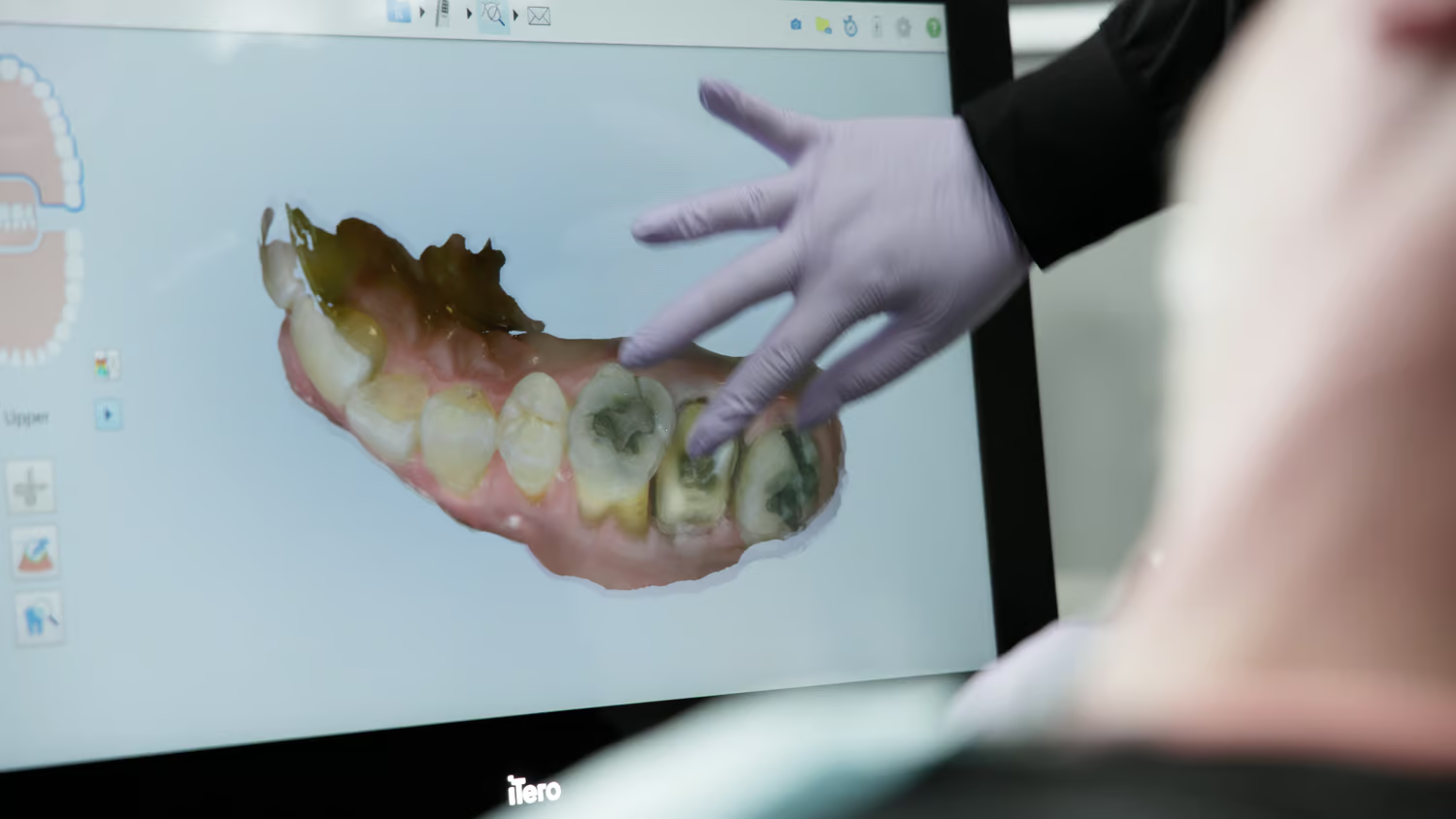
Most people picture something bigger than it is. There's no impression tray, no temporary, no waiting two weeks for a lab. You sit down, we work, you leave with the tooth finished.

Here's how a typical visit runs.

  • We look at the tooth and talk shade. You hold a shade guide up next to your own teeth in the light and we pick together.
  • We decide about numbing. A small chip on enamel usually needs nothing at all. If the spot is close to the nerve or below the gumline, we numb it.
  • We roughen the surface slightly and apply a mild etching gel, then a bonding liquid. This is what makes the composite grip.
  • We layer the composite on in thin increments and shape it by hand. This is the slow part and it should be.
  • A curing light hardens each layer in seconds.
  • We polish, then check your bite with thin marking paper and adjust until it feels like nothing.

One tooth runs roughly thirty minutes to an hour. Several front teeth take longer, and we'd rather book the time than rush the shaping.

The bite check matters more than patients expect. If a bonded edge sits even slightly high, you'll feel it every time you close, and that tooth takes the brunt of every chew. We see this every week with bonding done in a hurry somewhere else.

You can eat right away, though we'll ask you to skip coffee, red wine, and tea for the first couple of days while the surface finishes settling. No soreness in most cases. If you were numb, that wears off in an hour or two.

At our Peoria office we handle cosmetic bonding alongside veneers, whitening, and same-day crowns, so if the tooth turns out to need more than bonding, we can talk it through in the same chair instead of sending you somewhere else.

03

When a Crown or Veneer Is the Better Call

Here's the part most websites skip. Cosmetic bonding is not always the right answer, and we'll tell you that in the chair before we tell you anything else.

Bonding is composite material. It's strong for what it does, but it's not as strong as the tooth it sits on. So when a tooth has lost a lot of its own structure, adding more composite doesn't fix the underlying problem. It just gives you something else that can break. A tooth that's cracked through, had a big old filling fail, or gone through a root canal usually needs a crown. Full coverage. Something that holds the whole tooth together instead of patching one face of it.

Cases where we'll usually steer you away from bonding:

  • A back tooth doing heavy chewing work with significant damage or a large failed filling
  • A tooth that's cracked below the gumline or already had a root canal
  • You want six or eight front teeth changed in shape and color all at once, and you want them to stay that shade for years
  • You grind at night and haven't dealt with it yet, because grinding will chip composite faster than we can place it
  • Crowding or rotation is the actual complaint, not the color or the chip

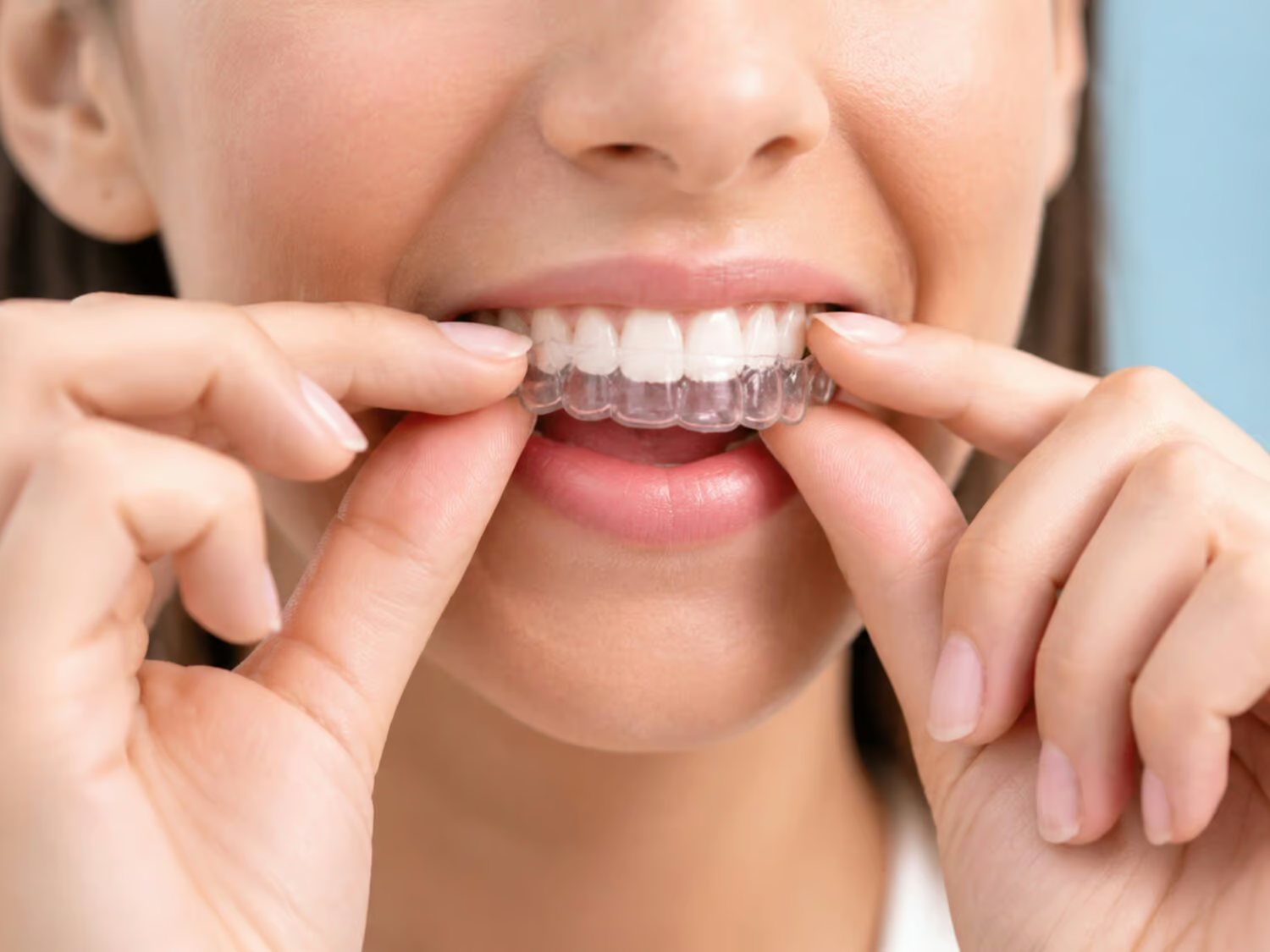
That last one comes up a lot. Someone books for bonding, and what they're really unhappy about is how their teeth sit. Bonding can camouflage minor overlap. It can't move anything. Invisalign is the honest fix there, and sometimes a little bonding afterward to polish the edges.

And sometimes the answer is nothing. A tiny chip you notice in the bathroom mirror and nobody else has ever mentioned? You can leave it. Watch it. If it catches your lip or gets bigger, come see us then.

We mill crowns in-house here at the Peoria office, so choosing a crown over bonding doesn't mean weeks in a temporary. That matters when you're deciding what's best for the tooth instead of what's fastest.

Have a chip or gap you'd like fixed in one visit?
04

How Cosmetic Bonding Is Usually Priced

Bonding is almost always priced per tooth. Not per visit, not per hour. So one chipped front tooth costs what one tooth costs, and a patient closing gaps across four front teeth pays roughly four times that. That's the whole model. It's why bonding usually lands well under the cost of a veneer or a crown on the same tooth.

What moves the number up or down is mostly time and difficulty.

  • How much tooth structure is missing. A small corner chip is quick. Rebuilding half an incisor takes layering and shaping.
  • Where the tooth sits. Front teeth show, so they get more time spent on shade matching and polish than a back tooth would.
  • Shade blending. A single-shade repair is faster than matching a tooth that's darker near the gum and translucent at the edge.
  • Bite work. If your bite hits that tooth hard, we spend extra time adjusting so the bonding doesn't chip off in a month.

Insurance is the part that confuses people. If the bonding is repairing damage or filling decay, plans often treat it like a composite filling and pay something. If it's purely cosmetic, closing a gap you've never liked, most plans pay nothing. Same procedure, different coding, different answer. Ask any office to tell you which category your case falls into before you schedule.

We're fee-for-service and not in-network with any plan, but we'll bill most insurance for you, Medicaid is the exception. CareCredit and 0% interest payment plans up to six months are available if you'd rather spread it out. Peoria's a price-sensitive market and we know it, so we'd rather you see the full number up front than find it out at checkout.

Three things worth asking any dentist: what's the per-tooth fee, how many teeth do you recommend treating, and what happens if the bonding chips later. Get those answers and you can compare offices.

05

Caring for Bonded Teeth After Your Visit

You can eat right away. That's one of the nicer parts of composite work, there's no waiting period like you'd have with a temporary crown. The material is fully hardened before you leave the chair.

But the first 48 hours matter more than people expect. Composite picks up stain most easily while it's new. So coffee, red wine, tea, curry, dark soda - give them a rest for a couple of days. After that, normal life is fine.

Here's the part nobody wants to hear. Bonding does not whiten. If you bleach your teeth later, the bonded spots stay exactly the shade they were matched to, and now they stand out. That's why we talk about whitening before bonding, not after. We see this every single week, someone comes in unhappy with a repair that looked perfect two years ago and the bonding never changed at all, the teeth around it did.

Composite is strong, but it's not enamel. It chips under the same habits that chipped the tooth in the first place.

  • Stop using your front teeth as tools. No tearing tape, no opening packaging, no cracking pistachio shells.
  • Skip ice chewing and hard candy. Front-edge bonding takes the worst of it.
  • If you grind at night, wear the guard. Grinding is the number one reason bonding fails early.
  • Brush with a soft brush and a low-abrasion paste. Whitening pastes with heavy grit dull the polish.
  • Floss normally, but pull the floss out sideways at the gumline rather than snapping it up through a bonded contact.

Keep your regular cleanings. At our Peoria office we check bonded edges at every exam and polish them back up if they've gone a little flat. Small touch-ups cost far less than starting over, and catching a hairline chip early usually means we smooth it instead of replacing it. Most bonding holds up several years with decent habits. Some goes much longer.

And if something does chip, call us. Don't wait for it to bother you.

FAQ

Answers to the most common questions.

Something else on your mind?
Call us at (309) 690-4500.

How long does a bonding appointment take?

One tooth usually takes thirty minutes to an hour. If you're fixing several front teeth, plan for longer, since we shape each layer by hand instead of rushing it. There's no lab and no temporary. You sit down, we build and shape the composite, then polish and check your bite before you leave. Most people are surprised how much gets done in a single visit at our Peoria office.

Does getting a tooth bonded hurt?

Most bonding needs no numbing at all, especially for a small chip on the enamel. We only numb if the spot is close to the nerve or below the gumline. There's no soreness afterward in most cases, and any numbness wears off within an hour or two. You can eat right away, though we'll ask you to skip coffee, red wine, and tea for a couple of days while the surface finishes settling.

Can bonding fix a chipped front tooth?

Yes, and it's the most common repair we see. Someone bites a fork wrong or catches an elbow at a pickup game, and a small piece of enamel breaks off the front edge. We match the shade, build composite back onto the edge, shape it, and polish it, all in one visit. No lab, no temporary, no second trip to our Peoria office needed.

When should I get a crown instead of bonding?

Choose a crown when the tooth has lost a lot of its own structure, like a crack through the tooth, a failed large filling, or a tooth that's had a root canal. Composite bonding isn't as strong as the tooth itself, so it can't carry that load long term. We mill crowns in-house at our Peoria office, so picking a crown over bonding doesn't mean weeks waiting in a temporary.

Should I whiten my teeth before or after bonding?

Whiten first, always. Composite doesn't respond to whitening treatments the way your natural enamel does, so bonding done before whitening will stand out once your other teeth get brighter. If whitening is part of your plan, tell us during your visit so we can match the bonding to your finished shade instead of your current one.

Will bonding fix crooked or overlapping teeth?

Bonding can camouflage minor overlap, but it can't move teeth. If crowding or rotation is your real concern rather than color or a chip, Invisalign is the more honest fix. Some patients pair the two, straightening first with Invisalign, then adding a little bonding afterward to polish the edges once the teeth sit where they should.

Request an appointment

Call us at (309) 690-4500

Tell Us About Yourself

Are you new to Associates in Dentistry?

Preferred Day and Time (optional)
Thank you! Your submission has been received!

That didn't go through. Please try again, or call your office.