
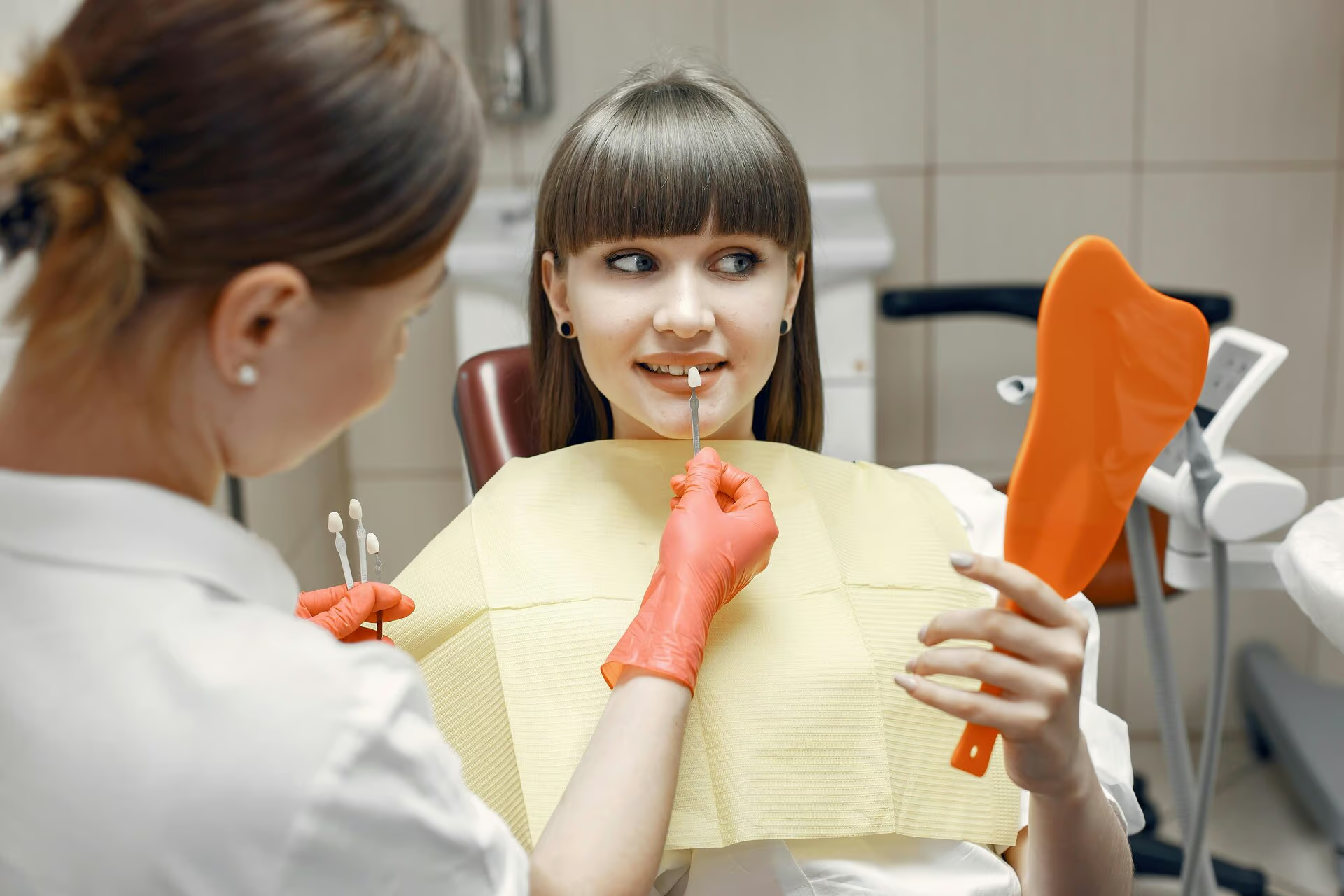


Smiling patient in a dental chair checking her teeth in a hand mirror
Your family's dental home

Veneers in Washington

Smiling patient in a dental chair checking her teeth in a hand mirror
The short answer
Reviewed by our
Washington
doctors.
Dr. Dennis Burton, dentist at Associates in Dentistry in Washington
Dr. Jonathan Gifford, dentist at Associates in Dentistry in Peoria and Washington

Veneers cover the front of a tooth to change its color, shape or visible edge. They're designed for cosmetic concerns rather than pain, decay or missing teeth. Smaller changes may only need bonding or whitening, and veneers usually require removing some enamel, so it's worth discussing your options first.

01

Veneers Fix Specific Cosmetic Problems, Not All of Them

Veneers in Washington may be worth considering if you want to change the color, shape, or visible edge of a tooth. They cover the front of a tooth, but they don't fix pain, decay, or a missing tooth.

This is part of Cosmetic Dentistry in Washington. Care is provided at our Washington office by Dr. Dennis Burton and Dr. Jonathan Gifford.

The first question is simple: what do you want to change? A veneer can change the part of a tooth people see when you smile. That may make sense if one tooth has a dark spot, an uneven edge, or a shape that looks out of place beside the others. It matters less what the concern is called than where it is. Veneers work on appearance at the front of a tooth, not on every problem that can affect it.

Picture a small chip on a front tooth. If the tooth is otherwise sound, changing its visible edge may be the main goal. Now picture a tooth that hurts when you bite. Even if it also looks chipped, covering the chip wouldn't answer the concern about pain. Those are different decisions, and they shouldn't be treated as the same cosmetic problem.

Color: A veneer can cover the visible face of a tooth whose shade bothers you. It won't change the color of the teeth beside it, so the whole smile matters when you're thinking about shade.

Shape: A veneer can make a short or uneven-looking tooth appear more in line with nearby teeth. It doesn't change the tooth's position.

Spaces: Veneers may change how a small space looks. They don't correct the underlying position of your teeth or the way they fit together.

A veneer also isn't a replacement for a missing tooth or a fix for a tooth with decay. If your main concern is a loose tooth, sore gums, or pain, the visible surface isn't the whole story. The right question isn't just, "Could a veneer hide this?" It's, "Is what I want to change mainly cosmetic?" That distinction keeps you from choosing a covering for a problem it can't solve.

You don't need to know the answer before you come in. It helps to point to the tooth and say what you notice: the shade, the edge, the space, or something that feels wrong. Veneers are available at our office at 300 Peoria St in Washington. We can talk with you about whether the change you're hoping for is one a veneer is meant to make.

02

Veneers Versus Bonding and Whitening: How to Decide

Veneers make the most sense when you want to change more than one thing about the visible part of a tooth. If the change you want is smaller, cosmetic bonding may be enough. If the shape of your teeth already looks right and it's their overall shade that bothers you, teeth whitening is the more direct choice. You don't have to pick the biggest change to get the change you want.

Cosmetic bonding is worth considering when one small area stands out, such as a chipped edge. It may suit you if you like the rest of the tooth as it is.

Teeth whitening focuses on the color of natural teeth. It won't make a short tooth look longer or change an uneven edge.

A veneer may be worth considering when the visible face of one tooth needs a broader change in shape, shade, or both.

Say one front tooth looks a little shorter than the tooth beside it. If its color looks fine, ask whether a small change with bonding would address what you notice. If that same tooth also has a shade or surface you want to change, a veneer may fit the goal better. Now suppose you like the shape of every tooth, but your whole smile looks darker than you'd like. Whitening addresses that concern without trying to change each tooth's shape.

Color matters when you're weighing these choices together. Whitening can change the shade of natural teeth, but it won't lighten bonding or a veneer that's already in place. If you've had cosmetic work on a front tooth, tell us what you'd like to change about the teeth around it, too. A single tooth can look different once its neighbors are a different shade. It's worth thinking about how the teeth will look together, not just whether one tooth looks better by itself.

Our cosmetic dentistry in Washington includes veneers, cosmetic bonding, and teeth whitening. That gives you three distinct ways to think about the same concern: is it one small area, the color of your natural teeth, or more of a tooth's visible surface? You may find that only one of those descriptions fits. You may also find that your first idea doesn't address the part you keep noticing in the mirror.

You don't need to know the treatment name. Think about what would still bother you if only the chip changed, or if only the color changed. If the answer is "nothing," a broader change may not be what you're looking for. If both shape and shade matter on the same tooth, that's a useful reason to discuss a veneer.

03

When Veneers Are Not the Right Choice

You don't need a veneer just because a tooth looks different from the one beside it. Teeth aren't meant to be identical. If the difference doesn't bother you, leaving it alone is a reasonable choice. And if pain, decay, or a missing tooth is the main concern, a veneer doesn't answer it.

A veneer also won't fix the reason a tooth keeps chipping. If the same edge breaks more than once, the force on that edge matters as much as how it looks. Clenching or grinding can put pressure on a veneer, too. Covering the edge may change its appearance without changing what happens when your teeth meet. That doesn't mean a veneer is ruled out for everyone who grinds their teeth. It does mean looks alone aren't enough to make the decision.

Think about where the change you want is. A veneer covers a tooth; it won't move your gum line or change how your lips frame your smile. If you look at a photo and wish your whole smile sat differently, changing the face of one tooth may leave that concern untouched. It's okay if you can't name the exact issue yet. What's important is not expecting a veneer to change something outside the tooth.

Veneers aren't a good choice if you want a change you can simply take off when you tire of it. They're fixed to teeth, and they may need care or replacement over time. You also don't have to decide while you're still unsure what shade or shape you'd feel comfortable seeing every day. A tooth can look attractive on its own and still look out of place beside its neighbors. If you're hoping for every tooth to look exactly the same, that expectation deserves a second thought before you make a lasting choice.

Cost can be a reason to pause, too. Veneer costs depend in part on how many teeth are involved and the materials used. A plan for one tooth isn't the same decision as a plan for several visible teeth. If you don't know which teeth you'd want changed or what the full plan would cost, you don't have enough information to commit. Waiting until you're clear on both the goal and the scope is sensible.

Wondering if veneers are right for your smile?
04

Tooth Preparation: What Happens to Your Teeth

Tooth preparation means making room for a veneer to fit over your natural tooth. In some cases, that means removing enamel from the front of the tooth. The amount can vary. That's why the most useful question isn't just, "Will you prepare my tooth?" It's, "How much of my tooth would need to change for the result I want?"

Enamel doesn't grow back. If some is removed, that change is permanent, even though a veneer may need to be replaced later. It's worth being clear on that before you agree to treatment. You should know which teeth would be prepared, not just how many veneers you're considering. A plan that changes one tooth is a different commitment from a plan that changes several.

Why make room at all? A veneer adds material to the front of a tooth. If the finished tooth needs to stay close to its current size, there has to be space for that material. The answer depends on the tooth you have and the shape you're trying to achieve. If a tooth sits farther back than its neighbor, the space available may differ from a tooth that already sticks out. You can't tell how much preparation you'd need from a photo of someone else's smile.

Before you decide, point to the part of your tooth you want to keep as well as the part you want to change. Maybe you like its length but not its front surface. Maybe you want a smoother edge without making the tooth look wider. Those details matter because a veneer has to fit with the tooth beside it, not just look good when viewed alone. Ask what your natural tooth would look like after preparation and what that means if the veneer needs attention in the future.

Be cautious with a promise that a veneer will need no tooth preparation. That may be possible in some situations, but it isn't something to assume for your tooth. The same goes for an estimate of how much enamel will be removed before your tooth has been assessed. You deserve an answer about your own tooth, in plain words, before making a lasting choice.

If you're uneasy about changing healthy enamel, say so. It isn't a minor concern or a question you need to set aside to talk about the finished look. The right plan needs to account for both: what you'll see when you smile and what happens to the tooth underneath. If those two parts of the decision aren't clear yet, you don't have to decide yet.

05

The Veneer Process from Consultation to Final Bonding

The process starts with a clear goal. Tell the dentist which tooth you mean and what catches your eye about it. Is it the color, the edge, or the way it looks next to another tooth? Bring up anything you feel as well as anything you see. That helps separate a change in appearance from a concern a veneer can't solve.

From there, ask what the proposed veneer would change and what it would leave alone. You should be able to picture the goal in plain terms, such as a tooth that looks less short beside its neighbor. You shouldn't have to agree to a treatment based only on a general promise that your smile will look better. If several teeth are being considered, ask why each one is part of the plan.

Before any work on your tooth, make sure you understand whether the plan calls for preparation. As discussed above, that decision can affect your natural tooth for good. You can also ask how many appointments the proposed plan involves and what happens at each one. Don't assume that someone else's schedule or treatment plan will match yours.

What shade and shape are you aiming for, and how will the veneer look beside the teeth you aren't changing?

Which parts of my natural tooth would need to change before the veneer is placed?

Will I have a chance to discuss the planned look before final bonding?

What should I expect between appointments, if my plan takes more than one visit?

Those questions matter because a veneer isn't just a tooth viewed by itself. You'll see it next to other teeth when you talk and smile. A front tooth that looks even in one view may look different to you from another angle. If you have a photo that shows the detail you've been noticing, bring it along. It can help you point to the concern without having to find the perfect words for it.

Final bonding is the point at which you want any uncertainty out in the open. If you're unsure about the proposed color, shape, or which teeth are included, say so before you agree to that step. The aim isn't to make every tooth identical. It's to choose a change you understand and feel comfortable making to your own tooth. If you can't yet describe what will change, it's reasonable to ask for a clearer explanation first.

FAQ

Answers to the most common questions.

Something else on your mind?
Call us at (309) 444-8481.

What disqualifies someone from getting veneers?

Active decay, gum disease, or a missing tooth can rule out veneers until those problems are treated first. Veneers only change the visible front surface of a tooth, so a tooth that hurts or is structurally unsound needs a different fix before cosmetic work makes sense. If you grind or clench your teeth, that habit needs to be discussed too, since it can put extra pressure on a veneer's edge.

Why might a dentist suggest something other than veneers?

A dentist may steer you toward bonding or whitening if your goal doesn't need a veneer's level of change. If one small chip is bothering you, bonding alone may solve it without reshaping the whole tooth. Veneers also require permanent enamel removal, so a dentist may want you to be fully sure about the goal and scope before committing to that step.

What are dental veneers?

Veneers are thin shells made to fit over the visible front surface of a tooth. They can change the appearance of tooth shape, size, color, and some small spaces.

Are veneers a good choice for a small chip?

They can be, but a small chip may also be treatable with bonding. The choice depends on the size of the change and the condition of the tooth.

Are veneers permanent?

Veneers are a long-term restoration, but they can still wear, chip, or need replacement over time. Your dentist can discuss what to expect for your teeth.

Do veneers require tooth preparation?

Veneers may require preparation of the tooth so the finished restoration can fit properly. The amount depends on the tooth and the planned veneer.

Request an appointment

Call us at (309) 444-8481

Tell Us About Yourself

Are you new to Associates in Dentistry?

Preferred Day and Time (optional)
Thank you! Your submission has been received!

That didn't go through. Please try again, or call your office.