

Your family's dental home

Home Sleep Testing in Bartonville: What the Test Tells You, and What Happens Next

The short answer
Reviewed by our
Bartonville
doctors.
Dr. Landall Cormier, dentist at Associates in Dentistry in Bartonville

A home sleep test uses a compact SleepImage sensor ring to collect sleep-related information, including oxygen levels, heart rate, movement and sleep patterns. You wear it while sleeping in your own bed. The results are reviewed by a board-certified sleep physician, who makes the formal diagnosis and helps determine what should happen next.

01

What a Home Sleep Test Checks and Who It Fits

A home sleep test looks for signs of sleep-disordered breathing, including patterns associated with obstructive sleep apnea. This condition occurs when the airway becomes partly or fully blocked during sleep, disrupting normal breathing.

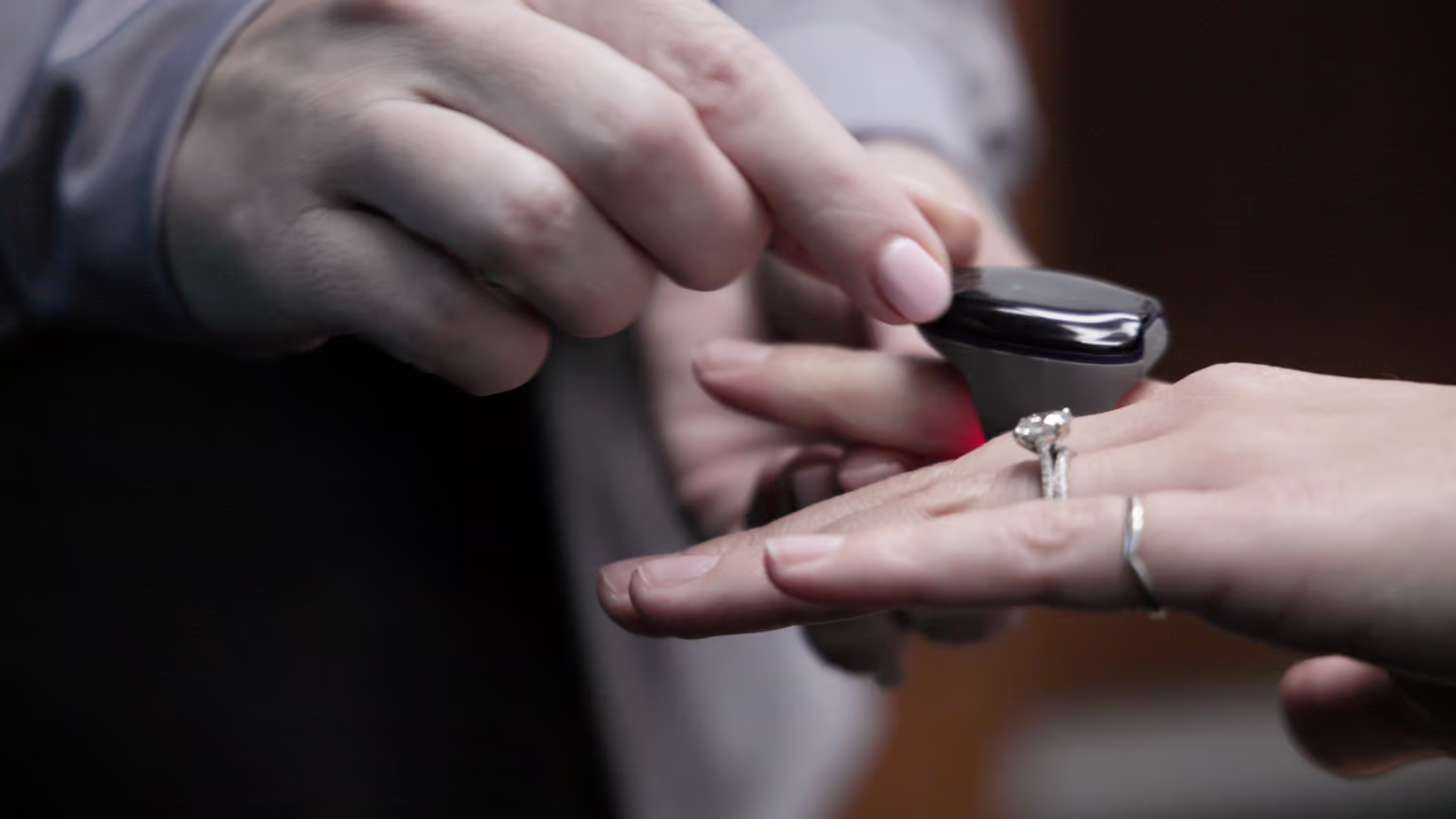
SleepImage uses a small sensor ring to record information overnight, including oxygen levels, heart rate, movement and sleep patterns. The test lets you collect this information at home rather than spending the night in a sleep lab.

The data can help show patterns that may point to breathing problems during sleep. It doesn't establish a diagnosis by itself. A board-certified sleep physician reviews the report and determines what the findings mean.

Home testing may be appropriate for adults who snore regularly, wake feeling unrefreshed or have been told that they stop breathing during sleep. These symptoms can be reasons to investigate, although none confirms sleep apnea on its own.

Home testing isn't the right choice for every person or every sleep concern. Depending on your symptoms and medical history, a physician may recommend an overnight sleep study instead. A lab study can measure additional information that a home test may not capture.

Home sleep testing is part of General Dentistry in Bartonville. If you're concerned about your sleep, our Bartonville team can help you discuss whether home testing may be an appropriate next step.


02

Signs It Is Time to Get Tested

Loud snoring and daytime tiredness are two familiar signs of possible sleep apnea, but the clues aren't always so obvious.

You might notice that you wake with a dry mouth or headache, feel tired despite spending enough time in bed, or struggle to stay alert during the day. A partner may notice pauses in your breathing, followed by snorting or gasping.

Your dentist may also notice changes worth discussing: worn teeth from grinding, a sore jaw in the morning, scalloped marks along the sides of the tongue, a small or set-back lower jaw, or a dry mouth. These can have several causes, but they may be relevant when considered alongside other symptoms.

Other reasons to talk with a healthcare professional include:

  • Waking frequently during the night
  • Feeling unusually foggy, irritable or tired during the day
  • Having a partner report that you stop breathing while asleep
  • Finding it difficult to stay alert while driving or doing routine activities

These signs don't prove that you have sleep apnea. The important thing is to look at the overall pattern rather than drawing conclusions from one symptom.

If daytime sleepiness is affecting your ability to drive safely, seek medical advice promptly and avoid driving when drowsy.

At Associates in Dentistry in Bartonville, Dr. Landall Cormier can discuss sleep and airway concerns and help you understand whether home testing may be worth exploring.

03

When to See a Physician or Sleep Lab Instead

Home sleep testing is designed to help evaluate possible sleep-disordered breathing. It doesn't assess every condition that can interfere with sleep.

If your main concern is difficulty falling asleep, frequent waking without signs of breathing problems, unusual movements during sleep or overwhelming daytime sleepiness, a physician may need to investigate other causes.

An overnight sleep study may also be more appropriate for people with certain medical conditions or when a home test doesn't provide enough information. A physician can help determine which type of evaluation fits your symptoms and health history.

It's also important to follow up if a home test doesn't show sleep apnea but you continue to experience symptoms. A result that doesn't identify a problem isn't always the end of the evaluation. Your physician may recommend additional testing.

The goal is to get the right information for your situation, not to use the same test for every sleep concern.

Thinking About Home Sleep Testing in Bartonville? Let's Talk.
04

What Happens Before and During the Test

SleepImage testing is performed at home. Instead of setting up the traditional collection of tubes and chest straps used by some home sleep tests, you wear a compact sensor ring while you sleep.

The ring records sleep-related signals overnight, including oxygen levels, heart rate, movement and sleep patterns. You can sleep in your own bed, in your usual surroundings.

Before testing, a healthcare provider needs to determine whether the test is appropriate and arrange the process. Follow the instructions supplied with your device, including guidance on how to wear it, when to start recording and how to return or submit it afterward.

A few practical reminders:

  • Read the instructions before bedtime so you know how to use the device.
  • Follow the testing provider's directions for wearing the ring and collecting the data.
  • Ask the provider if anything about the setup is unclear.
  • Follow your clinician's advice about medications and any other preparation.

After the recording is complete, the data is used to prepare a report. A board-certified sleep physician reviews the findings and determines whether they indicate a sleep-related breathing disorder.

The process is designed to collect useful information without requiring you to spend the night in a sleep lab. Whether home testing is sufficient depends on your symptoms and the quality of the results.

05

From Results to Treatment in the Same Office

Testing is one step in understanding what's happening while you sleep. The next step is knowing what the findings mean and what care, if any, makes sense.

A board-certified sleep physician reviews the SleepImage report and makes the formal diagnosis. If the results indicate obstructive sleep apnea, treatment depends on the severity of the condition, your overall health and the options appropriate for you.

For some adults, a custom oral appliance may be an option. These devices are worn during sleep and help hold the lower jaw in a position that keeps the airway more open. They aren't suitable for everyone, and deciding whether one is appropriate requires an individualized evaluation and coordination with the relevant healthcare professionals.

Associates in Dentistry offers sleep and airway treatment at our Bartonville office. Dr. Landall Cormier can discuss the dental options available and how they may fit into your care after the sleep evaluation.

Sleep concerns can also overlap with oral health issues, such as worn teeth or jaw discomfort. If you have those symptoms, let your dentist know so they can be considered as part of your overall care, including TMJ/TMD treatment when jaw pain is part of the picture.

Sleep testing and treatment typically bill to medical insurance, not dental. We're fee-for-service and not in-network with any plan, but we accept and bill most insurance. Medicaid is the exception. CareCredit and interest-free payment plans of up to six months are available.

You don't need to know exactly what's causing your symptoms before asking questions. If you snore regularly, wake feeling tired or have concerns about your breathing during sleep, contact our Bartonville office to discuss your options.

FAQ

Answers to the most common questions.

Something else on your mind?
Call us at (309) 697-2228.

What if the sensor moves or comes off during the night?

Put the ring back on and keep sleeping. If you're not sure the recording is complete, call our Bartonville office before returning the device.

Can I sleep in my normal position during the test?

Yes. Sleep however you normally do. The test is meant to capture an ordinary night, so moving around or getting up to use the bathroom won't throw it off.

What if I don't sleep well on the night of the test?

Let the testing provider know if you think you didn't collect enough data. They can review whether the recording is usable and whether another night of testing or a different type of evaluation is needed.

Do I need a doctor's order before I can get a home sleep test?

A provider needs to determine whether testing is appropriate and arrange the process. Contact our Bartonville office to ask how home sleep testing is coordinated and what steps are needed before you begin.

Can home sleep testing tell me for sure whether I have sleep apnea?

The test collects information that can help evaluate possible sleep-disordered breathing. A board-certified sleep physician reviews the report and makes the formal diagnosis. If the results don't explain your symptoms, further evaluation may be needed.

Request an appointment

Call us at (309) 697-2228

Tell Us About Yourself

Are you new to Associates in Dentistry?

Preferred Day and Time (optional)
Thank you! Your submission has been received!

That didn't go through. Please try again, or call your office.