

Your family's dental home

Sleep Apnea Treatment in Bartonville: Breathe Easier, Sleep Better

The short answer
Reviewed by our
Bartonville
doctors.
Dr. Landall Cormier, dentist at Associates in Dentistry in Bartonville

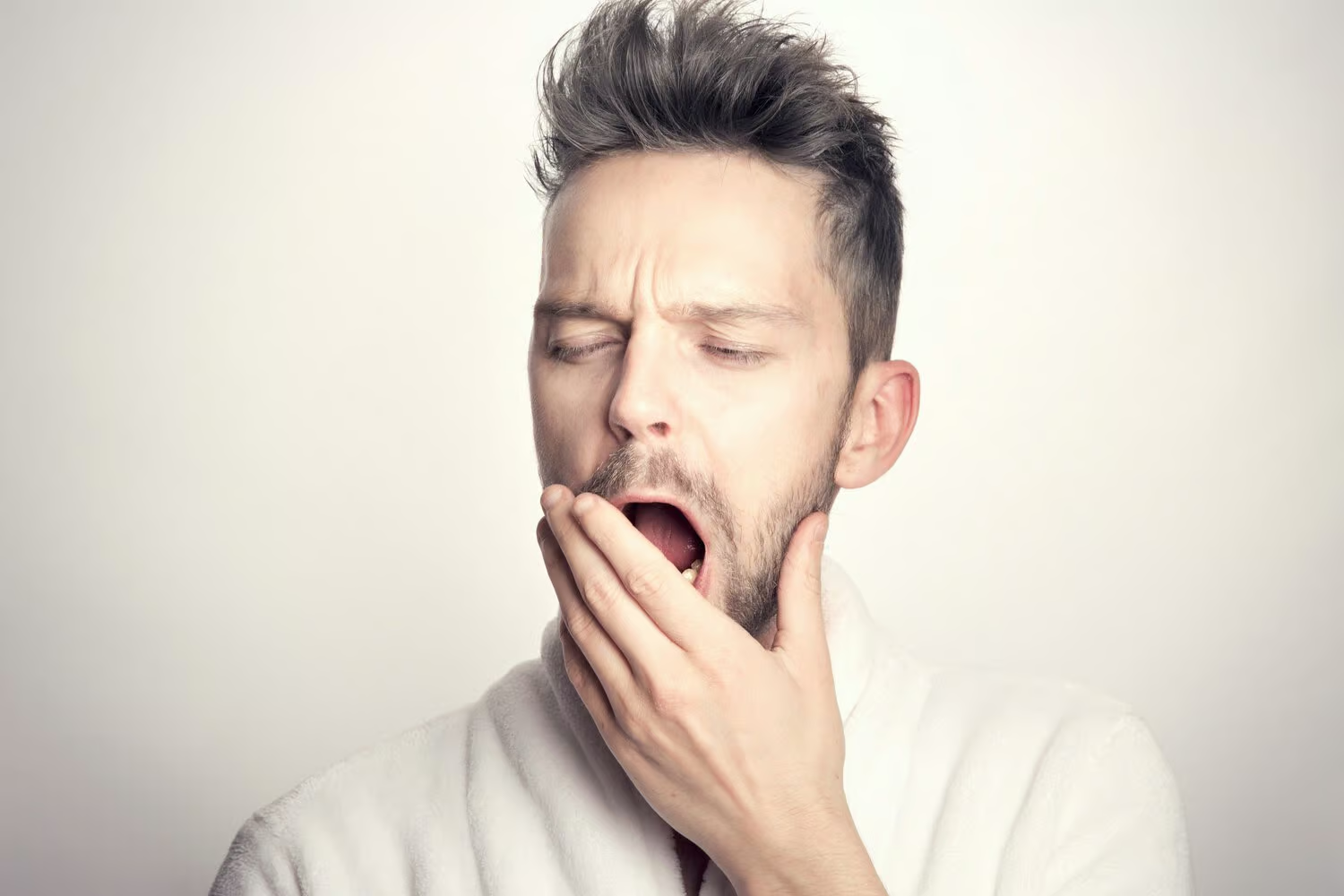
Loud snoring, gasping or choking at night, and waking up unrefreshed are the most common signs of sleep apnea. Daytime clues matter just as much: morning headaches, fog by mid-afternoon, and nodding off at red lights. Worn-down teeth, a scalloped tongue, and a small airway are signs your dentist can see before you ever notice them.

01

Signs You May Need Sleep Apnea Treatment

Most people don't figure this out on their own. A spouse does. They're the one lying awake listening to the snoring stop, then start again with a gasp. That pause is the part that matters.

This is part of General Dentistry in Bartonville. Care is provided at our Bartonville office by Dr. Landall Cormier.

And plenty of folks come in swearing they sleep fine. Eight hours, every night. But they wake up with a dull headache behind the eyes, their mouth is bone dry, and by two in the afternoon they're fighting to stay awake at a desk. That's not normal tiredness. That's a body that never got into deep sleep.

  • Snoring loud enough that someone else changes rooms
  • Gasping, choking, or a long silent pause in your breathing
  • Morning headaches and a dry, sore throat
  • Waking up three or four times a night, often to use the bathroom
  • Falling asleep watching TV, reading, or worse, at a stoplight
  • Short fuse, low mood, trouble remembering things

Here's a detail most people miss. We often spot it in your mouth first.

Flat, worn chewing surfaces on the back teeth. Little cracks in the enamel. A tongue with scalloped edges where it's been pressed against the teeth all night. Redness at the back of the throat. Nine times out of ten, when someone tells us they grind their teeth and can't figure out why, there's a breathing issue underneath it. Your jaw clenches because your body is trying to pull the airway open.

Kids show it differently. Mouth breathing, restless sleep, bedwetting past the usual age, trouble focusing at school.

You don't need every sign on this list. Two or three is enough to be worth a conversation at your next visit in Bartonville, where our team can take a look at your airway and your bite together.

02

Why Jaw Pain and Sleep Problems Often Connect

Here's something that surprises a lot of people. The jaw and the airway are neighbors. When the airway narrows during sleep, the body fights to reopen it. That fight often shows up as clenching, grinding, and a jaw that aches in the morning.

Think about what's happening back there. The tongue sits right in front of the airway. Lying on your back, muscles relaxed, that tongue can slide back and crowd the space. Your brain doesn't like that. So it triggers a jaw thrust or a swallow to pull things forward again. Do that a few hundred times a night and the jaw muscles never get to rest.

We see this every single week.

Someone comes in for a cracked molar or a sore joint. They mention they wake up tired. They mention headaches behind the eyes. Nine times out of ten there's more going on than a bad bite. That's why we look at the whole picture during a regular exam, and why airway questions come up even in routine general dentistry in Bartonville.

A few things we look for when jaw pain and sleep problems show up together:

  • Flat, worn edges on the back teeth or chipped front teeth
  • Scalloped ridges along the sides of the tongue
  • A jaw joint that clicks, pops, or feels tight before noon
  • Morning headaches that fade by mid-morning
  • A partner who reports snoring, gasping, or pauses in breathing

None of those prove sleep apnea on their own. But together they tell a story, and it's usually the same story. Treating the jaw without asking about the airway means you're sanding down the symptom and leaving the cause alone. The night guard helps the teeth, sure. It doesn't do much for why you're clenching in the first place.

So we ask about sleep. Every time.

03

How Sleep Apnea Is Diagnosed Before Treatment Begins

We can't treat sleep apnea based on a conversation. Neither can anyone else. A dentist can spot the signs, and we spot them often, but the diagnosis itself has to come from a physician reading a sleep study. That's not a technicality. It's what separates treatment that works from an expensive mouthpiece that hides your snoring while your oxygen still drops all night.

So how does a person get from "my wife says I stop breathing" to an actual answer? Usually it goes like this.

  • Someone notices something. Loud snoring, gasping, waking up tired no matter how long you slept, morning headaches, dozing off at red lights.
  • A screening conversation happens. Sometimes with your doctor, sometimes with us at a regular exam.
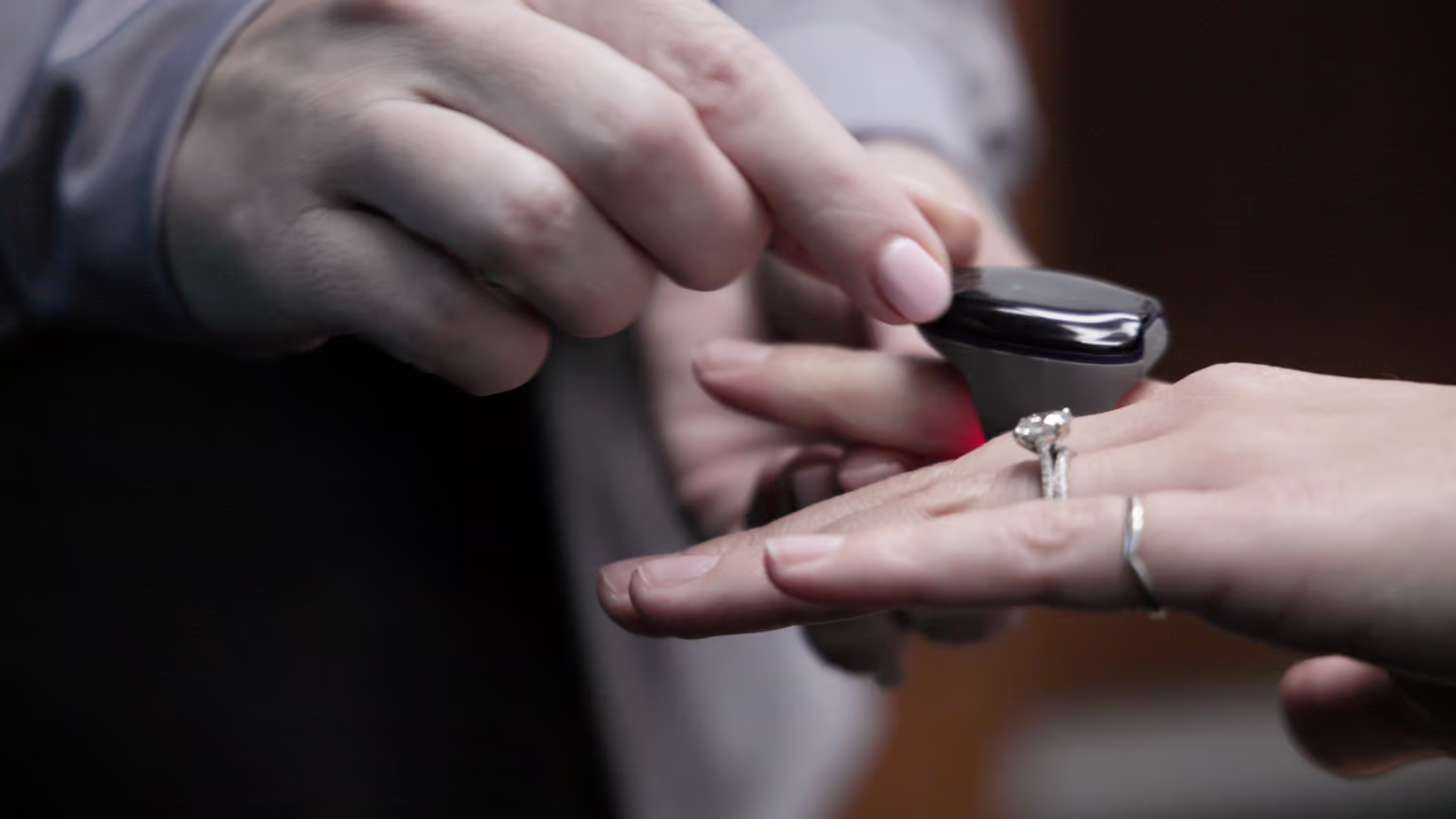
  • A sleep study gets ordered. Either a take-home test you sleep with in your own bed, or an overnight study at a lab.
  • A physician reads the results and gives you a diagnosis, including how severe it is.
  • You and your care team pick a treatment. CPAP, an oral appliance, or in some cases both.

We see the dental clues before a lot of folks ever get tested. Flattened, worn-down back teeth from grinding. Scalloped edges along the tongue. A small airway opening in the back of the throat. Dry mouth complaints at every cleaning. Any one of those alone means little, but together they're a pattern, and we've learned to say something when we see it.

Already have a study in hand? Bring it. The severity number on that report shapes everything about what comes next, including whether an oral appliance is a reasonable fit for you at all. And if you've never been tested, we'll help you get pointed toward someone who can order one.

Nobody should be guessing about this.

Tired of snoring and waking up worn out?
04

When Sleep Apnea Treatment Is Not the Right Next Step

Not everybody who snores needs us. Some folks come in convinced they've got sleep apnea, and after we talk it through, the answer is that an oral appliance isn't what they need right now. We'd rather say that out loud than fit you for something that won't help.

If you've never had a sleep study, that's step one. Not an appliance. A dentist can't diagnose sleep apnea, and we won't pretend otherwise. Snoring alone doesn't confirm it, and plenty of loud snorers turn out to have no apnea at all. Home sleep tests are simple now, you wear a small device for a night in your own bed. Get the diagnosis first, then decide on treatment.

Severe apnea is another case where we pump the brakes. Oral appliances do their best work with mild to moderate apnea, and for some people with severe numbers. If your study comes back severe and CPAP is working for you, stay with CPAP. It's still the most effective treatment out there. We're not here to talk anybody off a machine that's doing its job.

Then there's the mouth itself.

An appliance grips your teeth. If you've got loose teeth, active gum disease, or not enough healthy teeth to hold it, the appliance has nothing to work with. Same story with untreated decay or a jaw joint that's already flaring up. Those things get handled first. Sometimes that means gum treatment or a few repairs, sometimes it means we talk about dentures and a different path entirely.

And if your main complaint is daytime tiredness with no snoring, no witnessed pauses, and a normal sleep study? That's worth chasing down with your physician. Thyroid, anemia, medication side effects, plain old short sleep, lots of things wear people out. An appliance won't touch any of them.

05

What Oral Appliance Therapy Involves and What Costs Depend On

A sleep apnea treatment appliance looks a little like a retainer, but it does something different. It holds your lower jaw slightly forward while you sleep. That keeps the airway from collapsing shut. No hose, no mask, no power cord. It fits in a case the size of a deck of cards.

Here's how the process usually goes.

  • We look at your airway, jaw, teeth, and bite, and talk through how you've been sleeping.
  • You get a sleep test through a physician. We don't diagnose sleep apnea, a doctor does, and we need that result before we make anything.
  • We take digital scans of your teeth and record how your jaw moves forward.
  • The appliance gets built to those scans and fitted in the office.
  • We adjust the forward position over several weeks, a little at a time.
  • Your doctor confirms it's working, often with a follow-up sleep test.

That adjustment stretch surprises most people. It isn't one visit and done. The first week your jaw feels tired in the morning. That usually settles. And the amount of forward movement that fixes your breathing is different from your neighbor's, so we move slowly and check in.

Now, cost. We can't quote numbers here, but we can tell you what moves them. In this field, price generally depends on the type of appliance, whether it's custom-made from your scans or a stock tray, how many adjustment visits are built in, and whether the case is billed to medical insurance or dental. Most oral appliance therapy runs through medical, not dental, and that surprises people. Our office bills most insurance plans, though we're not in-network with any of them. CareCredit and 0% payment plans up to six months are available if spreading it out helps.

Ask any provider these three things: is it custom, are adjustments included, and who bills it.

FAQ

Answers to the most common questions.

Something else on your mind?
Call us at (309) 697-2228.

How do I know if my snoring is sleep apnea?

Loud snoring alone doesn't confirm sleep apnea, but gasping, choking, or pauses in breathing are red flags. A spouse often notices this before you do, since they hear the silence between breaths. Morning headaches, a dry mouth, and feeling foggy by mid-afternoon are other clues. If two or three of these sound familiar, it's worth bringing up at your next visit so we can check your airway and bite together.

Can my dentist diagnose sleep apnea?

No, a diagnosis has to come from a physician reading a sleep study, not from a dental visit alone. We can spot warning signs early, like worn-down back teeth, a scalloped tongue, or a small airway. Those clues help us point you toward getting tested. Once you have a diagnosis and a severity number, we can talk about whether an oral appliance makes sense for your situation.

Why does my jaw hurt if my real problem is breathing at night?

Your jaw and airway work as a team while you sleep. When your airway narrows, your body clenches or thrusts the jaw forward to pull it open again. Do that hundreds of times a night, and your jaw muscles never get to rest. A night guard eases the soreness, but it won't fix why you're clenching. That's why we ask about sleep during jaw pain exams.

What kind of sleep study do I need before seeing a dentist about this?

You'll need either a take-home sleep test or an overnight study at a sleep lab, ordered by a physician. Both measure how often your breathing stops and how much your oxygen drops. If you already have results, bring them to your Bartonville visit. That severity number shapes whether an oral appliance is a reasonable option or whether other treatment fits better.

What are the signs my kid might have sleep apnea instead of a bad habit?

Mouth breathing, restless sleep, bedwetting past the usual age, and trouble focusing at school can all point to sleep apnea in kids. It often looks different than in adults, so it gets missed or blamed on behavior. If you notice two or more of these signs, mention them at your child's next dental visit so we can take a closer look at their airway.

Is an oral appliance always the right treatment for sleep apnea?

No, an oral appliance isn't the right fit for everyone, and that's a normal outcome of the conversation. Some people need CPAP instead, and some need both treatments together depending on severity. We talk through your sleep study results, your daily habits, and your goals before recommending anything. The point is finding what helps you breathe better at night, not just quieting the snoring.

Request an appointment

Call us at (309) 697-2228

Tell Us About Yourself

Are you new to Associates in Dentistry?

Preferred Day and Time (optional)
Thank you! Your submission has been received!

That didn't go through. Please try again, or call your office.
