


Your family's dental home

Emergency Dental Pain Treatment in Bartonville: Fast Relief When You Need It Most

The short answer
Reviewed by our
Bartonville
doctors.
Dr. Landall Cormier, dentist at Associates in Dentistry in Bartonville
Dr. Jessica Dean, dentist at Associates in Dentistry in Bartonville

Tooth pain that wakes you up, throbs without anything touching it, or comes with facial swelling needs same-day attention. Pain that only shows up with cold drinks or sweets usually isn't an emergency, though it's still telling you something. The difference is whether the nerve is inflamed or the infection has started moving.

01

Signs Your Tooth Pain Is a Real Dental Emergency

Most people already know. They just want someone to confirm it.

This is part of Emergency Dentistry in Bartonville. Care is provided at our Bartonville office by Dr. Landall Cormier and Dr. Jessica Dean.

Here's the honest line we use. If the pain is driving the clock, it's an emergency. Pain that wakes you at 2 a.m. and won't quit, pain that ibuprofen barely dents, pain that makes you sit up in a chair instead of lying down, that's a nerve that's inflamed or dying. It doesn't settle on its own. And waiting a week usually means the fix gets bigger, not smaller.

  • Throbbing that starts on its own, with no cold drink or chewing to trigger it
  • Swelling in your cheek, jaw, or under the eye, even a little
  • A bad taste or salty drainage near a sore tooth
  • Pain that shifts when you lie down or bend over
  • A tooth that feels taller than the ones next to it
  • Fever along with the toothache

That last one changes things. Fever plus swelling means the infection isn't staying put, and swelling that reaches your eye or makes swallowing hard is a hospital trip, not a dental appointment. We say that plainly because it matters.

Now the other side. Sensitivity to cold that fades in a few seconds is usually a worn spot, a small cavity, or receding gum line. Annoying, not urgent. A chip with no pain can wait a few days. Soreness after a filling often calms down in a week or two. Nine times out of ten those folks don't need to be seen today, and we'll tell them so over the phone.

One pattern we see every week in Bartonville: someone rides out a sore tooth through a long winter stretch, and it flares hard once they finally bite into something on the other side. The nerve was already gone. The pain just took a break.

02

Dentist or Emergency Room: How to Choose

Here's the part most people get wrong. The emergency room is the right place for some dental problems and the wrong place for most of them. Hospitals can't do root canals. They can't pull a tooth. They can't put a crown back on. What they can do is handle the things that put you in actual danger, and they do that well.

So go to the ER or call 911 if any of these are happening.

  • Swelling that's closing your eye, spreading down your neck, or pushing under your jaw
  • Trouble breathing, trouble swallowing, or a voice that suddenly sounds different
  • Fever with facial swelling, especially if you feel confused or shaky
  • Bleeding after an injury that won't stop with firm pressure
  • A broken jaw, or a head injury that came with the dental injury

That's infection moving where it shouldn't, and hours matter. Nobody should wait on that.

But a throbbing tooth with no swelling? A cracked molar? A crown that popped off during dinner? The ER will look at it, hand you a prescription, and tell you to call a dentist. You'll have spent half the night and still have the same tooth. Nine times out of ten that's how it goes, and people are frustrated when they tell us about it the next morning.

A dental office can fix the cause. Emergency root canal, emergency tooth extraction, broken tooth repair. We do root canals in-house here at our office, so the treatment that stops the pain happens in one place.

Not sure which side of the line you're on? Call us and describe it. We'd rather talk you into a hospital trip than have you tough out something serious at home, and if it's a tooth we can handle, we'll tell you that too.

03

What to Do Before Your Emergency Visit

So you've called and you have a time. Now what? The hours before your visit matter more than most people think. What you do at home can keep the pain from spiking, and it can keep a small problem from turning into a swollen face by morning.

Here's what we tell people over the phone.

  • Rinse gently with warm salt water. A half teaspoon in a cup of warm water, a few times. It won't fix anything, but it calms tissue and clears food out of a cracked tooth.
  • Use a cold compress on the outside of your cheek. Twenty minutes on, twenty off. This is the one thing that reliably helps swelling.
  • Take over-the-counter pain medicine the way the label says, as long as your doctor hasn't told you otherwise. Ibuprofen tends to work better on dental pain than acetaminophen because the pain is inflammatory.
  • Sleep with your head propped up on an extra pillow. Lying flat sends more blood pressure to the jaw, and that's why the throbbing gets worse at night.
  • Keep chewing on the other side and skip anything very hot, very cold, or very sweet.

A few things to avoid. Don't put an aspirin against the gum. It burns the tissue and we see the chemical burn more often than you'd guess. Don't poke at the tooth with a toothpick or a fingernail. And don't use heat on a swollen area, heat pulls infection outward and makes it spread faster.

Bring a list of your medications and any health conditions, plus your insurance card if you have one. We bill most plans but we're not in-network with any of them, so knowing your coverage ahead of time keeps the front desk conversation short.

And if the swelling spreads toward your eye or under your jaw while you're waiting, call us back. That changes the timeline.

Tooth hurting right now? Call and we'll help.
04

Inside a Same-Day Emergency Dental Visit

Most people picture the worst before they ever sit down. Drills, bad news, a bill they can't plan for. What happens is a lot calmer than that. We're trying to find the source of the pain first, then treat it. That order matters.

Here's how a same-day emergency dental pain treatment visit usually goes at our office.

  • You call and tell us what hurts. Sharp or throbbing, hot or cold, one tooth or a whole side. Those details help us hold the right kind of spot for you.
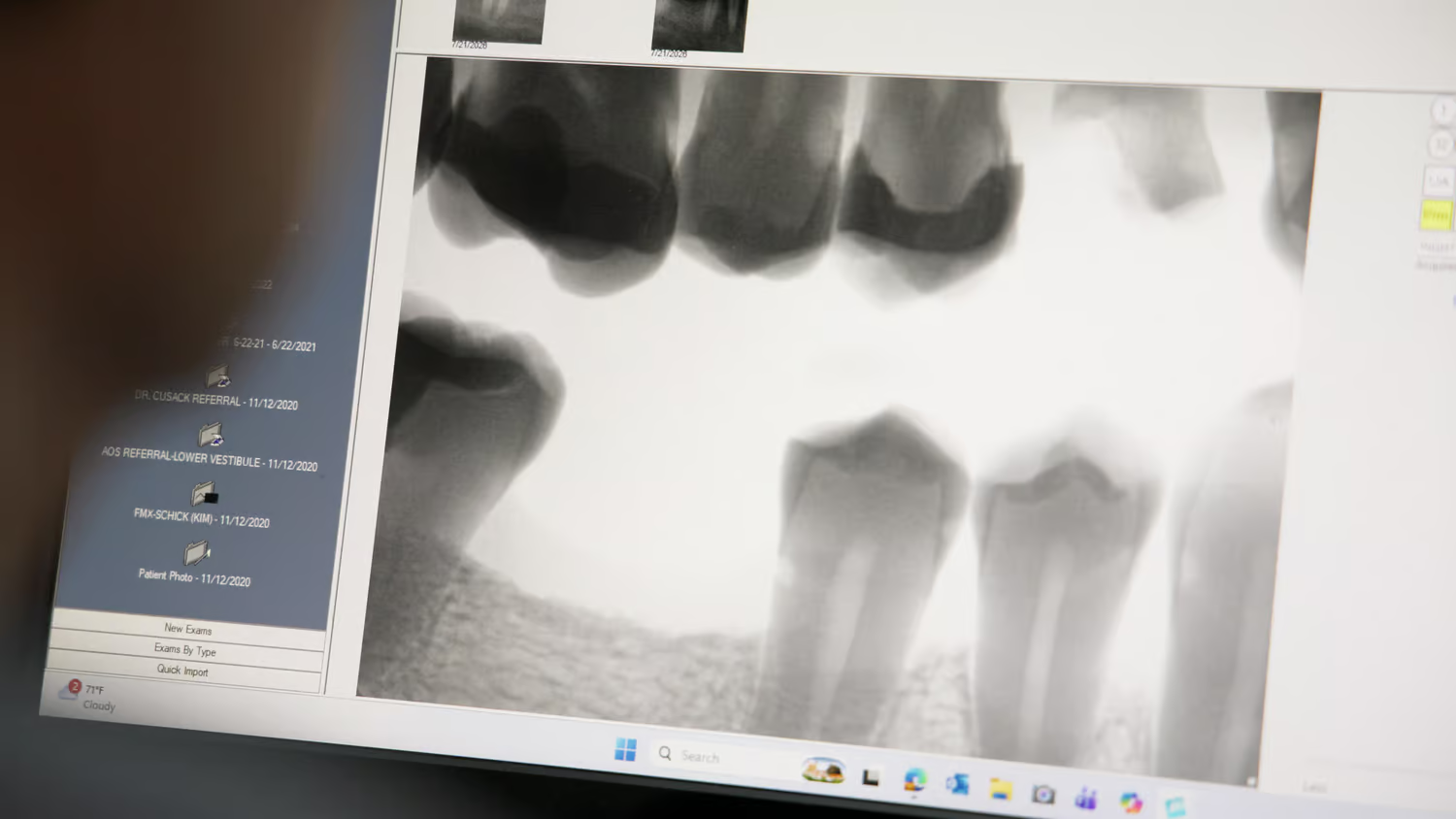
  • We take an X-ray of the area. Pain is a terrible mapper. People point at an upper molar when the problem is the one below it.
  • A dentist tests the tooth. Cold, tapping, a little pressure. It sounds simple, and it's the fastest way to tell a dying nerve from a cracked filling.
  • We get you numb before anything else. Nobody makes a decision about treatment while they're still hurting.
  • We tell you what we found and what your choices are, including the option to stabilize today and finish later.

Sometimes that same appointment ends the problem for good. We do root canals right here in house, so a tooth with a dying nerve doesn't have to mean a referral and another week of misery. We also have an in-house mill for same-day crowns, which helps when a tooth breaks and needs covering before it splits further.

And some visits end with less than you expected. A prescription, a temporary filling, a plan for Thursday.

That's not us stalling. Swollen, infected tissue doesn't numb well, and rushing a permanent repair on an angry tooth usually means doing it twice. We'd rather get you comfortable tonight and do the real work right.

05

Understanding Emergency Dental Costs

Money is the reason people sit at home with a throbbing tooth. We hear it all the time. So let's take the mystery out of it.

Almost every emergency dental visit is billed in two parts. First the visit itself, which covers the exam and any X-rays we need to see what's happening under the gum. Then the treatment, billed separately once we know what the tooth needs. Those are different numbers. An office that quotes you one flat price over the phone before seeing an X-ray is guessing, and guesses tend to go up later.

What moves the cost up or down isn't luck. It's the tooth.

  • Which tooth hurts. A front tooth has one canal. A molar can have four, so a root canal there takes longer and costs more.
  • How far the problem has gone. A small filling today is a fraction of what a crown and root canal cost next month.
  • Whether you need the tooth restored afterward. A root canal usually needs a crown to finish it, and that's its own line item.
  • Whether swelling is involved. Infection sometimes means antibiotics and a second visit before the real repair.

Here's where we're different from a lot of offices, and you should know it before you call. We moved to a fee-for-service model in August 2024. We accept and bill most insurance, but we're not in-network with any plan. That means your benefits still apply, they just work differently than they would at a contracted office. Ask us to walk you through it. We'd rather explain it in two minutes than have you find out on a statement.

CareCredit and 0% interest payment plans up to six months are available, so a bad night doesn't have to become a bad year financially. And no, we don't take Medicaid.

Call any office and ask three things: what does the emergency exam cover, will I get a written estimate before you start, and what are my payment options today. Any good office will answer all three without flinching.

FAQ

Answers to the most common questions.

Something else on your mind?
Call us at (309) 697-2228.

How do I know if my tooth pain is a real emergency?

If pain is driving the clock, it's an emergency. Throbbing that starts on its own, swelling in your cheek or jaw, or pain that wakes you at 2 a.m. all point to a nerve that's inflamed or dying. Cold sensitivity that fades in seconds usually isn't urgent. If you're not sure, call us and describe what you're feeling. We'll tell you whether it can wait or needs same-day care.

Should I go to the emergency room or call an emergency dentist?

Go to the ER only if swelling is closing your eye, spreading down your neck, or you're having trouble breathing or swallowing. Hospitals can't do root canals or pull a tooth. Most people who go to the ER for a toothache leave with a prescription and are told to call a dentist anyway. A dental office fixes the actual cause, so call us first if there's no danger sign.

What can I do at home before my emergency dental appointment?

Rinse with warm salt water, use a cold compress on your cheek for twenty minutes at a time, and take ibuprofen as directed since it works better on dental pain than acetaminophen. Sleep with your head propped up to ease nighttime throbbing. Avoid heat on swelling since it can pull infection outward, and never put aspirin directly against your gum, it burns the tissue.

Why does my tooth pain seem to come and go instead of staying constant?

This is a pattern we see often in Bartonville, especially after a long winter stretch. Someone rides out a sore tooth for weeks, then it flares hard once they bite on the other side. The nerve was often already dying, and the pain just took a break. Coming and going doesn't mean it's healing. It usually means the problem is still there and getting worse underneath.

What happens during a same-day emergency dental visit?

We focus on finding the source of your pain first, then treating it, which keeps the visit calmer than most people expect. We do root canals in-house at our office, so the same visit that diagnoses the problem can often treat it too. Bring your medication list and insurance card so the front desk conversation stays quick.

Is a fever with tooth pain something to worry about?

Yes, fever along with facial swelling means the infection isn't staying in one place. This combination is more serious than tooth pain alone, and swelling that reaches your eye or makes swallowing hard needs a hospital, not a dental appointment. Call us right away if you notice fever with swelling so we can help you figure out the safest next step quickly.

Request an appointment

Call us at (309) 697-2228

Tell Us About Yourself

Are you new to Associates in Dentistry?

Preferred Day and Time (optional)
Thank you! Your submission has been received!

That didn't go through. Please try again, or call your office.
