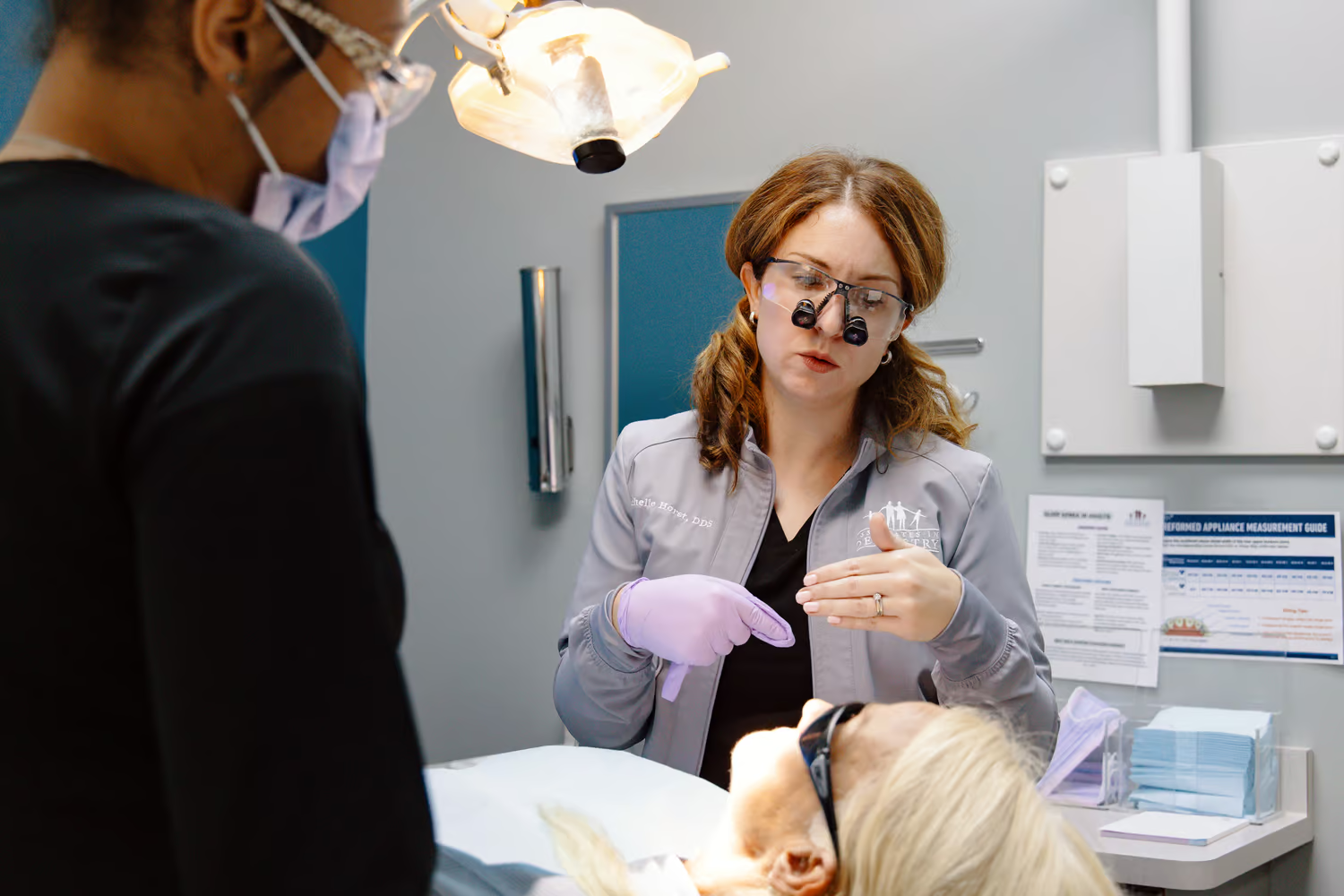
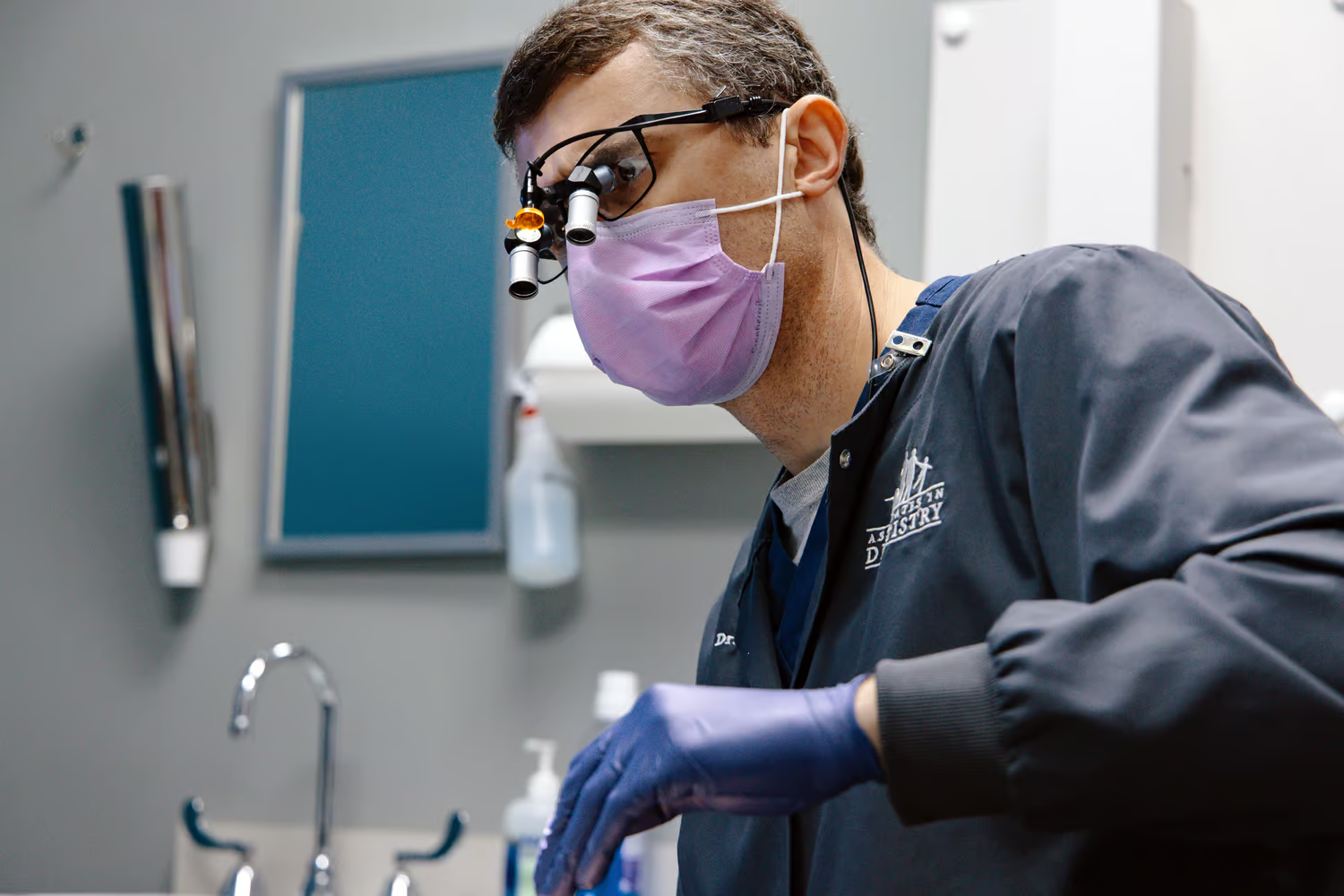


Dentist in magnifying loupes and a mask preparing to treat a patient
Your family's dental home

Root Canal Pain in Bartonville: How to Tell If It's an Emergency

Dentist in magnifying loupes and a mask preparing to treat a patient
The short answer
Reviewed by our
Bartonville
doctors.
Dr. Landall Cormier, dentist at Associates in Dentistry in Bartonville
Dr. Jessica Dean, dentist at Associates in Dentistry in Bartonville

A toothache that wakes you up, throbs on its own, or comes with swelling is usually infection inside the nerve, not simple sensitivity. That kind of pain doesn't settle down on its own. The sooner it's treated, the more of the natural tooth we can keep.

01

Signs Your Toothache Is a True Dental Emergency

Most toothaches aren't emergencies. A tooth that zings for two seconds when you drink ice water and then quiets down? That's sensitivity. Annoying, but it can wait for a regular appointment.

The pain we worry about behaves differently. It doesn't need a trigger. It shows up on its own and stays. People describe it as a deep throb, like a pulse in the jaw. It gets worse lying flat, so it hits hardest around bedtime. And over-the-counter pain relievers start to feel like they're barely touching it. That pattern points to the nerve inside the tooth, and once the nerve is infected, there's no waiting it out.

Here's what tells us to get you in the same day.

  • Pain that wakes you up or keeps you from sleeping
  • Swelling in the gum, cheek, or under the jaw
  • A bad taste or salty drainage near the sore tooth
  • Pain when you bite down or even tap the tooth
  • Fever, or swelling spreading toward your eye or throat

That last one isn't a dental problem anymore, it's a medical one. Swelling that moves toward the eye, or makes swallowing and breathing hard, needs an emergency room, not a dental chair.

One thing that fools people every week: the pain suddenly stops.

Folks think they got lucky. Usually the nerve just died. The infection is still there and still spreading into the bone, it just lost the ability to send a signal. We'd rather see you while it hurts than three weeks later when the tooth can't be saved.
02

When a Toothache Can Wait for a Regular Appointment

Here's the part most dental websites leave out. Plenty of toothaches don't need us tonight. A tooth that zings when you drink ice water and settles back down in a couple seconds is usually just a sensitive tooth. Maybe a little gum recession. Maybe a spot where the enamel is thin. That pain can be sharp enough to make you jump, but it's not an infection, and it's not an emergency.

Short pain that stops when the trigger stops is the key. Long pain that keeps going after the trigger is gone is a different animal.

Soreness after a recent filling is another one we hear about constantly. A tooth that was just worked on can ache for a week or two while the nerve calms down. That's normal. So is a dull ache on one side after a long weekend of clenching your jaw, which we see a lot in folks who grind at night.

Signs that usually mean you can book a regular visit instead of calling after hours:

  • Cold or sweet sensitivity that fades within a few seconds
  • A chipped tooth with no pain and no sharp edge cutting your tongue
  • Mild tenderness for a week or so after new dental work
  • Food getting stuck between two teeth, with the ache gone once you floss it out
  • General jaw soreness on both sides, worse in the morning

None of that means ignore it. A chip today can turn into a cracked cusp in three months, and food traps almost always mean something is wrong with the contact between teeth. But you can sleep, you can eat, and you can wait for a normal appointment slot.

So use the clock, not the intensity. Pain that comes and goes in seconds waits. Pain that throbs for hours, wakes you up, or brings swelling with it doesn't. And if you can't tell which one you've got, call and describe it to us. We'd rather talk you through it over the phone than have you guess at midnight.

03

Why Waiting Out the Pain Can Make Things Worse

Here's the part most people don't know. When the nerve inside a tooth dies, the pain often stops. Not because you're healing. Because the nerve can't send signals anymore. We see this every single week, someone finally calls three weeks after the throbbing quit and the infection has already pushed out the bottom of the root.

That's the window that matters. A tooth with a live, angry nerve is usually a straightforward root canal. Clean it out, seal it, cap it, done. But once bacteria move past the root tip into the jawbone, you're dealing with something bigger.

The bone around the root starts breaking down. An abscess forms. Sometimes it drains into your mouth through a little bump on the gum, and the pressure drops, and you feel better for a while. That bump isn't a good sign. It means there's a steady path for infection to keep feeding.

And the tooth itself gets weaker the longer it sits. Brittle. More likely to crack under normal chewing. A tooth we could have saved in October sometimes can't be saved in December, not because the infection spread, but because the tooth split while you were eating a sandwich.

Swelling that moves is the line we don't want you to cross. Puffy gum is one thing. Swelling that reaches your cheek, your eye, under your jaw, or makes swallowing feel tight needs care that same day. Infections in that area sit close to your airway. That's not a scare tactic, it's just anatomy.

Antibiotics alone won't fix it either. They can knock the swelling down. But the inside of the tooth has no blood supply left, so the medicine never reaches the source. The infection comes back once the pills run out. Almost always.

Throbbing tooth that won't quit? Call us today.
04

What Happens During an In-House Emergency Root Canal Visit

Most people picture something far worse than what happens. You're numb the whole time. The hard part, the throbbing you walked in with, usually stops during the visit.

Here's how a visit at our office usually goes.

  • We take an x-ray and test the tooth. Cold, tapping, sometimes both. That tells us whether the nerve is the problem or something else is.
  • We numb you. This is the step folks worry about most, and it's over in about a minute. If the tooth is badly infected, we may need extra anesthetic to get you fully comfortable.
  • We open the top of the tooth and clean out the inflamed nerve tissue. The pressure drops almost right away.
  • We shape and disinfect the canals, then seal them.
  • We protect the tooth. Sometimes that's a temporary filling. Sometimes we go straight to a same-day crown with our in-house mill.

Start to finish, a single-root front tooth moves fast. A back molar with three or four canals takes longer, and we'd rather take the time than rush it.

We do root canals right here, so you're not being handed off to a specialist across town with a three-week wait. That's the whole point of keeping this in-house.

You can drive yourself home. No sedation required for most people. If dental anxiety is part of your story, we'll talk it through, and if sedation makes sense, we'll refer you to a provider who offers it.

Afterward, the numbness wears off over a few hours. The tooth may feel bruised or tender to bite on for several days, that's the ligament around the root settling down, not the infection coming back. Over-the-counter pain relievers handle it for most people. Chew on the other side until the permanent crown is on.

And if something feels off? Call us. We'd rather hear from you on day two than day ten.

05

How Root Canal Costs and Insurance Typically Work

Money is usually the second question. The first one is how fast can you make this stop.

So let's talk about how root canal pricing works, because nobody explains it and that's part of why people wait. Cost isn't one flat number. It moves based on a few things you can ask about before you ever sit down in the chair.

  • Which tooth it is. Front teeth have one canal. Molars in the back often have three or four, and they take longer to clean and fill.
  • Who does the work. A general dentist and an endodontist price the same tooth differently. Being sent across town to a specialist also adds a second appointment and a second bill.
  • Whether it's a retreatment. Going back into a tooth that had a root canal years ago is harder than treating it the first time.
  • The crown. This is the one that surprises people. The root canal saves the tooth. The crown protects it afterward, and it's almost always billed separately.

That last point matters more than anything else on this list. If you get a quote for a root canal and nobody mentions a crown, ask. A back tooth without a crown can split months later, and then you're paying to remove the tooth you just paid to save.

Insurance adds its own wrinkles. Most dental plans carry an annual maximum, and a root canal plus a crown can eat a big chunk of it in one visit. Timing matters too. If it's November and you've barely touched your benefits, that's worth knowing before you schedule.

We're not in-network with any plan, but we accept and bill most insurance, Medicaid being the exception. We also do root canals and same-day crowns here in Bartonville with our own mill, so you're not paying for a referral trip and a second workup somewhere else. CareCredit and 0% payment plans up to six months are available if the timing is bad.

Ask for the full plan and the full number before treatment starts. Any honest office will give you both.

FAQ

Answers to the most common questions.

Something else on your mind?
Call us at (309) 697-2228.

How do I know if my toothache is a real emergency?

It's usually an emergency if the pain wakes you up, throbs on its own, or comes with swelling. Sensitivity that fades a few seconds after cold water isn't an emergency. But deep, constant throbbing that gets worse lying down often means the nerve inside the tooth is infected. If you also have swelling near your eye, throat, or jaw, or trouble swallowing, that needs same-day care. Call us and describe your pain so we can help you decide.

My tooth pain suddenly stopped. Does that mean it's healing?

No, sudden pain relief usually means the nerve has died, not healed. The infection is often still spreading into the bone even though it can't send pain signals anymore. We see this every week in Bartonville patients who wait a few weeks after pain stops, only to find the infection has already reached the root tip. Please still book a visit even if the throbbing has quieted down.

Can antibiotics fix my infected tooth instead of a root canal?

Antibiotics can reduce swelling, but they can't cure the infection inside the tooth. The inside of an infected tooth has no blood supply, so the medicine never reaches the source. The infection almost always comes back once you finish the pills. A root canal removes the infected tissue directly, which is the only way to stop it for good.

What happens during an emergency root canal visit at your office?

You'll be numb for the whole procedure, and the throbbing you came in with usually stops during the visit. We start with an x-ray and test the tooth with cold and tapping to confirm the nerve is the problem. Numbing takes about a minute. Most patients are surprised how calm the appointment feels compared to the pain that brought them in.

Is a chipped tooth with no pain a dental emergency?

Usually not right away, but you shouldn't ignore it. A painless chip with no sharp edge can often wait for a regular appointment. Still, a small chip today can turn into a cracked cusp within a few months if left alone. Watch for new sensitivity, sharp edges cutting your tongue, or pain when chewing, and call us if any of those show up.

Should I go to the ER or call your office for facial swelling?

If swelling spreads toward your eye, throat, or under your jaw, or makes breathing or swallowing hard, go to the emergency room first. That kind of swelling sits close to your airway and becomes a medical issue, not just a dental one. For swelling limited to the gum or cheek without breathing trouble, call our office so we can see you the same day.

Request an appointment

Call us at (309) 697-2228

Tell Us About Yourself

Are you new to Associates in Dentistry?

Preferred Day and Time (optional)
Thank you! Your submission has been received!

That didn't go through. Please try again, or call your office.