

Why Cracked Tooth Pain Doesn't Feel Like You'd Expect
You might expect a cracked tooth to ache all day. Often, it doesn't. You can eat breakfast without trouble, then feel a sharp jab at lunch. The American Association of Endodontists notes that cracked tooth pain can come and go. That stop-and-start pattern can make the warning easy to brush aside.
Why does one bite hurt while the next feels fine? Pressure can make the cracked parts of a tooth move slightly. That movement may irritate the sensitive tissue inside. Once you stop biting, the pressure changes. The bite feels fine, the release stings. Or the pain may happen only when food lands on one spot.
But your tooth won't always point you to the crack.
You may feel pain near a back tooth without knowing which tooth hurts. You might even think it's the tooth beside it. We hear that often when someone tries to describe a quick twinge. If it lasts only a second, there's little time to find the exact spot.
Picture yourself eating lunch in Peoria. You bite into a sandwich and feel a sudden sting. You shift food to the other side, and lunch feels normal again. That change can seem reassuring. But avoiding the sore spot has only changed where you bite. It hasn't explained the pain.
A few details can help you describe the feeling during a dental exam. Notice the pattern rather than testing the tooth with harder bites.
- Does it hurt as you bite down, or when you let go?
- Does cold water cause a brief sting?
- Can you name one tooth, or only a general area?
- Has the pain returned during more than one meal?
And don't worry if your answers aren't exact. We don't expect you to diagnose a crack at home. Those small details give us a place to start. During a dental exam, we can check the tooth and ask you to describe what sets off the pain.
Cold can add another confusing clue. A sip may sting, but warm food might feel fine. Or you may notice no cold pain at all. A cracked tooth doesn't follow one neat script. The pain fades, the crack remains. That's why a quiet afternoon can't rule out a problem you felt at lunch.
You might even think it's gone -
But if that sharp feeling returns, pay attention. You don't need to wait for constant pain before asking about it. And if you notice swelling or pain that won't settle, call promptly. You deserve a clear answer, not another meal spent guessing where to bite.
Signs of a Cracked Tooth to Watch For
A cracked tooth doesn't always look broken. You might feel a quick sting while eating, then nothing for hours. That's why cracked tooth symptoms can be hard to pin down. The tooth looks fine, the pain keeps coming back. We hear that story often from people in Peoria.
The pattern matters more than one bad bite. Does the same tooth hurt when you chew something firm? Or do cold drinks bother one spot more than the others? Notice what brings on the pain and how long it lasts.
- Pain when you bite or let go: You may feel a sharp jolt as pressure changes. According to the American Association of Endodontists, pain can occur when you release a bite. It's easy to miss if it happens only with certain foods.
- A sudden sting from cold: One tooth may react when you sip cold water. The feeling might pass quickly. But if it keeps returning in the same spot, make a note of it.
- Tenderness that comes and goes: Your tooth might ache during dinner but feel normal by morning. We see people wait because the pain fades. The pain fades fast, the pattern still matters.
- A rough edge or visible line: Your tongue may find a sharp spot before you see anything. A line can be hard to spot at home. And some cracks aren't visible without a dental exam.
You don't need to have every sign on this list.
Think of someone biting into toast at breakfast. One back tooth gives a quick pinch, but lunch feels fine. Then the same thing happens two days later. That repeat pain is worth mentioning, even if the tooth looks normal. We find that the timing often helps us narrow down where to look.
And don't test the tooth by biting harder. You might think one more bite will settle the question -
But you can learn more by leaving it alone. Chew on the other side for now. Write down the tooth, the food, and what you felt. Did it hurt as you bit down or as you let go? That small detail can help during a dental exam.
Cracked tooth symptoms can overlap with other tooth problems. So a symptom list can't tell you what's happening inside your tooth. We check the tooth and listen to your description before discussing next steps. If you notice swelling or pain that won't ease, call for care rather than waiting for another meal.
Cracked Tooth Syndrome and the On-and-Off Pain Pattern
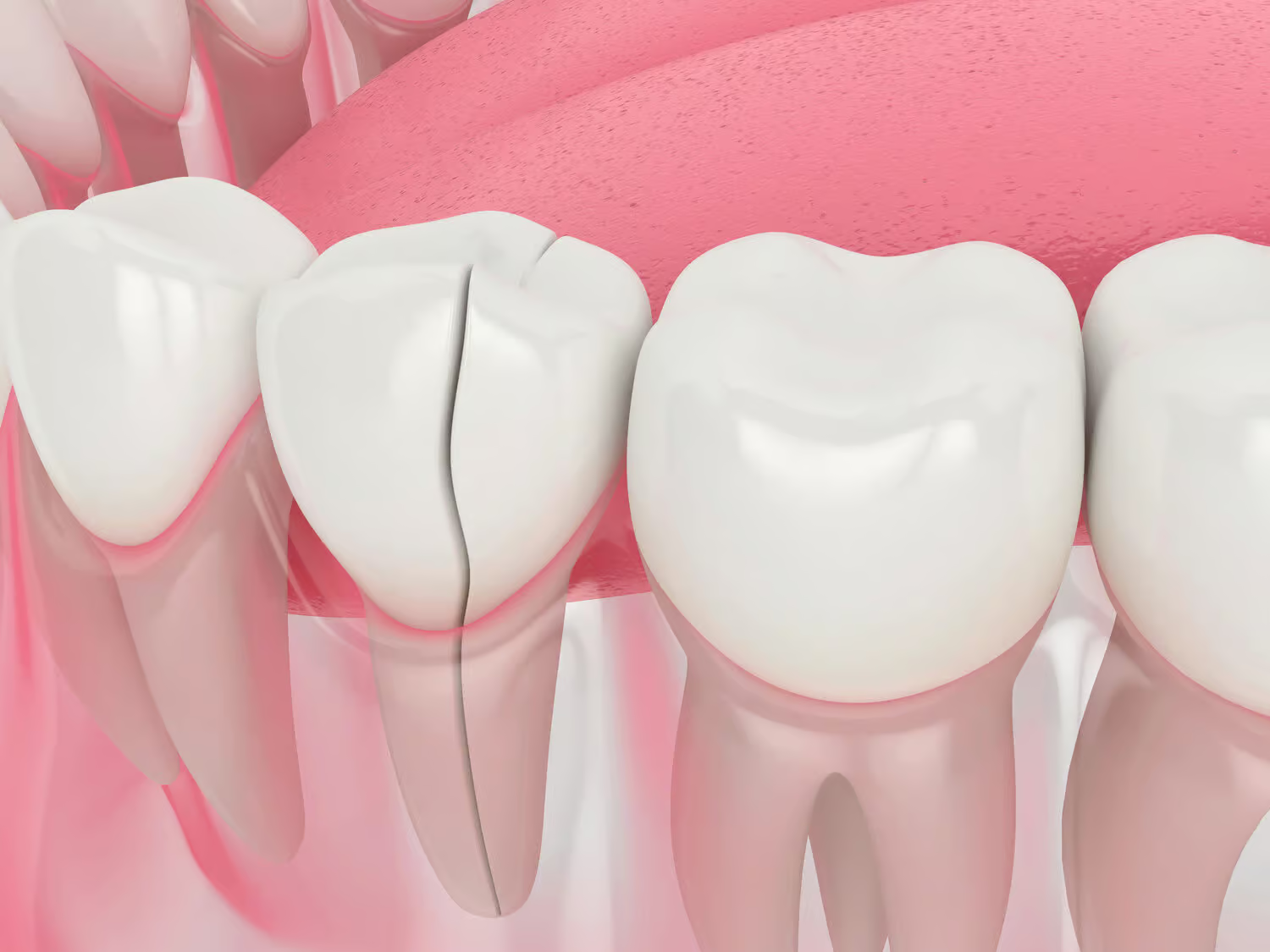
Cracked tooth syndrome can fool you. One bite hurts, the next feels fine. That on-and-off pain doesn’t mean the tooth healed. A small crack can shift when you chew. You might feel a sharp jolt as you let go. The American Association of Endodontists names pain on biting or release as a common clue. But pain alone can’t tell you how deep a crack goes.
Imagine biting into a sandwich during lunch in Peoria. A back tooth stings, then the pain disappears. You chew on the other side and finish eating. By dinner, you’ve almost forgotten it happened. We often hear this from people who expected a cracked tooth to hurt all day.
Why does it hurt only sometimes? Pressure may cause a crack to move slightly. That movement can bother sensitive tissue inside the tooth. Bite at another angle, and you might feel nothing.
Look for a pattern instead of a visible line. A crack may be hard to spot yourself. These details can help you explain what’s happening:
- Pain hits when you bite down or just as you release the bite.
- A certain food sets it off, but other foods don’t.
- One small spot hurts when you chew, though the whole tooth looks normal.
- Cold drinks sometimes sting, even between otherwise painless meals.
You don’t need every sign on that list. Even one repeatable pattern is worth mentioning during a dental exam. Try noting the tooth, the food, and the moment pain starts. That’s more useful than saying it hurts now and then.
Cracked tooth syndrome isn’t something you can confirm in a mirror.
The pain may come and go for days. The pain stops, the problem may remain. And chewing only on the other side can hide it from you. Still, not every sharp bite means there’s a crack. Other tooth problems can feel similar. That’s why guessing at home can leave you unsure.
We’ll ask where you feel the pain and what brings it on. During a dental exam, we can check the tooth and your bite. We may ask you to bite gently in different spots. That helps us find the area that hurts. A crack isn’t always clear on an X-ray, so your description matters.
Until the tooth’s checked, avoid testing it with hard foods. You don’t have to prove the pain is still there. And if pain becomes steady or you notice swelling, call promptly. Trouble swallowing or breathing calls for urgent medical help.
Not sure if that quick sting counts? It does. You can bring the pattern to a dental exam, even if the tooth feels fine when you arrive.
If the tooth needs repair, our Broken Tooth Repair in Peoria page explains the next step.