
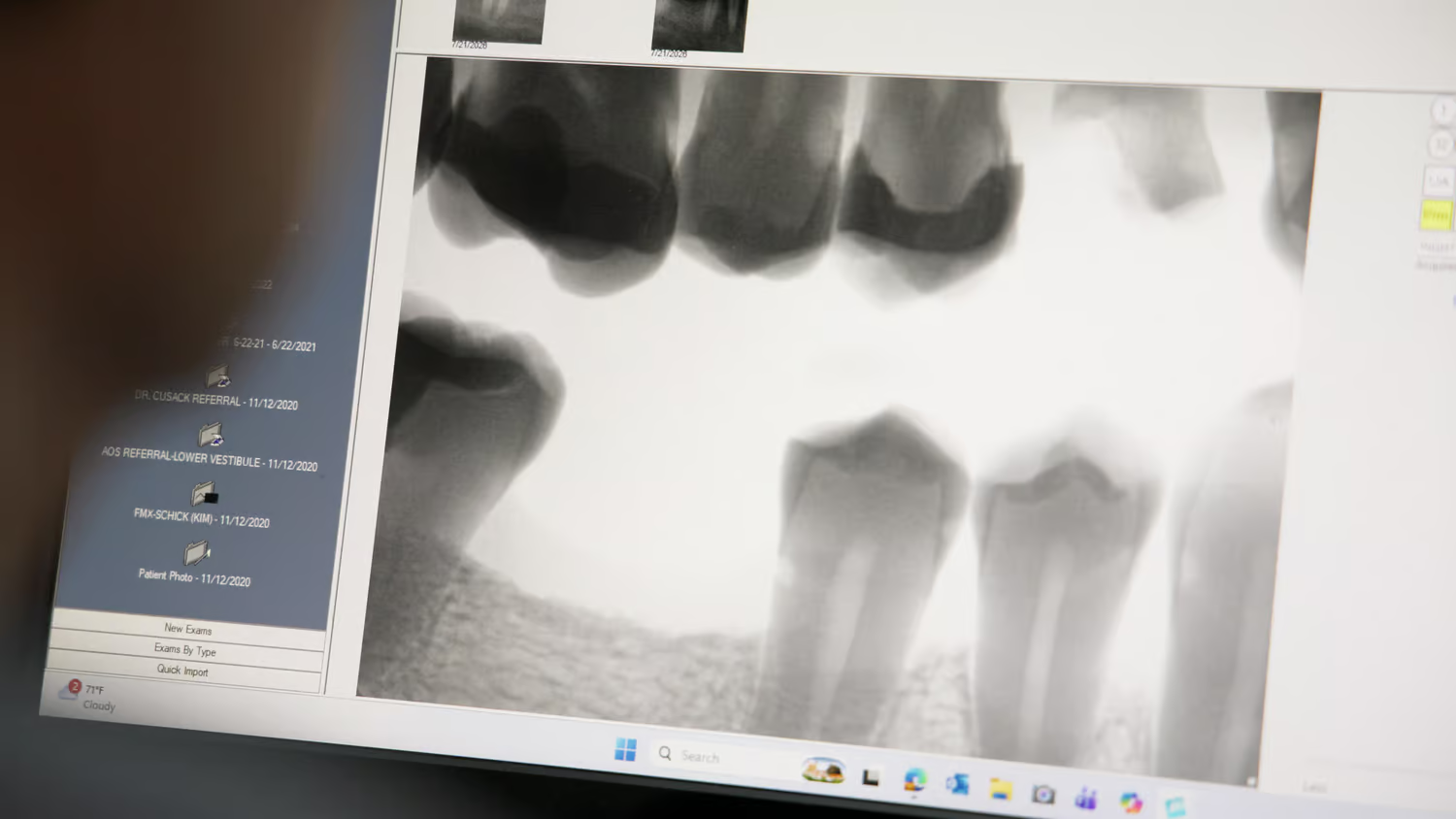

Dental x-ray of back teeth displayed on a computer screen
Your family's dental home

Emergency Dental Pain Treatment in Canton: Know When to Call

Dental x-ray of back teeth displayed on a computer screen
The short answer
Reviewed by our
Canton
doctors.
Dr. Aaron Thum, dentist at Associates in Dentistry in Canton

If tooth pain is getting worse, keeping you from eating or sleeping, or comes with swelling, ask about same-day dental care. You don’t need to know what’s causing it before you call.

01

Signs Your Tooth Pain Needs Same-Day Care

A toothache isn’t always steady. It may hurt only when you bite down, or it may throb even when you’re sitting still. What matters for this decision is how much the pain has changed and what it’s stopping you from doing. If you’re putting off meals, avoiding one side of your mouth, or waking up because of the pain, tell us that when you call. Those details are more useful than trying to rate the pain with a number.

This is part of Emergency Dentistry in Canton. Care is provided at our Canton office.

  • Pain that’s growing stronger instead of settling down, especially if it’s hard to focus on work, meals, or sleep.
  • Swelling you can see or feel near the sore tooth, in your gums, or along your jaw.
  • Pain when you bite or chew that makes it hard to use that side of your mouth.
  • A tooth that’s broken or damaged and now hurts. Mention what happened and whether the pain has changed since then.

You may have more than one of these signs, or none that fit neatly. That’s okay. Say when the pain started, whether it comes and goes, and whether it feels different today. If you’ve noticed swelling, say where it is. If biting hurts, say whether it’s one tooth or a wider area. You don’t have to decide on a treatment before anyone has looked at the problem.

Ask about availability rather than assuming a same-day visit is open. Associates in Dentistry offers Emergency Dental Pain Treatment at 336 N Main St in Canton. Dr. Aaron Thum practices at this location and was born and raised in Canton. When you call, describe what’s happening in plain words. That gives you a starting point for finding out what care you need, without having to guess at the cause yourself.


02

When Tooth Pain Can Wait for a Regular Visit

A regular dental exam may be the better choice when the discomfort is mild, brief, and isn't getting in the way of eating or sleeping. You don't have to ask for emergency pain treatment every time a tooth feels a little different. You also don't have to ignore it. The question is whether the feeling passes or starts to become part of your day.

Say you feel a quick zing when you drink something cold, but it goes away and you can eat as you normally would. That feeling alone doesn't tell you what's wrong, and you don't need to name a cause before making an appointment. A regular exam gives you a chance to talk about it and have the tooth checked. That's more useful than guessing from one moment of discomfort.

The same goes for a small ache that comes and goes without changing what you can do. If it returns, make a note of when you notice it. Is it tied to a cold drink, a meal, or no clear trigger at all? You don't need a detailed log. A few plain details can help you explain the concern when you arrange a visit. Even if the ache has stopped by then, you can still mention it.

If you're already due for a cleaning, don't assume that's the right appointment for a tooth that's been bothering you. Tell the office about the pain when you schedule so you can ask for a dental exam. There's a difference between saying, “I need a cleaning,” and saying, “This tooth has hurt a few times.” The second tells them what you need checked, even if it doesn't feel urgent.

You can choose a regular visit without deciding that the problem is harmless. Keep paying attention to whether the pain changes. If it begins to fit the signs covered above, don't stick with your first plan just because you've already made an appointment. For now, if it's a brief or mild concern that isn't disrupting your day, a regular dental exam is a sensible place to start.

03

What Causes Emergency Dental Pain

Tooth pain doesn't point to just one problem. A cavity, a crack, an infection, or sore gums can all hurt, but they don't call for the same care. That's why the useful question isn't just, “How do I stop the pain?” It's, “What's making it hurt?” You don't need to figure that out on your own before asking for help.

Decay is one possible cause. A small cavity may not bother you much at first. As it gets deeper, the tooth can become more sensitive or start aching without an obvious trigger. Pain doesn't tell you how deep a cavity is, though. A tooth that looks fine in the mirror can still have decay in a spot you can't see, including between teeth.

A crack is another possibility. You might remember biting down on something hard, or you might have no idea when the crack happened. The tooth can feel normal until pressure hits one part of it. An older filling can also leave a tooth hurting if the filling breaks or comes loose. Those problems can feel much like decay from your side of the chair, even though the source of the pain is different.

Sometimes the trouble is deeper inside the tooth or near its root. Infection or inflammation in those areas can cause an ache that's hard to pin to one spot. It may even seem as if several teeth hurt. That's one reason pointing to the sore side of your mouth is helpful, but it may not identify the exact tooth. The tooth that feels like the problem isn't always the one causing the pain.

Gums can hurt, too. Inflamed gums or a problem around a tooth can make the area tender enough that it feels like a toothache. A sore spot near the gumline, a tooth that hurts under pressure, and a deep ache may each give a different clue. None is a diagnosis by itself. More than one problem can be present, so guessing from a single symptom can send you in the wrong direction.

If you can remember when the pain began or what you were doing when you first noticed it, keep that detail handy. If you can't, that's okay. Emergency dental pain treatment is about identifying the source of the pain so the next decision fits the problem, not expecting you to name the cause before you come in.

Tooth hurting right now? Call and we'll help.
04

How We Treat Dental Pain

Emergency Dental Pain Treatment in Canton starts with a simple question: what's making the tooth hurt? Pain relief matters, but the next step needs to fit the problem. The same ache might lead to a filling for one person and a different treatment for someone else. You don't need to choose a procedure when you call Associates in Dentistry.

If decay is affecting a tooth that can be repaired, a composite filling may be an option. If the trouble reaches deeper inside the tooth, a root canal may be considered. A dental crown may be needed when a tooth needs more protection than a filling can give. These are services offered at the office, but pain alone can't tell you which, if any, is right for you.

Sometimes the question is whether a painful tooth can be kept. Associates in Dentistry also offers emergency tooth extraction in Canton. That doesn't mean extraction is the answer whenever pain is severe, or that a painful tooth can always be saved. How much of the tooth is damaged and where the problem sits both matter. It's reasonable to ask what the choices are and what each choice would address before deciding.

If the pain seems to be coming from the gums, treating the tooth itself may miss the problem. Periodontal treatment is available at this office for gum concerns. Tell us if the soreness feels more like it's around a tooth than inside it. You don't have to be certain. That detail helps you explain what you're feeling without trying to diagnose it.

You might also be worried about what happens after the pain eases. That's worth asking about while you're weighing treatment. A choice that addresses today's pain may have different implications for keeping or replacing a tooth later. You should be able to understand what problem a proposed treatment is meant to solve, and whether another decision will follow. There isn't one answer that fits every sore tooth.

Before you call, you don't need a photo, a guess about the treatment, or the right dental words. Be ready to say which side hurts, when it started, and what makes it worse. If you've had work done on that tooth, mention it. The goal is to get from “my tooth hurts” to a decision based on the cause, rather than picking a treatment from the pain alone.

05

What to Do Before Your Visit

Start with the practical part: ask what appointment times are available and tell the office if you have a time limit, such as needing to pick someone up or get back to work. Don't count on a same-day opening until you've asked. If you have dental records or a recent X-ray from another office, let the office know. You don't need to track down paperwork before making the call.

Have your insurance details nearby if you use dental insurance. Associates in Dentistry accepts and bills most insurance plans, but that doesn't tell you what your own plan will cover. The practice moved to a fee-for-service model in August 2024. Before you book, ask how your plan will be handled, what you may need to pay, and when payment is expected. If you don't have insurance, you can still ask what charges to expect before agreeing to care.

You won't know the full cost from the pain alone. An exam and the treatment that follows may have different charges. The amount can depend on what needs to be done once the problem is identified. It's fine to ask for the cost of the proposed care before you decide. If more than one option is possible, ask what each option would cost and whether any work would need a separate appointment.

A few questions can help you leave with a clear decision, not just a name for the problem:

  • What has to be addressed now, and what can be decided later?
  • What does the proposed treatment do for this tooth?
  • If there's more than one reasonable option, what changes with each choice?
  • What costs should I understand before choosing?

Keep the list short enough to use. You may only need one or two of those answers. If you take medications or have allergies or health conditions that could matter to dental care, have that information ready to share. You don't need to decide for yourself whether it changes your options. The point of preparing isn't to arrive with a diagnosis. It's to make it easier to talk through a choice once you know what's causing the pain.

If your schedule is tight, ask about the time available for the appointment rather than assuming every possible treatment can happen in one visit. That way, you can plan around the time you've been offered, not a guess. You can also ask what information the office would like you to bring. There's no need to delay the call while you gather every detail.

FAQ

Answers to the most common questions.

Something else on your mind?
Call us at (309) 647-3331.

Should I call ahead for emergency dental pain?

Yes. Call the office as soon as possible so we can understand what's happening and determine how quickly you need to be seen.

What if I'm not sure whether my dental problem is an emergency?

Call us. Severe or worsening pain, swelling, a broken tooth or pain that is interfering with eating or sleeping should be evaluated promptly.

Will you take an X-ray before treating my dental pain?

An X-ray may be needed to understand what's causing the pain. Your dentist will determine what examination and imaging are appropriate based on your symptoms.

What counts as a dental emergency?

Severe or worsening tooth pain, swelling, pain that makes it difficult to eat or sleep and a broken tooth can all require prompt attention. Call the office the same day if you're experiencing these symptoms.

What can I do for dental pain until I can be seen?

Over-the-counter pain medication can provide temporary relief when taken as directed. A cold compress and warm salt-water rinse may also help. Avoid very hot, cold or hard foods around the affected area.

When should I go to the emergency room for dental pain?

Go to the emergency room if swelling is spreading toward your eye or neck or if you're having trouble breathing or swallowing. These can be signs of a more serious infection.

Request an appointment

Call us at (309) 647-3331

Tell Us About Yourself

Are you new to Associates in Dentistry?

Preferred Day and Time (optional)
Thank you! Your submission has been received!

That didn't go through. Please try again, or call your office.