



Cracked, Loose, or Ill-Fitting: Diagnosing What Your Denture Is Telling You
Your denture gives clues before the problem becomes obvious. We look at where it moves, where it hurts, and what changed. A sudden crack often needs repair, a slow loss of grip may need relining. Still, those symptoms can overlap. That’s why Denture Repair & Relines should begin with a hands-on exam.
- A visible crack, split base, or broken denture tooth often points toward repair.
- Rocking during meals may mean the base no longer matches your gums.
- Repeated sore spots can come from poor fit, bite pressure, or a damaged edge.
- Clicking, gagging, or a changed bite needs closer review before choosing a fix.
Picture this. Your lower denture lifts when you speak, then settles when you bite. That movement isn’t just annoying. It can rub one small area raw while food collects underneath.
But don’t glue it at home. Household glue can contaminate the surface or hold pieces in the wrong position. And don’t bend a partial denture clasp yourself. A small adjustment can change how it grips the supporting teeth. We’ve seen simple cracks become harder to correct after a home fix.
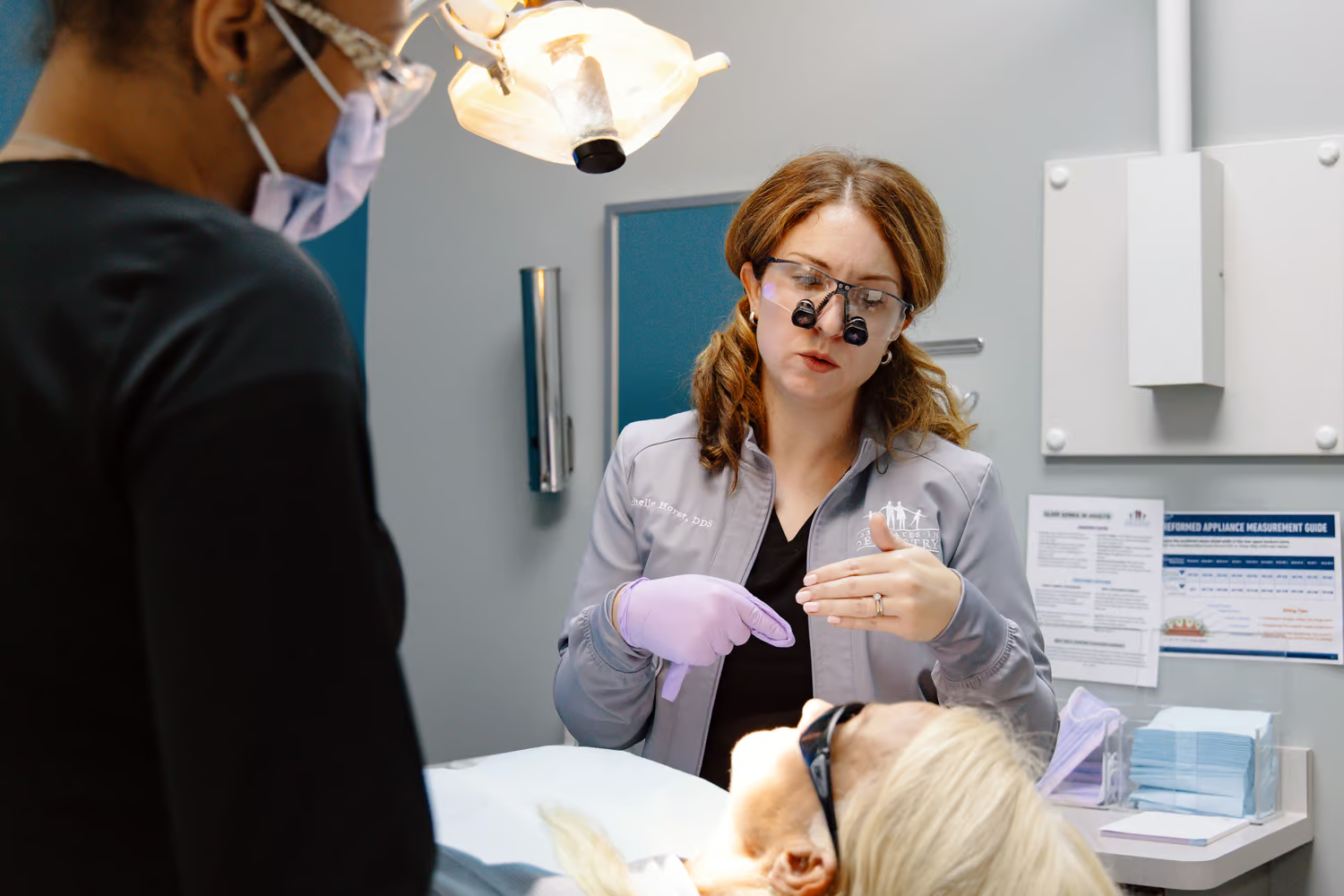
During your visit, we check the denture and your mouth together. We inspect the base, teeth, clasps, bite, and sore areas. Then we decide if repair restores strength or a reline restores contact. Sometimes neither is right. Deep wear or repeated breaks may call for replacement. Major bite changes can point there too, but an exam comes first.
Our office provides denture repair. Bring every piece, even a tiny broken tooth. And bring the denture case. Small details help us see what failed, the fit often tells us why.