
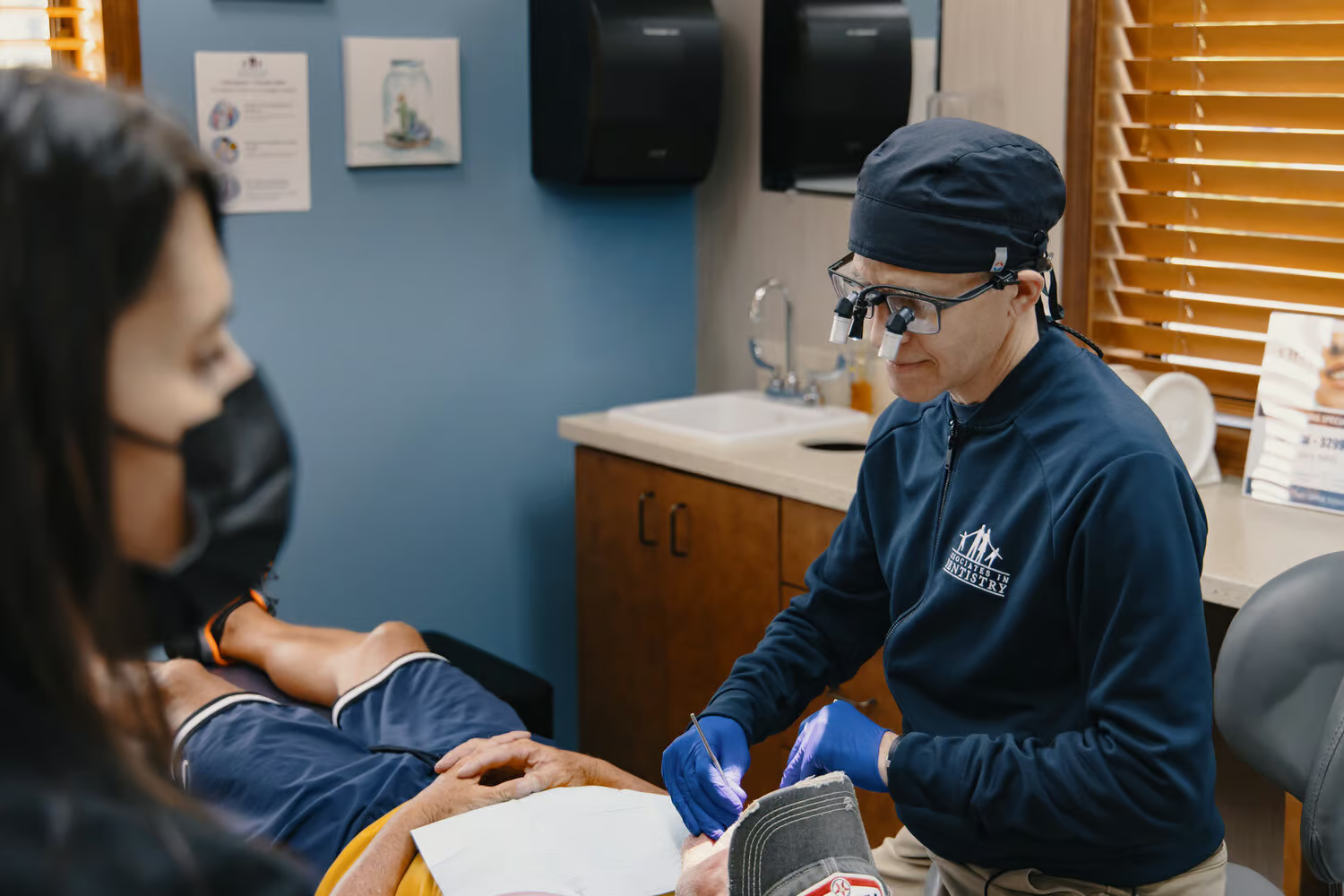


Dentist wearing loupes talking with a patient in a dental chair while an assistant looks on
Your family's dental home

Dental Exams in Bartonville: What to Expect at Your Visit

Dentist wearing loupes talking with a patient in a dental chair while an assistant looks on
The short answer
Reviewed by our
Bartonville
doctors.
Dr. Landall Cormier, dentist at Associates in Dentistry in Bartonville
Dr. Jessica Dean, dentist at Associates in Dentistry in Bartonville

A dental exam is a full look at your teeth, gums, bite, and soft tissue, usually with X-rays. The dentist is looking for decay, cracks, gum disease, bite wear, and anything unusual in the mouth or jaw. What gets found here decides your whole treatment plan, so the exam comes first and everything else follows.

01

What a Dental Exam Checks and Why It Matters

Most people think a checkup is a quick peek and a polish. It isn't. The exam is where we figure out what's going on, and it takes real time and attention.

This is part of General Dentistry in Bartonville. Care is provided at our Bartonville office by Dr. Landall Cormier and Dr. Jessica Dean.

We start with X-rays, because a lot of trouble hides where the eye can't reach. Decay between two back teeth. A dark spot at the root tip. Bone loss along the gum line. None of that shows up in a mirror. Then we go tooth by tooth with a mirror and explorer, checking old fillings, edges, and cracks.

Here's what we're looking at during a dental exam:

  • Decay, including the kind that starts between teeth where floss catches
  • Gum health, measured in millimeters around each tooth
  • Cracked teeth, worn edges, and failing old fillings
  • How your teeth come together when you bite and slide side to side
  • Soft tissue: tongue, cheeks, palate, and the floor of the mouth
  • Jaw joint movement, clicking, and tenderness

That bite check matters more than folks expect. Flat, shiny spots on the back teeth usually mean grinding, and grinding is what cracks molars years later. Same with the soft tissue check. It takes about ninety seconds and it's the one part of the visit nobody thinks about until it matters.

And the jaw joint gets checked too. We treat TMJ and TMD here, so a click or a sore jaw isn't something we wave off.

Nine times out of ten, the exam turns up something small. A watch spot. A gum pocket creeping up a millimeter. Small is good, small is cheap to handle. The exam is how small things stay small.

02

Same-Practice Treatment After Your Exam

Here's the part most people don't think about until they're in the chair. An exam finds something. Then what? For a lot of folks, that's where the hassle starts: a referral card, a phone number for an office thirty minutes away, and a six-week wait to fix a tooth that's already hurting.

We built this office so that doesn't happen. Our office has an in-house mill, so a cracked molar we spot on your exam can often be scanned, designed, and crowned in one visit. Same-day crowns aren't a gimmick. They mean you skip the temporary, skip the second numbing, and skip driving back.

Root canals stay here too. We do them in-house, and that matters when an exam turns up deep decay or a tooth that's been quietly dying under an old filling. You're not getting handed off to a stranger. You're seeing the same team, in the same building, who already looked at your x-rays.

Dr. Dean has an established focus serving patients with special needs, and that changes how an exam appointment gets planned from the first phone call. Shorter visits. Quieter timing. A slower pace when that's what works. Families tell us they've waited years to find that.

If your exam points toward something bigger, the range here still covers it. Oral surgery, TMJ and TMD treatment, implant restorations, clear aligners, denture repair. Routine general dentistry in Bartonville and the more involved work live under one roof, which is the whole point.

Not everything found at an exam needs fixing today. Some things we watch. But when it does need fixing, you shouldn't have to build your month around it.

03

When You Can Wait and When You Shouldn't

Here's the part most dental offices won't say out loud. Sometimes you can wait.

If your last exam was clean, your gums don't bleed when you brush, nothing hurts, and you're not overdue by more than a couple of months, pushing your appointment to the spring is not going to wreck your mouth. Low-risk adults with a history of healthy checkups often do fine on a longer interval. We'd rather tell you that than watch you skip dental care entirely because you felt guilty about missing one window. Life happens. A new baby, a job change, a rough winter, people fall behind, and most of the time it's fixable.

But there are things that shouldn't sit.

  • Gums that bleed every time you brush, not just once in a while
  • A tooth that's sensitive to cold and stays achy for more than a few seconds after
  • A rough spot, chip, or sharp edge your tongue keeps finding
  • A sore, patch, or lump inside your mouth that hasn't healed in two weeks
  • Any swelling in your face or jaw, or pain that wakes you up at night

That last one isn't a wait-and-see. Swelling and night pain usually mean infection, and infection doesn't reverse on its own. We see this every week, and the folks who come in early almost always have simpler options than the ones who waited three months hoping it would settle down.

You also shouldn't stretch your interval if you're managing diabetes, if you smoke, if you're pregnant, or if you've had gum treatment before. Those mouths change faster. Six months isn't a rule handed down from on high, it's just the interval that catches most problems while they're still small.

Not sure which group you're in? That's a fair question, and a two-minute phone call usually sorts it out.

Due for a checkup? Let's see where things stand.
04

Getting Ready for Your First Visit

Most folks who call us haven't been to a dentist in a while. Sometimes years. And they're bracing for a lecture. You won't get one here. The first dental exam is mostly us listening and looking, then telling you plainly what we see.

Plan on about an hour. We'll take X-rays, check every tooth, look at your gums, and check your bite and jaw joints. If something hurts, tell us up front. We'll start there.

A little prep makes the whole thing go faster.

  • Bring a photo ID and your insurance card if you have one.
  • Write down every medication you take, including vitamins and blood thinners.
  • Note any health changes since your last visit, pregnancy, new diagnosis, recent surgery.
  • Ask your old dentist to send recent X-rays, if you can. Saves you a set.
  • Jot down your questions. People forget them the second they sit in the chair.

Now, the money part, because nobody likes being surprised by it. We moved to a fee-for-service model in August 2024. We're not in-network with any plan, but we do accept and bill most insurance, Medicaid being the exception. We'll tell you what your visit costs before we start, not after. CareCredit and 0% interest payment plans up to six months are available if a larger treatment comes out of the exam.

Nervous about the whole thing? That's more common than you'd think.

Dr. Jessica Dean has built a focus around caring for special-needs patients, and that same patience carries over to anyone who needs extra time, extra explanation, or just a minute to breathe. Tell the front desk when you call. We'll build the visit around what you need.

05

How Dental Exam Costs Typically Work

A lot of time, this isn't explained at a dentist's front desk. A dental exam isn't one charge. It's usually a few separate items on the same bill, and knowing which is which keeps the total from surprising you.

Most offices in this industry code the exam itself apart from any X-rays taken that day. The cleaning is separate again. So when someone calls and asks what a checkup costs, the honest answer is a question back: do you need images, and has it been long enough that you're due for a full set?

  • The exam. The dentist looking, charting, checking your bite, gums, and soft tissue.
  • X-rays. A couple of bitewings runs less than a full series. Full series are typically taken every few years, not every visit.
  • The cleaning. Priced on its own, and a deeper cleaning for gum disease is coded differently than a routine one.
  • New patient versus recall. A first visit almost always costs more than the six-month one, because there's more to record.

We moved to a fee-for-service model in August 2024. That means our fees are our own, not set by an insurance network. We still accept and bill most insurance plans, just not Medicaid, and we're not in-network with any of them. Plenty of patients still get benefits paid out. But you'll want to know your plan's out-of-network coverage before you assume.

And if the timing is bad? CareCredit and 0% interest payment plans up to six months are both available here. We'd rather spread it out than have you skip the visit.

Ask any office three things before you book. What's included in the exam fee. Whether X-rays are extra. And what happens to the price if they find something that needs treating that day. Any office worth your time will answer all three without hedging.

FAQ

Answers to the most common questions.

Something else on your mind?
Call us at (309) 697-2228.

How long does a dental exam take at your office?

Plan on about an hour for a first dental exam. We take X-rays, check every tooth, measure your gums, and look at your bite and jaw joints. Return visits after that usually move faster since we already have your history and images on file. If something hurts when you call, tell us up front so we can plan extra time for that spot during your visit.

What if my dental exam finds a problem like a cracked tooth?

You won't need a referral to another office. Our office has an in-house mill, so a cracked molar found during your exam can often be scanned, designed, and crowned the same day. Root canals and deeper decay stay here too, with the same team that already reviewed your X-rays handling the follow-up work.

Can I wait a few months if I'm overdue for a dental exam?

Sometimes, yes. If your last exam was clean, your gums don't bleed, and nothing hurts, pushing your visit a few months usually won't hurt you. But swelling, night pain, or a sore that hasn't healed in two weeks means don't wait. Diabetes, smoking, pregnancy, or past gum treatment also mean your mouth changes faster, so a shorter interval matters more.

Does a dental exam check for more than cavities?

Yes, a full exam covers your gums, bite, jaw joints, and soft tissue, not just teeth. We measure gum pockets in millimeters, check how your teeth meet when you bite, and look at your tongue, cheeks, and the floor of your mouth. We also check for jaw clicking or tenderness, since we treat TMJ and TMD right here in Bartonville.

I haven't seen a dentist in years. What happens at my first visit?

You won't get a lecture. Your first exam is mostly us listening and looking, then telling you plainly what we see. We'll take X-rays, check your teeth and gums, and review your bite and jaw joints. Dr. Dean also has an established focus serving patients with special needs, so we can adjust pacing and timing if that helps you feel more comfortable.

Why do dentists use X-rays during a routine dental exam?

X-rays catch trouble hiding where a mirror can't reach, like decay between back teeth or bone loss along the gum line. A lot of early problems show no visible sign in the mouth. Catching them on X-ray while they're small usually means simpler treatment later, which is why X-rays come first in nearly every exam we do.

Request an appointment

Call us at (309) 697-2228

Tell Us About Yourself

Are you new to Associates in Dentistry?

Preferred Day and Time (optional)
Thank you! Your submission has been received!

That didn't go through. Please try again, or call your office.
