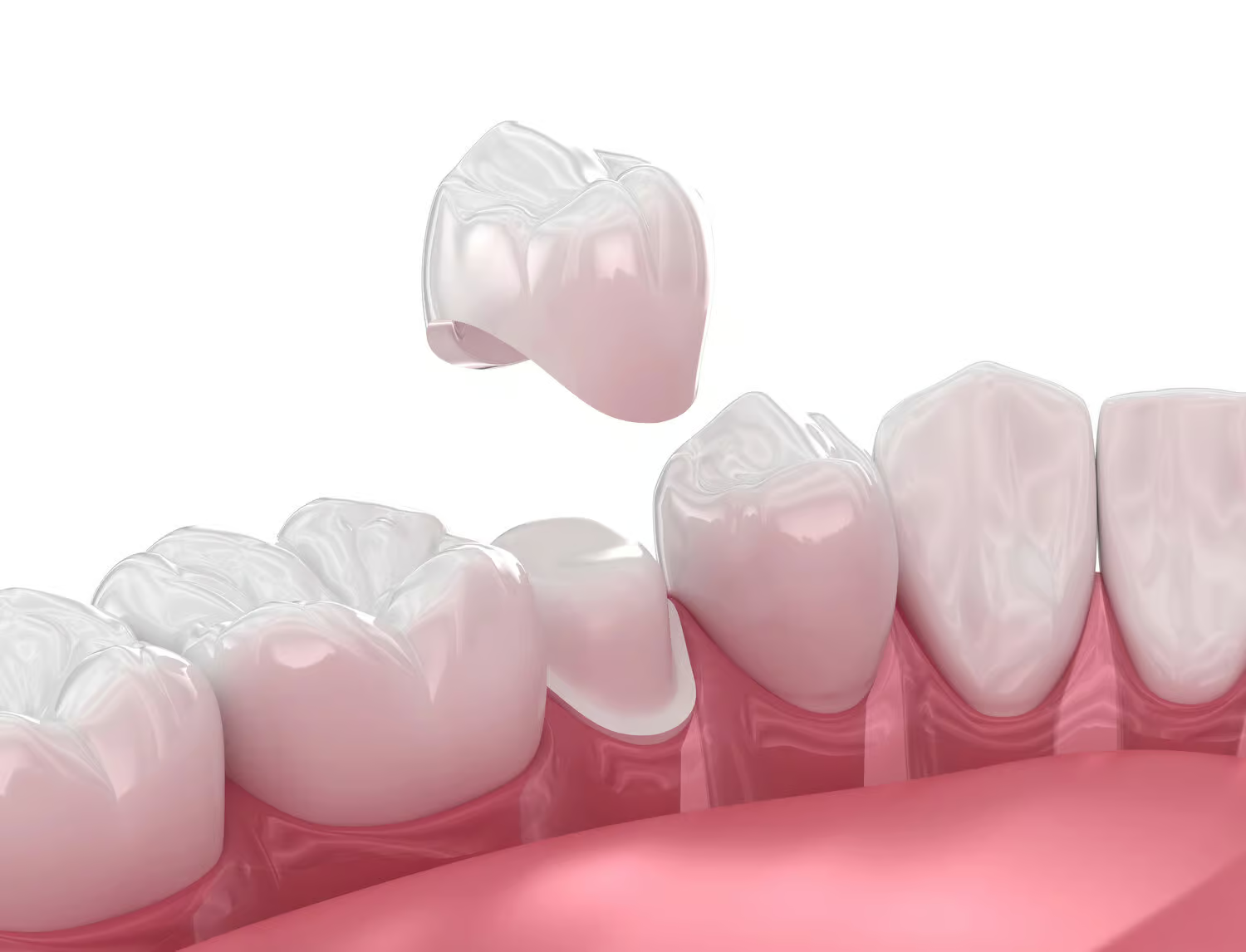


Illustration of a dental crown being placed onto a prepared tooth
Your family's dental home

Dental Crowns in Bartonville: Same-Day Ceramic Crowns vs. Lab-Made, and When You Need One

Illustration of a dental crown being placed onto a prepared tooth
The short answer
Reviewed by our
Bartonville
doctors.
Dr. Landall Cormier, dentist at Associates in Dentistry in Bartonville
Dr. Jessica Dean, dentist at Associates in Dentistry in Bartonville

A tooth usually needs a crown when too much of it is missing or cracked for a filling to hold. Sharp pain when you bite down and release, a tooth that catches on your tongue, or an old silver filling with dark lines running out from it are the most common warning signs. Cracks don't heal, so the cheapest version of the fix is almost always the earliest one.

01

Signs a Cracked or Worn Tooth Needs a Crown

Most people don't wake up one morning knowing they need a crown. It creeps up. A tooth gets a little sensitive to cold, then it's fine for three weeks, then one day a piece of a granola bar makes you wince and you stop chewing on that side without even deciding to.

That avoidance is the real signal. Ask yourself which side you chew on. If you already know the answer, your mouth has been protecting that tooth for a while.

Here's what we look for when someone comes in describing that pattern:

  • A quick jolt of pain when you bite down and then let go. That release pain is the classic sign of a crack flexing open.
  • Cold sensitivity that lingers longer than a few seconds after the cold is gone.
  • A rough edge you can feel with your tongue, or a chip you noticed after biting something hard.
  • An old large filling with dark lines spreading out from its edges into the tooth.
  • A tooth that's had a root canal and has no crown on it yet.

That last one matters more than people expect. A back tooth after a root canal is hollow and brittle, and it takes a lot of force every time you chew. We see those fracture straight down the middle when the crown gets put off too long, and once a crack runs below the gumline the tooth usually can't be saved.

Nine times out of ten, the person telling us "it only hurts sometimes" has a crack. Not decay. A crack.

So if a tooth has been on your mind for a month, that's your answer. Getting it looked at while it's still intact is a much smaller visit than rebuilding it after it breaks.
02

Same-Day Crowns Versus Lab-Sent Crowns

Two visits or one? That's usually the first question people ask once they hear the word crown.

Here's how the two paths differ. A same-day crown starts with a digital scan of your prepared tooth. No goopy tray. That scan becomes a 3D design, and a mill carves the crown out of a solid ceramic block right here in the office. We have an in-house mill at our office, so the crown gets seated the same appointment. You leave with the finished tooth, not a temporary.

A lab-sent crown takes a different road. We prep the tooth, take records, and place a temporary crown. A dental lab builds the final crown over a couple of weeks, often layering porcelain by hand. Then you come back to have it fitted and cemented.

Neither one is the better crown. They're better at different jobs.

  • Same-day tends to fit molars and premolars well, where strength and bite accuracy matter more than subtle color shifts.
  • Same-day helps a lot if you travel for work, care for someone at home, or can't easily get back for a second visit.
  • Lab-sent often wins on front teeth, where a technician can hand-layer translucency to match the tooth beside it.
  • Lab-sent makes sense when we're rebuilding several teeth together and the whole smile needs to be designed as a unit.

There's a practical upside to skipping the temporary, too. Temporaries come loose. They come loose on a Friday, usually, right before a weekend. And every time a temporary pops off, the tooth underneath is exposed to hot, cold, and whatever you're chewing.

We talk this through before we pick up a single instrument. Where's the tooth, how much of it is left, how does it show when you smile, how does your bite land on it. The answers point to the method. Not the other way around.

03

When a Filling or Bonding Works Instead of a Crown

Plenty of teeth don't need a crown. We tell people that every week, and it's one of the better parts of the job.

Here's the simple version. A crown covers the whole tooth, so it's the right answer when there isn't enough solid structure left to hold a filling. But if most of your tooth is still healthy and the damage is small, a composite filling or some cosmetic bonding does the job. Small cavity between two teeth? Filling. Chipped edge on a front tooth from a fork or a hard pretzel? Bonding usually handles that in one visit. A shallow crack in the enamel that hasn't gone deep? We'll often watch it rather than cut the tooth down.

Front teeth are a good example. They don't take the same grinding force your back molars do. So a chipped incisor can often be rebuilt with bonding and look completely normal, no crown required.

The line we watch is how much wall is left. Once a filling would take up more than about half the tooth, the remaining walls get thin, and thin walls crack. That's when a filling becomes a short-term fix. You'd get a year or two out of it, then a fracture, and sometimes that fracture runs below the gum where we can't save it. Replacing a tooth costs a lot more than covering one.

There's also the wait-and-see category. Sensitivity to cold that fades in a couple seconds isn't automatically a crown. Neither is an old silver filling that looks ugly but isn't leaking. We'll show you the X-ray, tell you what we see, and let it ride if letting it ride is reasonable.

If a filling will hold, we'd rather place a filling. Less tooth removed today means more options for you later.

Wondering if that tooth needs a crown?
04

How Root Canals Connect to Crown Placement

Here's something a lot of folks don't hear until they're already in the chair. A root canal isn't the finish line. It's the middle of the job.

When we do a root canal, we clean out the nerve and blood supply inside the tooth. That stops the pain. But it also leaves the tooth drier and more brittle than it used to be. On top of that, we had to drill an access hole through the top to reach the canals. So the strongest part of the tooth, the roof, now has a window in it. Back teeth take the worst of your bite force. A molar that's been through a root canal and left uncrowned can split right down the middle, and once it splits below the gum, that tooth usually can't be saved.

The crown caps it. It holds the walls together and spreads your bite pressure across the whole tooth instead of letting it wedge into that weakened center.

The gap between the two appointments is where trouble happens. Someone gets the root canal done, feels fine, and puts off the crown for six months. We see it every year. The temporary filling wears down, bacteria leak back into the canals, and now they need the root canal redone before the crown can even go on.

That's why we like doing both here in Bartonville. We do root canals in-house, and our mill is right down the hall. No referral across town, no waiting on a lab, no six-month gap where a temporary is the only thing protecting the tooth.

One visit for the nerve, one cap over it. Then you go back to chewing on that side and forget it ever happened.

05

What Happens During Tooth Preparation and Recovery

Most people picture something worse than what happens. The tooth gets numb first, and once it's numb you don't feel the shaping. You feel pressure and water. That's about it.

Here's how a same-day crown visit usually goes in our Bartonville chairs.

  • We numb the area and check it twice before anything starts.
  • Old filling material or decay comes out, and we look at what's left of the tooth underneath.
  • The tooth gets shaped down so the crown has room to sit without feeling bulky.
  • We take a digital scan instead of the old putty trays.
  • The crown gets designed on screen and milled in our in-house mill while you wait.
  • We try it in, check your bite, adjust the high spots, then bond it in place.

Bite checking matters more than people think. A crown that sits even slightly high will ache every time you close. We'd rather spend an extra ten minutes with the blue paper than send you home with a tooth that throbs on Thursday.

Recovery is usually quiet. The numbness wears off over a couple hours, and the gum around the tooth can feel tender for a day or two because it was pushed aside during prep. Some cold sensitivity is normal for a week or so, especially if the tooth had deep decay. Over-the-counter pain relief handles it for most folks.

What's not normal? Pain that gets worse instead of better after day three. Or a bite that still feels off once the swelling settles. Call us. That's a five-minute adjustment, not something to live with.

And you can eat that night. No two-week temporary crown, no chewing on one side, no coming back.

FAQ

Answers to the most common questions.

Something else on your mind?
Call us at (309) 697-2228.

How do I know if I need a crown or just a filling?

You probably need a crown if more than half your tooth's structure is damaged or missing. If most of the tooth is still healthy, a filling or bonding usually works fine. We check how much solid wall is left before deciding. Once a filling would need to cover more than about half the tooth, thin walls remain and they tend to crack later. We'd rather place a smaller filling today if it will hold, since that keeps more options open for you down the road.

Can I get a crown done in one visit?

Yes, many crowns can be finished in a single visit using our in-house mill in Bartonville. We scan your prepared tooth digitally and carve the crown from a solid ceramic block right in the office, so you leave with the finished tooth instead of a temporary. This works especially well for molars and premolars, where strength and bite accuracy matter more than subtle shading. Front teeth needing precise color matching sometimes do better sent to a lab instead.

What are the signs a cracked tooth needs a crown?

A sharp pain when you bite down and release is the clearest sign of a cracked tooth needing a crown. Other signs include lingering cold sensitivity, a rough edge you feel with your tongue, or an old filling with dark lines spreading from it. If you've noticed yourself avoiding chewing on one side without really deciding to, that's your mouth protecting a weak tooth. Catching it early keeps the fix smaller than waiting until it fractures further.

Do I need a crown after a root canal?

Usually yes, especially on back teeth. A root canal cleans out the nerve inside the tooth, which leaves it hollow and more brittle than before. Back teeth take heavy force every time you chew, and we regularly see them fracture straight down the middle when a crown gets delayed too long. Once a crack runs below the gumline, the tooth often can't be saved. Getting the crown placed soon after your root canal protects the work you already had done.

What happens if my temporary crown falls off before my next Bartonville appointment?

Call us right away if your temporary crown comes loose, and try to keep the space clean until you're seen. Temporaries tend to pop off at inconvenient times, often right before a weekend, and every time that happens the tooth underneath is exposed to hot, cold, and chewing pressure. We'll get you back in to recement or replace the temporary so the prepared tooth stays protected until your final crown is ready.

Is a same-day crown as good as a lab-made one for a Bartonville patient?

Neither type is better overall, they're just better for different situations. Same-day crowns work well for molars and premolars, and they're a real advantage if you commute for work or can't easily fit in a second visit. Lab-made crowns often win on front teeth, where a technician hand-layers porcelain to match the tooth next to it. We look at where the tooth sits and how it shows when you smile before recommending a path.

Request an appointment

Call us at (309) 697-2228

Tell Us About Yourself

Are you new to Associates in Dentistry?

Preferred Day and Time (optional)
Thank you! Your submission has been received!

That didn't go through. Please try again, or call your office.