
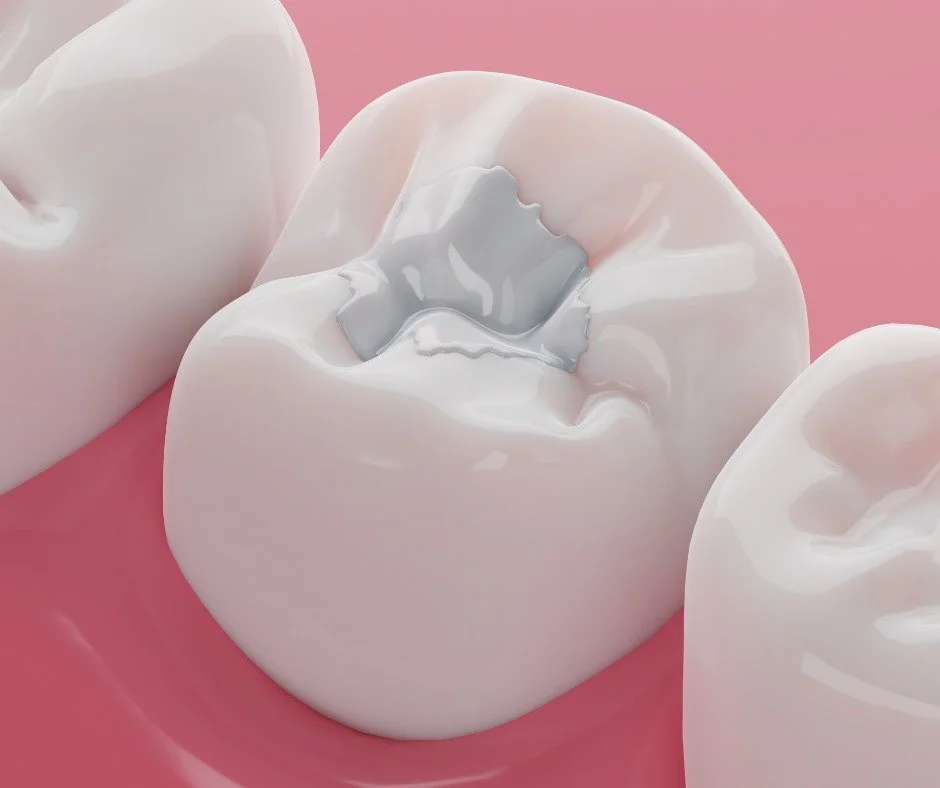


Illustration of a molar with a tooth-colored filling
Your family's dental home

Composite Fillings in Bartonville: Do You Need One? How to Tell

Illustration of a molar with a tooth-colored filling
The short answer
Reviewed by our
Bartonville
doctors.
Dr. Landall Cormier, dentist at Associates in Dentistry in Bartonville
Dr. Jessica Dean, dentist at Associates in Dentistry in Bartonville

Most cavities that still qualify for a composite filling cause small, short-lived symptoms: a quick zing from cold, food packing in one spot, a rough edge your tongue keeps finding. Pain that lingers, wakes you up, or throbs usually means decay has reached the nerve. The window for a simple filling is early, and it closes quietly.

01

Signs a Cavity Needs a Filling Now

Here's the frustrating part about cavities. They don't hurt when they're easy to fix. By the time a tooth really aches, decay has usually worked past the enamel and into the softer layer underneath, and sometimes further than that.

So the signs you want to catch are small ones. A sip of ice water makes one tooth flinch for a second, then it's fine. Floss shreds in the same spot every time. You bite into something and feel a little sharp catch. Those are the calls we love to get, because a composite filling handles that in one visit.

  • A quick zing from cold or sweet that fades within a few seconds
  • Food wedging in the same spot after every meal
  • A rough or chipped edge your tongue keeps returning to
  • A dark spot or dull gray shadow on a back tooth
  • Floss that tears or catches in one place, every single time

Now the other list. Pain that lasts more than a minute after the cold is gone. Throbbing that wakes you at night. Swelling in your gum or cheek. Pain when you press on the tooth. Those point toward the nerve, and a filling alone won't fix them.

We see this every single week. Someone waited six months on a little cold sensitivity, and what could have been a small composite filling turned into a root canal and a crown. We do root canals right here in Bartonville, and plenty of them started as a tooth that only bothered someone at breakfast.

Not sure which list you're on? That's the most common question we hear, and it's a fair one, the symptoms overlap more than people expect. An exam and an x-ray settle it in a few minutes.

02

Composite Versus Silver: Making the Right Call

Silver fillings worked. Plenty of people in Bartonville still have them, and some have held up for twenty-five years. So this isn't a story about one material being bad. It's about how they hold on to the tooth. Silver gets packed into a space the dentist has to carve out first. That carving means cutting away healthy enamel just to give the filling somewhere to sit. Composite bonds straight to the tooth structure. We only remove what's decayed.

That difference matters most on a tooth you'll keep for another forty years.

Here's where composite usually wins, and where it doesn't.

  • Front teeth and anything that shows when you smile: composite, no real debate. Color is matched to the tooth next to it.
  • Small to medium cavities on back teeth: composite does well, and we keep more of your own enamel.
  • A tooth we can't keep dry during the appointment: bonding needs a dry field. If saliva keeps flooding the site, the bond suffers.
  • Very large decay, or a cusp that's already cracked off: a filling of any kind is being asked to do a crown's job.
  • Deep below the gumline where isolation is hard: sometimes another approach holds up better.

That fourth one is the honest disqualifier. We see it every week. Someone wants a composite filling because they've had one before and liked it, but the tooth has lost half its chewing surface. Packing more material into that hole just sets up the next fracture. A same-day crown wraps the tooth instead of filling it. You leave with it finished, milled in-house at our office.

Ask two questions before you agree to anything. How much healthy tooth gets removed? And what happens to this tooth in ten years? A dentist who's thinking past today's appointment will have an answer ready. Small decisions on a molar compound over time, the material is only part of it.

We talk through both options at the chair. No pressure either way.

03

When a Filling Isn't the Real Fix

Not every dark spot needs drilling. Some don't need anything yet.

Early decay that hasn't broken through the enamel can sometimes be watched. We take an x-ray, mark it, and check it again at your next cleaning. If it hasn't moved, we leave it alone. Fluoride, better flossing, and cutting back on sipping sweet drinks all day can stall a spot like that for years. We'd rather watch a tooth than cut into it, once enamel is gone it doesn't grow back.

There's a flip side too. Some teeth are past the point where a composite filling will hold.

Here's the honest line: a filling replaces missing tooth. It doesn't hold the rest of the tooth together. When decay eats through a cusp or the crack runs under the gum, packing composite into that space just delays the real repair. You'll feel it flex when you chew. Then it'll break again, usually worse.

  • The decay reaches the nerve and the tooth is aching on its own at night. That's a root canal conversation first.
  • More than about half the chewing surface is gone. A crown covers the tooth instead of filling it.
  • There's a visible crack running down the side of the tooth.
  • You grind hard at night and keep snapping the same filling. The bite has to be addressed or the next one snaps too.
  • The tooth has already been filled two or three times and there's not much tooth left to bond to.

Ever had a filling done and the tooth still bothered you? That usually means the problem wasn't the hole.

If a tooth needs a crown, we'll say so and show you why on the screen. We mill crowns in-house at the office, so that conversation doesn't mean weeks in a temporary. But we're not going to talk you into one you don't need. Plenty of teeth in this office get a composite filling and go twelve years without another thought.

Think you might have a cavity? Let's check.
04

What Happens If Decay Runs Deeper Mid-Visit

Here's the part nobody warns you about. An X-ray shows a shadow. It doesn't show exactly how far that shadow goes.

So we get you numb, open the tooth, and clean out the decay. Most of the time it stops where we expected and a composite filling handles it easily. But sometimes decay has crept closer to the nerve than the image suggested, and we find that out only once the soft stuff is gone.

We stop and tell you right then.

You're numb, not unconscious. We'll explain what we're looking at in plain words, what your choices are, and what each one means for the tooth long term. Sometimes the answer is a medicated liner under the composite filling to calm the nerve and wait. Sometimes too much tooth structure is gone to hold a filling, and a crown protects it better. And once in a while the nerve is already involved, which puts a root canal on the table. We do root canals right here, so that conversation doesn't mean getting shipped somewhere else.

Does this happen at every visit? Not even close. Nine times out of ten the plan we walked in with is the plan we finish with. But we'd rather you hear the possibility now, sitting at home, than for the first time with a mouth full of cotton.

What we won't do is make the call for you while you're in the chair, then hand you a surprise afterward. You get the options, the tradeoffs, and a minute to think. If you'd rather place a temporary and come back after you've talked it over with your spouse or checked your budget, that's a fine answer too, the tooth will keep for a short while.

Treating what's there beats treating what we guessed was there. Every time.

05

The Filling Visit From Start to Finish

Most people picture something worse than what happens. A single composite filling usually takes about 20 to 40 minutes in the chair. Two of them side by side? Still under an hour most days.

Here's the order of things.

  • We look and take an x-ray. That tells us how deep the decay runs and whether a filling is still the right fix.
  • We numb the area. A little gel first, then the injection. The gel is why most folks say they barely felt the needle.
  • We clean out the decay. This is the part you hear more than you feel.
  • We layer in the composite. It goes in soft, shade-matched to your tooth, and a curing light hardens each layer.
  • We shape it and check your bite. You'll tap down on thin colored paper a few times while we adjust.
  • You walk out. No temporary, no second appointment, no waiting on a lab.

That bite check matters more than people realize. If the filling sits even slightly high, that tooth takes every chew first and gets sore within a day or two. So we'd rather spend an extra two minutes adjusting than have you call us Thursday.

Numbness wears off in one to three hours. Eat on the other side until it does, and be careful with hot coffee and your own cheek. We see at least one bitten lip a week, almost always a kid.

Some sensitivity to cold for a few days is normal, especially on a deeper filling. It should fade, not build. If it's getting worse after a week, call us.

FAQ

Answers to the most common questions.

Something else on your mind?
Call us at (309) 697-2228.

How do I know if I need a filling or if my tooth will get better on its own?

A quick zing from cold that fades in a few seconds usually means a small cavity that can wait a bit, but pain that lingers or wakes you at night means it's time to call. Floss tearing in the same spot every time is another sign worth checking. An exam and an x-ray settle it in a few minutes, so you're not guessing at home.

Should I choose a composite filling or a silver filling?

For most people, composite is the better choice because it bonds directly to your tooth instead of needing extra healthy enamel carved away. Silver fillings still work and can last decades, but composite lets us keep more of your natural tooth. Front teeth are an easy call for composite since the color matches. We'll walk through both options with you before deciding.

What happens if my tooth still hurts after getting a filling?

That usually means the problem wasn't just the cavity itself. A filling replaces missing tooth structure, but it doesn't fix a crack or a nerve that's already inflamed. If pain continues, come back in so we can check for a deeper issue like a crack or infection. We'll show you on the screen exactly what's going on.

Can a composite filling be used on a tooth that's already been filled before?

It depends on how much tooth is left to bond to. If a tooth has already been filled two or three times, there may not be enough healthy structure for another composite filling to hold. In that case, a crown often makes more sense. We mill crowns in-house at our office, so that doesn't mean weeks with a temporary.

Is it worth waiting on a small cavity instead of getting it filled right away?

Sometimes, yes. Early decay that hasn't broken through the enamel can often be watched with an x-ray and checked again at your next cleaning. Fluoride and cutting back on sugary drinks can stall it for years. But once it starts causing real symptoms, waiting usually turns a simple filling into something bigger, like a root canal.

What can turn a simple cavity into a root canal in Bartonville?

Waiting too long on small symptoms is the most common cause we see. Someone notices cold sensitivity for six months, ignores it, and decay reaches the nerve. We do root canals right here in Bartonville, and many started as a tooth that only bothered someone at breakfast. Catching it early keeps it a one-visit fix.

Request an appointment

Call us at (309) 697-2228

Tell Us About Yourself

Are you new to Associates in Dentistry?

Preferred Day and Time (optional)
Thank you! Your submission has been received!

That didn't go through. Please try again, or call your office.